

Finding the right kitchen countertop is all about striking a balance between how it looks, how it holds up, how much it costs, and how much work you're willing to put into it. The classic debate often pits engineered quartz, loved for its incredible durability and easy care, against natural granite, which offers one-of-a-kind beauty and stands up to heat. But the truth is, the "best" material really depends on your life and your kitchen.
Understanding Your Countertop Priorities
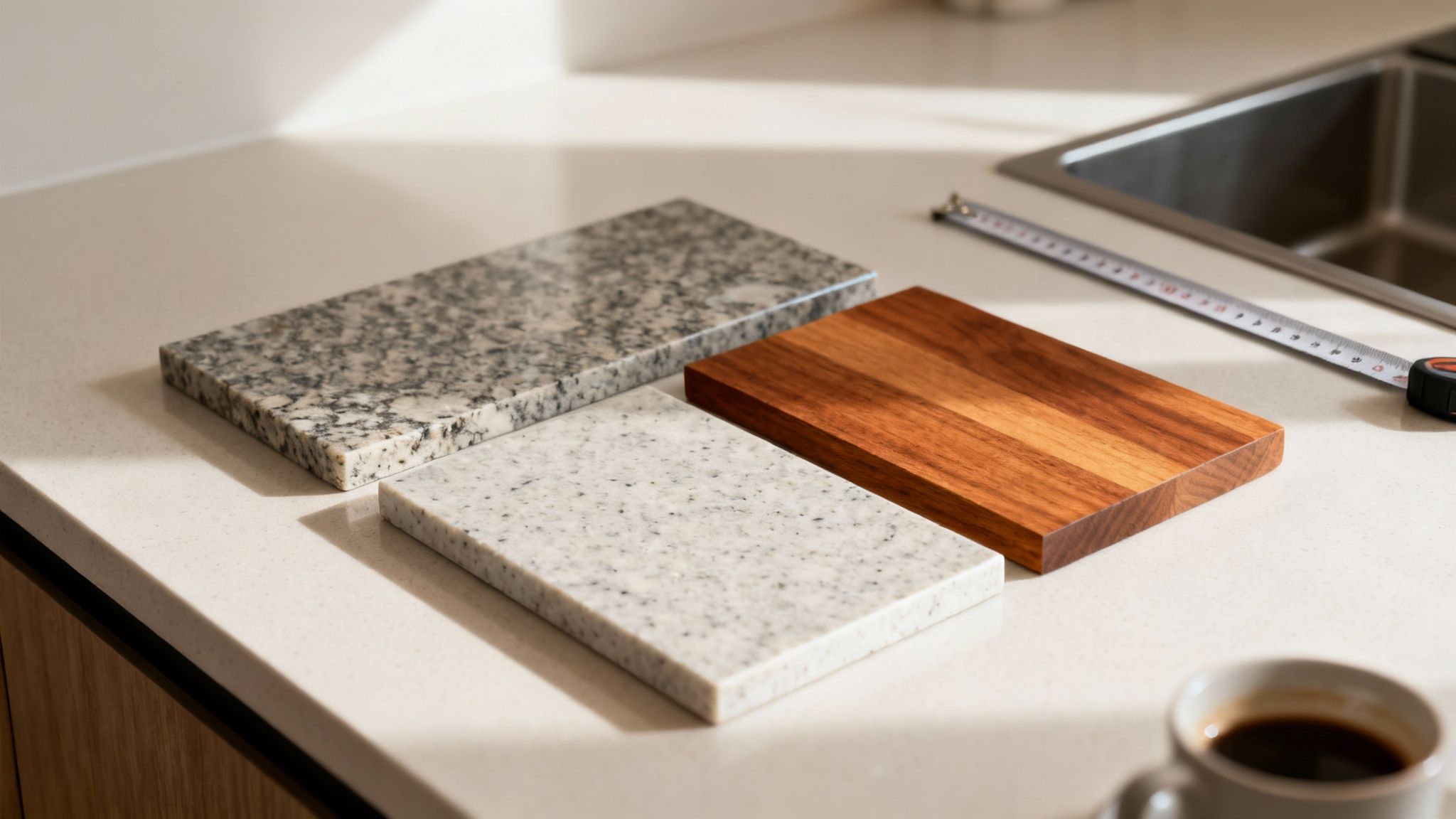
Picking a countertop isn't just about color and pattern; it’s a decision that will affect your daily routine for years. Before you get lost in the samples, take a moment to think about what you truly need. Are you a passionate home chef who needs a workhorse surface that can take a hot pan in stride? Or are you part of a busy family where a low-maintenance, stain-resistant top is non-negotiable?
This guide goes beyond a simple list of pros and cons to help you find a material that genuinely fits your lifestyle. To get a better sense of how different materials and styles could look in your home, you can explore AI-powered interior design options to visualize the final result.
Key Decision Factors at a Glance
Think about where you land on these four key points. Knowing your priorities will instantly help you narrow down the field and focus on the materials that make the most sense for you.
- Durability: How much abuse will your countertop take? You need to consider its resistance to scratches, heat, chips, and stains. A bustling family kitchen has very different needs than a quiet kitchen used for light meal prep.
- Maintenance: Honestly, how much upkeep are you willing to do? Some materials, like granite or marble, need periodic sealing to look their best. Others, like quartz, just need a quick wipe-down with soap and water.
- Cost: What's your budget per square foot? This includes the material and the installation. The price gap is huge, from budget-friendly laminates on one end to high-end, exotic natural stones on the other.
- Aesthetics: What's the vibe you're going for? Your countertop is a huge visual statement that can define your kitchen’s entire personality, whether it's sleek and modern or warm and rustic.
Here’s a quick way to see how your priorities might point you toward certain materials.
| Factor | High Priority Might Lead You To... | Lower Priority Might Allow For... |
|---|---|---|
| Durability | Quartz, Granite, Porcelain | Butcher Block, Marble |
| Maintenance | Quartz, Porcelain, Laminate | Marble, Concrete, Butcher Block |
| Cost | Laminate, Butcher Block | Marble, Quartzite, High-End Granite |
| Aesthetics | Marble, Quartzite | Laminate, Stainless Steel |
A Look at the Top Countertop Materials
Before we get into the nitty-gritty of comparing kitchen countertop materials side-by-side, let's start with a quick introduction to the main players. Every material has its own personality—from the raw, timeless beauty of natural stone to the sleek consistency of engineered surfaces. Getting a feel for their basic traits is the first step in narrowing down what will work for your kitchen, your lifestyle, and your vision.
Natural stones like granite and marble have always been popular for their one-of-a-kind beauty. Since they are carved straight from the earth, no two slabs are ever exactly the same, which gives your kitchen a truly unique touch. Granite, for example, has been a go-to for homeowners for decades because it's just so tough in a busy kitchen. It still dominates the global market, holding a solid 29.8% market share thanks to its incredible durability and resistance to heat and scratches. A whopping 75.4% of that demand comes from residential projects, proving that homeowners still value premium, long-lasting surfaces. You can dig deeper into these market trends and material popularity if you're curious.
Engineered and Other Unique Surfaces
Engineered stones like quartz and porcelain have become fantastic alternatives, offering a blend of beauty, consistency, and serious durability. Quartz is made by combining crushed natural quartz with resin, which results in a non-porous surface that’s a beast against stains and scratches—all without ever needing to be sealed. Porcelain slabs are a different animal; they're fired at incredibly high temperatures, making them dense and tough enough to handle heat, UV rays, and scrapes. This makes them a great pick for both indoor and outdoor kitchens.
Of course, stone isn't the only option. Materials like butcher block bring a natural warmth into the kitchen and are perfect for a dedicated food prep zone. If budget is a top concern, high-pressure laminate has come a long way, offering a huge variety of designs at a fraction of the cost. And for anyone aiming for a more industrial or modern vibe, concrete and stainless steel bring that minimalist, professional-kitchen feel right into your home.
Expert Insight: Choosing the right countertop isn't just about what looks good. It's about finding that sweet spot where aesthetics, daily demands, your willingness to do upkeep, and your budget all meet. What’s perfect for a professional baker might be a nightmare for a busy family of five.
To help you quickly sort through these options, here’s a simple table that breaks down the key characteristics of the most popular materials. Think of it as a cheat sheet to get you started before we dive into the more detailed comparisons.
Quick Comparison of Popular Countertop Materials
| Material | Average Cost (Per Sq. Ft.) | Durability (1-5) | Maintenance Level |
|---|---|---|---|
| Granite | $40 - $100+ | 5 | Low to Medium |
| Quartz | $50 - $120+ | 5 | Low |
| Marble | $60 - $150+ | 3 | High |
| Porcelain | $55 - $120+ | 5 | Low |
| Laminate | $20 - $50 | 2 | Low |
| Butcher Block | $50 - $150 | 3 | High |
| Concrete | $65 - $135 | 4 | Medium |
| Stainless Steel | $75 - $150 | 4 | Low |
This table gives you a bird's-eye view, but the real story is in the details. In the next section, we’ll put these materials head-to-head to help you understand the nuances that make all the difference.
A Detailed Kitchen Countertop Materials Comparison
Picking the right countertop is always a balancing act. You're trying to find that sweet spot between what you can afford, how much of a beating it can take, and how much time you're willing to spend babying it. These are the big three we always come back to when helping clients.
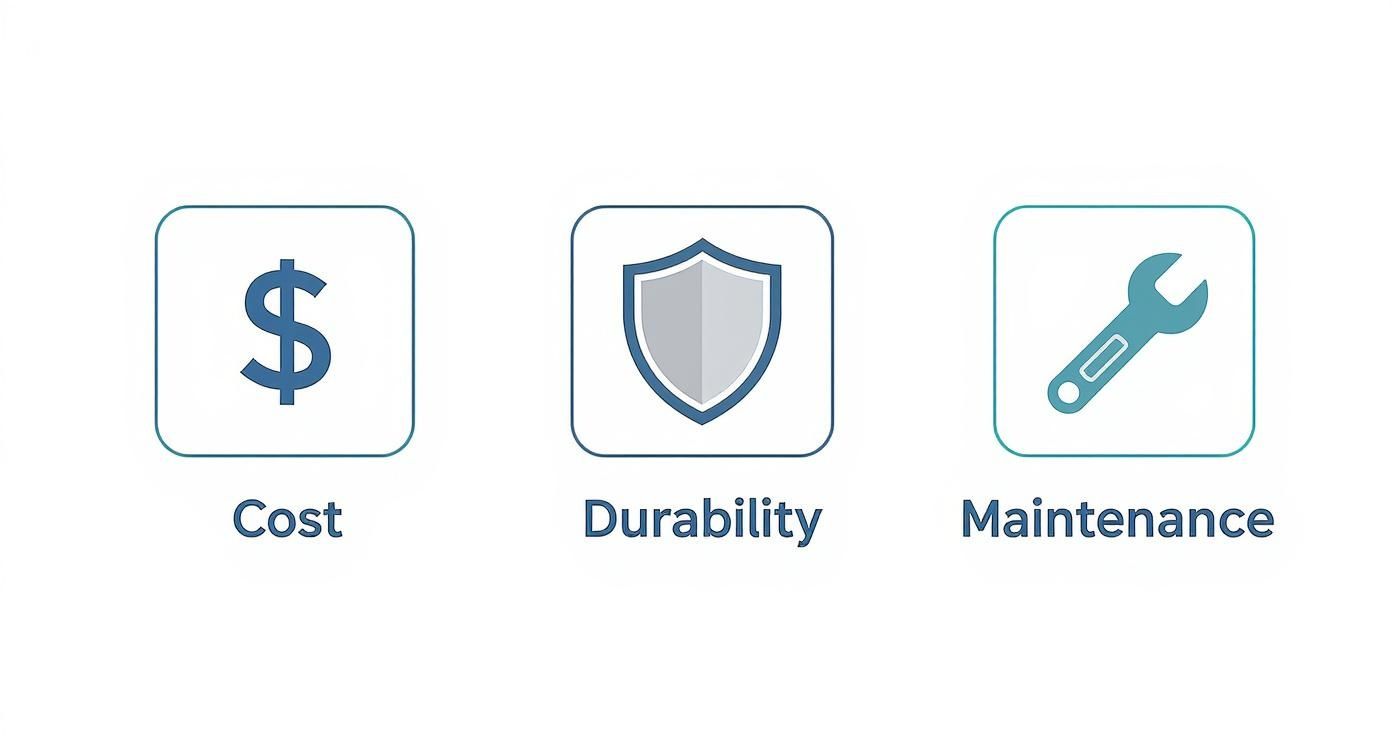
As you can see, these three factors really form the foundation of a smart decision. They'll guide you to a material that doesn't just look good on day one but fits into your actual life.
Durability Showdown: Granite vs. Quartz
The classic debate always seems to start here: granite or quartz? It makes sense. They're both workhorses, but their strengths and weaknesses are almost mirror opposites, which makes one a clear winner depending on how you use your kitchen.
Granite is 100% natural stone, and that means it’s born from heat. You can pull a pan straight from a 500-degree oven and set it right on the surface without a second thought. For serious home chefs, that’s a game-changer.
Quartz, on the other hand, is an engineered product—about 90% ground quartz mixed with 10% polymer resins. That resin is its secret weapon against stains, but it's also its Achilles' heel. A hot pan can melt the resin, leaving a permanent scorch mark. But the flip side is that you'll never have to seal it to protect against spills from wine, coffee, or oil. It's completely non-porous.
The Critical Trade-Off: With Granite, you get incredible heat resistance but have to commit to sealing it every year or so to keep it stain-proof. With Quartz, you get zero-maintenance stain protection but must be religious about using trivets for hot pans.
Scratch and Chip Resistance: Porcelain vs. High-End Laminate
When it comes to fending off scratches, porcelain slabs have really changed the game. Because they're fired at such extreme temperatures, they become incredibly dense and hard. I mean, you can practically slice and dice right on the surface without leaving a mark.
Modern high-end laminate looks better than ever, but at its core, it's still a softer surface. Everyday use is fine, but one slip of a knife or dragging a heavy stand mixer can easily create a permanent scratch or gouge that you just can't fix.
Porcelain's density also makes it a fortress against chipping. Laminate is most vulnerable along its edges. A good whack from a heavy pot can easily chip the corner, exposing the particleboard underneath. If you want to dive deeper, this comprehensive kitchen countertop materials comparison guide offers some great additional insights.
Porosity and Maintenance: Marble vs. Concrete
People fall in love with the look of marble and concrete. They both have this raw, organic beauty, but that beauty comes at a price. Both are naturally porous, meaning they demand a real commitment to maintenance to keep them from staining and etching.
Marble is the definition of timeless luxury with its soft, elegant veining. The problem is, it's made of calcite, which has a chemical reaction with acids. A little lemon juice or a splash of vinegar will "etch" the surface, leaving a permanent dull spot. Sealing helps with stains, but it does absolutely nothing to prevent etching.
Concrete countertops give you that cool, industrial vibe and can be customized in all sorts of colors and finishes. But just like marble, concrete drinks up liquid. It has to be sealed perfectly at installation and resealed regularly. If you don't, a single spill can seep in and create a deep, permanent stain.
- Marble's Weakness: Very easily etched by common kitchen acids, which dulls the polish.
- Concrete's Demand: Needs a robust and consistent sealing schedule to block moisture.
- Shared Trait: Both will develop a "patina" of etches and stains over time. Some people love this lived-in look and call it character; others just see it as damage.
Design Versatility: Quartz vs. Butcher Block
If you want unlimited aesthetic options, quartz is in a class by itself. Since it's an engineered material, manufacturers can create it in almost any color, pattern, or finish you can imagine.
This means you can get a countertop that looks almost identical to a rare slab of Italian marble or go for a bold, solid red that you'd never find in nature. The consistency is also a huge plus—the sample you approve is exactly what your installed countertop will look like.
Butcher block offers a different kind of versatility, one that’s all about warmth and character. You can choose from woods like maple, oak, or walnut, and each brings its own unique grain and color to the table. It’s perfect for rustic, farmhouse, or traditional kitchens but is naturally limited to, well, the look of wood. This focus on natural materials often extends to the cabinets, too. You can see how different wood choices can work together in our guide on the best kitchen cabinet materials.
Market Trends and Consumer Preferences
What we see in showrooms is backed up by market data. Granite and engineered quartz absolutely dominate the industry. You'll find that granite alone accounts for roughly 28-30% of the market, thanks to its durable nature and the one-of-a-kind beauty of each slab.
Engineered quartz is climbing fast, mainly because people love the idea of a countertop that's hygienic and requires zero upkeep. In North America especially, homeowners see both granite and quartz as premium materials that add real long-term value to their homes.
Heat and Hygiene: Stainless Steel vs. Granite
For those who want a kitchen that performs like a professional one, the conversation often boils down to stainless steel versus granite. Both are champions of hygiene and can take the heat, but they create a completely different kitchen environment.
Stainless steel is the undefeated king of clean. It’s non-porous, can be fabricated with seamless corners, and you can hit it with the harshest sanitizers without causing any damage. It’s also completely heat-proof.
Granite is no slouch, either. It’s extremely heat-resistant, and once it's properly sealed, its surface is just as hygienic. In fact, studies show a sealed granite top resists bacteria as well as stainless steel. The only potential weak spot is the seams between slabs, which need to be kept clean.
The User Experience Difference: Stainless steel gives you that industrial, no-nonsense kitchen, but it shows every fingerprint and can be noisy. Granite offers a more classic, upscale feel with natural beauty, but it asks for a little attention to sealing and seam care. Your choice here is as much about the vibe you want for your kitchen as it is about pure performance.
Finding the Right Countertop for Your Lifestyle
You can fall in love with a countertop's look, but if it doesn't fit how you actually live, that love affair will be short-lived. A beautiful surface that scratches easily or stains from a spilled glass of juice quickly becomes a source of regret. The real secret to a successful kitchen isn't just about looks—it's about matching the material's real-world performance to your daily life.
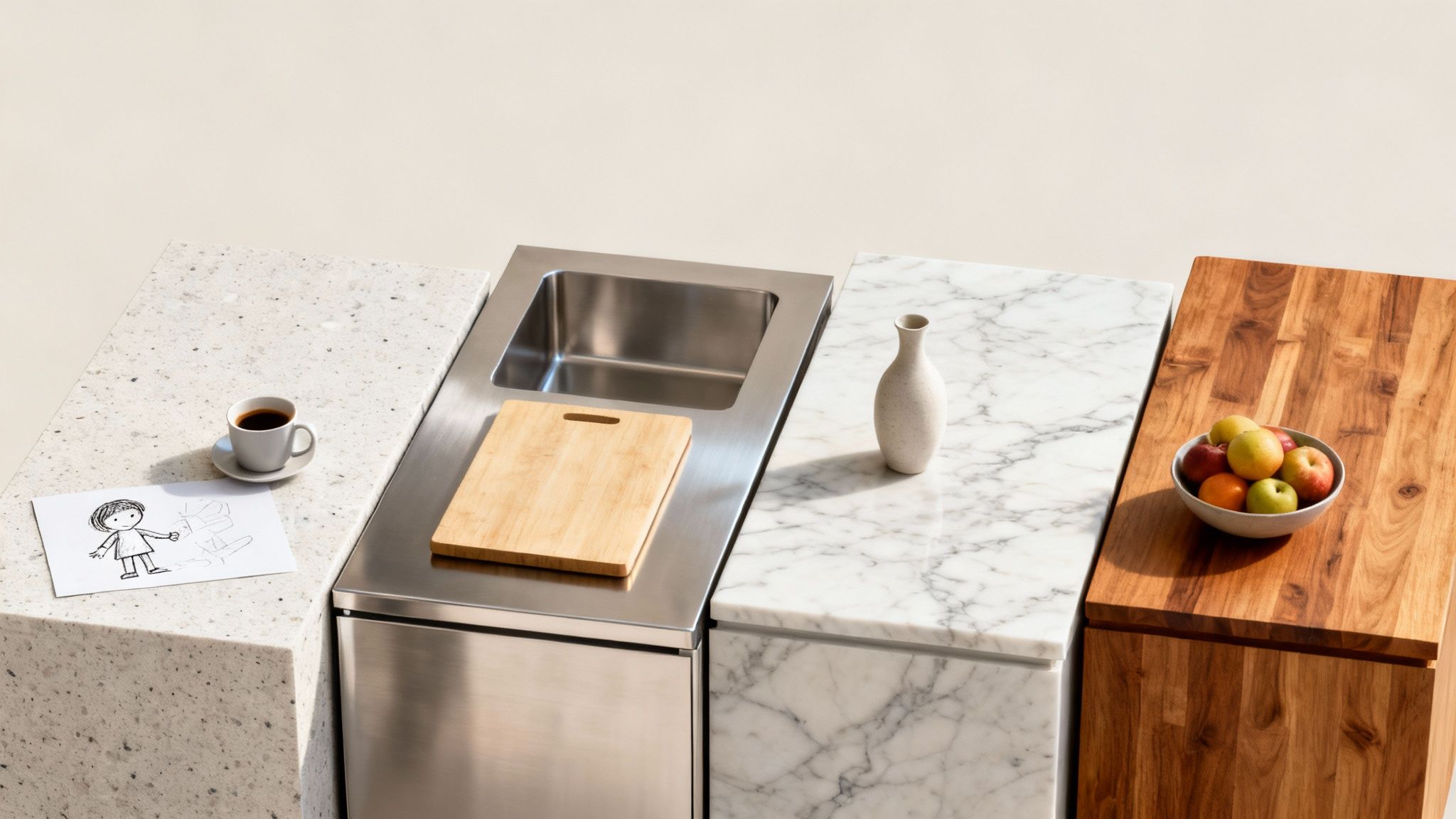
When you start thinking this way, you're not just picking a pretty surface; you're making a practical investment in how your home functions. Let's walk through a few common scenarios and see which materials truly shine.
The Busy Family Kitchen
If you have kids, you know the kitchen counter is command central. It’s where homework gets done, art projects explode, and juice gets spilled. In this kind of environment, you need a surface that’s practically bulletproof. Forgiveness is the name of the game.
This is where engineered quartz almost always wins. It’s a non-porous material, which means liquids from grape juice to marker ink can't seep in and leave a permanent stain. It’s also incredibly tough, so you won’t have a panic attack every time a plate gets dragged across it.
It’s no surprise that the demand for engineered stone is projected to grow 5.4% annually across the globe. Homeowners love that it delivers the high-end look of natural stone without all the maintenance anxiety.
The Gourmet Chef's Workspace
For those who treat cooking as a passion, the demands are different. A serious home chef needs a countertop that works as hard as they do—a surface that can take a searing hot pan straight from the oven and stand up to heavy-duty prep work without a fuss.
- Granite: This natural stone was forged by intense heat deep within the earth, so it’s naturally heatproof. Setting a hot pan directly on it won't cause any damage, which is a huge plus when you're in the middle of cooking. Once sealed, it’s also highly sanitary and very difficult to scratch.
- Stainless Steel: There’s a reason this is the standard in professional kitchens. It’s completely non-porous and impervious to heat, stains, and bacteria. You can even have a sink integrated seamlessly, creating a sleek, super-easy-to-clean workspace.
The Big Difference: Your choice between granite and stainless steel often boils down to the vibe you're going for. Granite brings a natural, one-of-a-kind beauty, while stainless steel offers a clean, industrial, and highly functional look.
The Luxury Statement Kitchen
Sometimes, the kitchen is designed to be the show-stopping centerpiece of the home. In these spaces, the countertop is more than just a work surface—it's a piece of art. Aesthetics take the lead, even if it means a little extra upkeep.
Marble is the undisputed classic for a luxury look. Nothing quite matches its soft, luminous quality and elegant, unique veining. But its beauty comes with a price—it's a softer, more porous stone that can be scratched or etched by acidic things like wine or lemon juice. For many, this evolving patina is part of its charm, a story of a kitchen well-loved.
For a similar dramatic effect with far greater durability, porcelain slabs are a fantastic alternative. Modern printing technology allows porcelain to flawlessly mimic the look of the rarest marbles, but it's virtually immune to heat, scratches, and stains. It won’t even fade in the sun, making it a great option for outdoor kitchens, too.
The Budget-Conscious Remodel
You don't need a massive budget to make a huge impact. Thanks to modern manufacturing, some of the most affordable materials now look better and last longer than ever before, giving you that high-end feel without the high-end price tag.
If you’re watching your wallet, these are two excellent choices:
- Laminate: Forget the laminates of the past. Today's high-pressure versions come in a staggering array of designs, including incredibly convincing stone and wood patterns, for just a fraction of the cost.
- Butcher Block: There's an undeniable warmth and character that wood brings to a kitchen. While it does need some care, like regular oiling, one of its best features is that you can simply sand down any scratches or stains and refinish it to look brand new.
Just remember, natural materials like granite or marble need the right kind of care to stay beautiful. To learn how to protect your investment, take a look at our guide on how to clean natural stone countertops.
Bringing It All Home: Finalizing Your Choice and Planning the Installation
You’ve sifted through the options in this kitchen countertop materials comparison and probably have a couple of front-runners in mind. But making that final decision is about more than just picking a pretty slab. Now we get into the nitty-gritty: the warranties, the installation plan, and the true, all-in cost.
Nailing these details is what separates a smooth project from a stressful one. This is the bridge you cross from dreaming about a new kitchen to actually pouring your morning coffee on that perfect, newly installed surface.
What Does a Countertop Warranty Really Cover?
Before you commit, you need to know what you're actually protected against. A warranty sounds like a safety net, but it's not a catch-all. Most manufacturer warranties are there to cover defects in the material itself—things that went wrong back at the factory, like bad pigment mixing or structural flaws.
What they almost never cover is damage from everyday life in a busy kitchen. That means things like:
- Chips and Scratches: A dropped cast-iron skillet or a knife slip? That’s considered normal wear and tear, not a defect.
- Stains and Etching: Spilled red wine or lemon juice that sat too long is on the homeowner to prevent and clean.
- Heat Damage: Setting a hot pan directly on a quartz surface and leaving a scorch mark is considered improper use.
- Installation Errors: If a seam pulls apart or a crack appears because of shoddy support, that’s an issue with the installer, not the stone manufacturer.
The Bottom Line: Think of a material warranty as protection against rare manufacturing mistakes, not as an insurance policy. Your best defense against damage is always going to be professional installation and good daily habits.
Why Professional Installation is Non-Negotiable
I know the DIY spirit is strong, but countertop installation is one area where you absolutely want to call in the pros. This isn't like painting a room; it’s a precise, heavy-duty job that requires specialized skills and tools. A professional installer brings much more to the table than just muscle.
They start by creating a perfect template of your cabinets, which accounts for every little imperfection in your walls. They have the equipment to transport slabs that can weigh hundreds of pounds without breaking them, and they make flawless cuts for sinks and cooktops.
Most importantly, they get the countertop perfectly level and ensure it’s properly supported. Improper support is the number one reason countertops fail and develop stress cracks over time. Trying to do this yourself can lead to a broken slab (a very expensive mistake) or ugly, grime-collecting seams. The cost of professional installation is a small price to pay for peace of mind and a countertop that lasts.
Budgeting for the Entire Project
The sticker price on a slab is just one piece of the puzzle. To avoid any nasty surprises, you need to budget for the total project cost, from tear-out to final polish.
Here's what a realistic budget should account for:
- Material Cost: The price of the slabs themselves.
- Fabrication: This is the skilled labor for cutting the slab to your kitchen's template, finishing the edges, and making cutouts for your sink and appliances.
- Installation: The cost for the crew to deliver and secure the countertops in your home.
- Removal and Disposal: The fee for tearing out and hauling away your old countertops.
- Plumbing and Electrical: Don’t forget the cost of having a professional disconnect and reconnect your sink, garbage disposal, and cooktop.
Knowing how this all comes together is crucial. To see how this stage fits into the bigger picture, check out our guide on creating a successful kitchen renovation timeline.
You Need to See Them for Yourself
At the end of the day, a picture on a screen can’t replace the real thing. You can’t feel the cool, smooth texture of honed marble or see how light dances across a polished granite surface from a photo. The final step in any kitchen countertop materials comparison is to experience your top contenders in person.
We invite you to stop by our Boca Raton showroom to see and touch these materials for yourself. Our design experts are on hand to offer a complimentary consultation, answer your questions, and help you pull together a plan that’s perfect for your home.
Your Top Countertop Questions, Answered
Even with all the options laid out, you probably still have a few questions buzzing around. Choosing a new countertop is a big deal and a serious investment, so you deserve clear, straight-up answers. Here are some of the most common questions we get asked by homeowners who walk into our showroom, designed to give you that final bit of confidence.
Getting these last few details sorted out ensures the countertop you bring home doesn't just look stunning, but actually works for the way you live.
What Is The Most Durable Kitchen Countertop Material?
This is the big one, but "durability" isn't a single score—it really depends on your kitchen habits. If you're looking for an all-around champion against scratches, stains, and heat, granite has been a top contender for years. It's natural stone forged by incredible heat, so setting a hot pan on it is no problem.
Engineered quartz is a powerhouse when it comes to shrugging off scratches and stains, thanks to its non-porous surface. This makes it a go-to for busy families with kids. Just be mindful of the resins used to bind it together, as they can be damaged by extreme heat from pots and pans. In the same league, porcelain is a true beast, boasting fantastic resistance to scratches, stains, and heat, placing it among the toughest materials you can install.
The truth is, no countertop is bomb-proof. But granite, quartz, and porcelain consistently deliver the highest performance against the daily chaos of a modern kitchen. How you use your space will ultimately decide which one is the most "durable" for you.
How Do I Maintain My New Kitchen Countertops?
The long-term relationship you'll have with your countertop really comes down to maintenance, and the required commitment varies wildly from one material to the next.
- Natural Stones (Granite, Marble): Because they're porous, these beauties need to be sealed periodically—usually about once a year. This simple step is your best defense against stains from spills like red wine or coffee.
- Engineered Surfaces (Quartz, Porcelain): One of their biggest perks is being non-porous. That means no sealing, ever. A daily wipe-down with a little soap and water is all it takes to keep them looking brand new.
- Butcher Block: To keep the wood from drying out, cracking, or warping over time, you’ll need to condition it regularly with a food-safe mineral oil. It's a bit more hands-on, but it keeps the surface rich and healthy.
No matter what you choose, always stick to the manufacturer's care instructions. Using the wrong cleaner—like something abrasive or acidic on marble or laminate—can cause permanent damage.
Which Countertop Material Offers The Best Value For Money?
Finding the "best value" is more than just looking at the price tag; it's about weighing the upfront cost against how well the material holds up over time. Laminate is definitely the most budget-friendly option at the start, making it a great pick for a quick refresh on a tight budget. However, it also has the shortest lifespan and is the most vulnerable to heat and deep scratches.
On the other hand, materials like granite and quartz have a higher initial cost but deliver incredible long-term value. With just a little care, they can literally last a lifetime, meaning you won't be paying for a replacement down the road. Plus, they can significantly boost your home’s resale value. Their sheer durability means they'll stand up to decades of daily life, making that one-time investment feel smarter and smarter every year. The best value really hinges on your budget, your lifestyle, and how long you plan to stay in your home.
Ready to see these materials up close? Pictures and articles only go so far. Stop by the Kitchen Renovations Perfected showroom in Boca Raton for a complimentary consultation. Our experts are here to help you touch, see, and feel the options to find the perfect surface for your home. Schedule your visit today!