


When you're trying to figure out the best flooring for a kitchen remodel, a few materials always rise to the top. Luxury Vinyl Plank (LVP) is a fan favorite for its waterproof resilience, porcelain tile is unbeatable for sheer durability, and classic hardwood brings a warmth you just can't fake. Ultimately, the right choice comes down to a balancing act between your family’s lifestyle, your budget, and the look you’re going for.
Your Guide to Choosing the Best Kitchen Flooring
Picking the right flooring is one of the most fundamental decisions you'll make in your kitchen renovation. It’s about so much more than just a color; you’re choosing a material that has to stand up to daily spills, constant foot traffic, and all the chaos of a busy household. Since the kitchen is truly the heart of the home, the floor you put down sets the entire tone for a space that needs to be as functional as it is beautiful.
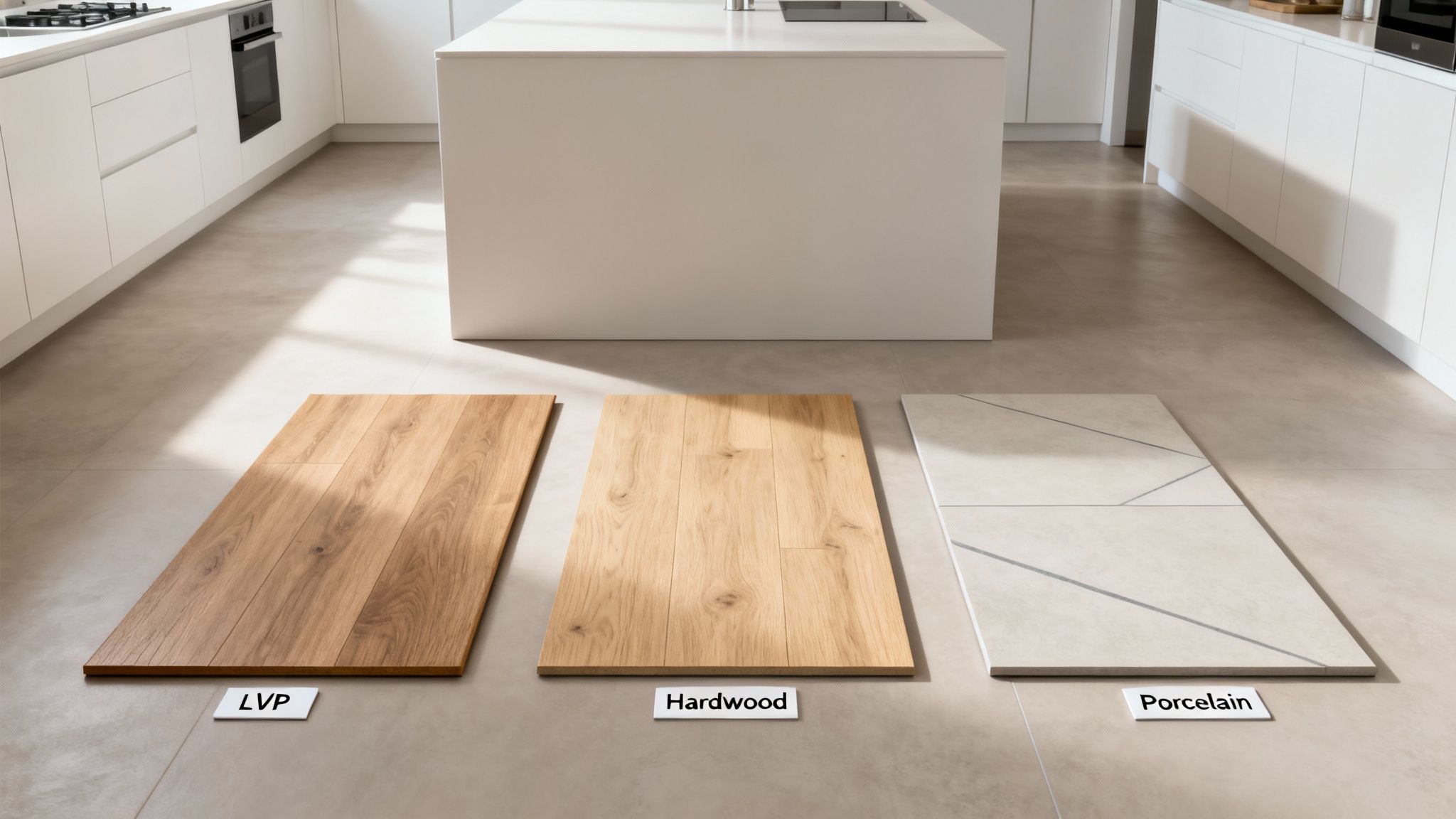
To make a choice you’ll be happy with for years, you really need to weigh a few critical factors:
- Water Resistance: Let's be real—kitchens are splash zones. From a pot boiling over to a leaky dishwasher, your floor has to handle moisture without warping, staining, or falling apart.
- Durability and Maintenance: Think about dropped pans, scooting chairs, and the click-clack of pet claws. A durable floor will resist scratches and dents, and a surface that’s easy to clean will make your daily life so much easier.
- Comfort and Safety: You spend a surprising amount of time standing in the kitchen. A floor with a little bit of give can be a lifesaver for your back and joints, and a slip-resistant surface is a must for safety, especially if you have kids or pets running around.
- Style and Aesthetics: The floor is the glue that holds your design together. It needs to work with your cabinetry, countertops, and overall vision to create a cohesive, inviting space.
A Quick Comparison of Top Materials
It's easy to get lost in all the options, but understanding the core strengths of each material helps clear things up. Porcelain tile, for instance, is practically indestructible and completely waterproof, making it a worry-free choice for high-traffic, spill-prone kitchens. The trade-off? It’s hard underfoot, and if you drop a glass on it, it’s a goner.
On the other end of the spectrum, hardwood offers a natural, timeless beauty and can be refinished over and over, adding real long-term value to your home. Its biggest challenge is its vulnerability to water, which means spills need to be wiped up right away. Then you have Luxury Vinyl Plank, which beautifully bridges the gap—it gives you the convincing look of real wood but with 100% waterproof performance and a much softer feel underfoot.
The ideal kitchen floor isn't just one that looks good on day one—it's the one that performs reliably for years, adapting to your family's needs while retaining its beauty and structural integrity.
To help you see how these materials stack up at a glance, we've put together a quick comparison of the leading choices.
Kitchen Flooring Options at a Glance
This table gives a high-level overview of the most popular kitchen flooring materials, highlighting the key factors that usually drive the decision-making process.
| Flooring Material | Average Cost (per sq. ft. installed) | Water Resistance | Durability | Best For |
|---|---|---|---|---|
| Porcelain Tile | $12 - $25 | Excellent | Excellent | High-traffic kitchens needing maximum durability and stain resistance. |
| Hardwood | $10 - $20 | Low | Good | Homeowners seeking timeless beauty and increased home value, who are diligent with maintenance. |
| Luxury Vinyl Plank | $7 - $15 | Excellent | Very Good | Families with kids and pets who need a stylish, 100% waterproof, and comfortable flooring solution. |
| Engineered Hardwood | $8 - $18 | Moderate | Good | Kitchens in climates with humidity fluctuations or on concrete slabs, offering real wood appeal. |
While this table is a great starting point, the best material for you depends entirely on your specific home and priorities. Each option comes with its own unique set of benefits and considerations.
A Detailed Look at Top Kitchen Flooring Materials
Choosing the right flooring for your kitchen goes way beyond picking a color from a showroom sample. You have to imagine how it will hold up in the real world—what happens when a heavy pot drops, a glass of juice spills, or it endures the daily stampede of a busy family? This guide breaks down the practical realities of the top contenders to help you see which one truly fits your home and lifestyle.
We'll compare four popular choices: porcelain tile, solid hardwood, luxury vinyl plank (LVP), and engineered hardwood. We’ll look at them from the perspective of a real-world kitchen, focusing on durability, water resistance, maintenance, and how they feel to live with day in and day out.
Porcelain Tile: The Unmatched Durability Champion
There's no question about it—porcelain tile is tough. It's fired at incredibly high temperatures, creating a dense body that naturally resists moisture, scratches, and stains. Think of it as a fortress for your kitchen floor. This isn't just a surface treatment, either. The color and pattern run all the way through the tile, so if you do manage to chip it, it's far less obvious than it would be on ceramic.
But that legendary hardness can be a double-edged sword. While it can handle heavy appliances and endless foot traffic without batting an eye, it has zero give. Drop a wine glass or your favorite ceramic bowl, and it’s almost guaranteed to shatter. It’s also incredibly hard underfoot, which can be tiring if you spend a lot of time standing while cooking or cleaning.
A Quick Tip on Grout: The real maintenance headache with tile isn't the tile itself—it's the grout. Traditional cement-based grout is porous and will soak up spills, leading to stains and discoloration. We always recommend upgrading to a modern epoxy or urethane grout. It's stain-proof, never needs sealing, and keeps your floor looking pristine for years.
Keep in mind that installing porcelain tile is a big job. It demands a perfectly level and stable subfloor to prevent cracks down the line. The process is labor-intensive, which definitely adds to the upfront cost.
Solid Hardwood: The Timeless Classic
You just can't beat the warmth and character that solid hardwood brings to a kitchen. It creates a seamless, inviting flow from the rest of the home and adds a natural beauty that can seriously boost your home's resale value. One of its best features is its incredible longevity. A solid hardwood floor can be sanded and refinished multiple times, essentially giving you a brand-new floor every decade or so.
Of course, the big worry with hardwood in a kitchen is water. Any prolonged exposure to moisture can cause the wood to warp, cup, or stain. You have to be diligent about wiping up spills right away.
How Hardwood Handles Common Kitchen Spills:
- Water Splashes: A few splashes from the sink are no big deal if you wipe them up quickly. The real danger comes from slow, unnoticed leaks from a dishwasher or fridge.
- Acidic Spills (like lemon juice or vinegar): If left to sit, these can actually etch the finish and leave a dull spot on the surface.
- Oily Spills: Oil can seep into the wood's pores if not cleaned up fast, potentially leaving a dark, permanent stain.
A high-quality, professionally applied polyurethane finish is your best line of defense. It forms a protective barrier that buys you precious time to clean up messes before they can do any real damage.
Luxury Vinyl Plank: The Ultimate Problem-Solver
Luxury Vinyl Plank (LVP) has exploded in popularity for a good reason: it brilliantly blends the look of natural materials with an almost indestructible performance. Using high-definition printing and embossed textures, today's LVP offers incredibly realistic wood and stone visuals. Honestly, most people can't tell it's not the real thing without getting down on their hands and knees.
Its biggest selling point is that it is 100% waterproof. Not just water-resistant—the material itself is completely impervious to water. You could leave a plank submerged for days, and it wouldn't swell or warp. This makes LVP a completely worry-free choice for kitchens, especially in homes with kids and pets.
LVP is also much softer and warmer underfoot than tile, so it's more comfortable for those long cooking sessions. That little bit of give also means a dropped plate is less likely to break. Plus, its layered construction often includes an attached underlayment that helps dampen sound, which is a huge plus in open-concept homes.
Engineered Hardwood: The Smart Hybrid
For those who crave the authentic look of real wood but need a bit more stability, engineered hardwood is a fantastic compromise. It's made with a top layer of genuine hardwood veneer that’s bonded to multiple layers of high-quality plywood. This core is arranged in a cross-grain pattern, which is the secret to its stability.
This layered construction makes the plank far less likely to expand and contract with changes in temperature and humidity. That stability means engineered hardwood can be installed in places where solid hardwood is a risky bet, like over concrete subfloors or in basements.
While you get the same natural beauty as solid hardwood from the veneer, it’s still only moderately water-resistant. Spills need to be cleaned up just as quickly. The thickness of that top veneer also dictates its long-term value—a thicker veneer ( 3mm or more) can be sanded and refinished once or twice, but thinner veneers can't.
Direct Comparison: Performance Under Pressure
So, how do these four materials really stack up when faced with everyday kitchen chaos? Let’s put them to the test.
| Scenario | Porcelain Tile | Solid Hardwood | Luxury Vinyl Plank (LVP) | Engineered Hardwood |
|---|---|---|---|---|
| A Leaky Dishwasher | Unaffected. Grout may stain if not epoxy/sealed. | High risk of warping, cupping, and permanent damage. | Completely unaffected. The floor is 100% waterproof. | High risk of delamination and damage to the wood veneer. |
| Heavy Appliance Traffic | Excellent. Resists scratches and dents from moving the fridge. | Good. Can dent under heavy point loads. A harder species like oak helps. | Very Good. High-quality LVP has a thick wear layer that resists scuffs. | Good. The real wood veneer can dent just like solid hardwood. |
| Dropped Cast Iron Pan | High risk of the tile cracking or chipping. | Will likely leave a significant dent or gouge. | May leave a small dent but is unlikely to crack or break. | Will likely dent the wood veneer, possibly exposing the core. |
| Comfort While Cooking | Poor. Very hard underfoot, leading to fatigue. Cold in winter. | Good. Offers some natural give and warmth. | Excellent. Softer, warmer, and more comfortable for standing. | Good. Feels identical to solid wood underfoot. |
| Long-Term Value | Excellent. A durable, permanent installation that adds value. | Excellent. Can be refinished for decades, a major selling point. | Good. Adds functional value but not the same prestige as hardwood. | Good. Adds real wood value, but limited refinishing options. |
To get another perspective on how different materials perform, you can check out this detailed comparison of vinyl, laminate, and hardwood flooring options. It's a great resource for weighing the pros and cons of some of today's most popular choices.
Ultimately, the best kitchen flooring is the one that matches your lifestyle. At Kitchen Renovations Perfected, our design team can walk you through these options in our showroom so you can feel the textures and see the true colors for yourself. We're here to provide expert advice to ensure your choice not only looks beautiful but performs perfectly for years to come, backed by our professional installation and comprehensive warranty.
Why Hardwood Remains a Timeless Kitchen Choice
There's just something about real hardwood in a kitchen. It has an undeniable warmth and elegance that creates a seamless, inviting flow from the rest of your home. While concerns about moisture are completely valid, hardwood's classic appeal and ability to add serious resale value keep it at the top of the list for many homeowners. Thankfully, modern finishes and smarter wood choices have made it a far more practical kitchen option than in the past.
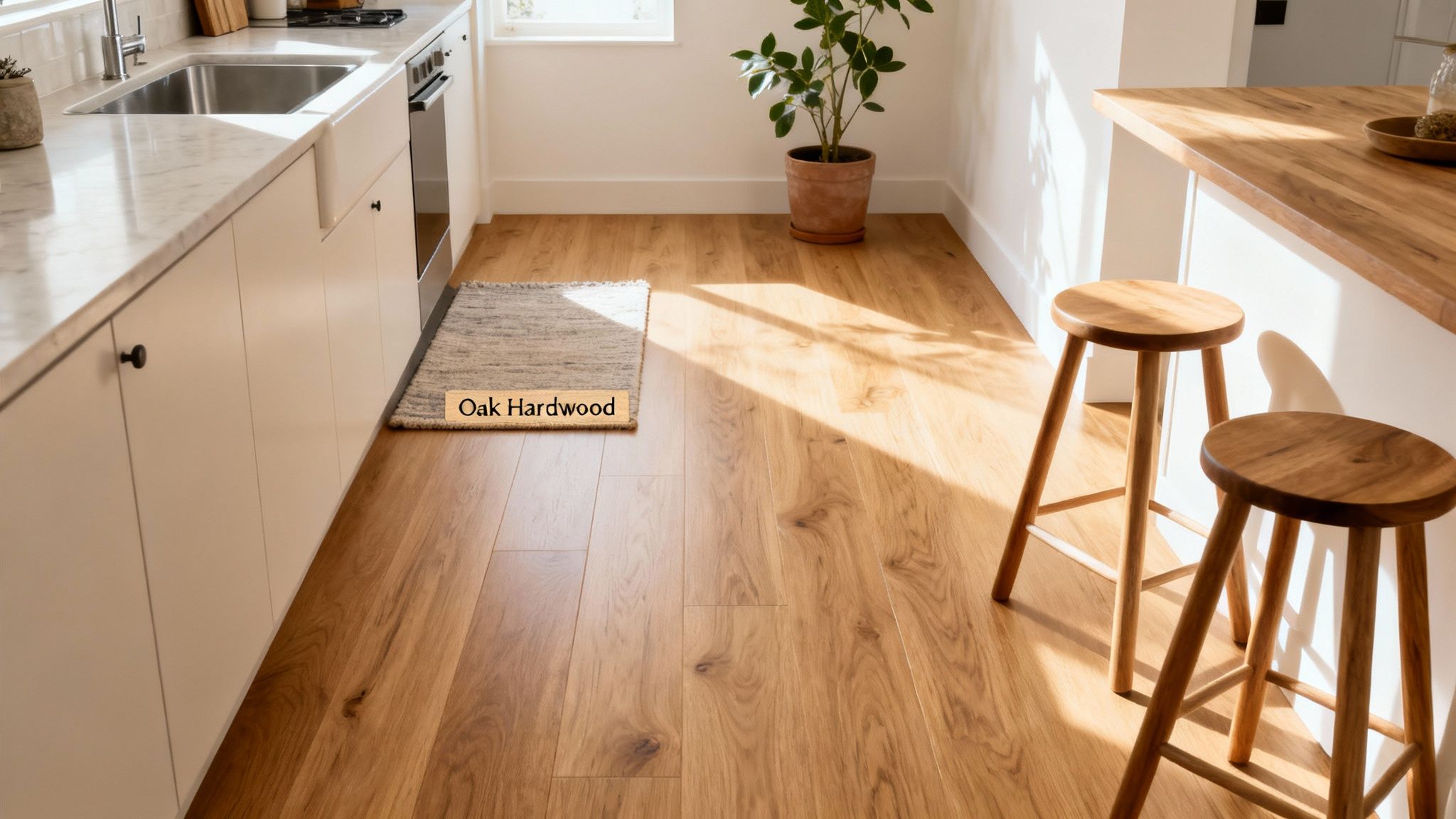
In fact, hardwood is still a leading choice for home upgrades. Even with all the waterproof alternatives out there, a surprising 22% of homeowners plan to install it during their 2025 kitchen remodels. This tells us that people still crave authentic materials that build lasting character in their homes. You can check out more about kitchen renovation material trends on Statista.com.
The secret to making hardwood last in a kitchen really comes down to two things: a great seal and picking the right type of wood from the start.
Understanding Your Wood Options
Not all hardwood is created equal, especially for a high-traffic, high-risk area like the kitchen. Your main decision will be between solid and engineered hardwood.
- Solid Hardwood: This is what most people picture—planks milled from a single, solid piece of timber. Its biggest advantage is that you can sand and refinish it multiple times over its life, essentially giving you a brand-new floor every decade or so.
- Engineered Hardwood: This is constructed with a top layer of real hardwood bonded to a core of high-quality plywood. That layered structure makes it more dimensionally stable, meaning it’s less likely to warp, expand, or contract with changes in humidity. That's a huge plus in a kitchen.
For kitchens, engineered hardwood is often the more practical choice simply because of that added stability. That said, a properly sealed solid hardwood floor can perform beautifully for homeowners who are diligent about wiping up spills right away.
The Critical Role of Sealing and Species Selection
The real hero of a hardwood kitchen floor is its finish. A professionally applied, high-quality polyurethane sealant creates a protective barrier that repels water, prevents stains from soaking in, and stands up to minor scratches. It buys you that crucial time to clean up messes before they can do any real damage.
The type of wood you choose matters a lot, too. We measure wood hardness on the Janka scale, and for a kitchen, harder is always better.
Expert Insight: Oak, hickory, and maple are fantastic choices for kitchens. Their natural hardness makes them far more resistant to dents from a dropped pan or a dragged barstool compared to softer woods like pine or birch.
This inherent durability, combined with the right protective finish, turns hardwood from a risky bet into a resilient and beautiful foundation for your kitchen. And its ability to be refinished gives it a long-term value that synthetic materials just can’t replicate.
For a deeper look into this classic option, you can learn more about the pros and cons of hardwood flooring for kitchens. At the end of the day, a well-maintained hardwood floor doesn't just look stunning; it becomes part of your home’s story, aging gracefully and adding character that only gets better with time.
Porcelain Tile: The Champion of Durability
If you're looking for a kitchen floor that can take a beating and still look fantastic, porcelain tile is in a league of its own. Its incredible toughness isn't just a surface treatment; it's a result of firing fine clay at incredibly high temperatures. This process creates a tile that’s remarkably dense, non-porous, and built to last.
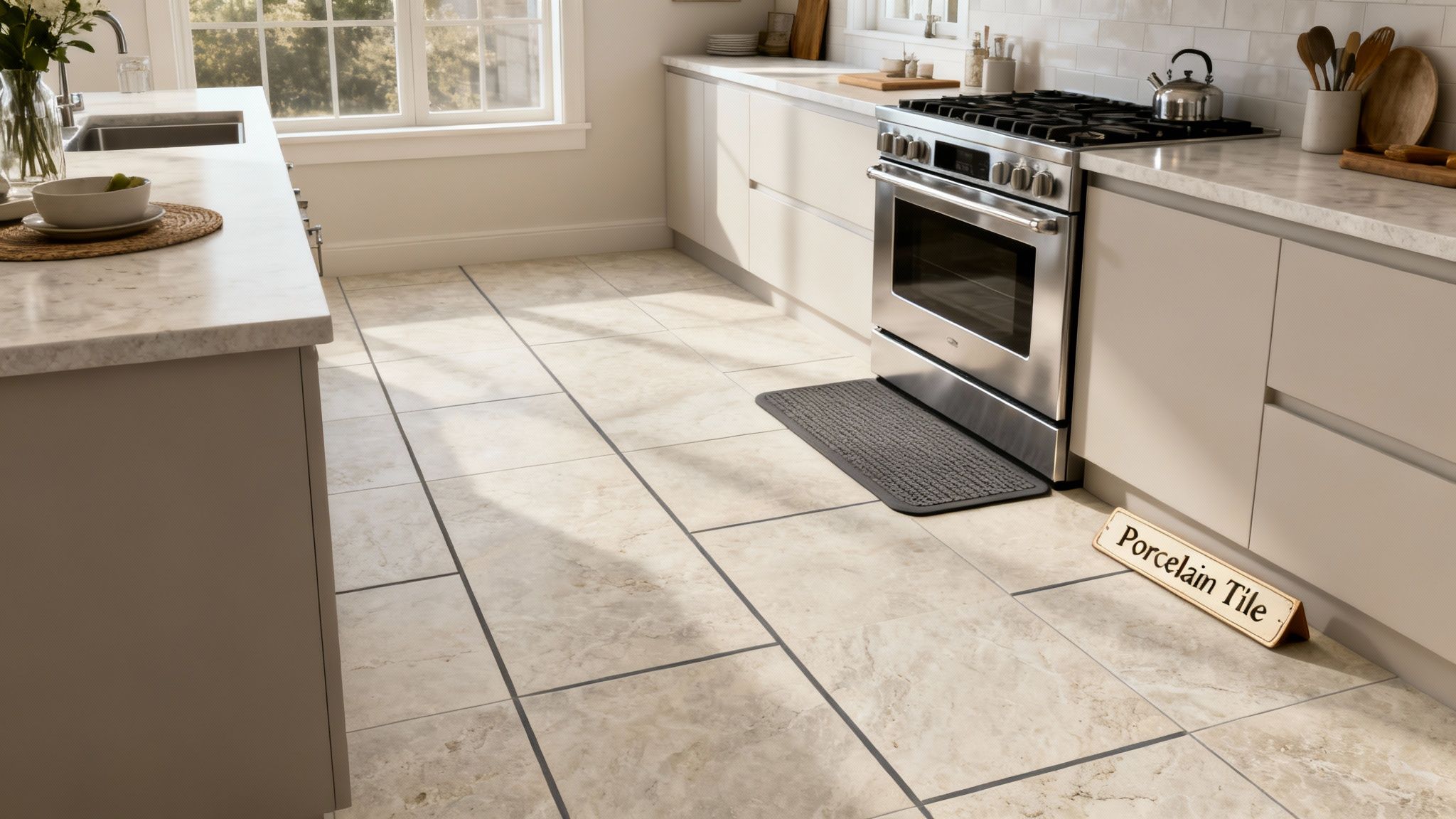
What does that mean for your kitchen? A floor that's virtually waterproof. Spills from cooking, splashes from the sink, or even a leak from the dishwasher are no match for porcelain. While other materials might warp, stain, or swell, porcelain just wipes clean. It’s this rock-solid resilience that explains why vitrified tiles like porcelain lead the global market, holding a 36.65% revenue share in 2024. You can read more about flooring market trends on grandviewresearch.com.
Beyond its moisture resistance, porcelain is also one of the hardest flooring options out there. It stands up to scratches from pet claws, scrapes from dragged furniture, and heavy foot traffic without showing wear. Drop a heavy pot? No need to worry about a dent.
What About the Downsides?
Of course, every material has its trade-offs. Two concerns we often hear from homeowners are the hardness underfoot and the hassle of cleaning grout lines. Porcelain is undeniably hard—great for durability, not so forgiving if you drop a glass. The easy fix? We suggest placing cushioned anti-fatigue mats in the high-traffic spots, like in front of the stove and sink, to provide comfort where you need it most.
And when it comes to grout? Forget the days of endlessly scrubbing stained, dingy lines.
The secret to a low-maintenance tile floor is using the right grout from day one. We insist on modern epoxy or urethane-based grouts for our installations. They are non-porous, stain-proof, and never need to be sealed, which keeps your floor looking brand new for years to come.
This one choice during installation turns a potential headache into a truly low-maintenance floor. The logic behind installing tile is pretty consistent, whether it's for a kitchen or a bathroom. For a deeper dive into tile varieties, check out our guide on choosing the best bathroom tile types.
The Best of Both Worlds: Style and Strength
Maybe the biggest draw for porcelain today is its incredible design flexibility. High-definition printing technology has gotten so good that porcelain can mimic nearly any material you can think of, and do it convincingly.
- Wood-Look Planks: Love the warmth of hardwood but need something that can handle a kitchen's spills and traffic? Wood-look porcelain is the answer.
- Natural Stone Elegance: Get the sophisticated look of marble, slate, or travertine without the high cost and demanding maintenance.
- Contemporary Solids & Patterns: From sleek, large-format solid tiles to bold geometric patterns, porcelain offers a limitless palette for any design vision.
This chameleon-like ability means you never have to choose between the look you want and the performance you need. You get a floor that’s both a showpiece and a workhorse—a perfect long-term investment for any busy kitchen.
Luxury Vinyl: The Smart, Stylish Choice for Modern Kitchens
Luxury Vinyl, whether in Plank (LVP) or Tile (LVT) form, has absolutely exploded in popularity, and for good reason. It's become the ultimate problem-solver for kitchen flooring. Forget the flimsy sheet vinyl you might remember from decades past; today's luxury vinyl is a different beast entirely, using high-definition printing and embossed textures to mimic wood and stone with shocking realism. You get that high-end look without the high-maintenance attitude.
It’s the perfect marriage of hardwood's warmth and the rugged resilience a busy kitchen demands. This blend of beauty and brawn makes it a top contender, especially in homes where spills, foot traffic, and daily life are part of the equation.
The Magic of Being 100% Waterproof
Here’s the single biggest advantage that puts luxury vinyl in a class of its own: it’s 100% waterproof. We’re not talking "water-resistant," which just means it can handle a splash for a little while. LVP and LVT are genuinely impervious to water. You could literally leave a plank sitting in a bucket of water for days, and it wouldn’t swell, warp, or fall apart.
For a kitchen, this is a total game-changer. It gives you complete peace of mind when it comes to sink overflows, dishwasher leaks, pet water bowls, or muddy boots. Your subfloor is safe from moisture damage, and you’re safe from the stress.
If you have kids or pets, this waterproof quality is liberating. It means you don't have to panic every time something spills. You can just live your life and enjoy your kitchen without constantly worrying about ruining the floors.
More Than Just Waterproof: Comfort and Durability
Beyond its ability to shrug off water, luxury vinyl brings a lot more to the table. It’s noticeably softer and warmer underfoot compared to tile, which makes a huge difference when you’re standing for long stretches while cooking or cleaning. Your back and joints will thank you. That little bit of give also means a dropped plate or glass has a better chance of surviving the fall.
The construction is tough, too. A strong, clear wear layer on top fights off scratches, scuffs, and stains, holding up beautifully to the chaos of a busy kitchen.
Installation is another area where LVP shines:
- Floating Floor System: Most products use a simple click-lock mechanism. This allows the floor to "float" over your subfloor without messy glues or nails.
- Less Prep, Less Mess: It can often go right over an existing hard surface, which means less time and dust from demolition.
- Lower Labor Costs: Because the installation is more straightforward, it generally costs less in labor than a traditional tile or hardwood job.
This combination of style, toughness, and value is why it’s taking over. The North American market for Luxury Vinyl Tile hit USD 7,446.08 million in 2024 and is expected to keep climbing through 2031. If you're curious about the numbers, you can dive into the LVT flooring market report on cognitivemarketresearch.com.
At the Kitchen Renovations Perfected showroom, we have a fantastic selection of premium LVP options. We can help you find a look that captures your vision perfectly and delivers the performance your family needs. Of course, it’s all backed by our expert installation and comprehensive warranty.
Making the Final Decision for Your Home and Lifestyle
Picking the best flooring for your kitchen goes way beyond just comparing materials on a spec sheet. The right choice is deeply personal and has to work for your home’s unique environment and your family's daily life. It’s about matching the material to the reality of your world—things like local climate, your building type, and even how often you cook are what truly matter.
What works perfectly in one home can be a disaster in another. Think about solid hardwood—it’s a beautiful, classic choice for a single-family home in a dry climate. But here in a humid, coastal area like Boca Raton? That same wood is at risk of expanding and warping from the constant moisture. Likewise, if you're in a condo, noise rules might push you away from tile and toward LVP or cork, which do a much better job of dampening sound for your neighbors below.
Tailoring the Choice to Your Lifestyle
The best way to get to the right answer is to think honestly about your day-to-day life. A little self-assessment goes a long way.
Ask yourself a few honest questions:
- Who really uses the kitchen? If you're a serious home chef who is on their feet for hours, the softer feel of LVP or engineered hardwood will be a lifesaver. If your kitchen is mostly for reheating leftovers, the hardness of tile probably won't bother you.
- Do you have kids or pets? Let's be real—spills and claws are part of life. A floor that's 100% waterproof and scratch-resistant, like Luxury Vinyl Plank, offers incredible peace of mind.
- What are your long-term plans? If you might sell in the next few years, the classic appeal of hardwood can be a real boost to your home's resale value. But if this is your forever home, the bulletproof durability of porcelain tile could be the smartest investment you make.
Your kitchen floor is the stage for your daily life. The best choice supports your activities, withstands your challenges, and complements your home's character without demanding constant worry or excessive maintenance.
This simple flowchart can help you visualize the thought process, especially when considering one of today's most popular, practical options.
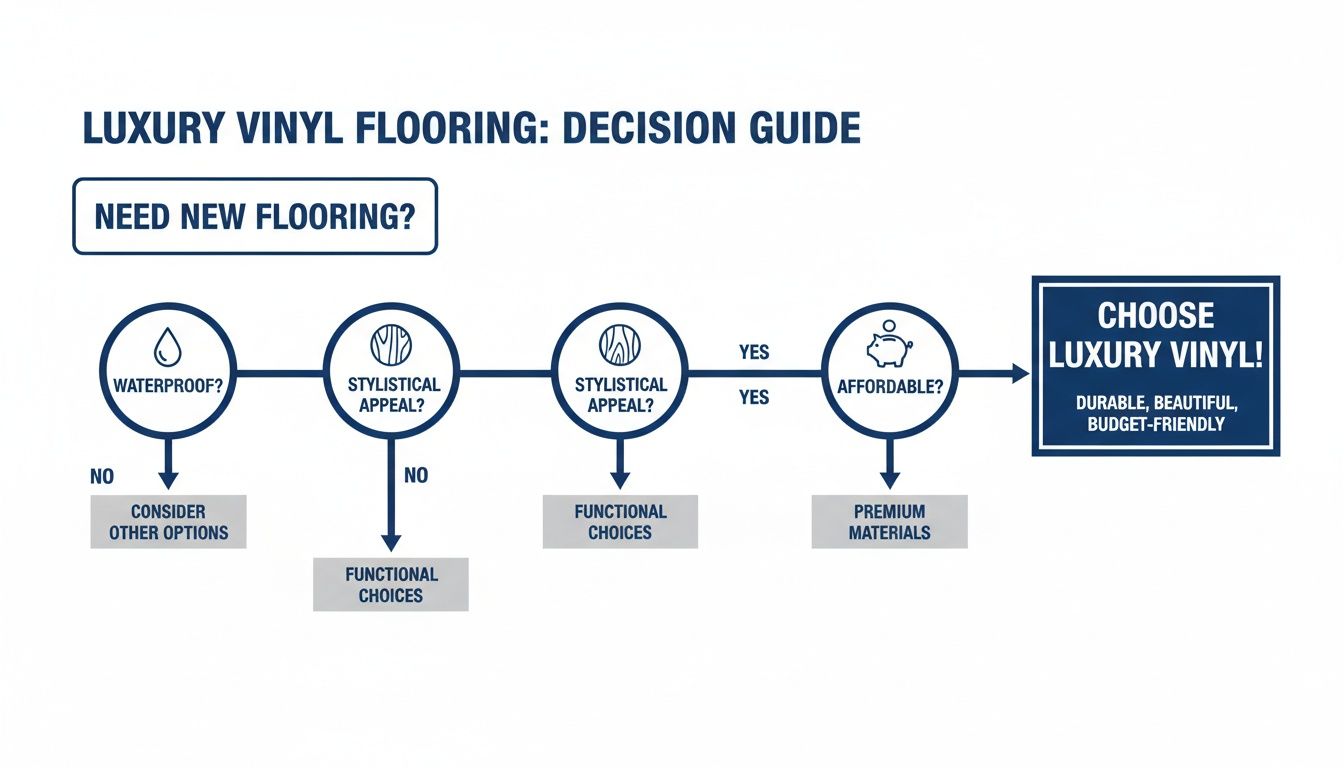
As you can see, when waterproofing, style, and budget are at the top of your list, Luxury Vinyl often stands out as the frontrunner.
Partnering with the Right Professionals
At the end of the day, even the most expensive material is only as good as the team that installs it. Working with an experienced crew is non-negotiable if you want your floor to perform well and last for decades. A true professional knows how to prep the subfloor correctly, use the right adhesives, and handle any unexpected issues that pop up. To make sure you’re in good hands, check out our guide that explains how to choose a kitchen remodeling contractor who can turn your vision into a reality.
At Kitchen Renovations Perfected, our complimentary design consultation is all about helping you navigate these decisions. We bring the showroom to you, so you can see and touch the materials in your home's actual lighting. We’ll help you land on a choice that not only looks incredible but is perfectly matched to your South Florida lifestyle—all backed by our expert installation and a comprehensive warranty.
Kitchen Flooring FAQs
When you're close to a decision, it's often the last few questions that make all the difference. Let's tackle some of the most common ones we hear from homeowners to help you finalize your choice with complete confidence.
What's a Truly Indestructible Kitchen Floor?
If you're looking for the toughest material out there, porcelain tile is it. No question. Its incredibly dense structure fights off scratches, stains, and water like nothing else. For a busy kitchen with constant foot traffic, dropped pans, and inevitable spills, it's the undisputed champion.
That said, Luxury Vinyl Plank (LVP) is a very strong contender. It might not have the same brute strength as porcelain, but it’s fantastic at resisting scratches and has one huge advantage: it's 100% waterproof.
Are Hardwood Floors Really a Good Idea in a Kitchen?
Absolutely, as long as you know what you're getting into. Hardwood, whether solid or engineered, adds a warmth and classic beauty that's hard to beat, and it definitely boosts your home's resale value.
The catch? You have to be diligent. A top-notch, professional sealant is non-negotiable to fend off splashes. Spills need to be wiped up right away to avoid any chance of water damage. Choosing a harder species like oak or hickory is also a smart move to minimize dings and dents from dropped items.
How Much Time Will My Flooring Choice Add to My Renovation?
This is a big one. Your flooring can have a major impact on the project schedule. For instance, putting in porcelain tile isn't a one-and-done job; it takes several days. There's the initial setting of the tile, waiting for the mortar to cure properly, and then coming back to grout and seal.
On the other hand, a floating LVP floor can often be laid in just a day. It's crucial to factor this into your planning. We map out these dependencies in detail, but you can get a great overview by looking at a standard kitchen renovation timeline.
The right floor is about more than just a material—it's about how you live. Think honestly about your daily life. Do you have pets skittering around? Kids dropping sippy cups? Are you a passionate cook who makes a glorious mess? Your lifestyle will always guide you to the perfect choice.
Ready to see these options for yourself? The design experts at Kitchen Renovations Perfected are ready to walk you through our collection at our Boca Raton showroom. Schedule your complimentary design consultation today!