

Choosing the right shower tile really boils down to three things: durability, water resistance, and your personal style. You’re essentially picking armor for your shower walls and floor—it needs to look good and stand up to a daily deluge.
For most homeowners I work with, porcelain is the go-to choice. It's almost completely waterproof and tough as nails. But don't count out ceramic; it's a bit easier on the wallet and opens up a huge world of design possibilities.
Making Your First Big Decision on Shower Tile
Picking a shower tile isn't as simple as grabbing a color swatch you love. It’s the first domino in a long line of decisions that will shape the look, feel, and even the daily upkeep of your new bathroom. The material you choose will determine your cleaning routine for years to come, and the tile size can trick the eye, making a tight space feel airy or a large one feel more intimate.
This initial choice really does set the tone for everything else, from the grout color you select to the finish on your shower fixtures. It’s where raw function meets your creative vision. As you start planning, it's also a good time to think about how other major elements, like custom glass shower enclosures, will tie into the design, as they can influence your tile selection from the get-go.
Balancing Durability, Style, and Budget
At the heart of it, your decision will always be a balancing act between these three pillars. Getting a handle on how they work together is the first real step to a project you'll love.
How Will It Perform? Different materials have completely different relationships with water and wear. Porcelain tile is the undisputed champion of durability and water resistance, making it a fantastic long-term investment.
What’s Your Vision? Now for the fun part. Are you drawn to the sleek, clean look of large-format tiles, or do you love the intricate patterns you can create with mosaics? If you're feeling stuck, browsing through a gallery of bathroom shower tile ideas is a great way to see what sparks your interest.
What's the Bottom Line? Tile prices can swing wildly. It’s so important to ground your dream design in financial reality. Always remember to factor in the cost of installation, waterproofing, grout, and sealer—not just the tile itself.
This decision-making process is all about finding that sweet spot where practicality, aesthetics, and your budget align.
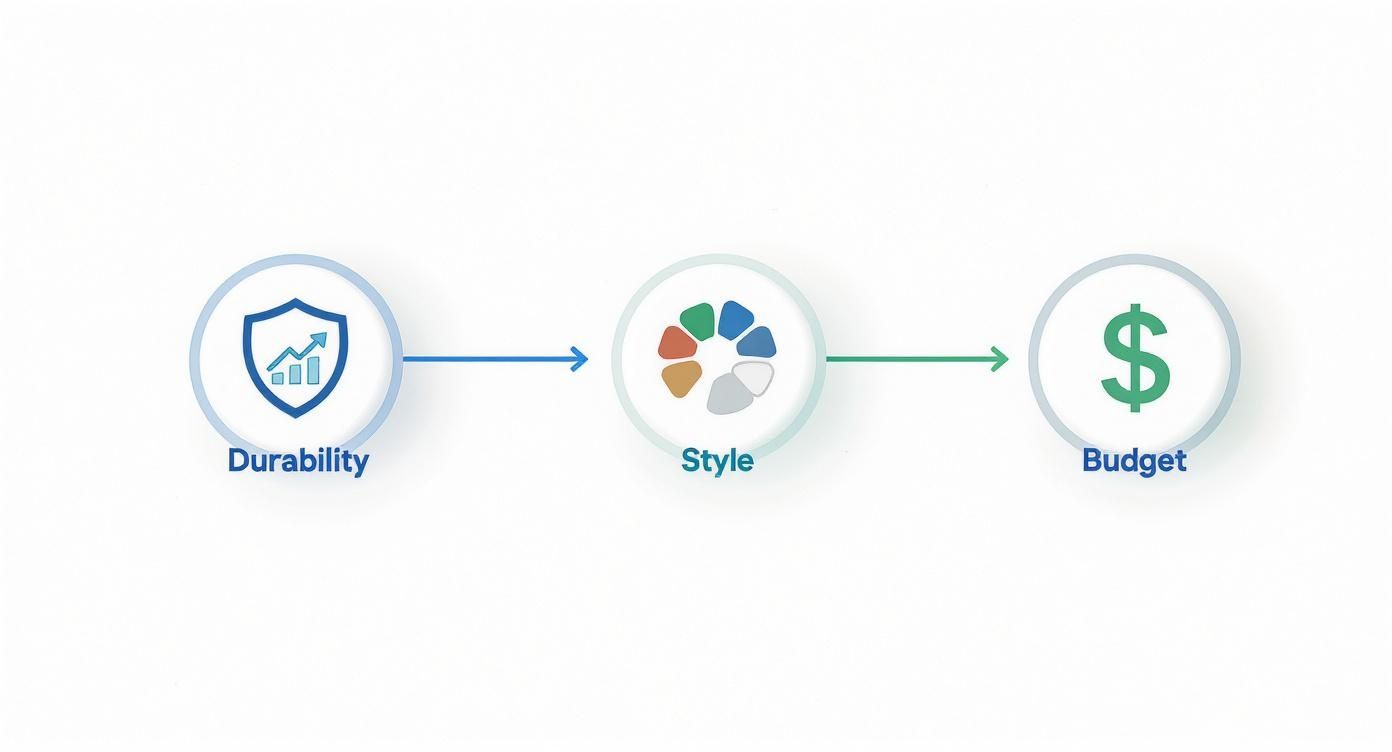
As you can see, the perfect choice isn't about finding the "best" tile overall, but about finding the best tile for your specific project, where your budget allows for a style you love in a material that will last.
A Practical Guide to Shower Tile Materials
When it comes to choosing tile for your shower, the material you pick is arguably the most critical decision you'll make. This isn't just about looks—it’s about standing up to a pretty harsh environment. Your shower sees constant moisture, temperature swings, and a whole lot of soap and cleaning products, so only certain materials are truly up to the task.
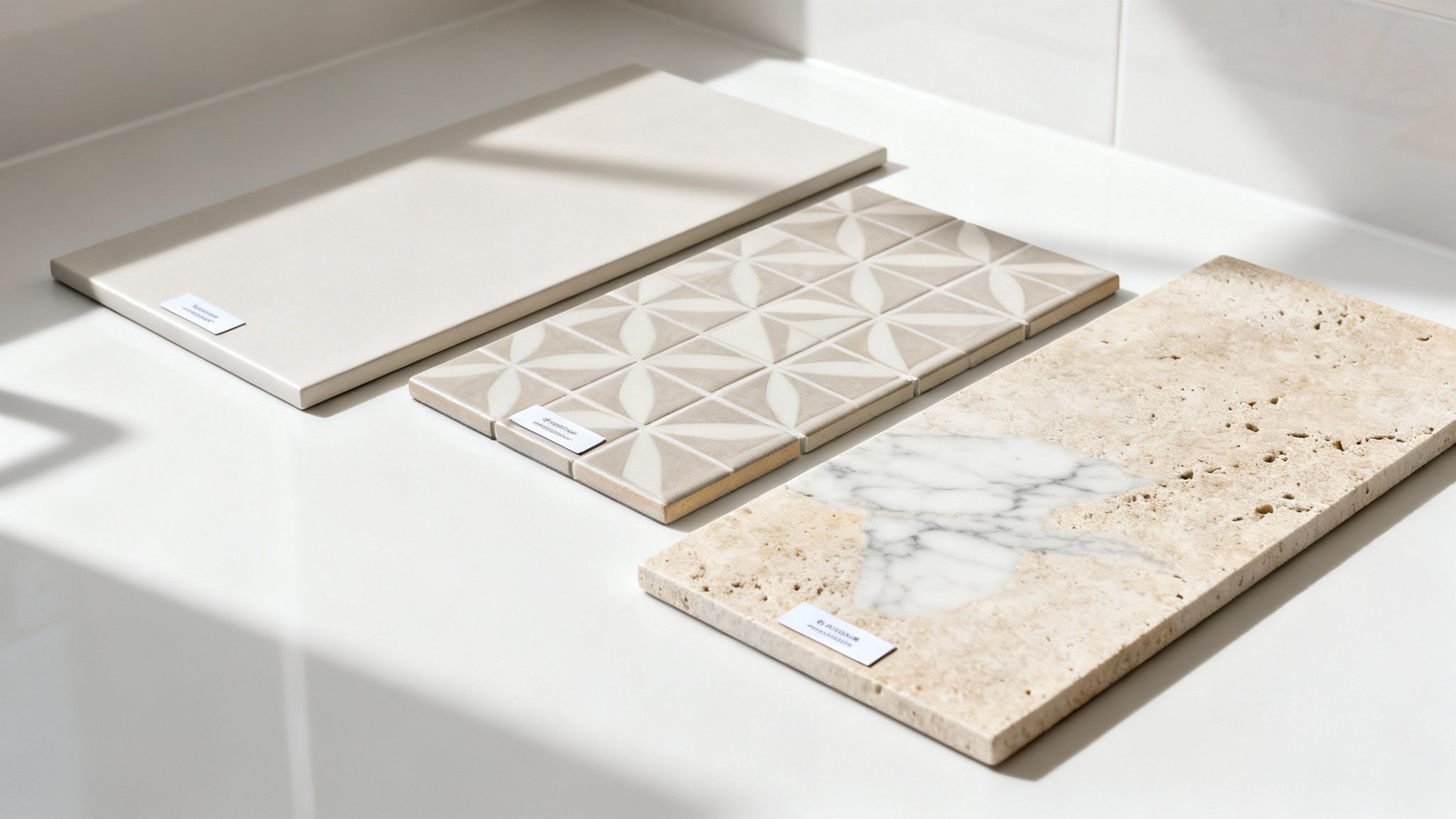
Think of the tile material as the foundation of your entire project. Get this part right, and you're setting yourself up for a beautiful, long-lasting shower. Get it wrong, and you could be facing headaches down the road.
The Workhorse: Porcelain
If you ask any professional what the go-to material for a shower is, they’ll almost always say porcelain. There's a good reason for that. It’s made from a finer, denser clay and fired at much higher temperatures than standard ceramic, which makes it incredibly tough and non-porous.
What does that mean for your shower? Well, most porcelain has a water absorption rate of less than 0.5%. In simple terms, it's practically waterproof. This is a huge deal because it means water isn't going to seep through and create a hidden mold problem behind your walls. The tile industry is booming, largely because homeowners demand high-performance materials like this for wet areas.
Porous materials in a shower are a recipe for long-term problems. The core benefit of porcelain isn't just its look—it's the peace of mind that comes from knowing your shower is protected against moisture intrusion from the very start.
The Versatile Contender: Ceramic
Coming in at a close second is the ever-popular ceramic tile. It's often more budget-friendly than porcelain and comes in an almost endless variety of colors, shapes, and patterns. If you've got a specific design in your head, there's a good chance you can find a ceramic tile that brings it to life.
Now, it is naturally more porous than porcelain, but a high-quality glaze acts as a tough, protective shield, making it a perfectly fine choice for shower walls. If you want to dig deeper into the specifics, our guide on the different bathroom tile types is a great resource. One small thing to keep in mind: if you chip a ceramic tile, the color of the clay underneath (usually a reddish-brown) will show. Porcelain, on the other hand, typically has its color all the way through the body.
The Luxury Option: Natural Stone
For that high-end, spa-like retreat, nothing quite beats the beauty of natural stone. Materials like marble, slate, and travertine offer an organic, timeless elegance that manufactured tiles just can't replicate. Every single piece is unique, which means your shower will be a true one-of-a-kind installation.
But all that beauty comes with a catch: maintenance. Natural stone is, by its very nature, porous. It absolutely must be sealed regularly to protect it from water damage, staining, and even etching from certain cleaners. If you’re not ready to commit to that upkeep, a stone shower can quickly turn from a dream into a disappointment.
Material Maintenance at a Glance
| Material | Water Resistance | Maintenance Level | Best For |
|---|---|---|---|
| Porcelain | Excellent | Low | Anyone wanting maximum durability with minimal fuss. |
| Ceramic | Good (when glazed) | Low to Medium | Budget-conscious projects with specific design goals. |
| Natural Stone | Poor (requires sealing) | High | Homeowners committed to regular maintenance for a luxury look. |
At the end of the day, the "best" material isn't just about what looks prettiest in the showroom. It’s the one that fits your lifestyle, your budget, and how much time you're really willing to spend on upkeep. A little honesty with yourself now will ensure you choose a shower tile you'll be happy with for years.
How Tile Size and Shape Impact Your Shower
Choosing the right tile size and shape goes way beyond aesthetics. It's one of those decisions that has a real, tangible effect on your daily life—think cleaning, safety underfoot, and even how big your shower feels. Getting this right can be the difference between a low-maintenance, spa-like retreat and a shower that feels cramped and is a constant chore to keep clean.
When I walk clients through how to choose shower tile, this is a conversation we spend a lot of time on. It’s about balancing the look you want with the practicality you need.
Large Format Tiles for Walls
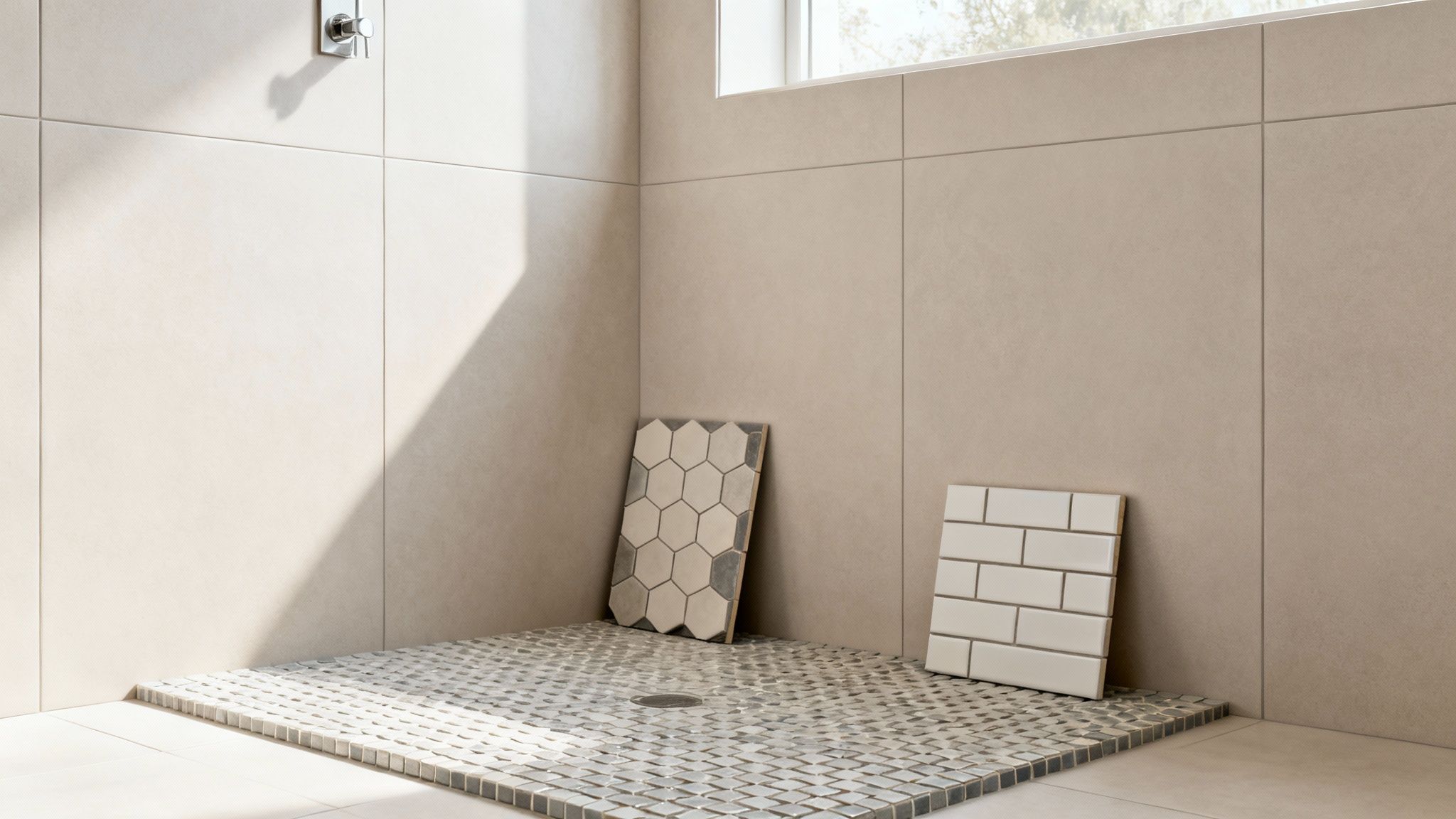
For shower walls, my go-to recommendation is often large format tiles. We're talking about those popular 12x24 inch slabs or even bigger. The reason is simple: fewer grout lines.
Fewer grout lines mean a cleaner, more seamless look that can visually expand a small shower. But more importantly, it means way less scrubbing to deal with mold and mildew. That’s a win for both style and sanity. The uninterrupted surface creates a clean, monolithic backdrop that really makes your fixtures or a feature niche pop.
Pro Tip: If you're going big, your walls have to be perfectly flat. Any bows or dips in the wall will cause "lippage," where the edge of one tile sticks out higher than its neighbor. A good installer will spend the time to prep the surface to avoid this.
Small Tiles for Shower Floors
While large tiles are king on the walls, the opposite is true for the floor. When it comes to the shower pan, smaller is almost always better. Mosaics—usually two inches square or smaller—are the standard for a couple of very good reasons.
- Safety First: All those extra grout lines create a natural texture. In a wet, soapy environment, that texture provides the grip you need to prevent slips.
- Proper Drainage: A shower floor needs a slight, consistent slope to guide water to the drain. Small, flexible mosaic sheets can easily conform to this slope, preventing water from pooling in flat spots.
This isn’t just my opinion; it’s a long-standing industry practice backed by how tiles are made and sold. While homeowners love large tiles for easy-to-clean walls, safety and function keep smaller mosaics as the top choice for floors. You can see how these preferences shape the ceramic and natural stone tile markets.
The Influence of Tile Shape
Ready to move beyond basic squares and rectangles? Unique shapes are where you can really inject some personality.
Classic subway tiles can be laid in a herringbone pattern for a dynamic feel or stacked vertically for a more modern, spacious look. Hexagon and penny tiles are perfect for adding a bit of vintage charm or a playful vibe, especially on the floor or in a niche.
Just be aware that creativity can come with a cost. The more complex the shape and pattern, the more intricate the cuts. A fish scale or hexagon pattern requires significantly more labor and skill from your tile setter than a simple grid, and that will absolutely be reflected in the installation price.
The Hidden Essentials: Grout and Waterproofing
It's a tough pill to swallow, but even the most gorgeous shower tile is doomed to fail without the right grout and waterproofing. These are the unsung heroes of your shower, the critical components working behind the scenes to protect your home. Thinking about them isn't just an afterthought—it's a foundational step in choosing your tile.
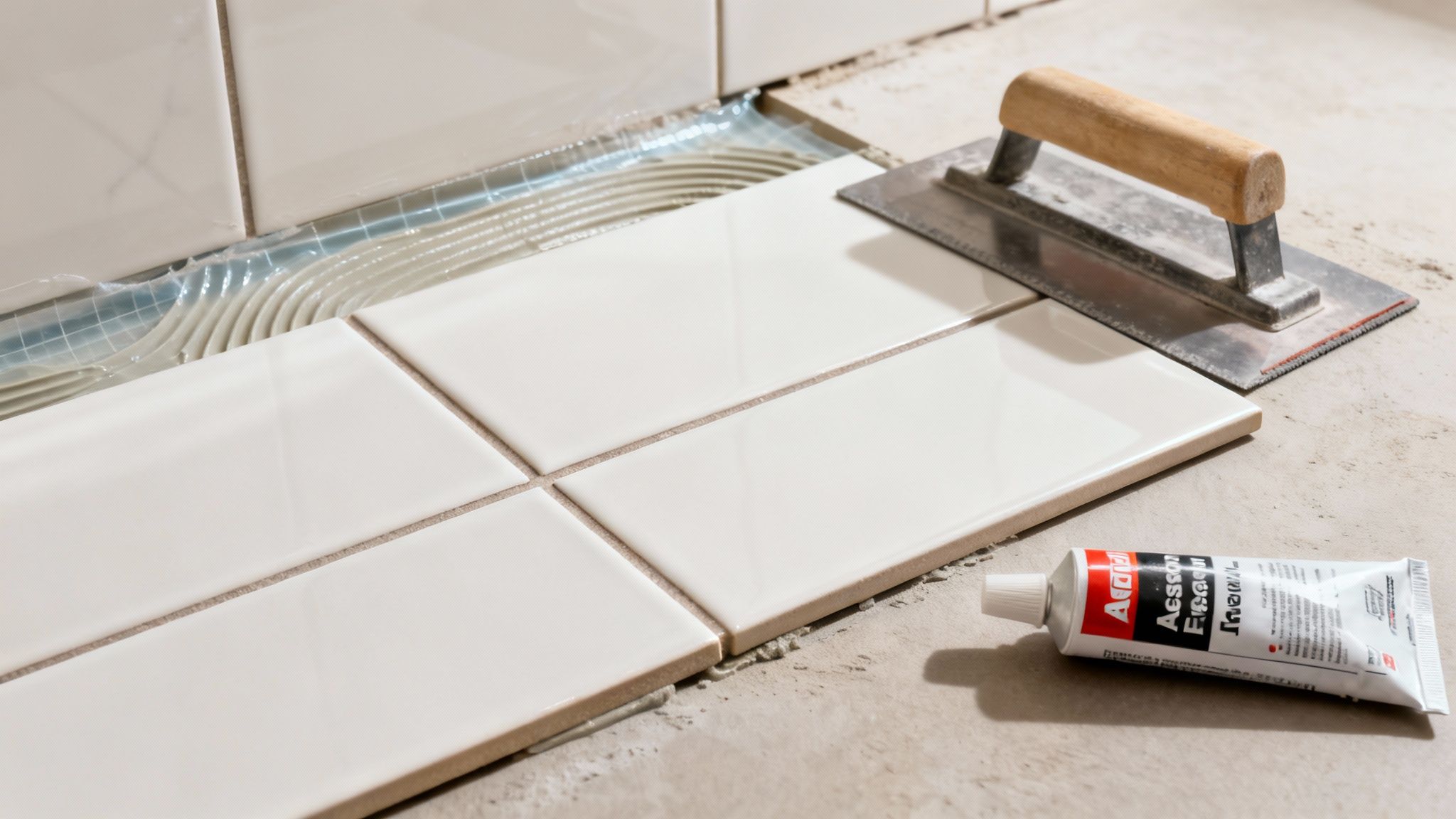
Let's start with grout. It’s not just the stuff that fills the gaps; it’s a structural and aesthetic component that can completely change the look of your design. Forget the old, crumbly mixtures that stained if you looked at them wrong.
Modern grout options are a world apart.
Choosing the Right Grout
Your grout choice really boils down to two things: performance and color. On the performance side, newer formulations like epoxy and urethane grouts are absolute game-changers. Unlike traditional cement-based grout, they are virtually non-porous.
This means they offer incredible resistance to stains, mold, and mildew—a huge advantage in a wet, humid space like a shower. While they cost a bit more and can be trickier to install, the low-maintenance payoff is well worth it for most homeowners.
Then there’s the color decision. This choice dramatically influences the final look:
- Matching Grout: Using a grout color that closely matches your tile creates a seamless, monolithic appearance. This can make the space feel larger and keeps the focus entirely on the beauty of the tile itself.
- Contrasting Grout: A darker or colored grout against a lighter tile (think classic black grout with white subway tile) makes the tile pattern pop. This highlights the shape of each tile and adds a bold, graphic design element to your shower.
The Non-Negotiable: Your Waterproofing Membrane
Grout is important, but what’s behind the tile is even more critical. A robust waterproofing membrane is your shower’s last and most important line of defense against water getting into your walls. A single, tiny leak can lead to thousands of dollars in hidden structural damage from rot and mold.
A waterproof shower isn’t just about the tile; it’s about creating a completely sealed, tank-like system behind it. This is one corner you can absolutely never, ever cut.
Modern waterproofing systems often involve liquid-applied membranes painted over cement backer board or pre-formed foam systems that are inherently waterproof. This crucial layer stops any moisture that might eventually seep through the grout from ever reaching the wooden studs of your home. If you want to dive deeper into protecting your home from water damage, the ultimate guide to buying waterproof flooring offers some great insights that apply here, too.
While DIY tiling is certainly possible for some projects, ensuring the waterproofing is perfect is a job best left to the pros. Proper shower and tub installation requires real expertise to manage slopes, seams, and corners flawlessly. Your tile is the beautiful face of the shower, but the waterproofing system is its functional heart.
Getting Real About Your Shower Tile Budget
A beautiful shower renovation starts with a smart, realistic budget. It’s incredibly easy to get swept up by a gorgeous tile in the showroom, but that price tag is just the first piece of the puzzle. The true cost of the project goes far beyond what you pay per square foot.
Getting a handle on the full scope of expenses right from the start is the best way to avoid sticker shock later. Think of your budget as the foundation of your project—just as critical as the design itself.
The Hidden Costs Behind the Walls
The price of your tile is the most obvious line item, but it often makes up less than half of your total spend. To build a shower that’s not just beautiful but also built to last, you need a whole system of supporting materials.
Don't forget to factor these essentials into your calculations:
- The Foundation: You'll need a stable, water-resistant base like cement backer board or a modern foam board system. This is what your tile actually sticks to.
- Waterproofing: This is the one area you absolutely cannot skimp on. Whether it's a paint-on liquid membrane or a sheet-style system, this layer is what protects your home from costly water damage.
- Adhesives & Grout: A high-quality thin-set mortar is crucial for a strong bond. And consider upgrading to a performance grout, like an epoxy, which will save you headaches by resisting stains and mold down the road.
- Sealers: If you've chosen a beautiful natural stone or are using traditional cement-based grout, a good sealer is a must to guard against moisture and stains.
These behind-the-scenes materials can add up fast, so make sure they have a place in your budget from day one.
Don't Underestimate Professional Labor
Unless you’re a seasoned DIY pro with serious tiling skills, the cost of professional installation will likely be your single biggest expense. Labor rates can swing dramatically depending on where you live, the skill of your installer, and the complexity of your design. For example, a tricky herringbone pattern requires far more time and precision—and therefore costs more—than a straightforward grid layout.
The demand for high-quality, water-resistant surfaces is booming. In 2024, the ceramic tile market was valued at a staggering USD 200.81 billion, and it’s expected to nearly double by 2034. This shows just how much homeowners value durable materials and expert installation. You can dig deeper into these numbers and learn about the ceramic tiles market projections on Precedence Research.
Your best move is to get at least three detailed quotes from reputable local tile setters. This gives you a realistic feel for labor costs in your area and helps you spot a fair price for quality work.
When you compare bids, look for itemized details. A good quote will break down the costs for demolition, prep work, installation, and cleanup. This transparency ensures you know exactly what you’re paying for and helps you avoid surprise charges popping up mid-project.
Got a Few Lingering Questions About Shower Tile?
Even when you think you’ve got it all figured out, a few last-minute questions always seem to pop up before you pull the trigger on your tile order. Getting these final details right can be the difference between a smooth project and a costly headache. Let's run through some of the most common things homeowners ask me.
Think of this as our final chat before you commit. These are the practical, real-world answers that will give you that last bit of confidence to move forward.
Can You Put Floor Tile on Shower Walls?
Absolutely. In fact, it’s a great design trick. Floor tiles are built to be tough—they can handle heavy foot traffic, so they’re more than strong enough to hang out on your shower walls for a lifetime.
Using the same tile on the floor and walls is a fantastic way to create a clean, seamless look. It can make a small shower feel much more spacious and unified.
Just remember, this is a one-way street. You can never use a wall-only tile on a shower floor. Wall tiles simply aren't made to be walked on and don't have the right texture for slip resistance, which is a serious safety issue in a wet area.
What Is a PEI Rating and Why Does It Matter?
When you’re looking at porcelain or ceramic tiles, you’ll probably come across a PEI rating. This is a scale from the Porcelain Enamel Institute that tells you how well a tile's surface holds up to wear and tear. It’s a super simple way to know if a tile is right for the job.
Here’s a quick breakdown:
- PEI 1: Wall use only. No feet allowed.
- PEI 2: Good for light traffic, like a bathroom floor where you're mostly barefoot or in slippers. Perfect for shower walls.
- PEI 3: The sweet spot for most homes. It's ideal for residential floors, including busy bathroom and shower floors.
- PEI 4: Tough enough for heavy home traffic or even some light commercial use.
- PEI 5: Built for heavy-duty commercial spaces (think airports and malls).
For your shower floor, stick with a tile that has a PEI rating of 2 or 3. This ensures it can handle daily use and scrubbing without looking worn out.
Don't just gloss over the PEI rating. It's a straightforward number that tells you if that gorgeous tile you love is actually strong enough for your shower floor. It's a simple check that can save you from a big mistake.
How Much Extra Tile Should I Really Buy?
This is probably the most important question you can ask before placing an order. The golden rule is to buy 10-15% more tile than your measurements call for. This isn't just to have leftovers; this "overage" is a non-negotiable part of the job.
Here’s where that extra tile goes:
- Cuts & Waste: Your installer will have to cut tiles to fit around the edges, corners, and your shower niche. This always creates unusable scraps.
- Oops Moments: Mistakes happen. A tile gets dropped, a cut goes wrong. Having extras on hand means a small slip-up won't bring the whole project to a halt while you scramble to find more.
- Future-Proofing: Tile styles get discontinued all the time. Stashing a box of your tile in the attic is your insurance policy for the future. If a tile cracks five years from now, you’ll have a perfect match ready to go.
A quick tip: if you're planning a more complex pattern like a herringbone or a diagonal layout, you'll need more cuts. For those, I’d bump your overage up to 15-20%. Trust me, it’s far better to have a few extra tiles left than to be one short.
Feeling confident about your tile choices but need an expert to bring your vision to life? The team at Kitchen Renovations Perfected offers concept-to-completion remodeling services, ensuring every detail of your new shower is installed flawlessly. Start with a complimentary consultation today!