


Before you even think about picking out tile or looking at new refrigerators, every successful kitchen remodel starts with two fundamental questions: What do I really need this new kitchen to do? and What can I realistically spend?
This isn't the glamorous part, I know. But getting this foundation right is the single most important thing you can do to ensure your project stays on track, on budget, and results in a space you'll love for years to come.
Defining Your Kitchen Remodel Vision and Budget
Think of this early stage as creating a roadmap for your renovation. Without a clear destination (your vision) and a full tank of gas (your budget), you’re bound to get lost. You might overspend, make compromises you’ll later regret, or end up with a kitchen that still doesn’t solve your daily frustrations. Let's get it right from the start.
Separate Must-Haves from Nice-to-Haves
First, let's get practical. Grab a notebook and walk through your current kitchen. What drives you crazy every day? Is it the complete lack of counter space for meal prep? The outdated oven that burns everything? A layout that forces you to walk a marathon just to make coffee?
Jot it all down, then split your list into two simple columns:
- Must-Haves: These are your non-negotiables. They’re the core reasons you’re even doing this. Think things like "more storage for pots and pans," "durable countertops that don't stain," or "a functional island where the kids can do homework."
- Nice-to-Haves: This is the fun stuff, the dream list. Maybe it’s a high-end espresso machine, a fancy wine fridge, or that stunning quartzite waterfall island you saw online.
This exercise isn't about crushing your dreams; it's about establishing priorities. When it's time to make tough budget decisions down the road—and it always is—you'll know exactly where you can cut back without sacrificing the essential improvements you need.
Establishing a Realistic Financial Plan
With a clear vision, it's time to talk money. A kitchen remodel is a major investment, and the costs can swing wildly depending on the scope of work, your home's value, and the level of finishes you choose.
Here in Boca Raton, labor rates and material costs can be higher, so it pays to have a solid grasp of the numbers from the outset. This graphic gives you a quick snapshot of what to expect.

Nationally, the average kitchen remodel falls somewhere between $25,000 and $50,000. On a square-foot basis, you can expect to spend anywhere from $75 to $250. While that’s a big range, the good news is that it’s an investment that pays you back. The average project recoups about 59% of its cost when you sell your home.
Expert Insight: I can't stress this enough—always build a 15-20% contingency fund into your total budget. It’s almost a guarantee that you'll uncover something unexpected once the walls are opened up, like old plumbing or funky wiring. That buffer will be a lifesaver, keeping a small surprise from becoming a project-derailing disaster.
Kitchen Remodel Budget Allocation Estimator
So, where does all that money go? It's not just about the shiny new appliances. Here's a typical percentage breakdown to help you see how a budget is usually allocated. Use it as a starting point to plan your own spending.
| Expense Category | Typical Budget Allocation (%) | Notes for Boca Raton Homes |
|---|---|---|
| Cabinetry & Hardware | 25-35% | Custom or semi-custom cabinets are popular here; high-end hardware can significantly impact this line item. |
| Countertops | 10-15% | Quartz and quartzite are top choices for their durability and luxe look, often commanding a higher price. |
| Appliances | 10-15% | High-end, integrated appliance packages are common in luxury homes, so this percentage can easily climb. |
| Labor & Installation | 15-20% | Skilled labor rates in South Florida are a key factor; this covers everything from demo to finishing. |
| Flooring | 5-7% | Porcelain tile and luxury vinyl plank are popular for handling humidity and beach sand. |
| Lighting & Electrical | 5-10% | Expect to update wiring to current code. Layered lighting (recessed, pendant, under-cabinet) is a must. |
| Backsplash | 3-5% | A great place to add a pop of personality without breaking the bank. |
| Plumbing & Fixtures | 3-5% | Includes the sink, faucet, and any plumbing work needed to move supply lines. |
| Permits & Design Fees | 2-4% | Varies by municipality but is a required cost. May be bundled with your contractor's fees. |
| Contingency Fund | 15-20% | Your safety net for the unexpected. Do not skip this! |
This table is a guide, and your final numbers will shift based on your specific project priorities. For a more comprehensive look at budgeting, check out our in-depth guide to the average cost of a kitchen renovation. Having a well-defined financial plan is the best tool you have to prevent stress and keep your project running smoothly.
Designing a Functional and Stylish Kitchen Layout
Alright, you’ve wrestled with the big picture and set your budget. Now comes the fun part: turning those dreams into a workable blueprint. This is where we get down to the nuts and bolts, creating a floor plan that will be the foundation for everything that follows. Think of it less like picking out paint chips and more like being the architect of your own space.
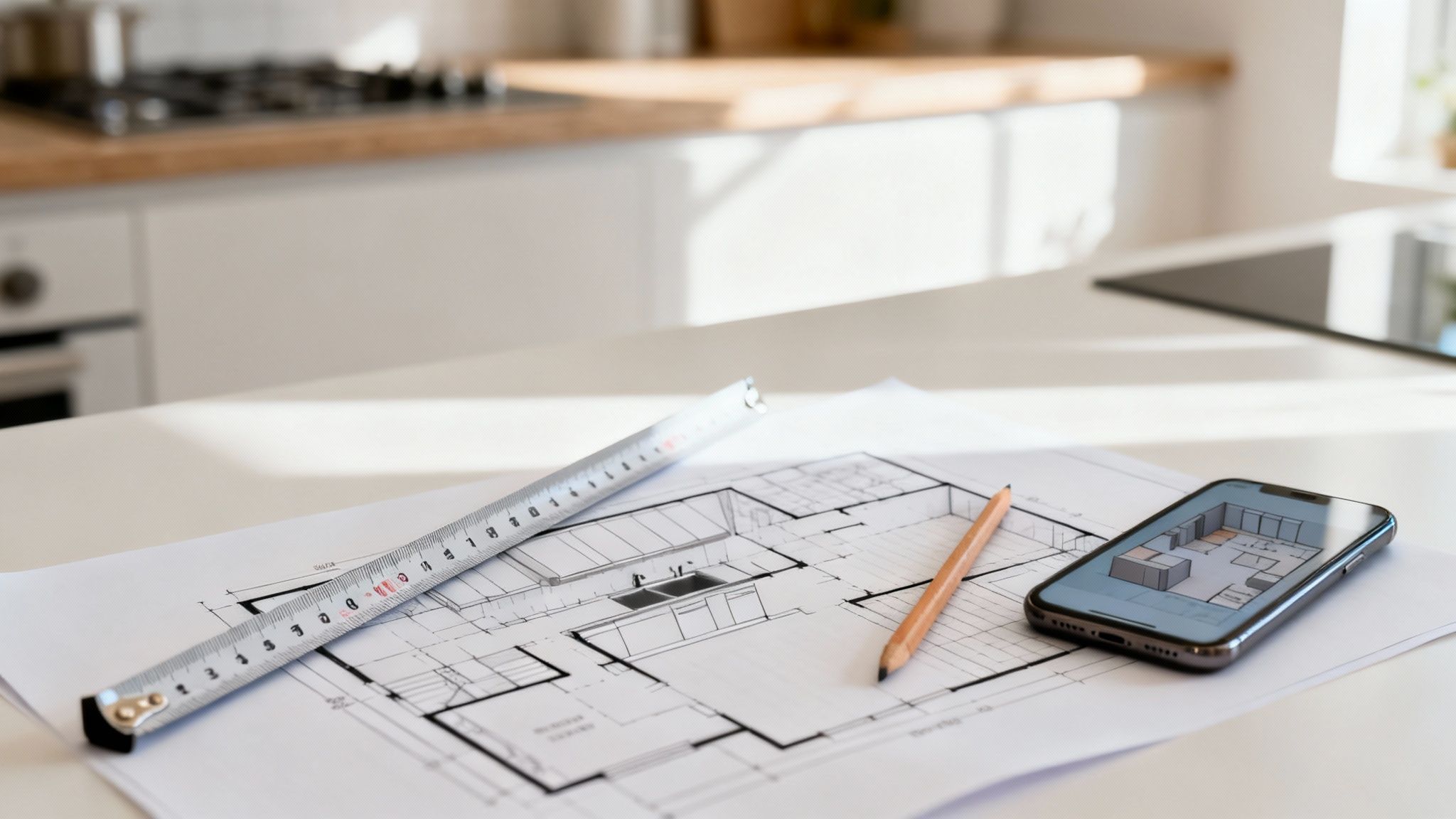
First things first, you need to measure. And I mean really measure. Grab a good tape measure and get precise. Don't eyeball anything. You'll need the length of every wall, the ceiling height, and the exact size and placement of all your windows and doors. Be sure to note where your current plumbing and electrical lines are—the center of the sink drain, every outlet, the gas hookup.
These details are gold for your designer and contractor. Trust me, being off by even half an inch can create massive headaches and delays when it's time for installation.
The Kitchen Work Triangle Reimagined
You've probably heard about the classic "kitchen work triangle." It’s the old-school design rule that connects your sink, fridge, and stove in an efficient triangular path. The idea is to keep the cook moving smoothly without taking a million extra steps.
While it’s still a solid concept, today’s kitchens are so much more than just a place to cook. They’re the hub of the home—where homework gets done, guests gather, and morning coffee is brewed. That’s why we now think in terms of "work zones." You might have a dedicated baking station, a coffee bar, or a separate prep sink on an island.
A huge part of this process is learning how to plan a room layout in a way that truly serves your life. It’s about more than just a triangle; it’s about how your family actually moves and lives in the space.
Pro Tip: Try this simple exercise. Close your eyes and walk through making a meal in your proposed layout. Go from the fridge to the sink, then to the counter to chop, then over to the stove. Is it a clear path? Or are you constantly having to sidestep an island or a poorly placed trash pull-out? This little mental walkthrough can expose major functional flaws before you’ve spent a dime.
Choosing Your Ideal Kitchen Layout
The shape and size of your room are going to be the biggest factors in deciding which layout works best. In Boca Raton, open-concept living is king, so it’s crucial that the kitchen flows beautifully into the living or dining room. Each layout has its own pros and cons.
Here are some of the most common configurations we work with:
- The L-Shape Layout: A real workhorse. This layout uses two adjacent walls, leaving the other side of the kitchen open. It’s fantastic for adding a dining table or an island and keeps the space from feeling walled-in.
- The U-Shape Layout: Built along three walls, this design gives you an incredible amount of counter space and storage. It creates a very efficient work area and is perfect for larger kitchens where you might have more than one cook.
- The Galley Layout: Think of a chef's kitchen. With two parallel runs of cabinets, it's a super-efficient corridor for cooking. We see this a lot in smaller homes and condos. The only downside is it can feel tight if it’s a major walkway for the rest of the house.
- The Island Layout: An island is easily the #1 most-requested feature in a remodel. It adds prep space, storage, and a casual spot for seating. It works perfectly with an L-shaped or single-wall kitchen to create a social, engaging hub.
- The Peninsula Layout: Like an island, but it's attached to a wall at one end. A peninsula is a clever way to get the benefits of an island—extra seating and workspace—without needing a massive amount of floor space.
At the end of the day, the right layout is the one that just feels right for your lifestyle. Think beyond cooking. Where will the kids sit to do homework? How will guests move through the space during a party? A layout that supports your daily rhythm is what makes a good kitchen truly great.
Selecting Materials, Appliances, and Finishes
Now for the fun part. This is where your vision really starts to take shape, and your kitchen’s unique personality comes alive. Choosing the materials, appliances, and finishes is easily the most exciting phase of planning. It’s the step where tactile surfaces, functional hardware, and gleaming appliances finally come together to create the look you’ve been dreaming of.
But this stage is about more than just picking what looks good; it’s about making smart, durable choices that fit your lifestyle and your budget. Every single selection, from the countertop where you'll prep countless meals to the cabinet pulls you'll touch a thousand times, contributes to the overall success and longevity of your new space.
Countertops and Cabinetry: The Backbone of Your Kitchen
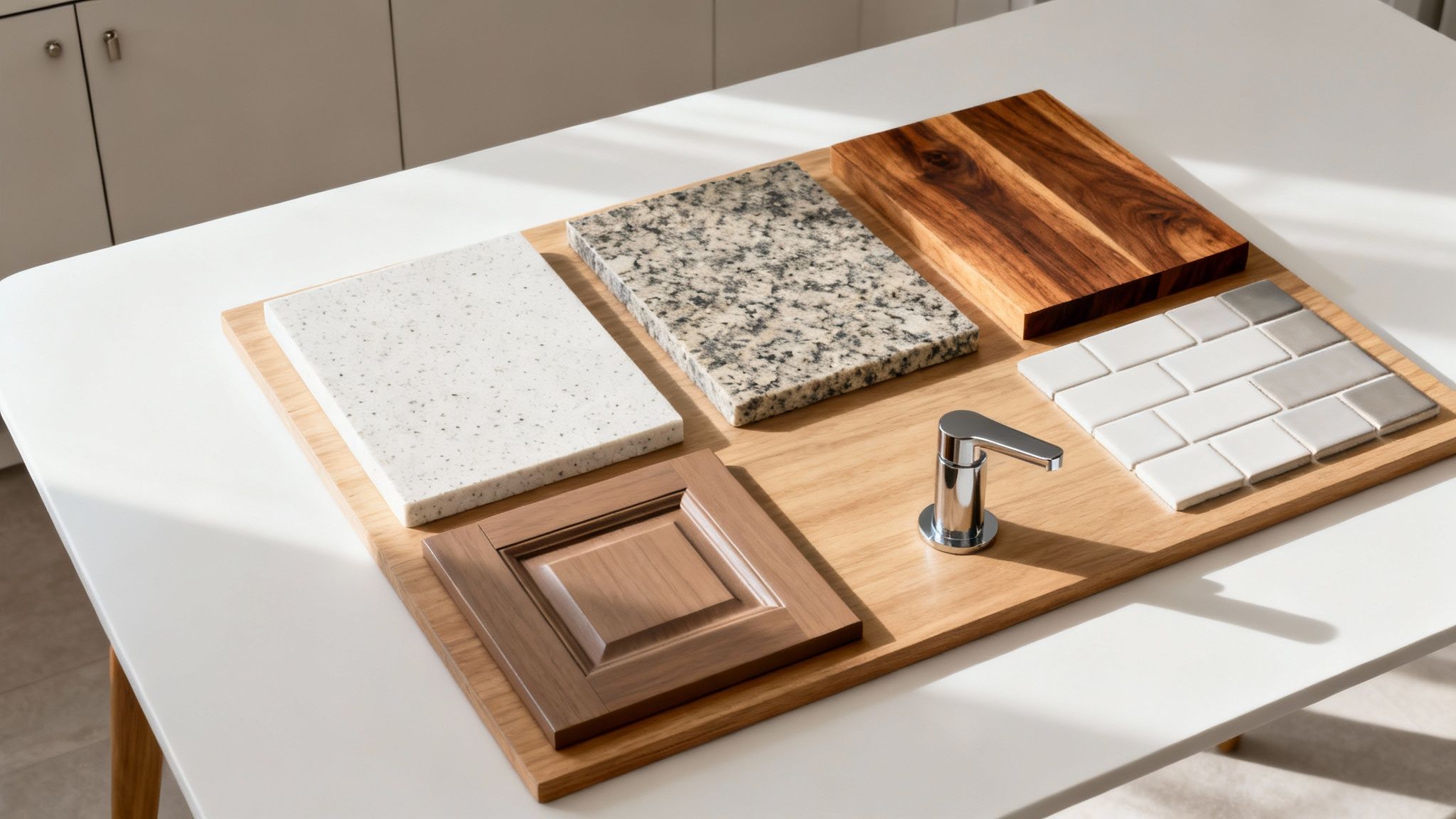
Your countertops and cabinets are the two biggest players in the room, both visually and functionally. They absolutely set the tone for everything else, so it's wise to start your selection process here.
When it comes to countertops, the options can feel a bit overwhelming. Here’s a quick rundown of the most popular choices we see in Boca Raton homes:
- Quartz: This engineered stone is a true powerhouse. It’s non-porous, which means it resists staining from things like red wine and coffee, and it requires virtually zero maintenance. It’s a workhorse that always looks good.
- Granite: For those who love the beauty of natural stone, each slab of granite is completely unique. It’s incredibly heat-resistant but does need to be sealed periodically to keep it from staining.
- Quartzite: Often confused with quartz, quartzite is a natural metamorphic rock that offers stunning, marble-like veining with far superior durability. It’s a luxury choice that makes a serious statement.
For a deeper dive into how these stack up on cost, durability, and upkeep, check out our complete kitchen countertop materials comparison.
As for cabinetry, your decision will likely come down to your budget and how much customization you need. Stock cabinets are the most affordable but come in limited sizes and styles. Semi-custom gives you more flexibility with finishes and dimensions, while fully custom cabinetry is built to your kitchen's exact specifications, maximizing every last inch of space.
Selecting Smart and Stylish Appliances
Appliances aren't just workhorses anymore; they are true centerpieces of modern kitchen design. The right suite of appliances should match your cooking habits, fit seamlessly into your layout, and offer features that genuinely make your life easier.
Think about how you actually cook. Are you an avid baker? A double wall oven might be non-negotiable. If you love to entertain, a spacious French door refrigerator and a whisper-quiet dishwasher are key. Homeowners are increasingly prioritizing upgrades like large islands, dedicated storage walls, and smart tech. To really modernize your kitchen, consider integrating the latest must-have smart appliances.
Kitchen remodeling is a huge priority for homeowners, with 38% of all renovations focusing on this single room. The National Kitchen & Bath Association (NKBA) projects the total U.S. residential kitchen and bath market will hit around $173 billion.
Pulling It All Together with Finishes
The final layer—flooring, backsplash, lighting, and hardware—is what ties all your big decisions together into a cohesive, polished look. Don't underestimate these details; they have a massive impact on the final result.
- Flooring: Here in South Florida, durability and humidity resistance are essential. Porcelain tile and luxury vinyl plank (LVP) are fantastic choices that stand up to sand, moisture, and heavy traffic, all while offering endless style options.
- Backsplash: This is a perfect opportunity to inject some personality. From classic subway tile to a bold, patterned mosaic, the backsplash can be a stunning focal point or a subtle, elegant backdrop. Just be sure to think about cleanability!
- Lighting: A layered lighting plan is crucial for a kitchen that works well and feels great. You’ll want a mix of ambient lighting (like recessed cans), task lighting (under-cabinet strips are a must), and accent lighting (think pendants over the island).
- Hardware: Think of cabinet pulls and knobs as the jewelry for your kitchen. The finish—be it matte black, satin brass, or polished chrome—can dramatically shift the entire style from modern to traditional in an instant.
Choosing these elements is a balancing act of personal taste, everyday practicality, and your budget. By focusing on quality materials and a cohesive vision, you'll create a kitchen that is not only beautiful but a true joy to use for many years to come.
Bringing in the Pros: Hiring Your Remodeling Team and Handling Permits
You’ve got a solid plan, you’ve picked out your materials, and you can practically see your new kitchen. Fantastic. Now comes the most important decision you'll make for the entire project: choosing the team to build it. A brilliant design means nothing if the execution is clumsy.
The right team doesn’t just build well; they orchestrate the whole complex dance of tradespeople, deliveries, and inspections. Let’s walk through how to find the right crew and deal with the essential paperwork.
Finding and Vetting Your Contractor
Think of the general contractor (GC) as the captain of your remodeling ship. They’re the one in charge of everything—hiring the plumbers and electricians, managing the schedule, ordering materials, and making sure every single thing is built correctly and up to code. Finding a great one is non-negotiable.
The best place to start is by asking around. Talk to friends, neighbors, or even coworkers who’ve had work done recently. An online review is one thing, but a glowing recommendation from someone you trust is gold. Once you have a shortlist, it's time to dig in and do some real homework.
- Check Their Credentials: This is crucial. In Florida, you can verify a contractor's license right on the Department of Business and Professional Regulation (DBPR) website. Just as important, make sure they have both general liability insurance and workers' compensation. Ask to see the certificates and don't be afraid to call the insurance company to confirm the policies are active.
- Talk to Their Past Clients: Don't just get a list of references—actually call them. Ask pointed questions. Did they stick to the budget? Did they finish on time? How did they handle the inevitable hiccup or surprise? Was the job site clean? Communication is key, so ask how well they kept the homeowner in the loop.
- Look at Their Work: A picture is worth a thousand words. Review their portfolio, but specifically look for projects that have a similar scope and style to what you’re planning. This isn’t just about quality; it’s about making sure their aesthetic aligns with yours.
For a deep dive into what to ask and what red flags to look for, check out our guide on how to choose a kitchen remodeling contractor. It's a must-read before you sign anything.
The Contract is Your Best Friend
Please, never, ever start a project on a handshake. A detailed, thorough contract is your single best tool for protecting yourself and ensuring a smooth process. It’s not about mistrust; it’s about making sure everyone is on the exact same page before work begins.
A strong contract protects everyone involved. It’s not about a lack of trust; it’s about creating a clear, shared understanding of expectations, responsibilities, and outcomes before the first hammer swings.
At a minimum, your contract must include:
- A Detailed Scope of Work: This should list everything being done, from the first day of demolition right down to the final caulk bead and paint touch-up.
- A Payment Schedule: Payments should always be tied to specific, completed milestones (like "cabinets installed" or "electrical rough-in passed inspection"), not just random dates on a calendar. Be very wary of any contractor demanding a huge payment upfront.
- A Clear Timeline: It needs to have a firm start date and a projected completion date.
- Material and Product Specs: Get specific. Don't just write "quartz countertops." It should be "Calacatta Laza Quartz countertops." Not just "white paint," but "Sherwin-Williams Pure White paint in a satin finish."
- Change Order Process: Changes happen. The contract needs to spell out exactly how they will be proposed, approved, documented, and priced so there are no surprises.
Navigating Boca Raton's Permitting Process
I know, permits can feel like a bureaucratic headache. But they are incredibly important. They exist to ensure that every bit of work done in your home is safe and meets the local building codes. This protects you, your family, and the long-term value of your property.
Here in Boca Raton, any kitchen remodel that involves moving walls, altering plumbing lines, or touching the electrical system is going to require a permit. The good news? Your GC should handle all of it. Submitting the plans, scheduling the inspections, and getting that final sign-off is a core part of their job.
Trying to skip the permit process is a recipe for disaster. It can lead to hefty fines, stop-work orders, and massive headaches when you try to sell your home down the road. When you hire a professional team you trust, this part of the project becomes seamless, ensuring your stunning new kitchen is also safe, sound, and fully compliant.
Getting Your Home Ready for the Construction Phase
Okay, the plans are signed off, and your team is ready to go. Now for the part everyone dreads a little: living through the actual remodel. Let's be honest, it can be a bit chaotic. But with some smart prep work, you can seriously cut down on the stress. The real goal here is to carve out a functional living space right next to the dust and noise, making the whole process much more manageable for your family.
This is more than just packing a few boxes. You're essentially creating a mini-command center for your daily routine. Putting some thought into this phase is just as important as planning the design itself—it's what will keep you sane when the hammers start swinging.

Setting Up a Makeshift Kitchen
For the next few weeks, you'll need a new spot to handle meals. A laundry room, guest bathroom, or even a section of the garage can work wonders, especially if there's a sink nearby. The trick is to make it as convenient as possible without a major setup.
Think of it like an upgraded indoor camping experience. You won't have your trusty oven, but a few countertop appliances can pick up the slack.
- Appliance All-Stars: Your microwave, a slow cooker or pressure cooker, a toaster oven, and a single induction cooktop will be your best friends. You'd be surprised what you can cook with just these four.
- The All-Important Coffee Bar: Don't skip this! Keep your coffee maker or kettle, mugs, and supplies all in one place. Trust me, maintaining that morning ritual is a game-changer.
- A Pop-Up Pantry: A simple bookshelf or some plastic drawers are perfect for organizing non-perishables, paper plates, and utensils. A little organization here prevents a lot of frustration later.
- The Dish Pit: Get one or two large plastic bins. You can use one for washing and one for rinsing/drying, likely in a bathtub or utility sink.
Moving out for a remodel isn't always practical or in the budget. That’s why making your temporary setup work is so crucial. Remodeling dust is no joke; it gets everywhere. Take the time to protect your stuff—and your lungs—by being thorough.
Packing Up and Protecting Your Home
Before any demolition starts, the kitchen needs to be completely empty. This is your golden opportunity to declutter. I always tell clients to make four piles: keep, donate, toss, and store. Be ruthless! Only pack the things you actually use and love.
Once you’ve sorted everything, it's time to pack carefully to shield your belongings from the inevitable grime.
- Seal It Up: Use good, sturdy boxes and don't skimp on the packing tape. Label every single box with its contents and where it goes. Your future self will thank you when it’s time to unpack.
- Cover Everything: Drape plastic sheeting over furniture in nearby rooms. A pro tip is to use painter's tape to seal the doorways that lead into the work zone. While your contractor should lay down floor protection, an extra layer doesn't hurt.
- Clear a Path: Make sure the crew has a straight shot from the door to the kitchen. Move any furniture, rugs, or wall art out of that pathway so nothing gets accidentally damaged.
Setting Expectations with the Construction Crew
From day one, clear communication with your contractor and their team is the key to a smooth project. This isn't about being demanding; it’s about making sure everyone is on the same page and respects your space.
Have a quick meeting before they start to go over the ground rules.
- Work Hours: Agree on official start and end times. Knowing when to expect noise and when you'll get your peace and quiet back makes a huge difference.
- Access & Security: Decide which door the crew should use and clarify the lock-up procedure for the end of the day.
- The Cleanup Crew: Talk about what "daily cleanup" means. The team should leave the area broom-swept and organized each afternoon to keep things tidy and safe.
- Bathroom Plan: Designate a specific bathroom for the crew to use and keep it stocked for them.
A bit of prep work now will save you countless headaches during construction. By setting up a practical temporary kitchen and laying down some clear ground rules, you can keep life running smoothly as you count down the days to your beautiful new space.
Got Questions About Your Kitchen Remodel? Let's Clear Things Up.
Even the most buttoned-up remodel plan is going to spark a few questions. That's not just normal; it's a good thing. When you're making a big investment in your home, especially the kitchen, you want to feel completely confident every step of the way.
We get asked these questions all the time, so let's tackle some of the most common uncertainties homeowners face. Think of this as the practical advice you need after you've got the big design ideas and budget sorted out.
How Long Does a Kitchen Remodel Really Take?
This is the big one, isn't it? While every single project has its own rhythm, you can generally expect a full-gut kitchen remodel to take somewhere between six to twelve weeks for the actual construction.
But that's just the construction part. The total timeline is a bit more involved.
- Planning & Design (4-8 weeks): This is where all the magic happens before a single hammer swings. You'll be finalizing layouts, picking out every last tile and faucet, and placing orders for materials. Getting this right is the secret to a smooth project.
- Permitting (2-6 weeks): Here in Boca Raton, you can't just start tearing down walls. Your contractor needs to get the plans approved by the city, and this process takes time.
- Construction (6-12 weeks): This is go-time. It covers demolition, plumbing and electrical rough-ins, drywall, cabinet and countertop installation, and all the final finishing touches.
Keep in mind, things like custom cabinets—which can easily have an 8-10 week lead time—or major structural changes will stretch this schedule. Your contractor should be giving you regular updates so you always know where things stand.
When’s the Best Time of Year to Start?
You can start a kitchen remodel any month of the year, but some seasons definitely have their perks here in South Florida.
A lot of our clients love starting in the fall. If you kick things off in September or October, you can usually get through the dustiest parts of the job before the holiday season chaos begins. Plus, the weather is a bit kinder to the construction crew.
Late spring and early summer are also great options, letting you wrap everything up just in time to enjoy your brand-new kitchen for summer gatherings. The only real wild card is hurricane season. If you're remodeling during this time, make sure your contractor has a rock-solid plan for securing the site if a storm heads our way.
Honestly, the calendar is less important than your own readiness. The "best" time is when you've got your financing locked in, your design choices finalized, and a contractor you genuinely trust.
How Do I Handle Surprise Costs?
Even with the most detailed plan, remodels have a way of revealing secrets once the walls come down. The best way to handle these surprises? Plan for them from day one.
This is why we tell every client that a contingency fund of 15-20% of your total budget isn't just a good idea—it's essential. This is your safety net for the unknowns.
What kind of surprises are we talking about?
- Outdated Wiring: Finding old knob-and-tube wiring that's not up to modern safety codes.
- Hidden Plumbing Issues: Discovering leaky, corroded pipes behind the drywall.
- Structural Problems: Uncovering termite damage or a rotted subfloor that has to be fixed.
- Mold or Water Damage: Finding evidence of a slow leak that needs professional remediation.
When something unexpected pops up, your contractor should immediately present you with a change order. This is a formal document, not a casual conversation. It will detail the problem, the solution, the extra cost, and how it affects the timeline. Always, always get it in writing.
That contingency fund is what turns a potential crisis into a manageable hiccup, allowing you to cover the cost without having to sacrifice the countertops you fell in love with. It's the best insurance you can buy for a less stressful remodel.
Planning a kitchen remodel is a big project, but you don’t have to do it alone. The team at Kitchen Renovations Perfected has spent decades guiding Boca Raton homeowners from the first sketch to the final reveal. Visit our showroom or schedule a complimentary consultation today to get started.