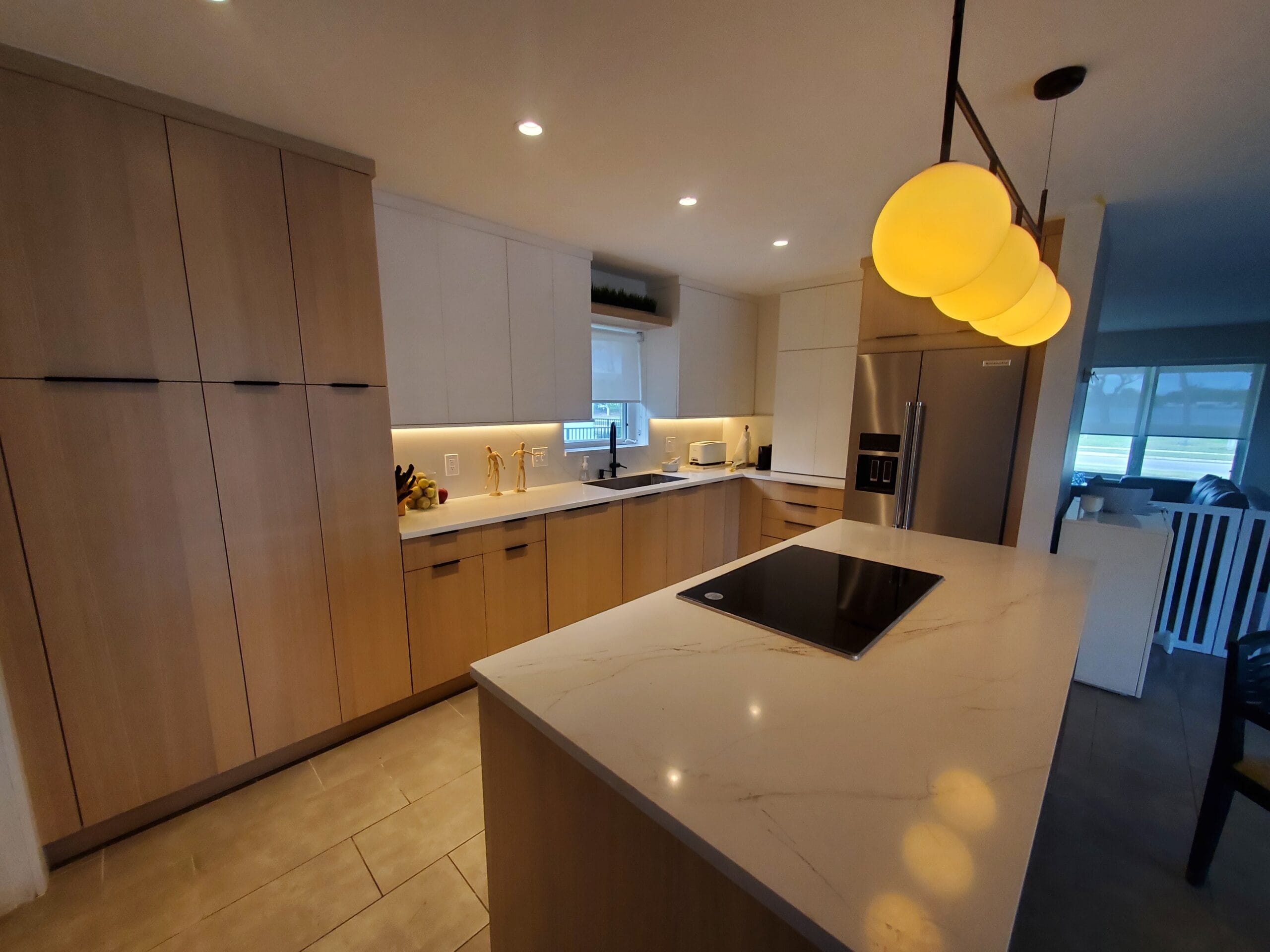
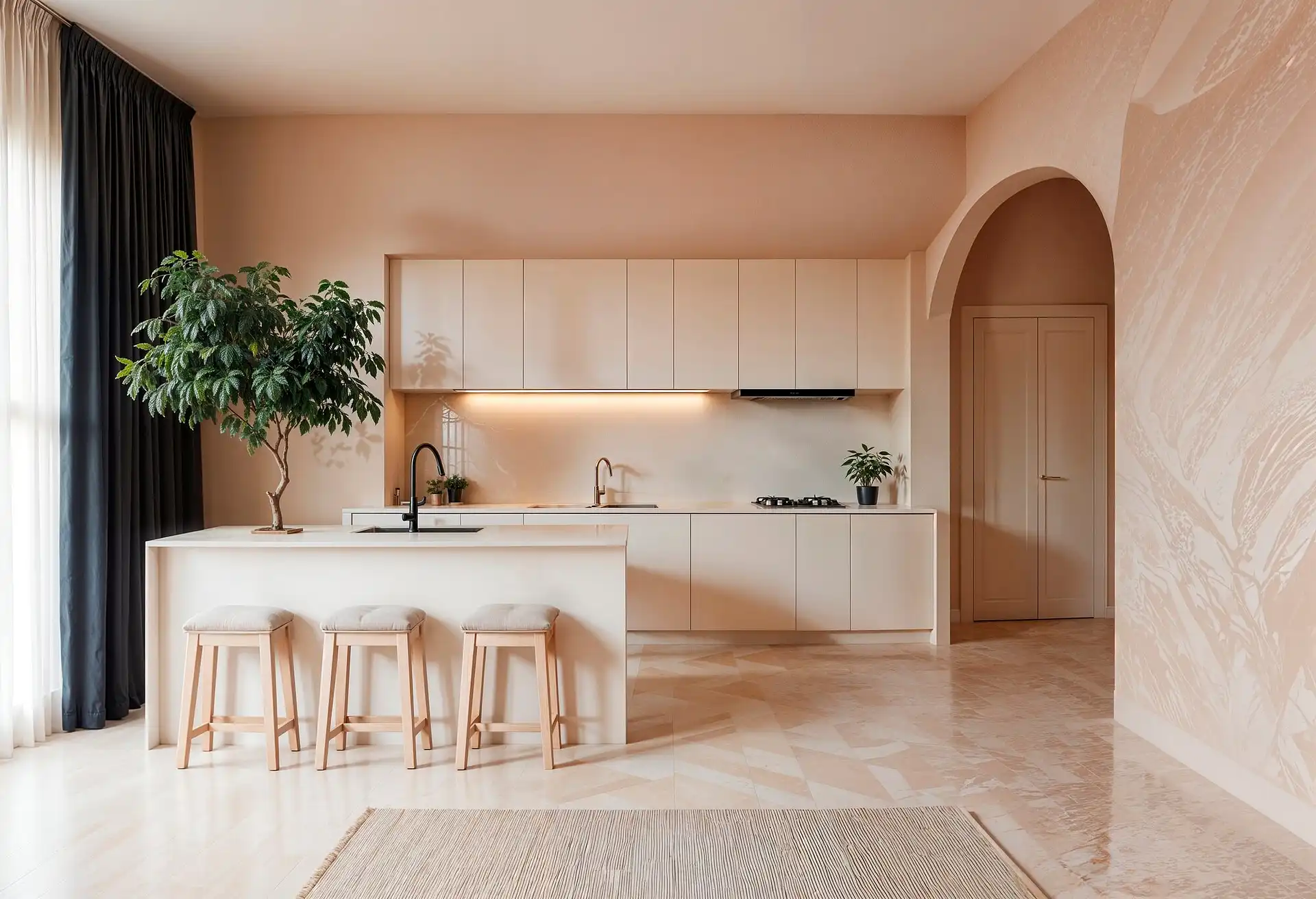
When you're weighing your options for countertops, the choice between quartz and granite really boils down to one core question: do you prefer engineered precision or natural, one-of-a-kind beauty? It's a classic matchup. Quartz gives you that predictable pattern and a completely non-porous surface that asks for zero maintenance. Granite, on the other hand, is 100% natural stone. Each slab is a unique piece of art from the earth, but it does need to be sealed now and then to keep it looking its best.
Your Quick Guide To Choosing The Right Countertop
Picking between quartz and granite is one of a handful of decisions that truly defines the look and feel of your kitchen renovation. Both are fantastic, high-end surfaces that will boost your home's value, but they appeal to different homeowners for different reasons. Getting a handle on their core differences right from the start will make your entire selection process much smoother.
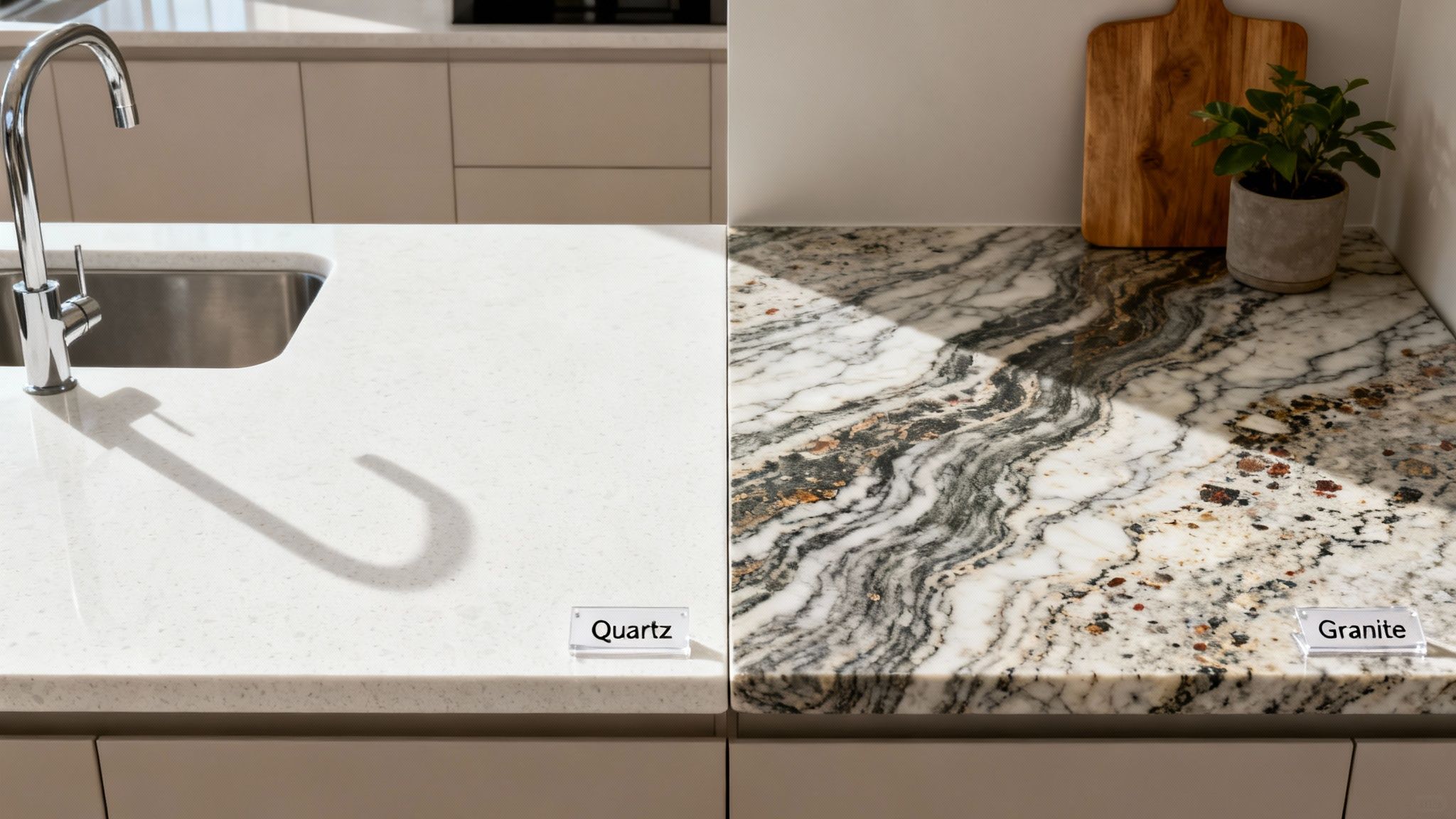
Think of this as your starting point—a high-level look before we dive into the finer details. If a low-maintenance, consistent look is at the top of your list, quartz is almost always the clear winner. But if you’re drawn to the idea of a truly unique, natural showstopper and you're okay with a little upkeep, granite is an incredible choice. We go even deeper into the selection process in our guide on how to choose kitchen countertops.
To get the ball rolling, here’s a straightforward breakdown of the key factors most homeowners care about.
Quartz Vs Granite At-A-Glance Comparison
This table is designed to give you a quick snapshot of how these two materials stack up against each other across the most important categories.
| Feature | Quartz Countertops | Granite Countertops |
|---|---|---|
| Composition | Engineered (90-95% ground quartz, resins) | 100% Natural Igneous Rock |
| Appearance | Consistent, uniform color and pattern | Unique, one-of-a-kind veining and flecks |
| Durability | Highly resistant to scratches and chips | Extremely durable, but can chip on edges |
| Stain Resistance | Excellent. Non-porous surface resists stains | Good. Porous; requires sealing to prevent stains |
| Heat Resistance | Good, but can be damaged by sudden heat | Excellent. Tolerates hot pans directly on surface |
| Maintenance | None required; easy to clean | Requires periodic sealing (every 1-2 years) |
| Cost Range | $105 – $185 per sq. ft. installed | $95 – $225 per sq. ft. installed |
Hopefully, this gives you a clearer picture of where each material shines. One isn't universally "better" than the other; the right choice is completely dependent on your kitchen, your family, and your personal style.
Comparing Material Origins And Composition
To really get to the bottom of the quartz vs. granite debate, you have to start where the materials themselves start. Their origins couldn't be more different, and that fundamental contrast is what shapes how they look, perform, and hold up in your kitchen for years to come.
Ultimately, it all boils down to one simple fact: one is a product of nature, the other is a product of human ingenuity.
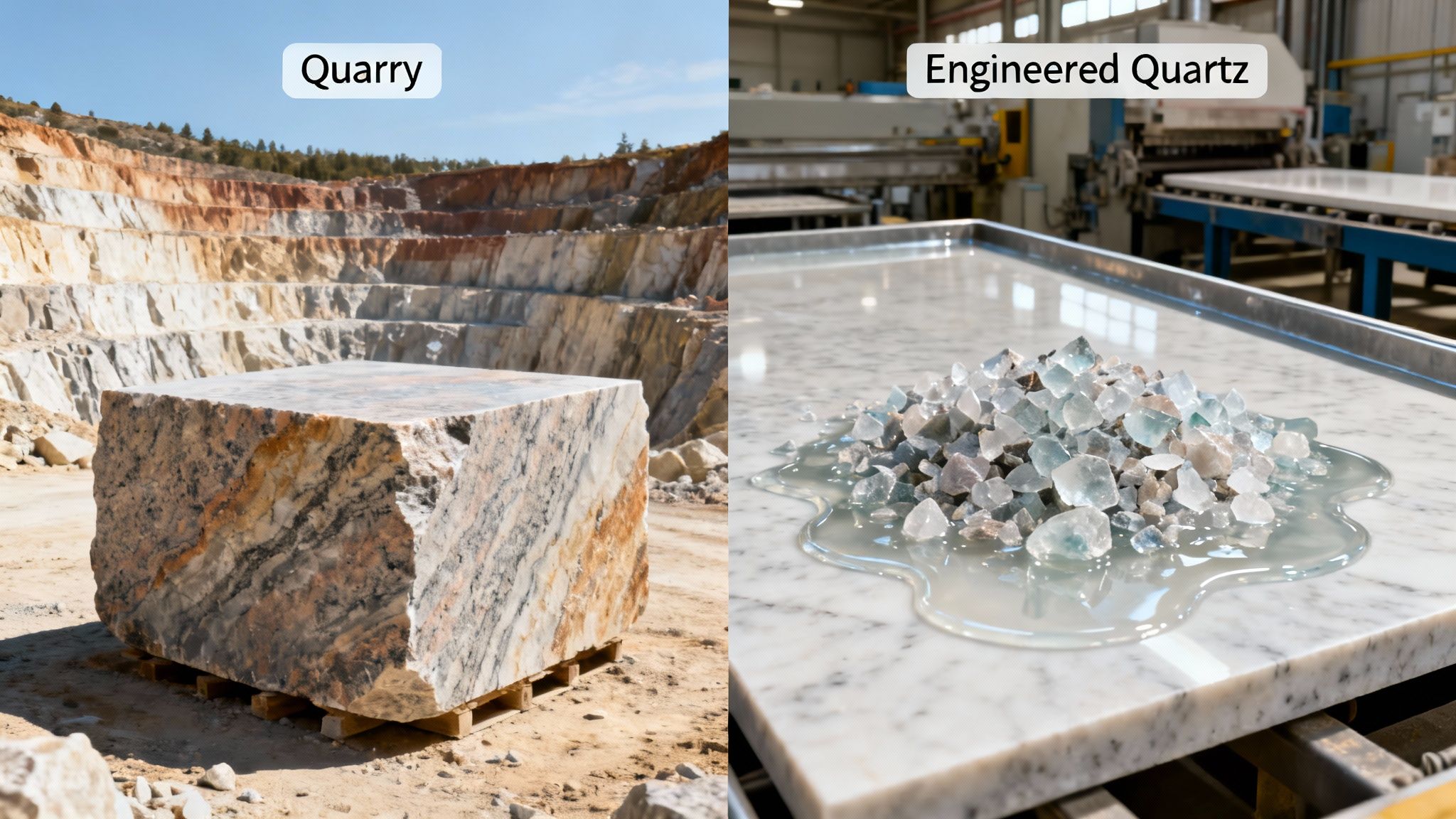
This isn’t just some technical detail; it's the very reason they have such distinct personalities and behave so differently once they're installed in your home.
Granite: A Natural Masterpiece
Granite is a 100% natural igneous rock, the real deal. It’s forged deep within the earth over millions of years as magma slowly cools and crystallizes. What you see in a showroom is a massive block that's been quarried from a mountain somewhere in the world—from Brazil to Italy—and then sliced into the slabs we know and love.
Because it’s created by geology, not a factory, every single slab of granite is completely unique. The swirling veins, the flecks of minerals, the subtle color shifts—that's a genuine snapshot of our planet's history. No two pieces are ever identical, which means your countertop is truly a one-of-a-kind work of art. This natural variation is what people fall in love with; it offers a depth and character that simply can't be manufactured.
The most significant takeaway is that granite’s beauty is a result of natural randomness. The colors and patterns are determined entirely by the minerals present during its formation, which means your countertop will have a story millions of years in the making.
Quartz: An Engineered Solution
Quartz countertops, on the other hand, are an engineered surface born from a very precise manufacturing process. They’re made from about 90-95% crushed natural quartz crystals (one of the hardest minerals on Earth) blended with polymer resins for binding and pigments for color.
This slurry is poured into a mold, compressed under extreme pressure, and then baked to create an incredibly dense and durable slab. This process is the key to quartz's main advantages. Because it’s man-made, manufacturers have total control over the final look and feel, opening up a world of design possibilities.
Here’s what that engineering gets you:
- Color Consistency: Unlike the wild, beautiful variations of granite, quartz delivers a uniform color and pattern across the entire slab. What you see in the sample is exactly what you get.
- Vast Design Options: The manufacturing process lets designers create colors and patterns you'd never find in nature. Think brilliant, solid whites, bold modern hues, or even slabs that perfectly mimic the look of marble or concrete without the maintenance headaches.
- Non-Porous Surface: The resins fill every gap between the quartz crystals, creating a completely sealed, non-porous surface from the start. It never needs a sealant.
Understanding this fundamental difference—natural versus engineered—is the first and most crucial step in choosing the right material for your home. It's why granite offers that untouchable, natural uniqueness, while quartz delivers unmatched consistency and design flexibility for today’s kitchens.
Durability and Maintenance: A Head-to-Head Analysis
A countertop’s real test isn't how it looks on day one, but how it holds up after years of life happening all over it. This is where the daily grind of spills, hot pans, and sharp knives reveals the true character of quartz and granite, and where their differences become crystal clear.
At the heart of it all is a simple structural difference: porosity. Granite is a natural stone, full of microscopic pores. Quartz, on the other hand, is an engineered material made from crushed quartz and resin, creating a completely non-porous surface. This one fact changes everything about how you'll live with your countertop.
Stain Resistance in Daily Life
Think about a red wine spill at a dinner party or a frantic coffee splash on a Monday morning. With quartz, those moments are no big deal. Its non-porous surface means liquids can't seep in, so a simple wipe is all it takes to clean up. This makes quartz a dream for busy families or anyone who just doesn't want to worry about stains.
Granite tells a different story. Its natural pores will soak up liquids like a sponge if it isn't properly sealed, leading to stubborn, permanent stains. To keep it looking pristine, granite must be sealed upon installation and resealed periodically—usually every one to two years. It's a routine but critical step to protect its natural beauty.
When it comes to long-term upkeep, the biggest divide is this: quartz is virtually maintenance-free, while granite requires regular sealing to protect your investment.
Heat Tolerance Under Pressure
Here, the tables turn, and granite’s natural origins give it a serious edge. Forged by incredible heat and pressure deep within the earth, granite can handle a hot pan straight off the stove without flinching. For passionate home chefs, this is a huge plus.
Quartz, however, isn't as heat-friendly. The resins that bind the quartz crystals together can be damaged by extreme temperature changes, a problem known as thermal shock. Setting a hot pot directly on a quartz surface can cause discoloration, ugly burn marks, or even cracks. Using trivets is an absolute must—no exceptions.
Scratch and Chip Durability
Both materials are incredibly tough, easily standing up to daily wear and tear. They both score around a 7 on the Mohs scale of hardness, so they're highly resistant to scratches from knives or other utensils. You should never cut directly on either surface (it’s a great way to ruin your knives), but you can rest assured they’ll handle everyday scrapes.
Where they differ is in their response to a sharp impact.
- Granite: As a natural crystalline stone, it can chip if a heavy pot is dropped on an edge or corner.
- Quartz: The resins give it a touch more flexibility, making it slightly more resistant to chipping than granite.
Finally, cleaning each surface requires a different approach. Quartz is a breeze—just soap and water will do. Granite, however, needs a bit more specific care. To learn the right way to maintain its beauty, check out our guide on how to clean natural stone countertops. Ultimately, you'll need to decide if the zero-stress maintenance of quartz is more important to you than the unmatched heat resistance of granite.
Evaluating Design Flexibility and Aesthetics
Choosing a countertop is about more than just function; it’s the decision that sets the entire visual tone for your kitchen. When it comes to quartz vs. granite, you’re looking at two fundamentally different aesthetic philosophies. One champions the wild, unpredictable beauty of nature, while the other offers the precision and control of modern engineering.
Figuring out which path is right for you is the first step in creating a specific mood—whether that's a dramatic, earth-forged centerpiece or a sleek, minimalist canvas for your life.
Granite: The One-of-a-Kind Statement
The real magic of granite lies in its raw, unfiltered authenticity. Every single slab is a geological snapshot, boasting intricate veins, rich mineral deposits, and subtle color shifts that can never be duplicated. This makes it an incredible choice for a statement kitchen where the countertop is meant to be the star.
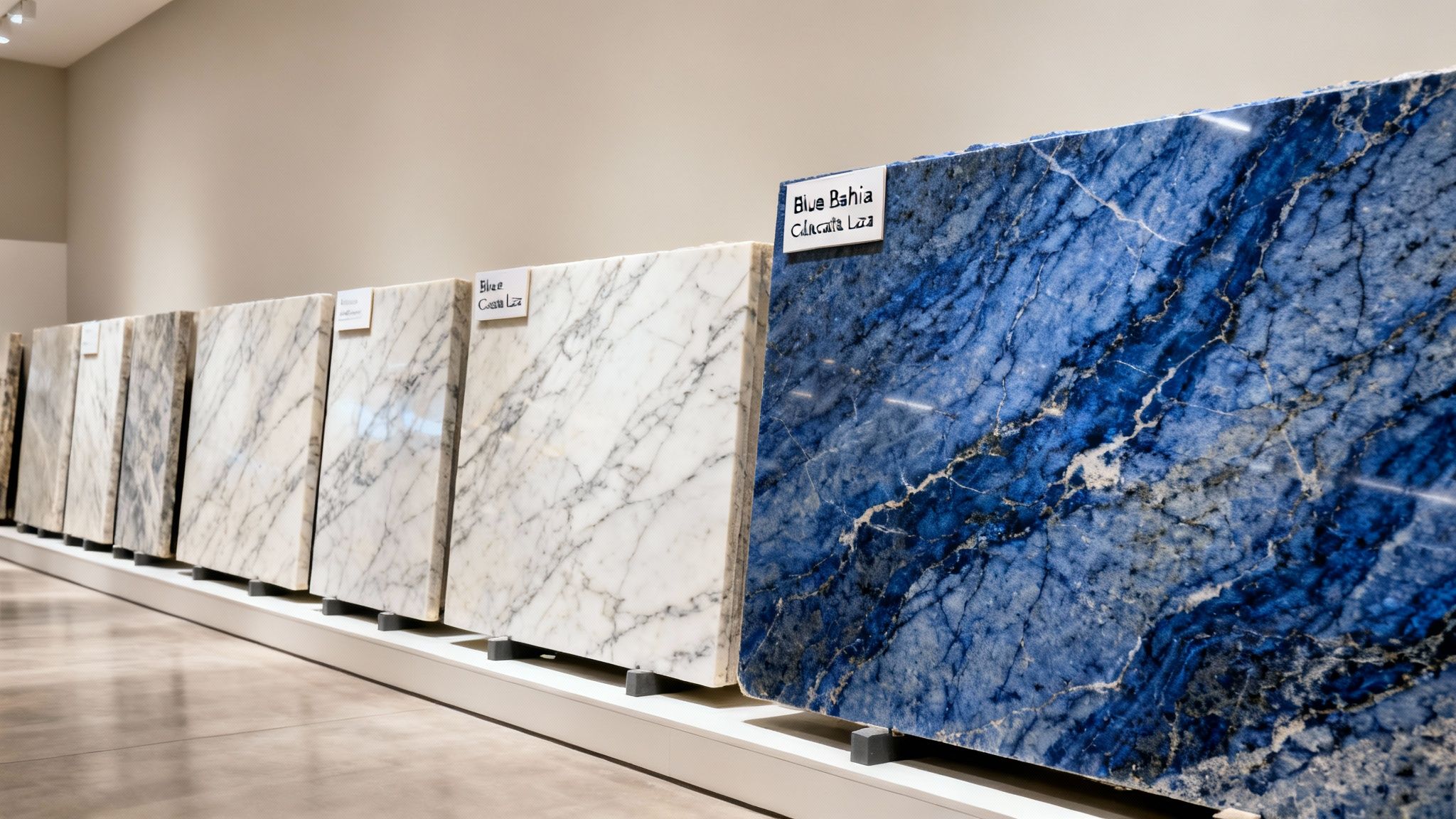
Imagine a slab of ‘Blue Bahia’ granite—its brilliant blue tones shot through with dramatic white and gold veining. It’s not just a surface; it's an art piece that instantly elevates a large island into a luxury focal point. But this uniqueness also presents its biggest challenge. Finding two slabs that match perfectly for an expansive kitchen is next to impossible, meaning your final look is entirely at the mercy of the specific piece you choose.
The core value of granite is its individuality. When you choose a granite slab, you are selecting a unique piece of the earth, ensuring your kitchen will have a character that is truly and completely its own.
Quartz: The Consistent and Versatile Choice
On the other side of the coin, quartz delivers unmatched consistency and design flexibility. Because it's an engineered product, you get a predictable, uniform look across every inch of the slab—and from one slab to the next. This makes it a far better option for modern, clean-lined designs or for large kitchens where a seamless appearance is essential.
The manufacturing process also opens up a massive spectrum of colors and patterns that you simply can't find in nature. You can have a brilliant, solid white for an ultra-contemporary kitchen, a soft gray that perfectly mimics concrete, or a dramatic jet black. High-end quartz, like a ‘Calacatta Laza’ design, can beautifully replicate the delicate veining of luxury marble without any of the maintenance headaches.
This predictability takes all the guesswork out of the equation. What you see in the showroom sample is exactly what gets installed in your home. For homeowners with a very specific vision, that level of control is priceless.
Of course, a countertop doesn't exist in a vacuum. To create a truly cohesive look, you need to think about how it will pair with your cabinetry. For a harmonious kitchen aesthetic, it's beneficial to consider how your chosen countertop material and hue will integrate with the latest kitchen cabinet color trends.
Ultimately, the choice boils down to a question of design philosophy. Do you crave the organic, untamed beauty of natural stone, or do you prefer the controlled, consistent elegance of an engineered surface? Answering that will lead you straight to the perfect material for your home.
Breaking Down The True Cost And Investment Value
When you're deciding between quartz and granite, it’s easy to get hung up on the price per square foot. But that number is just the beginning of the story. To really understand the financial side of things, you have to look at everything from the cost of the slab itself to the complexities of installation and what it means for your home’s value down the road.
Sure, you might find some entry-level granite that’s cheaper than quartz. But that’s not the whole picture. If you fall in love with a rare, exotic granite slab with stunning colors and veining, its price can easily soar past even the most high-end quartz.
Ultimately, this isn't about just finding the cheapest option upfront. It's about knowing how your choice will shape the total project budget and the lasting value it adds to your home.
What Determines The Final Price Tag
That initial per-square-foot quote? Think of it as a starting point. Several other factors will absolutely impact your final invoice, and they can add hundreds, sometimes thousands, to the total cost.
Here’s what really drives the price:
- Slab Thickness: The industry standard is 3 centimeters (around 1.25 inches). You might save a little by going with a thinner 2 cm slab, but if you want a thicker, beefier look, expect the material costs to jump significantly.
- Edge Profiles: A simple, squared-off edge is usually included in the base price. But if you want something more decorative—like an ogee, bullnose, or a dramatic waterfall edge—that requires specialized fabrication work, which adds a lot to the labor costs.
- Cutouts and Complexity: Every single cut for a sink, a cooktop, or even an outlet adds to the bill. A kitchen with a bunch of tricky angles and seams is always going to be more expensive to fabricate than a simple, straight run of countertop.
My advice? Always insist on a detailed quote that itemizes everything—not just the stone, but all the fabrication and installation charges. That’s the best way to avoid sticker shock later on.
Understanding Market Rates And Regional Pricing
Countertop pricing isn't static; it can shift based on your location and what's happening in the market. Still, there are some reliable patterns you can use for budgeting. Here in North America, you can expect installed quartz to run anywhere from $50 to $150 per square foot. The consistency and strong warranties of an engineered product keep it in that range.
Granite often sits in that same price bracket, though you can sometimes find more common patterns for less.
The key difference to remember is this: granite's price is all about rarity, while quartz's price is driven by the brand, the complexity of the design, and its finish. A widely available granite can be a real bargain, but a high-end quartz with intricate veining will have a more predictable cost than a one-of-a-kind slab of imported granite.
Resale Value and Long-Term Investment
Your countertops are a major investment in your home's equity. Both quartz and granite are seen as premium upgrades by homebuyers and can make a real difference in your resale value, especially if you’re moving up from laminate or tile.
Right now, quartz is incredibly popular. Buyers love its modern look and the fact that it’s so low-maintenance—a huge selling point for busy families. At the same time, granite has a timeless, classic appeal and is still seen as a symbol of luxury that many people actively look for.
So, which is the better long-term investment? It often comes down to your local real estate market and the overall style of your home. A beautiful countertop that fits seamlessly with your kitchen's design is what will always deliver a solid return. To get a bigger perspective on how this single choice affects your home’s worth, it’s worth exploring the return on investment of a kitchen remodel as a whole.
Making The Right Choice For Your Lifestyle
When it comes down to it, the great quartz vs. granite debate isn’t about which material is “better” in a vacuum. It’s about which one is better for *you*. We’ve covered composition, durability, appearance, and cost, but now it’s time to bring it home—connecting those facts to your daily routines, design dreams, and how much time you *really* want to spend on upkeep.
Choosing the right countertop means being honest about how you live in your kitchen. A surface that's a perfect showpiece for a meticulous homeowner might be a disaster for a busy family that puts function first. This is where we match the stone to your life.
Matching The Material To Your Home Life
Let's get practical and move beyond the general pros and cons. Seeing how these materials perform in different real-world scenarios makes it much easier to see which one fits your own home and priorities.
For The Busy Family With Young Children
In a house where spills are a daily event and free time is a myth, quartz is the clear winner. Its non-porous surface is basically stain-proof against everything from grape juice to stray crayon marks. A simple wipe is all it ever needs.
This "set it and forget it" reality means you’ll never have to worry about scheduling a resealing appointment or panic over a mess left overnight. Quartz is also incredibly tough against chips, a huge plus in a high-traffic kitchen where pots, pans, and toys can make accidental contact.
For The Design Enthusiast With A Luxury Vision
If your kitchen is the heart of your home's design and you're looking for a one-of-a-kind, artistic statement, granite is your stone. Every slab of high-end granite is a unique piece of natural art, offering a depth and organic movement that engineered stone just can't match.
Finding that rare slab with dramatic veining or exotic colors can make it the undeniable focal point of the entire room. For a design-forward homeowner who truly values this natural beauty, the small task of annual sealing is a minor trade-off for a countertop that is literally like no other on earth.
For The Practical Rental Property Owner
For an investment property, you're juggling durability, broad appeal, and cost. This is where the choice between quartz and granite gets a little more complex. A common, entry-level granite can deliver fantastic durability at a lower upfront cost, giving you that sought-after stone look tenants love.
On the other hand, a mid-tier quartz means zero long-term maintenance for you or your tenants, along with a clean, modern look that appeals to a huge pool of renters. The right call often boils down to your specific rental market and the level of finish you're aiming for.
Your Final Decision Checklist
To help you make the final call with confidence, take a second to answer these questions. Your gut response will likely point you in the right direction.
- Maintenance: How much upkeep are you genuinely willing to do? If the honest answer is "zero," then quartz is your material.
- Appearance: Do you need a consistent, uniform pattern, or do you crave a unique, natural look full of character and variations?
- Usage: How hard do you work your kitchen? Are you a passionate cook who needs superior heat resistance (granite), or is fighting off stains your main priority (quartz)?
- Budget: Are you focused on the absolute lowest entry price, or are you thinking about long-term value and the savings from zero maintenance costs?
This decision tree breaks down the typical paths for countertop costs, including the installation and overall value you can expect.
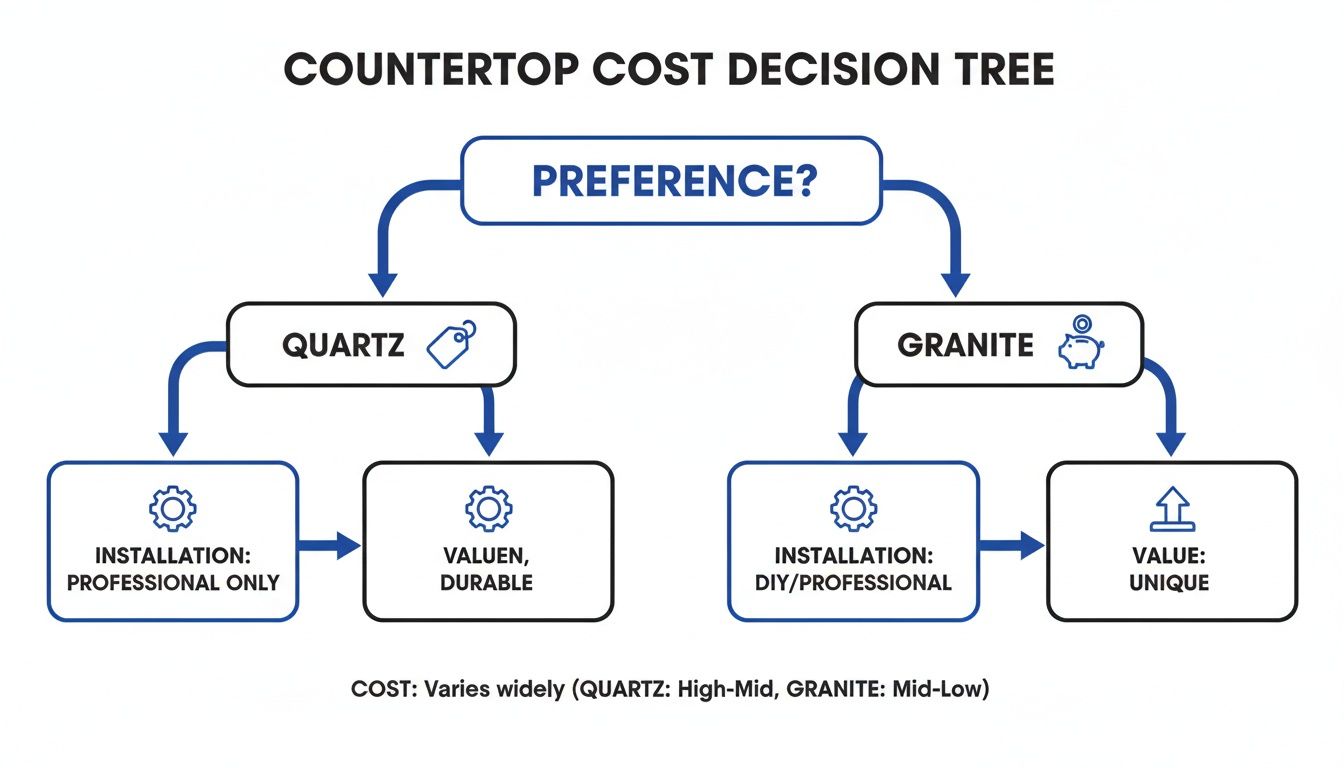
As the chart shows, while granite can sometimes have a lower starting price, quartz often provides more predictable installation costs and adds tremendous long-term value thanks to its maintenance-free durability.
Choosing your countertop is a personal decision that shapes how you experience your home every day. By aligning the material's strengths with your lifestyle, you ensure a surface that you will love for decades.
Still weighing your options between quartz and granite countertops? The best way to know for sure is to see and feel them in person. Visit the Kitchen Renovations Perfected showroom to explore a stunning range of slabs and get expert advice tailored specifically for your Boca Raton home.
Still Have Questions? Let's Clear Things Up.
Even with all the details laid out, a few specific questions always pop up when homeowners are on the home stretch of deciding between quartz and granite. We get it. Let's tackle them head-on with the kind of straightforward answers you'd get from our team in person.
So, Which One is Actually More Expensive?
This is probably the most common question we hear, and the answer isn't a simple "yes" or "no." While you can find entry-level granite for less than quartz, the prices for rare and exotic granite slabs can skyrocket.
- Granite generally runs from $95–$225 per square foot, installed.
- Quartz has a more consistent price band, typically landing between $105–$185 per square foot, installed.
The bottom line? A high-end, beautifully designed quartz could easily cost less than a rare, imported granite slab. It all depends on the specific stone you fall in love with.
Which Countertop Adds More to My Home's Value?
Both are premium materials that will definitely boost your home’s resale value. There's no wrong answer here, but there is a trend. Right now, quartz is incredibly popular for its clean, modern look and the major selling point of zero maintenance.
That said, a stunning slab of high-quality granite has always been a hallmark of a luxury kitchen. Many buyers still actively search for that timeless, natural stone appeal.
Our experience shows that the best investment is always the countertop that fits the overall design of your kitchen. A cohesive, thoughtfully designed space delivers a much better return than forcing in a material that just doesn't belong.
Can I Put a Hot Pan on These?
This is a big one, and the answer is different for each material.
Granite is a natural stone formed by heat and pressure, so it's incredibly heat resistant. You can place a hot pot on it without a second thought.
Quartz, on the other hand, is a different story. You should never put hot cookware directly on a quartz surface. The resins that bind the quartz crystals together can be scorched or damaged by the sudden temperature change, which can cause permanent discoloration or even cracks. Always, always use a trivet on quartz.
Ready to see which material feels right for your home? The experts at Kitchen Renovations Perfected are here to guide you. Visit our Boca Raton showroom or schedule a complimentary design consultation today!