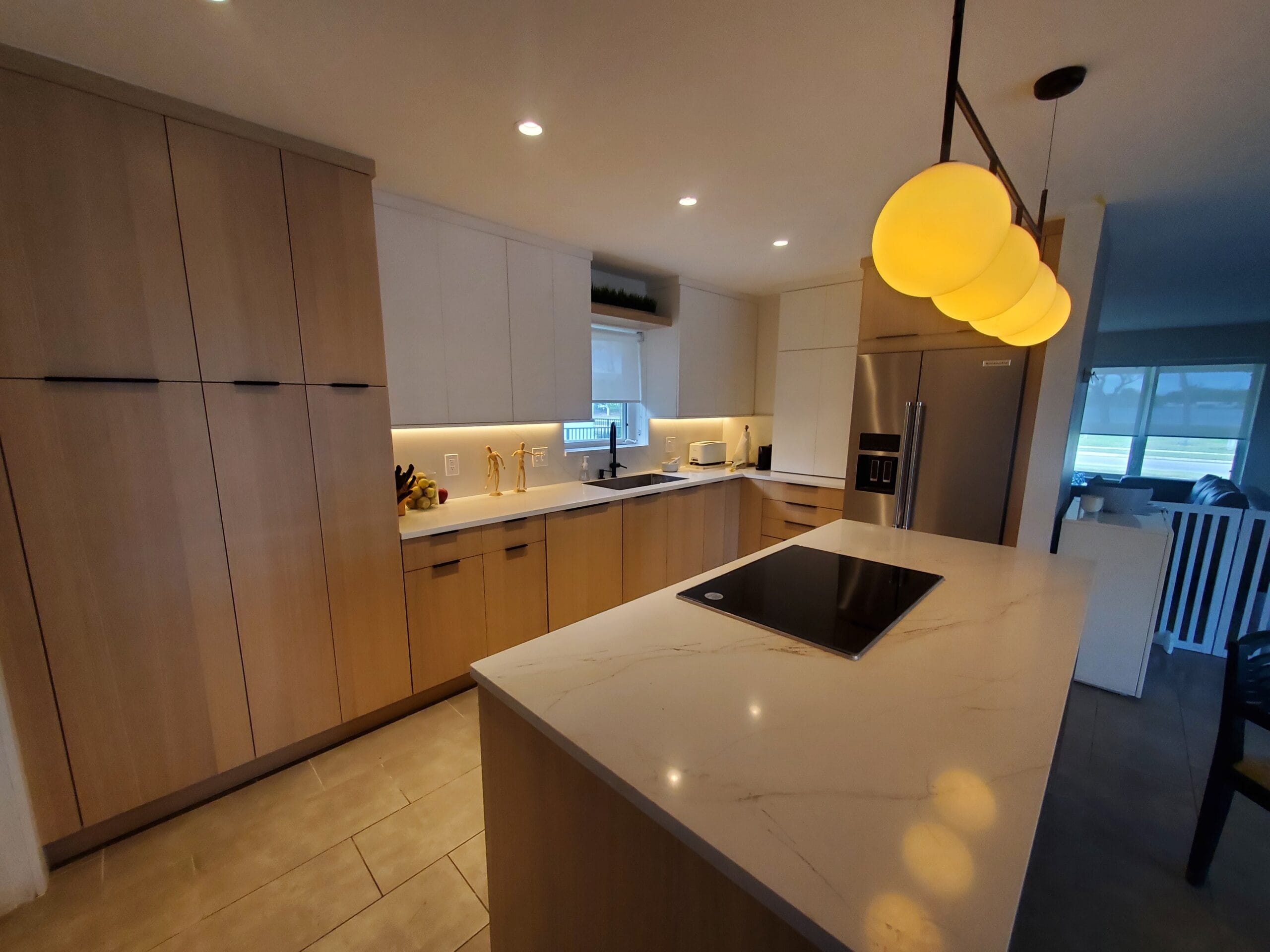
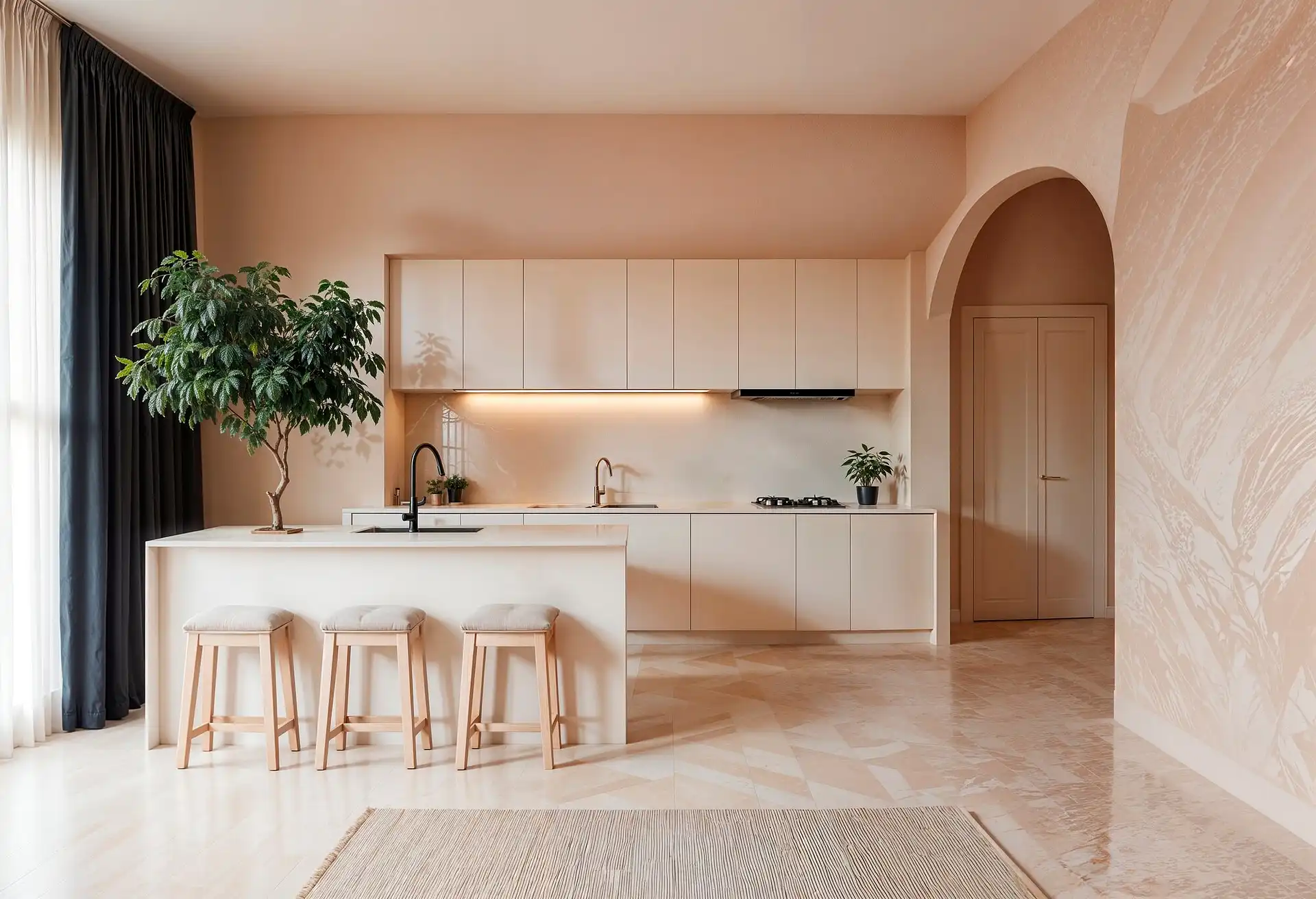
When you think of a coastal kitchen, forget the clichés of seashell jars and fishnet decorations. True coastal design is all about capturing a feeling—an effortless elegance that blends natural light, organic textures, and clean, simple lines. It’s about creating an atmosphere that’s sophisticated yet relaxed, a perfect match for the South Florida lifestyle.
What Defines Modern Coastal Kitchen Design
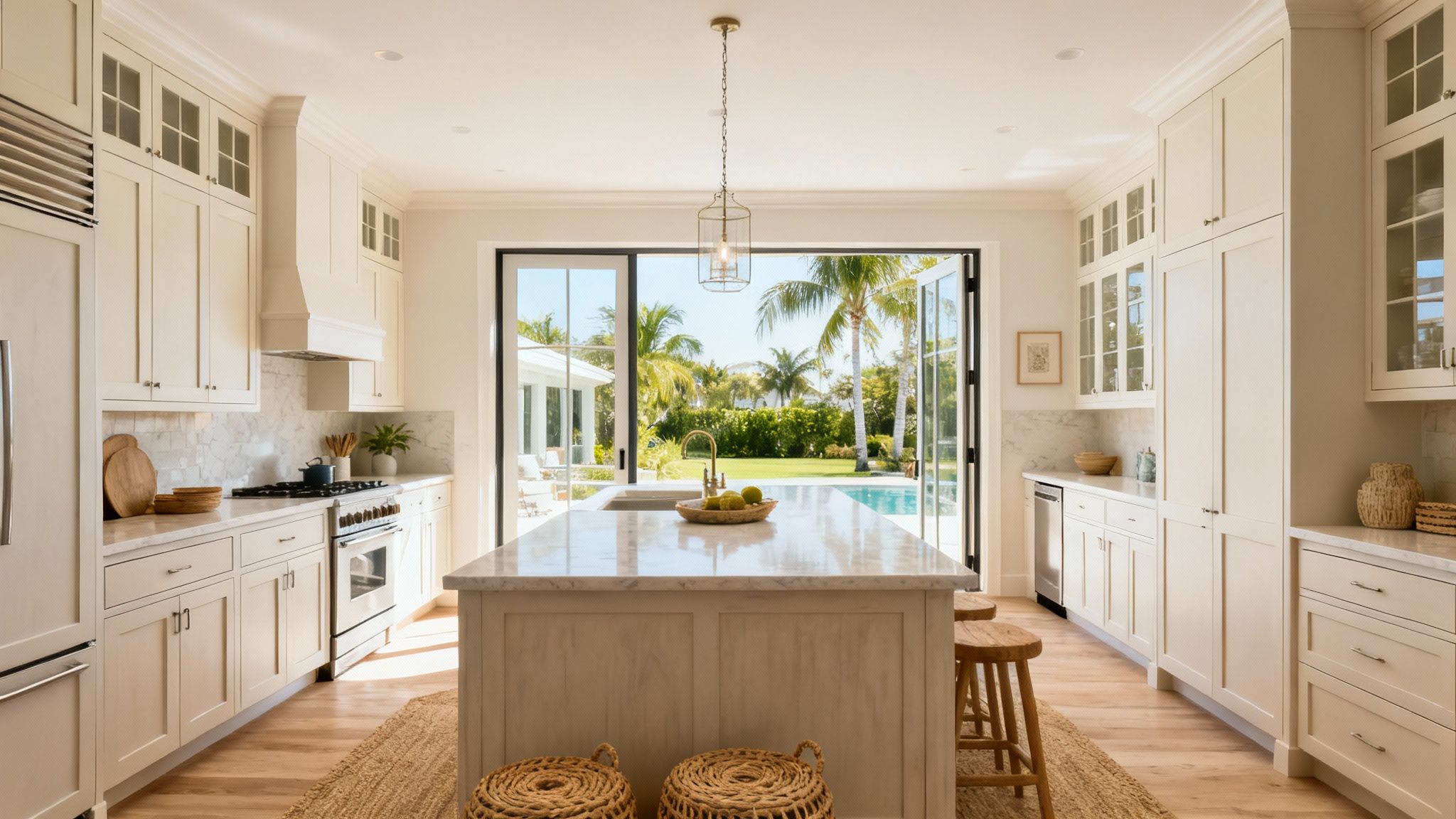
A modern coastal kitchen isn't so much a theme as it is an experience. It’s designed to feel like a tranquil seaside escape, but it achieves this without being too literal. Instead of anchor motifs, we focus on creating an open, bright environment that beautifully connects your indoor space with the stunning Boca Raton landscape just outside your window.
At its core, this design philosophy is built on a few key principles that all work together to create a space that feels both cohesive and incredibly inviting. It's all about finding that perfect balance between high-end sophistication and the casual comfort we all love about living by the coast.
Core Principles of the Coastal Aesthetic
Fundamentally, this style is about creating a serene backdrop for your life. Imagine a room flooded with sunlight, a gentle breeze coming through—that's the feeling we're after. We achieve this with a few signature elements:
- Abundant Natural Light: We maximize sunlight by using large windows, glass doors, and even skylights. This not only brightens the room but also makes it feel much larger and more connected to the outdoors.
- An Airy, Neutral Color Palette: The color scheme is built on a foundation of soft whites, gentle beiges, and light grays. These shades evoke the natural colors of sand and clouds, creating a calm, soothing base.
- Organic Textures: To add warmth and depth, we bring in natural materials. Think light-toned woods, rattan or woven light fixtures, jute rugs, and linen fabrics for seating. These elements provide crucial tactile interest.
- Clean Lines and Uncluttered Spaces: Simplicity is everything. We often recommend simple shaker-style or flat-panel cabinet doors and encourage keeping countertops clear to maintain that peaceful, uncluttered feeling.
A successful coastal design makes a room feel like a deep, cleansing breath. It’s not just about what you see, but about the sense of peace and openness the space provides. It’s a retreat from the outside world.
The Rise of Relaxed Elegance
This shift toward a more refined coastal look isn't just a local trend—it reflects a major movement in the design world. In fact, a recent trends report from the National Kitchen & Bath Association found that timeless, transitional styles are the most popular, favored by 72% of designers. This aesthetic, which is the very essence of modern coastal design, is gaining ground everywhere because it perfectly merges classic comfort with clean, modern sensibilities.
If you're looking for ideas that are both local and style-specific, you should explore these inspiring kitchen designs for Florida homeowners, reflecting coastal charm. They do a fantastic job of showing how these principles come to life in homes right here in our community, making them a great source of inspiration for your own project.
Designing a Layout for Light and Flow
The true heart of a coastal kitchen isn't just about the shiplap or the sea-glass-colored backsplash. It's about how the space feels. That breezy, open, and effortless vibe starts with a smart layout—the invisible framework that makes your kitchen a place where light, conversation, and life can flow freely. It's less about following a rigid blueprint and more about creating a space that works for how you really live.
An open-concept plan is practically made for the coastal aesthetic. When you knock down the walls between the kitchen and your living or dining areas, you instantly create that sense of spaciousness and community. But it does more than just make the room feel bigger; it allows natural light to pour in and bounce around, reaching every nook and cranny.
Think about it: you can be prepping dinner while chatting with family in the living room or keeping an eye on the kids playing just outside the patio doors. That seamless connection is what coastal living is all about, and it's why open layouts are so popular in homes designed to blur the lines between indoors and out.
Rethinking the Classic Kitchen Triangle
For years, everyone talked about the "kitchen work triangle"—that perfect path between the sink, refrigerator, and stove. And while it's still a good starting point, modern kitchens have evolved. We do so much more than just cook in them now; we work, entertain, and hang out.
Today's coastal kitchen often has multiple cooks and multiple activities happening at once. The layout needs to support that. Instead of a strict triangle, we prefer to design with "zones" to create efficient pathways for everything you do.
- Prep Zone: This is your main workspace, usually a big stretch of counter on an island, located right near a prep sink and the trash pull-out.
- Cooking Zone: Here you have the range or cooktop with clear landing spots on either side for hot pans. We make sure pots, pans, and spices are stored within arm's reach.
- Cleaning Zone: The main sink and dishwasher belong here, ideally positioned a bit out of the main work-flow to prevent traffic jams when someone is trying to cook.
- Social Zone: An island with comfortable seating is a must. It gives guests a place to land with a glass of wine, keeping them part of the action but out from under your feet.
This zoned approach means your kitchen’s flow stays smooth and intuitive, whether you're just grabbing a morning coffee or hosting a big family get-together.
Maximizing Light with Smart Design Choices
Nothing says "coastal" like a kitchen flooded with natural light. It's the most important ingredient, and your layout is the key to getting it right.
We always start by looking at the orientation of your home. If the kitchen gets that beautiful morning sun, we’ll design the layout to capture it. Something as simple as placing your breakfast nook or island seating to face the windows can create the perfect spot to start your day. For an even bigger impact, consider integrating solutions like these inspiring kitchen skylight ideas. A well-placed skylight can absolutely transform a space, bringing sunlight into areas you never thought possible.
The best layouts feel like they were designed around the sun. We always look for opportunities to remove a non-structural wall or widen a doorway to create an uninterrupted sightline to an outdoor view, instantly making the kitchen feel brighter and more connected to nature.
Popular Layouts for Coastal Living
While every project is custom, a few layouts are exceptionally well-suited for coastal homes.
The L-shaped kitchen with a large island is a classic for a reason. It gives you a super-efficient work area along two walls, while the island becomes the social hub and workhorse of the room. It’s the perfect spot for extra storage, casual seating, and a generous surface for meal prep or homework.
Another go-to is the one-wall kitchen with a parallel island. This layout works wonders in long, narrow spaces, creating a clear and open traffic lane. All your main appliances and cabinets are lined up on one wall, while the island acts as a beautiful, functional divider that defines the kitchen within a larger great room. A thoughtful layout doesn't just look good—it makes your kitchen a true joy to be in, day in and day out.
Choosing Materials That Outsmart Salt and Humidity
Living in South Florida is a trade-off. We get the sun, the sea, and that incredible ocean breeze, but the salt and humidity that come with it can be brutal on our homes. Your kitchen, in particular, is ground zero. This is where we need to think beyond just aesthetics and choose materials built for resilience. Your coastal kitchen needs to be as tough as it is tranquil.
This isn't just about a little rust on a hinge. We're talking about preventing the warping, fading, and slow decay that can turn a beautiful new kitchen into a constant maintenance chore. The right material choices are your first and best line of defense, ensuring your investment stays beautiful for the long haul.
This diagram shows how we bring together the core principles of a coastal kitchen—an open concept, abundant natural light, and smart traffic flow—to create that signature airy and functional feel.
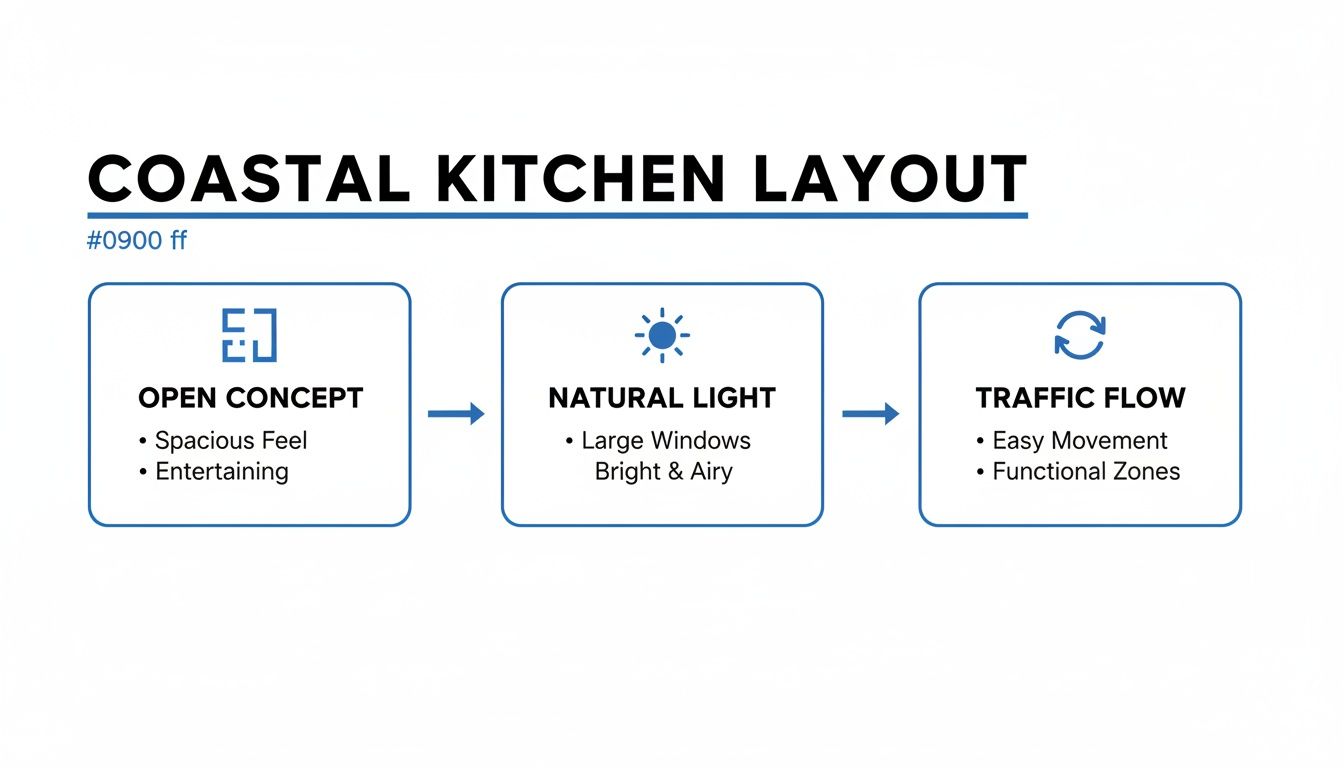
With this functional foundation in place, the materials you choose become absolutely critical for longevity.
Resilient Cabinetry for a Humid Climate
Cabinetry is the heart and soul of a kitchen's look, but in our coastal climate, traditional solid wood can be a real gamble. No matter how well it's sealed, wood naturally wants to expand and contract with the constant humidity, leading to warping and cracking over time. That gorgeous natural white oak look, a staple of coastal design, can quickly become a headache.
This is exactly why high-end composite materials and engineered woods have become our go-to recommendation. Brands like Decora and Schrock have perfected finishes that mimic the beautiful grain and feel of natural wood, but they're built on a substrate that’s far more stable and moisture-resistant.
Another fantastic route is high-density fiberboard (HDF) with a tough, factory-applied finish. It gives you a perfectly smooth, flawless surface for painted cabinetry—ideal for achieving that crisp, clean coastal aesthetic without ever worrying about wood movement. When you visit our showroom, we can put samples of each in your hands so you can see and feel the difference for yourself.
Expert Takeaway: Designing a coastal kitchen is a careful balance of art and science. You want the warm, organic look that wood provides, but you need the performance of a material specifically engineered to withstand our humid, salt-laden air.
Countertops That Combine Beauty and Brawn
Your countertops are the work surface of your kitchen, and here, they face more than just daily cooking. They deal with sand, moisture, and intense sunlight. While a beautiful slab of marble might seem like the dream, its porous nature makes it vulnerable to staining and etching from things as simple as a spilled glass of lemonade.
For a true coastal kitchen that puts durability first, we consistently point our clients toward engineered surfaces.
- Quartz: This material is an absolute workhorse. It's non-porous, meaning it fights off scratches, stains, and moisture without ever needing to be sealed. With a massive range of designs that can mimic the subtle veining of marble or the sleek look of concrete, you never have to compromise on style.
- Porcelain Slabs: A newer option that we're loving is porcelain. It's incredibly dense, tough, and virtually indestructible. It’s heat-resistant, UV-stable (so it won’t fade in a sun-drenched room), and 100% waterproof, making it a perfect fit for the South Florida lifestyle.
These materials deliver that high-end look you’re after with the low-maintenance reality a busy, beach-going family needs. The logic for choosing durable surfaces holds true whether they're inside or out; you can learn more in our guide to the best materials for an outdoor kitchen.
Smart Flooring for Sandy Feet
The floor in a coastal home has to stand up to three main enemies: moisture, sand, and constant foot traffic. Make the wrong choice, and you’ll have a floor that looks worn out, warped, or just impossible to keep clean in no time.
Luxury Vinyl Plank (LVP) is a top contender for very good reasons. Today's LVP offers stunningly realistic wood-look finishes that add warmth and character to a room. But its real superpower is performance: it’s 100% waterproof, highly scratch-resistant, and feels great underfoot. Sandy feet and wet towels from the pool are no match for it.
Porcelain tile is another bulletproof option. It's completely impervious to water and incredibly difficult to scratch or chip. You can find it in everything from wood-look planks to large-format tiles that create a seamless, sand-colored expanse. Our pro tip: always choose a tile with a subtle texture to provide better slip resistance when floors inevitably get wet.
Choosing the right materials from the start is about more than just looks; it's about building a kitchen that truly works for the coastal lifestyle. The table below breaks down our top recommendations for South Florida homes.
Coastal Kitchen Material Comparison for South Florida Homes
| Material | Best For | Durability in Coastal Climate | Maintenance Level | Aesthetic |
|---|---|---|---|---|
| Engineered Wood/HDF Cabinets | High-humidity areas, painted or wood-look finishes | Excellent. Resists warping, swelling, and moisture damage. | Low. Easy to clean. | Crisp, clean, or authentic wood-grain looks. |
| Quartz Countertops | Busy kitchens needing stain and scratch resistance | Excellent. Non-porous, won't stain or harbor bacteria. | Low. No sealing required. | Wide range of colors and patterns, including marble look-alikes. |
| Porcelain Countertops/Flooring | High-use surfaces, indoor/outdoor flow | Superior. Waterproof, heat-proof, UV-resistant. | Very Low. Extremely durable and easy to clean. | Modern, seamless, and versatile styles. |
| Luxury Vinyl Plank (LVP) Flooring | Areas with kids, pets, and wet foot traffic | Excellent. 100% waterproof and highly scratch-resistant. | Low. Simple sweeping and mopping. | Realistic wood looks in various tones and styles. |
Ultimately, both LVP and porcelain tile provide a tough-as-nails foundation for your kitchen, ensuring that the most-used surface in the room is truly built to last.
Choosing Your Coastal Color and Finish Palette
Forget the old days of sterile, all-white beach houses. The modern coastal kitchen has a much more sophisticated soul. While we still want that bright, airy feeling, today's designs are all about layering in subtle, nuanced color and texture. We’re aiming to create a serene backdrop that feels genuinely connected to the natural landscape, not just a cliché beach theme.
The secret is building a palette that feels both calming and complex. We always start with a base of warm whites, sandy beiges, and soft, misty grays. Think of these as your canvas—they capture and reflect the beautiful coastal light, establishing that open, breezy atmosphere that’s the signature of seaside living.
From that foundation, we begin to weave in layers of texture and subtle color. This is where the real artistry happens, blending natural elements with carefully chosen finishes to build a space that feels both thoughtfully designed and effortlessly relaxed.
The Foundation: Start with a Soothing Neutral Base
Your primary color choice really sets the tone for the entire kitchen. Instead of a stark, clinical white, I always steer clients toward warmer shades that feel more organic and inviting.
- Warm Whites: Think of colors with creamy or slightly beige undertones, like the inside of a seashell. These whites feel soft and welcoming, which is especially important in rooms that get a lot of bright Florida sun.
- Sandy Beiges: This is a wonderfully versatile neutral. It provides a gentle warmth, reminiscent of a sun-drenched beach, and it pairs beautifully with natural wood tones. It's the perfect backdrop for pops of color later on.
- Soft Grays: Look for grays that have a hint of blue or green. These shades evoke the color of the ocean on a slightly overcast day, adding a touch of depth and sophistication without ever feeling dark or heavy.
This foundational palette creates a tranquil environment that’s easy to live with and serves as the perfect canvas for layering other textures and finishes.
Bringing in Color with Strategic Accents
Once we have that serene backdrop, it's time to bring in color—but with intention. We're not talking about overwhelming the space. Instead, we use color to create focal points and draw a clear connection to the outdoors. A kitchen island is the perfect place to make a statement.
Imagine painting your island in a deep, moody sea-glass green or a dusty, muted blue. It immediately anchors the room and injects a dose of personality. Because the color is contained to one area, it feels impactful without being overbearing. The backsplash is another fantastic opportunity. A handcrafted tile in a soft aqua or even a tile with a subtle, water-like pattern can serve as a stunning focal point behind the range.
My Pro Tip: When you're thinking about accent colors, just look out the window. Pull inspiration directly from your surroundings—the soft green of sea oats, the deep blue of the Atlantic on a clear day, or the pale pinks of a coastal sunset. This ensures your color choices feel authentic and completely at home.
Cabinet Styles and Hardware: The Finishing Touches
The style of your cabinetry and the hardware you choose are the details that truly define the character of your coastal kitchen. These elements can steer the overall look from classic and traditional to clean and contemporary.
Cabinet Door Styles
- Shaker Doors: This is the quintessential choice for coastal kitchens, and for good reason. Their simple, clean lines offer a timeless look that feels both classic and fresh.
- Flat-Panel Doors: If you're leaning toward a more modern, streamlined coastal aesthetic, flat-panel doors are the way to go. They provide a sleek, minimalist canvas that lets other elements, like your countertop or backsplash, really shine.
Hardware Finishes
Hardware is the jewelry of your kitchen, and the finish can completely transform the feel of your cabinetry.
- Brushed Brass: This adds a touch of warmth and luxury. The soft, satin finish feels sophisticated and pairs beautifully with both light and dark cabinet colors.
- Matte Black: Looking for a bold, contemporary contrast? Matte black hardware against light-colored cabinets creates a modern, graphic punch.
- Unlacquered Brass: For a truly authentic, lived-in feel, unlacquered brass is a fantastic option. It will patina and age naturally over time, developing a unique character that tells the story of your home.
When you visit our showroom, we can walk you through all of these options in person. Seeing and feeling how different combinations of cabinet styles, colors, and hardware come together is the best way to craft a look that is uniquely yours. After all, it’s in these carefully considered details that a beautiful coastal kitchen is truly born.
How to Layer Lighting for a Warm Coastal Glow
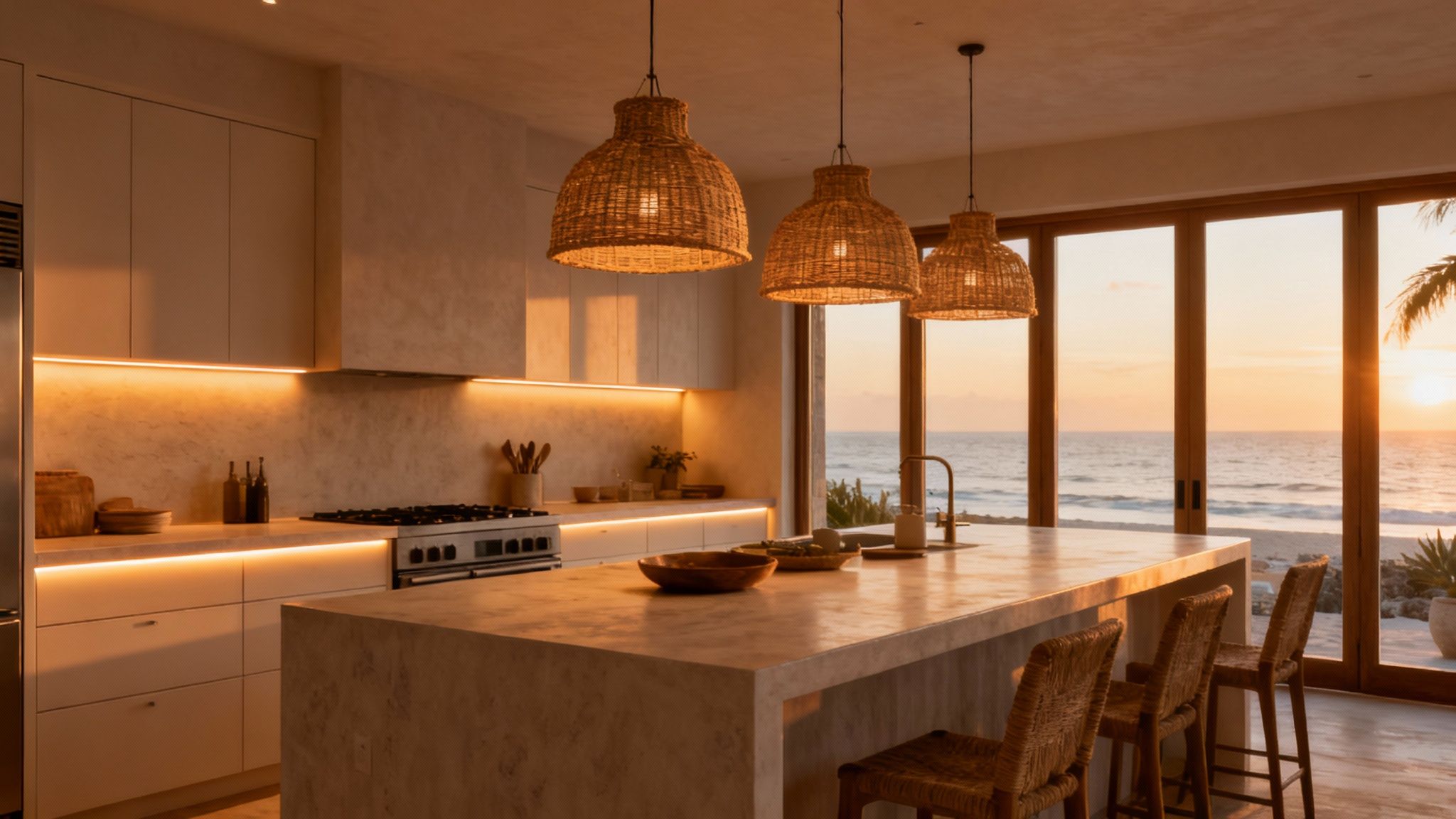
You can have the most beautiful cabinets and countertops, but without the right lighting, even a stunning design will fall flat. In a coastal kitchen, lighting is the secret ingredient. It’s what creates that warm, inviting glow that makes everyone want to linger long after the meal is over.
A great lighting plan is never about one single, blindingly bright fixture in the middle of the ceiling. It's about a thoughtful strategy, layering three distinct types of light—ambient, task, and accent—to build a space that’s functional, beautiful, and full of atmosphere. When you get this combination right, your entire coastal design comes to life.
Ambient Lighting: The Foundational Glow
Think of ambient lighting as the general, overall illumination for the room. It sets the primary mood and provides your base layer of light. For a coastal kitchen, this is a great opportunity to install a statement fixture that doubles as a piece of art, reinforcing that natural, organic vibe you’re aiming for.
A pair or trio of large pendants hanging over the kitchen island is a classic for a reason. We often recommend fixtures with woven textures—think rattan, wicker, or jute—to cast a warm, diffused light. They also add a crucial textural element that feels perfectly at home in a seaside setting. We'll supplement these with recessed ceiling lights to provide broad, even coverage without stealing the show.
A quick pro tip: Always put your ambient lights on a dimmer switch. This simple detail gives you total control, allowing you to go from bright, energetic light during meal prep to a soft, intimate glow in the evening.
Task Lighting: The Functional Workhorse
This is the focused, direct light you absolutely need for getting things done. Chopping vegetables, reading a recipe, rinsing dishes—task lighting makes it all possible. For a kitchen to be as practical as it is pretty, getting this layer right is non-negotiable.
From our experience, the most critical piece of task lighting is under-cabinet lighting. We consider this an absolute must-have in every kitchen we design. LED strips installed beneath the upper cabinets flood your countertops with light, getting rid of shadows and making prep work safer and easier. It’s a detail that makes a world of difference in the kitchen’s daily usability.
Other essential task lights include:
- Island Pendants: Those same beautiful pendants providing ambient light are also pulling double-duty, casting focused light right where you need it on the island work surface.
- Sink Lighting: We always plan for a dedicated recessed light or a stylish sconce directly above the sink. No one likes washing dishes in their own shadow.
Learning how each light source works together is fundamental. To get a better handle on this, you can explore our guide on the importance of lighting in kitchen design and creating the perfect ambiance.
Accent Lighting: The Final, Polished Layer
Finally, we have accent lighting. This is the decorative layer that adds drama, depth, and personality. You use it to highlight specific features you love, like a beautiful tile backsplash, a piece of art, or architectural details.
This is where you can add that extra touch of warmth that makes the space feel truly custom. In-cabinet lighting behind glass-front doors is a beautiful way to showcase your favorite dishware, creating a soft, luminous effect. A pair of elegant wall sconces flanking a window can also add a sophisticated glow that elevates the room’s coastal character. This final layer is what takes a kitchen from just a workspace to the true heart of your home.
Getting Down to Brass Tacks: Your Project and Budget
This is where the dream of a coastal kitchen starts becoming a reality. We move from beautiful ideas and inspiration boards to the nuts and bolts of the project itself—the timeline, the budget, and all the local rules we have to follow, especially for homeowners in Boca Raton’s gorgeous condo buildings.
A renovation you can actually enjoy is one where there are no surprises. We lay everything out on the table, showing you exactly what to expect and where every dollar of your investment is going. A great final reveal is the goal, but a smooth, well-managed process that respects your home and your peace of mind is how we get there.
How Long Will It Take? Timelines and Local Codes Explained
Here in South Florida, a full kitchen tear-out and rebuild typically runs somewhere between 8 to 12 weeks. A few things can stretch that timeline, like waiting on custom-made cabinets or navigating a more complex permitting process. This is especially true in places like Boca Raton or for condos that have their own set of construction rules.
Figuring all that out is our job, not yours. We know that many local condo associations have strict work hours, specific ways to handle debris, and hefty insurance requirements for any contractor on the property. We manage all of it, making sure the project follows every single local code and building policy so you don't have to worry about frustrating delays.
The biggest mistake we see people make? They forget about the prep work. The "pre-construction" phase—finalizing designs, ordering materials, and getting permits approved—can take a few weeks. But getting all those ducks in a row before the first hammer swings is the secret to staying on schedule later.
Where Does the Money Go? A Coastal Kitchen Budget Breakdown
It helps to know what things cost. While no two kitchens are exactly alike, the budget for a high-end coastal kitchen generally breaks down in a predictable way. Seeing the numbers helps you make smart decisions about where you want to invest. For a more detailed look at this critical planning stage, check out our complete guide on how to plan a kitchen remodel.
Here’s a rough sketch of how a typical budget gets allocated:
- Cabinetry and Installation: This is almost always the biggest ticket item, eating up about 30-35% of the budget.
- Labor and Construction: All the skilled work—demo, electrical, plumbing, installation—usually accounts for 20-25%.
- Appliances: Depending on your taste, new appliances can easily be 15-20% of your total spend.
- Countertops: Beautiful quartz or porcelain surfaces will typically land in the 10-15% range.
- Fixtures, Lighting, and Finishes: The finishing touches like your sink, faucet, backsplash, and lights make up the final 5-10%.
Common Questions About Coastal Kitchen Design
Over the years, we've had countless conversations with homeowners dreaming of a coastal kitchen. A few questions always come up, and getting the answers right is key to creating a space that's not only beautiful but also perfectly suited to your life by the sea.
How Much Does a Coastal Kitchen Remodel Cost?
This is usually the first question, and the honest answer is: it truly depends. Here in the Boca Raton area, a project's scope can shift the budget dramatically.
For a smaller-scale refresh—maybe you're keeping your existing cabinet layout but updating doors, counters, and backsplash—you might be looking at a starting point around $25,000. On the other hand, a full-gut luxury renovation that involves moving walls, installing custom cabinetry, and bringing in professional-grade appliances can easily exceed $100,000. The final number really comes down to your material selections and the complexity of the work.
What Is the Difference Between Coastal and Nautical Design?
This is a fantastic question because it gets to the heart of the style. Think of it this way: coastal design is about evoking the feeling of being at the beach. It’s light, airy, and natural, using soft color palettes and organic textures to create a relaxing, serene atmosphere.
Nautical design is much more literal and thematic. It often incorporates very specific motifs like anchors, ship wheels, ropes, and a classic navy-and-white color scheme.
Coastal is a feeling, while nautical is a theme. We focus on creating an atmosphere, not just decorating with objects, to achieve that timeless, sophisticated look.
How Can I Make a Small Condo Kitchen Feel Coastal?
When you're working with a smaller footprint, like in a condo, light is your best friend. The goal is to make the space feel as open and bright as possible.
We achieve this by using a very light color palette and incorporating reflective surfaces, like a glossy tile backsplash or countertops with a subtle sheen. Opting for streamlined, flat-panel cabinetry also helps to reduce visual clutter. Above all, a well-thought-out layered lighting plan and clever storage solutions are non-negotiable for making a compact kitchen feel genuinely coastal.
Ready to transform your kitchen into a coastal retreat? The team at Kitchen Renovations Perfected is here to guide you from concept to completion. Visit our Boca Raton showroom or schedule your complimentary consultation today.