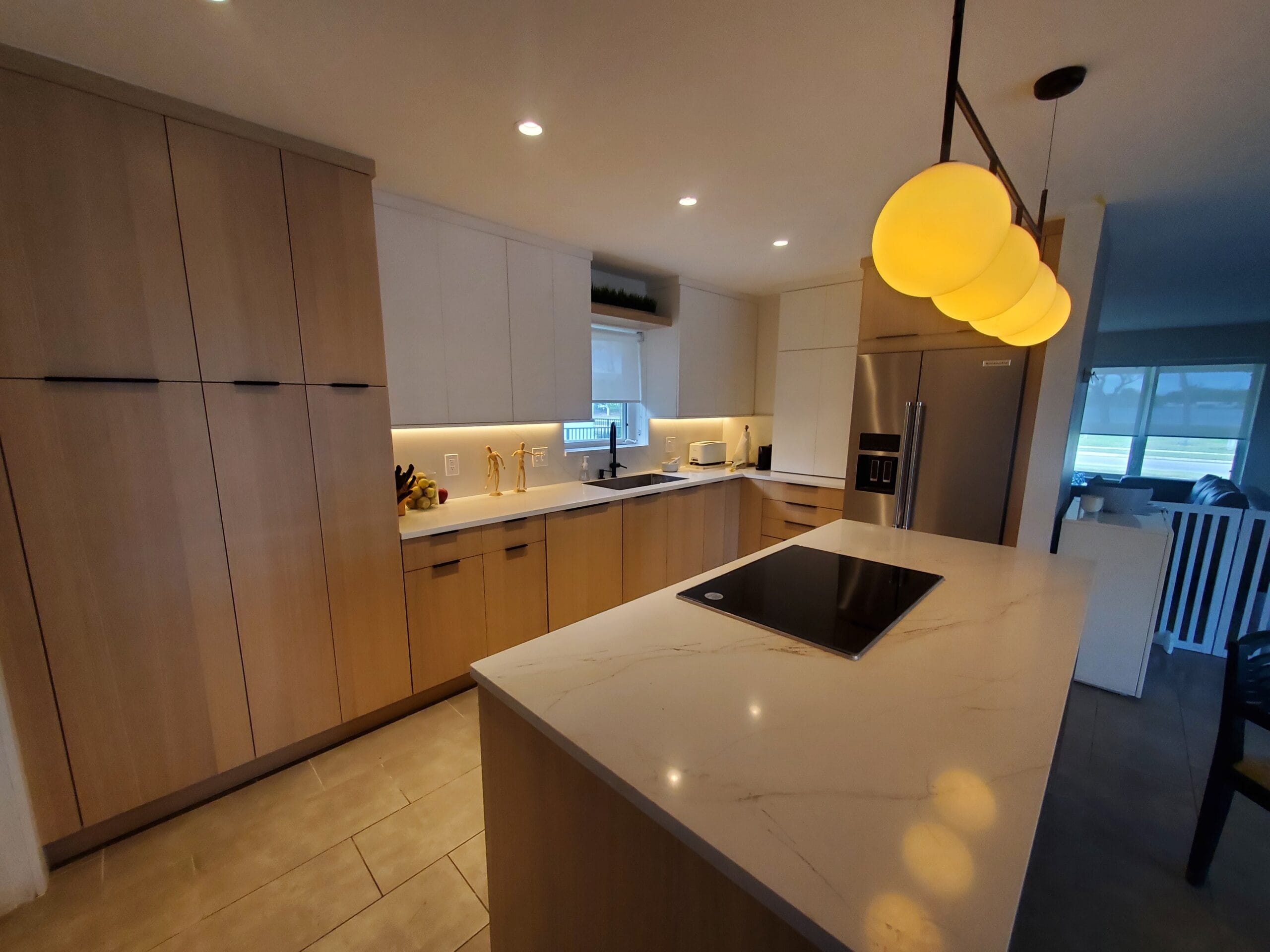
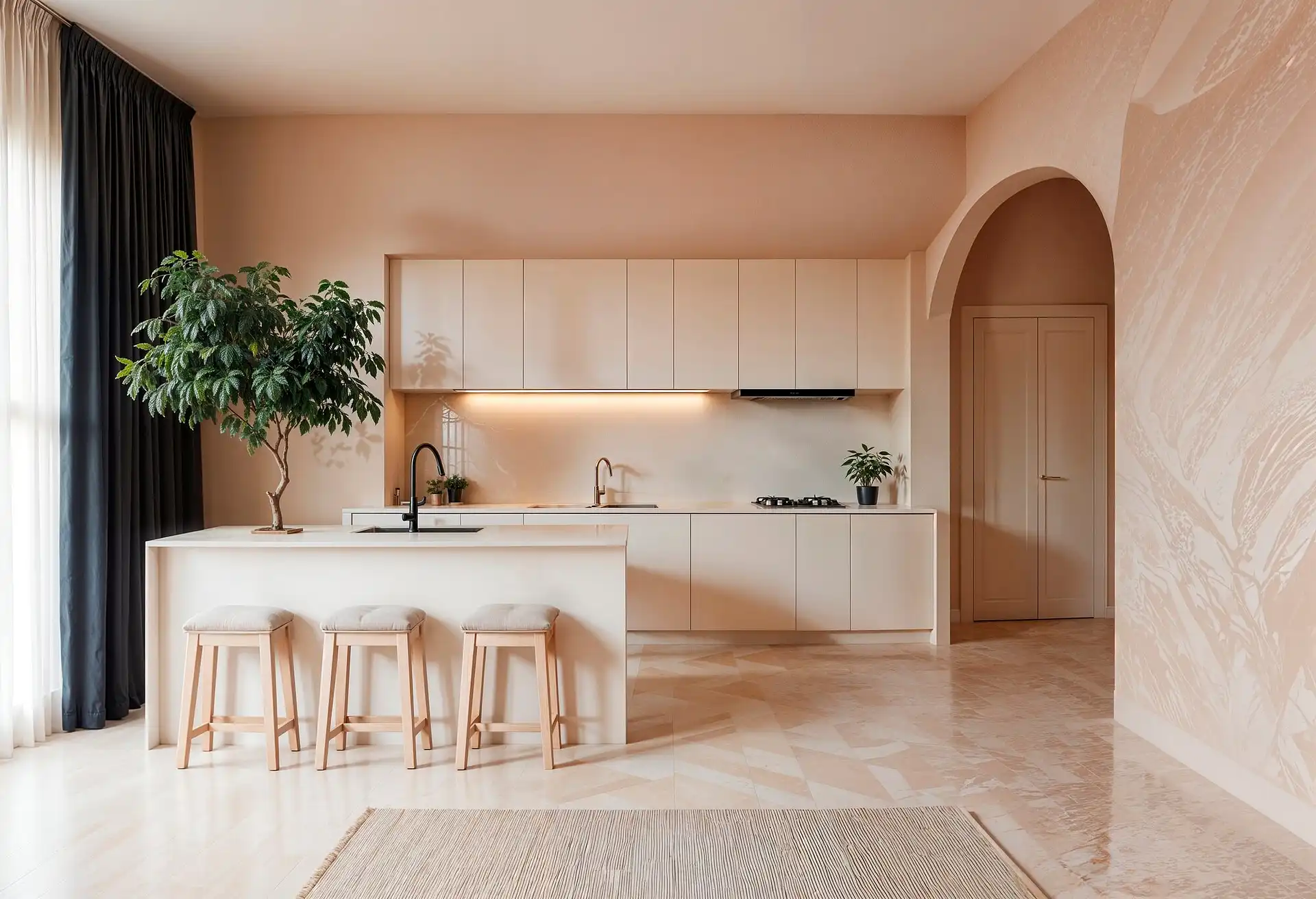
You’ve probably seen one a thousand times and never given it a second thought. It's that boxy section of wall that sits between the top of your kitchen cabinets and the ceiling. That, in a nutshell, is a kitchen soffit. But it's rarely just an empty box; think of it as a purpose-built bridge that gives your kitchen a clean, finished look while hiding all the messy-but-necessary guts of your home.
Decoding the Soffit: A Hidden Workhorse in Your Kitchen
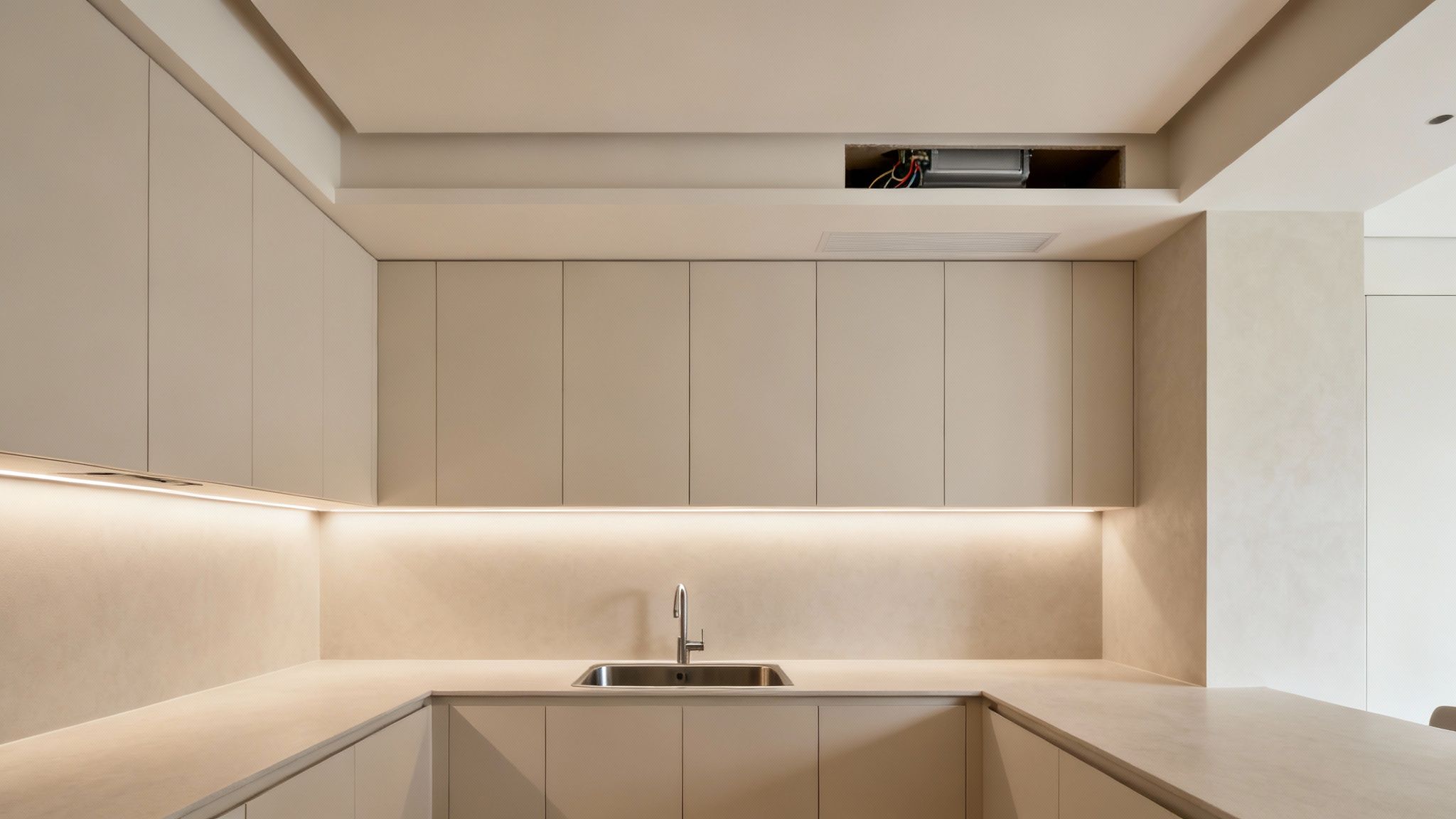
While many people now see them as a bit dated, kitchen soffits were once a genuinely clever solution to some very real construction challenges. Your home’s walls are a maze of pipes, wires, and ductwork. The soffit was designed to create a dedicated enclosure for all these systems right where they concentrate the most—the kitchen. Without it, you’d be staring at an exposed vent pipe for your range hood or plumbing lines snaking over your cabinetry.
This feature really took hold during the post-World War II housing boom, when builders prioritized practicality. Ceilings were typically between 84 to 96 inches high, and soffits became the standard way to close the awkward gap above cabinets while hiding the mechanicals needed for new appliances. It was an elegant way to conceal everything from ventilation ducts to the wiring for overhead lighting. If you're curious about the history, you can read about the evolution from standalone furniture to built-in soffits.
The Purpose of a Kitchen Soffit
At its heart, a soffit pulls double duty, serving both an aesthetic and a practical role. On the aesthetic side, it frames the cabinetry, making the kitchen feel more intentional and "built-in." But its practical job is where it really shines—it’s a problem-solver, neatly tucking away the home systems that would otherwise be a total eyesore.
For anyone planning a remodel in places like Boca Raton or Delray Beach, figuring out what’s lurking inside your soffit is always the first move.
A soffit isn't just an empty box. It can be a vital housing for plumbing from a second-floor bathroom, electrical for recessed lighting, or the main ventilation duct for your range hood. Opening one without a plan can turn a simple cosmetic update into a major construction project.
Quick Guide to Kitchen Soffit Functions
To break it down even further, here's a simple table that summarizes the key jobs a soffit performs in a kitchen's design and function.
| Function Type | Description | Common Examples |
|---|---|---|
| Structural/Mechanical | Conceals the home's essential systems that run between floors or through walls. | Plumbing pipes, HVAC ductwork, electrical wiring, and security system wires. |
| Aesthetic/Architectural | Creates a deliberate visual transition between cabinets and the ceiling, providing a finished look. | Framing the kitchen, adding a location for decorative crown molding, or lowering a section of a high ceiling. |
| Functional Lighting | Provides a convenient, pre-built structure for installing various types of lighting. | Housing for recessed can lights to illuminate countertops or ambient accent lighting. |
As you can see, a soffit can be doing one—or all—of these things at once. Knowing which roles yours is playing is critical before you decide to keep it, modify it, or tear it out completely.
The Great Debate: Keeping or Removing Your Soffit
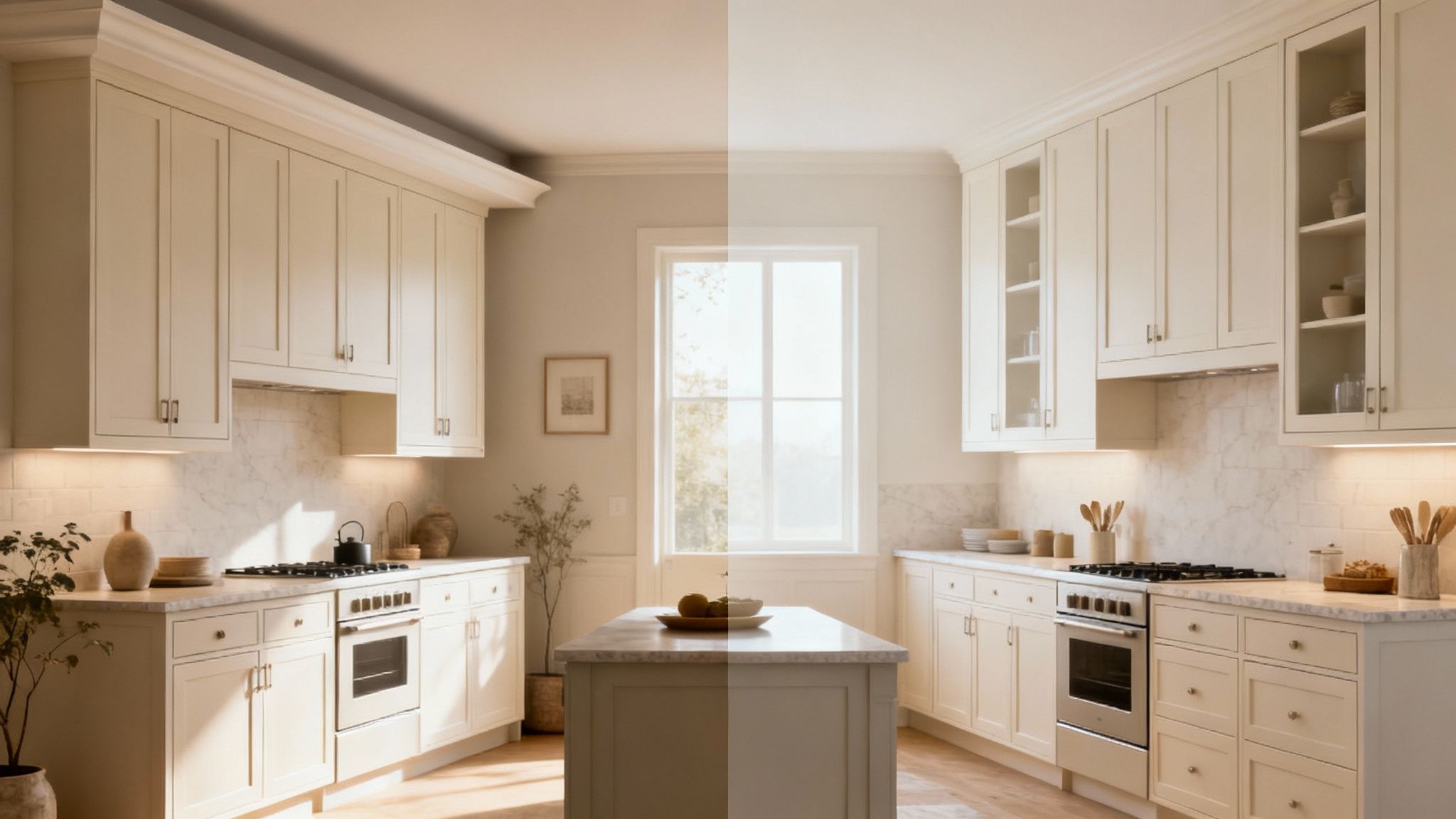
This brings us to the question every homeowner with a dated kitchen eventually asks: should the soffit stay or should it go? It's tempting to grab a sledgehammer in the name of modernization, but the decision is rarely that simple. A kitchen soffit can be a purely decorative leftover from a past era, but more often than not, it’s a master of disguise, concealing the very systems that make your home function.
The right choice really boils down to three things: your budget, your design goals, and what’s hiding inside that box. It's about looking past the drywall to understand the real-world impact of either keeping it or tearing it out.
Reasons to Keep Your Kitchen Soffit
Sometimes, the smartest move is to work with what you've got. Keeping the soffit might be the best call if it's hiding essential infrastructure that would be a nightmare to move.
- Containing Critical Systems: Think about it—rerouting plumbing from an upstairs bathroom or moving major HVAC ducts can blow up a renovation budget by thousands. If your soffit is doing this kind of heavy lifting, keeping it is often the most practical, wallet-friendly choice.
- Sticking to a Budget: A soffit removal project can be a Pandora's box of unexpected costs. If you're on a tight budget, modernizing the existing soffit is a much more predictable and affordable path than risking a costly discovery behind the drywall.
- Structural Integrity: In some homes, especially older ones here in South Florida, a soffit might conceal a structural beam that’s holding things up. Removing it isn't just difficult; it's a major engineering project that’s often not worth the expense.
Reasons to Remove Your Kitchen Soffit
On the other hand, if a little exploratory surgery reveals the soffit is just an empty box, removing it can completely transform your kitchen. This is where the real design magic happens.
The benefits are hard to ignore:
- Creating Vertical Space: Getting rid of the soffit lets you install taller, 42-inch upper cabinets that go all the way to the ceiling. This doesn't just add a ton of storage; it draws the eye upward, making the entire kitchen feel bigger, brighter, and more open.
- Achieving a Modern Aesthetic: That clean, seamless line from countertop to ceiling is the signature of a high-end, contemporary kitchen. Ditching the soffit removes that bulky, horizontal break for a sleek, streamlined look.
While soffits have largely fallen out of favor in contemporary kitchen design, they retain practical value in specific situations. Their primary function is to conceal mechanicals—like ventilation systems, wiring, or plumbing—that would otherwise create visual clutter. For more insights on their practical benefits, you can explore why soffits are still relevant in many kitchens.
So, what's the verdict for your home? The best way to make a confident choice is to weigh the pros and cons side-by-side.
Soffit Decision Matrix: Keep vs. Remove
| Consideration | Reasons to Keep the Soffit | Reasons to Remove the Soffit |
|---|---|---|
| Budget | Avoids high costs of rerouting plumbing, HVAC, or electrical systems. The project's cost is predictable. | Potentially high and unpredictable costs if complex systems are found. Best for homeowners with a flexible budget. |
| Aesthetics | Can be integrated into the design with crown molding, paint, or lighting to create a traditional or transitional look. | Creates a clean, modern, and seamless look. Makes the kitchen feel larger and more open. |
| Storage | Limits cabinet height to standard sizes (typically 30 or 36 inches), resulting in less storage space. | Maximizes vertical storage by allowing for taller 42-inch cabinets that extend to the ceiling. |
| Function | It may be non-negotiable if it hides critical structural beams or complex mechanical systems. | Ideal if the soffit is purely decorative or contains only easily rerouted wires or minor pipes. |
| Project Timeline | Working with the existing structure is faster and less disruptive. | Demolition and rerouting can add significant time and complexity to your renovation schedule. |
Ultimately, the choice to keep or remove your kitchen soffit is a personal one. By carefully weighing the cost of removal against the aesthetic gains, you can make an informed decision that aligns perfectly with your vision and budget for your home in Boca Raton or Delray Beach.
How to Modernize a Kitchen Soffit You Cannot Remove
So, you’ve discovered the kitchen soffit is hiding plumbing, wiring, or ductwork that’s impossible to move. It can feel like a major roadblock to your dream kitchen, but it doesn't have to be. Instead of viewing that soffit as an obstacle, it's time to reframe it as a design opportunity—a blank canvas, really.
You can actually work with this structural element to create a high-end, custom look. The secret is to stop fighting the soffit and start making it an intentional part of your kitchen's design.
Create a Seamless, Built-In Look
One of my favorite ways to handle a soffit is to make it disappear in plain sight by blending it into the cabinetry. This move creates a clean, cohesive line from the top of your cabinets to the ceiling, giving you that custom, floor-to-ceiling millwork look you see in high-end design magazines.
- Paint It to Match: The easiest trick in the book. Paint the soffit the exact same color and finish as your upper cabinets. When the color flows seamlessly from the cabinet face, over the soffit, and up to the ceiling, the eye stops seeing it as a separate, clunky box.
- Add Crown Molding: To really sell the illusion, run crown molding along the top of the soffit where it meets the ceiling, and then add another piece where the soffit meets the cabinets. This frames it out beautifully and makes the whole unit look like one solid, custom-built piece.
By visually merging the soffit with your cabinetry, you're not just hiding it—you're turning a dated feature into an architectural element that adds a sense of height and grandeur. It’s an incredibly smart solution that boosts the kitchen’s value without any demolition.
Turn the Soffit into a Focal Point
If blending it in feels too safe, why not go in the opposite direction and make the soffit a standout feature? By wrapping it in a beautiful material, you can transform what was once an eyesore into a stunning detail that draws the eye upward.
Think about materials that tie into the rest of your kitchen's style:
- Shiplap or Beadboard: Perfect for the coastal and modern farmhouse designs we see a lot of here in South Florida. Wrapping the soffit in painted shiplap adds just the right amount of texture and charm.
- Tile or Stone Veneer: Want something more dramatic? Cladding the soffit in the same tile you used for your backsplash creates a bold, unified look. A thin stone veneer can also add incredible texture and a high-end feel.
- Wood Paneling: For a touch of warmth, wrap the soffit in wood that matches your floors or a kitchen island. This brings in a natural element and can make the whole space feel richer.
Integrate Functional and Ambient Lighting
Older kitchens are notoriously under-lit, and a soffit offers the perfect opportunity to fix that. It's a goldmine for adding layers of modern, sophisticated lighting that can completely change the feel and function of your kitchen.
You could install recessed downlights directly into the soffit. This will give you amazing task lighting right over your countertops, getting rid of those annoying shadows while you're prepping food. For something a little softer, you can install upward-facing LED strip lights on top of the cabinets. This creates a beautiful, ambient glow that bounces off the ceiling and makes the entire room feel warmer and more inviting.
If you're searching for more ways to update your space, exploring different kitchen renovation ideas on a budget can spark some great inspiration. These design strategies are proof that you don't always need a sledgehammer to get a stunning, modern kitchen.
The Soffit Removal Process: What to Expect
So, you’re thinking about getting rid of that kitchen soffit? It’s a move that can instantly open up your kitchen and give it a clean, modern look. But it's not quite as simple as taking a sledgehammer to it. The whole project really starts with a little detective work to see what’s actually hiding inside.
Before any real demolition can happen, a contractor needs to cut a few small, well-placed holes in the drywall. This is, without a doubt, the most important step. Think of it like a surgeon doing a quick exploratory check before the main event—it tells you whether you're dealing with a simple empty box or the nerve center of your home.
Understanding the Scope of Your Project
What we find inside that soffit dictates everything: the complexity, the cost, and how long it's all going to take. You're typically going to run into one of two situations, and they are worlds apart in terms of what comes next.
- The "Hollow Soffit" Scenario: This is the best-case scenario and what every homeowner hopes for. If the soffit is just an empty frame put there for looks, taking it out is a breeze. It’s a matter of demolition, patching up the drywall, and blending the ceiling texture. A pretty straightforward and budget-friendly job.
- The "Complex Rerouting" Scenario: This is the one we see most often. If the soffit is hiding plumbing pipes, HVAC ductwork, or electrical wires, the project just got a lot bigger. Each of those systems needs a licensed pro—a plumber, an HVAC tech, or an electrician—to come in and safely move everything around.
Of course, sometimes removal isn't an option. If you have to keep it, you can still modernize it.
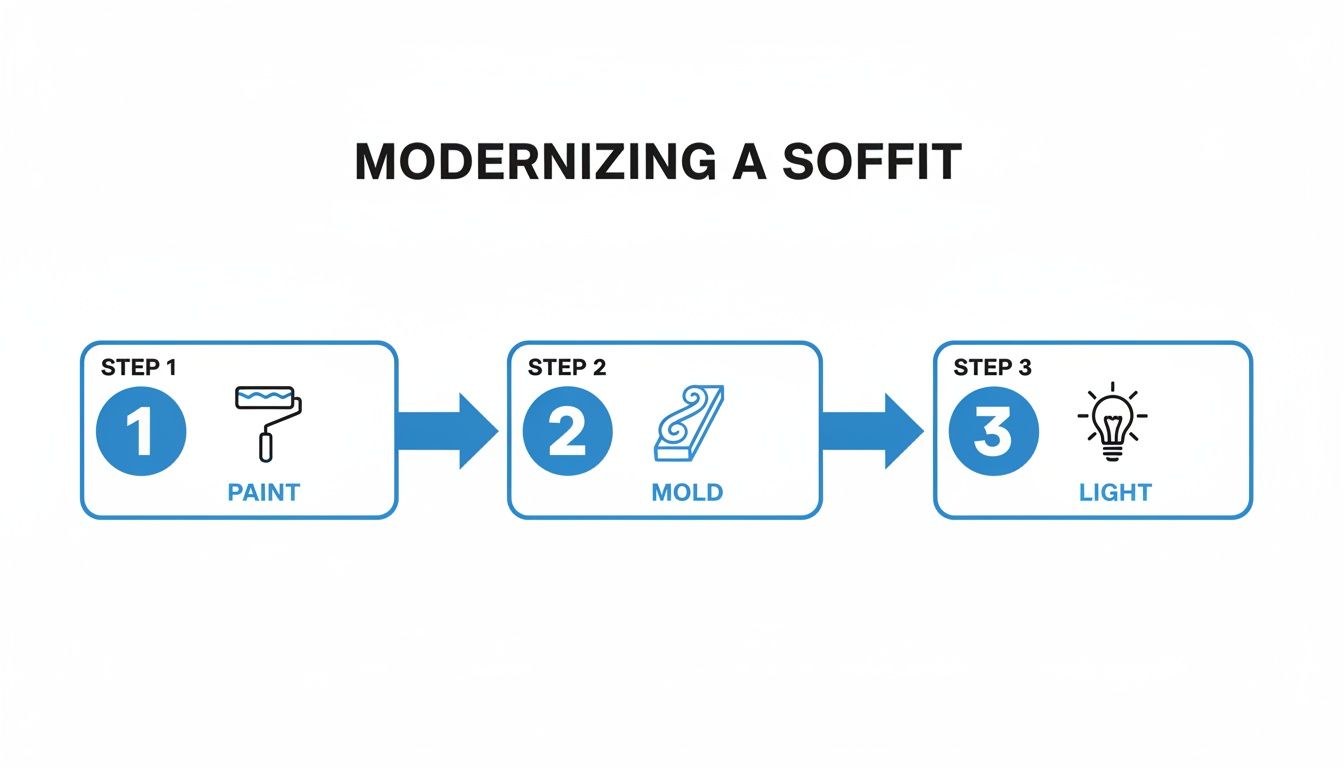
Whether you're updating a soffit or removing it, the main takeaway is that you need a solid plan before you start swinging hammers.
Assembling Your Professional Team
If you do need to reroute any utilities, your general contractor will bring in a team of trusted specialists. Here in South Florida—especially in places like Boca Raton and Parkland—all that work has to be done to code, so hiring licensed professionals isn't just a good idea, it's the law. Your GC will handle the scheduling to make sure the right person is there at the right time, keeping the project moving smoothly.
The cost to remove a soffit can swing wildly, from just a few hundred dollars for a hollow one to several thousand dollars if it’s packed with plumbing and ducts. This is why getting a detailed quote that covers all the "what-ifs" is so important before you commit.
That initial discovery phase really sets the stage for the entire project. Knowing from the get-go that things could get complicated helps you set a realistic budget and timeline. This one decision can have a ripple effect on your entire renovation; you can see how it all fits together in our guide to the typical kitchen renovation timeline. By starting with a thorough investigation, you avoid nasty surprises down the road and can plan for a much smoother renovation.
Why Modern Kitchens No Longer Have Soffits
Walk through a brand-new home today, and you'll likely notice something missing from the kitchen: that boxed-in section above the cabinets. This feature, the soffit, was once a standard in home building, but its near-disappearance from modern design tells an interesting story about how our tastes and homes have changed.
The biggest reason for this shift comes down to simple architecture. For most of the 20th century, homes were built with standard 8-foot ceilings. A soffit made sense in that context; it was a practical and visually balanced way to fill the gap above the upper cabinets. But that all started to change during the housing boom of the early 2000s.
The Rise of Taller Ceilings
New construction standards began to push ceiling heights upward. The old 96-inch standard gave way to ceilings well over 100 inches, with 10-foot ceilings becoming common in many new homes today.
As kitchens grew taller, the soffit started to look out of place. It became a bulky, horizontal block that visually cut the room's height down, making the extra vertical space feel wasted. Designers and homeowners quickly saw that this valuable real estate could be put to much better use.
A Shift Toward Open and Airy Design
This change in construction happened right as our design philosophy was evolving. The modern kitchen is all about feeling open, airy, and connected to the rest of the home. Bulky soffits do the exact opposite—they visually lower the ceiling and make the kitchen feel more closed in.
By getting rid of the soffit, we can now run cabinetry all the way to the ceiling. This doesn't just add a ton of extra storage (a huge win for any homeowner), it also creates a clean, unbroken vertical line that pulls your eyes upward, making the whole kitchen feel taller and more impressive.
This love for vertical lines and open space is a key part of contemporary design. To really see why soffits have fallen out of favor, just look at popular modern kitchen design ideas; they almost always feature full-height cabinetry and a seamless look. The sleek, integrated style you get without a soffit is now the gold standard.
If you're thinking about your own space, check out our guide on 10 modern kitchen design trends to see more examples of how this shift toward clean lines and maximized height has taken over.
Key Questions to Ask Your Remodeling Contractor
Before you sign on the dotted line, you need to have a frank, open conversation with your remodeling contractor about that kitchen soffit. Getting on the same page from the very beginning is the single best way to avoid expensive surprises and headaches later on. Think of it as a strategy session—one that can save you thousands of dollars and a ton of stress.
The goal is to move forward with a clear, shared vision. Here's what you need to ask to make sure that happens.
Uncovering What Lies Beneath
The very first step is a bit of detective work. How a contractor proposes to figure out what's inside your soffit speaks volumes about their experience and attention to detail.
-
How will you determine what’s inside my soffit before demolition? The right answer here involves cutting small, strategic exploratory holes. It’s a low-impact way to get a definitive look at any plumbing, wiring, or ductwork hiding in there. A pro will always diagnose before they demolish.
-
Is the soffit hollow, or does it contain essential systems? This is the million-dollar question. If it’s just an empty box built for looks, removal is straightforward. But if it’s housing the guts of your home’s mechanical systems, you’re looking at a much more involved—and expensive—plan.
These initial questions will define the true scope of your project right out of the gate.
Finding the right professional is just as important as asking the right questions. A reputable contractor will welcome this discussion and provide clear, honest answers. To help with your search, check out our detailed guide on how to choose a kitchen remodeling contractor for your South Florida home.
Clarifying Costs and Design Impact
Once you know what you're dealing with, the conversation naturally turns to money and design. These two things are completely intertwined, so you need real numbers to make an informed decision.
A good contractor should be able to break down the costs for different scenarios. Ask them these questions to get the financial clarity you need:
- What is the cost difference between removing the soffit versus designing around it? Get them to give you two separate estimates. This allows you to do a simple cost-benefit analysis: is the open, modern look worth the extra investment?
- If we find plumbing or HVAC, what is the estimated cost to reroute it? No one can give you a to-the-penny quote without seeing the situation firsthand, but an experienced local contractor can provide a realistic price range based on similar jobs they've done in homes around Boca Raton, Parkland, or Delray Beach.
- How will removing the soffit affect my new cabinet layout and cost? Taking out a soffit usually opens the door for taller, more spacious 42-inch cabinets. You'll want to confirm exactly how this upgrade changes your cabinetry budget and the overall storage capacity of your new kitchen.
Your Kitchen Soffit Questions, Answered
Can I Just Tear Out My Kitchen Soffit Myself?
I get this question all the time, and while I admire the can-do spirit, this is one area where I strongly advise against going it alone. It might look like a simple box made of drywall, but that soffit is often a hiding place for the guts of your home—think plumbing, HVAC ducts, and electrical wiring.
Trying to demo it without knowing exactly what’s inside is a huge gamble. You could accidentally cut a crucial wire, puncture a pipe, or damage a duct, leading to repairs that are far more expensive and complicated than the original project. For safety's sake and to avoid code violations, always bring in a professional contractor to take a look first.
What's the Real Cost to Remove a Soffit?
This is a classic "it depends" situation. The price tag for soffit removal can swing wildly based on what we find inside. If it’s just an empty, decorative box, you might only be looking at a few hundred dollars for demolition and patching the ceiling and walls.
However, if that soffit is housing ductwork or plumbing that needs to be completely rerouted by licensed tradespeople, the cost can quickly jump into the several thousand dollar range. The only way to know for sure is to have it professionally assessed.
Will Removing My Soffit Actually Add Value to My Home?
Absolutely, in almost every case. Taking out a bulky, dated soffit is one of the most impactful ways to modernize a kitchen. It instantly makes the room feel taller and more open, and it clears the way for you to install beautiful 42-inch upper cabinets that offer significantly more storage.
For homeowners in competitive markets like Boca Raton and Delray Beach, these kinds of updates are a major selling point. Buyers are looking for modern, spacious kitchens, so this project definitely boosts your home's appeal and overall value.
Ready to discover the potential hidden in your kitchen? The team at Kitchen Renovations Perfected offers complimentary consultations to help you make the best decision for your home, budget, and style. Schedule your design consultation today!