Walk-in closet organization systems are far more than just a few extra shelves and a hanging rod. Think of them as a complete, engineered solution designed to bring order, function, and even a touch of luxury to one of the most personal spaces in your home. They transform a chaotic, stressful closet into a streamlined, functional environment where everything has its place.
This isn't just about tidying up; it's about creating a personal sanctuary that makes your daily routine feel effortless.
From Chaos to Calm With a Closet Organization System
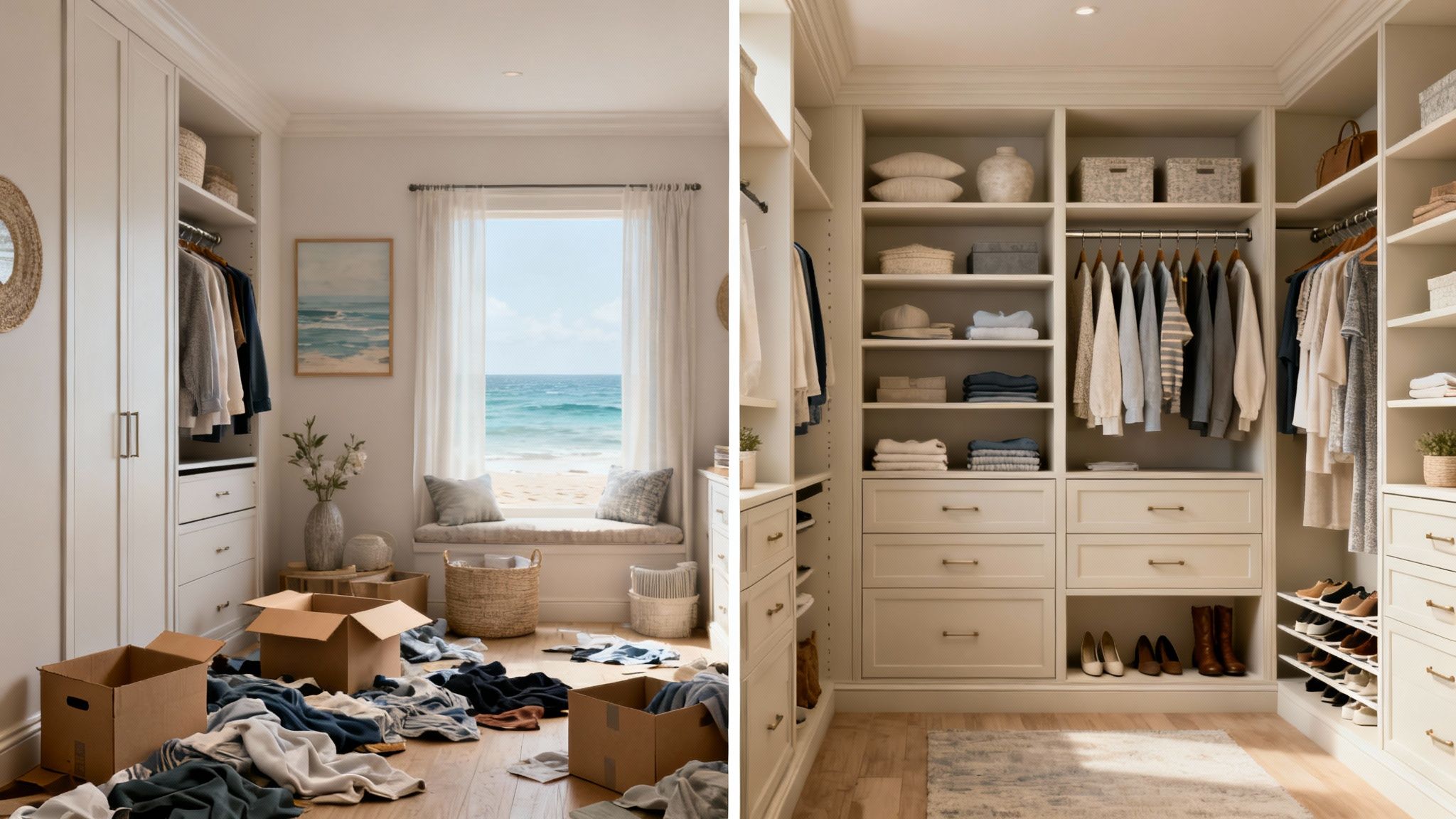
Picture a cluttered workbench versus a professional workshop where every tool is perfectly organized and within reach. A well-designed closet system brings that same level of intentional order to your wardrobe. It’s a thoughtfully planned solution that works for you, not against you.
Here in South Florida, especially in communities like Boca Raton, Parkland, and Delray Beach, these systems are quickly becoming an essential feature, not just a luxury. They're a genuine investment in your quality of life, saving you precious time and cutting down on daily stress. Imagine starting your day by calmly selecting an outfit instead of digging through piles of clothes. That's the difference a real system makes.
Why a System is More Than Just Storage
A true organization system is built on smart design principles, not just off-the-shelf parts. It starts with understanding your specific lifestyle, your wardrobe, and how you use the space. From there, we create a personalized layout that makes the most of every square inch.
Here’s what sets a professional system apart:
- Strategic Zoning: We create dedicated "zones" for different categories—a space for long dresses, another for folded sweaters, a showcase for your shoe collection, and easy-access spots for accessories.
- Optimized Components: The magic is in the mix. We combine drawers, adjustable shelves, valet rods, and specialized racks to perfectly suit what you own.
- Ergonomic Layout: It’s all about flow. Your most-used items are placed at eye level and within easy reach, while seasonal or less-used items are stored higher up. It just makes sense.
At the core of it all, you'll find sturdy, efficient hanging rails for wardrobe that provide the foundation for an orderly closet. This thoughtful planning is what elevates a simple storage space into your own personal boutique. If you're looking for more tips, our guide on how to organize closet shelves is a great place to start.
An Investment in Your Home's Value
A well-appointed walk-in closet isn't just a personal perk; it's a significant value-add for your home. In fact, these systems have become a hallmark of modern, upscale design.
The global market for closet organization systems was valued at an impressive USD 11.1 billion in 2023 and is projected to double to USD 22.3 billion by 2033. This boom is driven by a growing demand for personalized home features, a trend we see every day in luxury markets across South Florida where sophisticated walk-ins are often a key selling point.
Finding Your Perfect Fit Among Closet Systems
Choosing the right walk-in closet organization system feels a lot like buying a car. You can go for a reliable, pre-configured model that gets the job done, or you can commission a bespoke, high-performance machine built to your exact specifications. Neither is better than the other; the right choice is all about your lifestyle, your budget, and what you need the system to do for you.
Just like with cars, closet systems come in a few main flavors, each striking a different balance between flexibility, cost, and personalization. Getting a handle on these differences is the first step toward building a closet that feels like it was truly made for you. Let's break down the three main types: modular, semi-custom, and fully custom.
Modular Closet Systems: The Flexible Foundation
Think of modular systems as high-quality, off-the-rack solutions for your closet. They're made up of pre-manufactured components—think shelving units, drawer stacks, and hanging modules—that you can mix and match to fit your space. It's a bit like working with premium building blocks to create a highly functional and polished look.
This approach is a great fit for standard-sized closets, like those often found in condos and newer homes in communities around Highland Beach where the dimensions are fairly consistent. The biggest wins here are speed and cost. You can get a professionally organized space without the long wait times or higher price tag of a custom build.
The trade-off, however, is a perfect fit. Since you're working with standardized pieces, you might end up with some awkward gaps or find that the components don't quite use every last inch of a quirky corner. Still, it’s a fantastic choice for anyone keeping a close eye on the budget or for those who like the idea of rearranging things down the road.
Semi-Custom Systems: The Tailored Compromise
Semi-custom systems are the perfect middle ground, blending the efficiency of pre-made parts with the feel of a personalized design. You start with a standard framework of cabinet boxes and components but then get to pick from a curated menu of sizes, finishes, door styles, and hardware.
It’s like ordering a new car: you choose the trim package, the paint color, and the interior upgrades. The underlying structure is standard, but the final product feels like it's one-of-a-kind. This gives you a much more integrated, built-in look than purely modular setups, offering a taste of custom design without the full custom investment.
The real beauty of the semi-custom route is getting that high-end look while keeping the budget in check. You can splurge on premium drawer fronts or eye-catching hardware to elevate the design, while standard cabinet sizes help keep costs from getting out of hand.
This is the go-to option when you have a specific style in mind or need to work around slightly unusual dimensions without going for a full-blown custom project.
Fully Custom Systems: The Bespoke Masterpiece
This is the absolute pinnacle of personalized storage—the equivalent of a suit tailored to your exact measurements. With a fully custom closet system, every single element is designed and built from the ground up to fit the precise contours of your space and your wardrobe.
For homeowners in places like Parkland with unique architectural challenges—sloped ceilings, odd angles, or immovable obstructions—a custom solution is often the only way to genuinely maximize every inch of space. There are no "standard sizes" or preset limits here. If you can imagine it, a talented designer and craftsperson can bring it to life.
This level of personalization touches every detail:
- Material Selection: You have an unlimited palette to choose from, whether it’s exotic wood veneers, sleek high-gloss acrylics, or paint colors custom-matched to your walls.
- Component Design: You get to specify the exact height of your hanging rods, the perfect depth for your drawers, and the layout of every single divider.
- Integrated Features: This is where you can seamlessly build in features like LED lighting, hidden jewelry safes, pull-out ironing boards, and charging stations right into the cabinetry.
A fully custom closet is more than just storage; it’s an investment in unparalleled function and luxury. It becomes a true extension of your home's architecture and a perfect reflection of your personal style, delivering a seamless, wall-to-wall fit that no other method can replicate.
Designing a Smarter Closet Layout
A high-performance walk-in closet organization system is only as good as the blueprint it's built on. Think about it: an architect wouldn't design a house without first considering how people will actually move through it. The same principle applies here. A thoughtful layout is the foundation that ensures your daily routine is smooth, intuitive, and completely clutter-free.
The goal is to move beyond just lining the walls with shelves and rods. A truly smart layout transforms your walk-in closet from a passive storage box into an active, functional space that works for your life. Let’s look at how to master the most common closet shapes and create dedicated zones that finally bring some sanity to your wardrobe.
Planning for Common Walk-in Closet Shapes
Most of the walk-in closets we see in homes around Boca Raton and Delray Beach fall into one of three common shapes. Each one comes with its own set of opportunities and challenges, and understanding your closet's physical footprint is the first step to unlocking its real potential.
-
The L-Shaped Closet: This layout uses two adjoining walls for storage, which is fantastic for creating a more open, spacious feel. It often leaves a free wall for a full-length mirror or even a small bench. The corner can seem tricky, but with specialized corner shelves or carousels, it becomes some of the most useful real estate in the closet.
-
The U-Shaped Closet: By using three full walls, the U-shaped design is an absolute powerhouse for maximizing every inch of storage. If you have an extensive wardrobe, this is your best friend, as it offers the most linear feet for hanging clothes and shelving. The one non-negotiable is making sure you leave enough clearance—at least 36 inches of walkway—to move around comfortably.
-
The Galley-Style Closet: This is simply a long, narrow closet with storage running along two parallel walls. It’s an incredibly efficient use of space that creates a streamlined corridor of organization. This layout works best when you give each wall a different job—for example, all your hanging clothes on one side, with drawers and shoe shelves on the other.
This flowchart gives you a great visual of how different systems, from modular to fully custom, can be adapted to fit these common layouts.
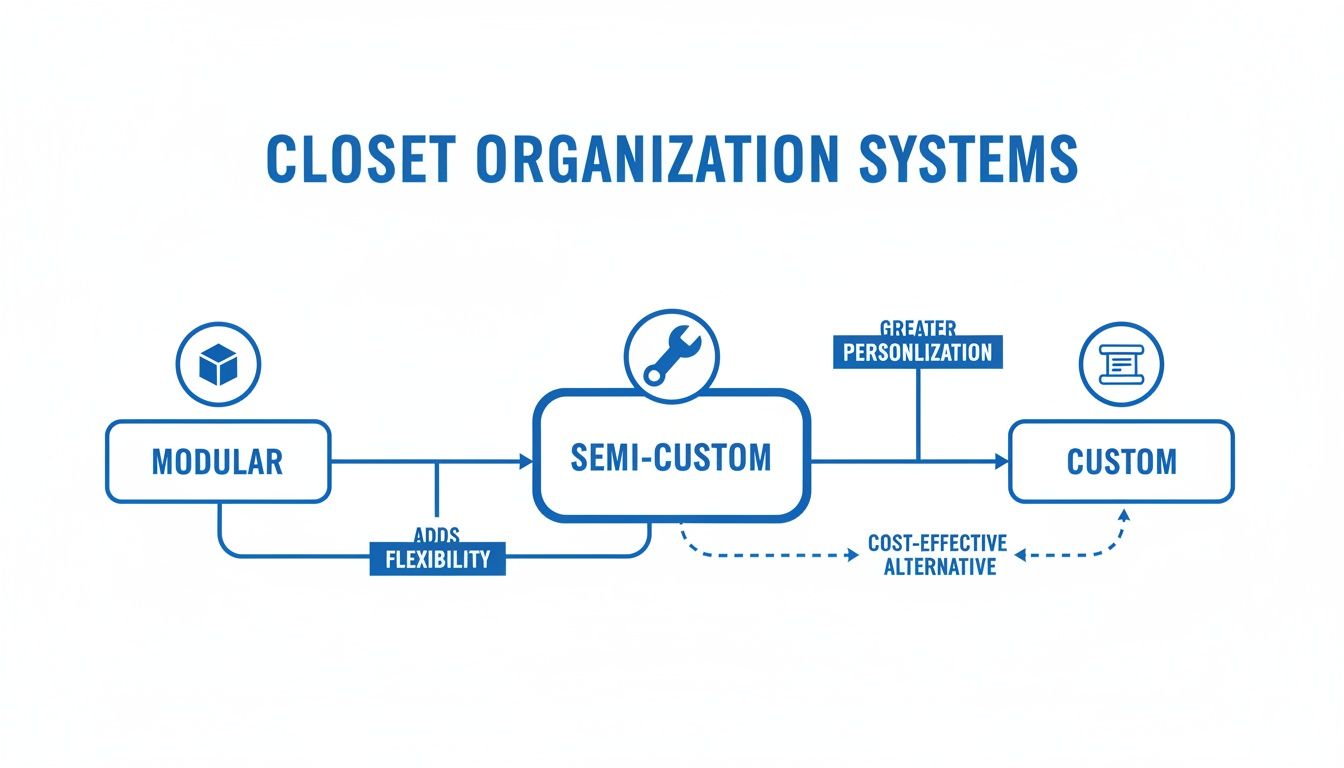
As you can see, moving from modular to custom solutions gives you far more flexibility to perfectly tailor the system to your closet's unique shape and quirks.
The Power of Functional Zoning
Once you have a handle on your closet's shape, the next step is zoning. This is just a simple but incredibly powerful way of dedicating specific areas to different parts of your wardrobe. It’s like organizing a grocery store—you instinctively know where everything is supposed to be.
Zoning isn't just about being tidy; it's about efficiency. By grouping like items together, you create a logical flow that eliminates guesswork and saves you time every single day. A well-zoned closet means no more frantic searching for a specific belt or that one pair of shoes.
For instance, you might dedicate one wall to long-hanging items like dresses and coats, another section for double-hanged shirts and pants, and a central tower of drawers for folded sweaters and jeans. Accessories like bags, scarves, and jewelry deserve their own consolidated, easy-to-access home. And if you're looking to get really creative, exploring some smart alcove storage ideas can spark inspiration for using every nook and cranny.
Take Inventory Before You Design
This is the one step people are tempted to skip, but it’s crucial. Before a single shelf goes up, you need to take a detailed inventory of what you actually own. This process empowers you to have a much more productive conversation with a designer and ensures your new system is built for your belongings, not a generic template.
Here’s how to do it right:
- Measure Your Space: Grab a tape measure and get precise dimensions of your closet's width, depth, and height. Be sure to note the location of any obstacles like windows, light switches, or attic access panels. For a complete walkthrough, our guide on how to design a walk-in closet dives into the details.
- Categorize and Count: Go through your entire wardrobe and sort everything into groups. Count your shoes, measure the linear feet your hanging clothes currently take up, and get a rough idea of the volume of your folded items. It doesn't have to be perfect, but it gives you a real-world starting point.
- Prioritize Accessibility: Figure out which items you reach for daily or weekly. These are your "prime-time players," and they need to be stored in the most accessible zones—typically right between your waist and eye level. Less-used seasonal items can go on higher shelves or in tougher-to-reach spots.
Choosing the Right Materials and Finishes
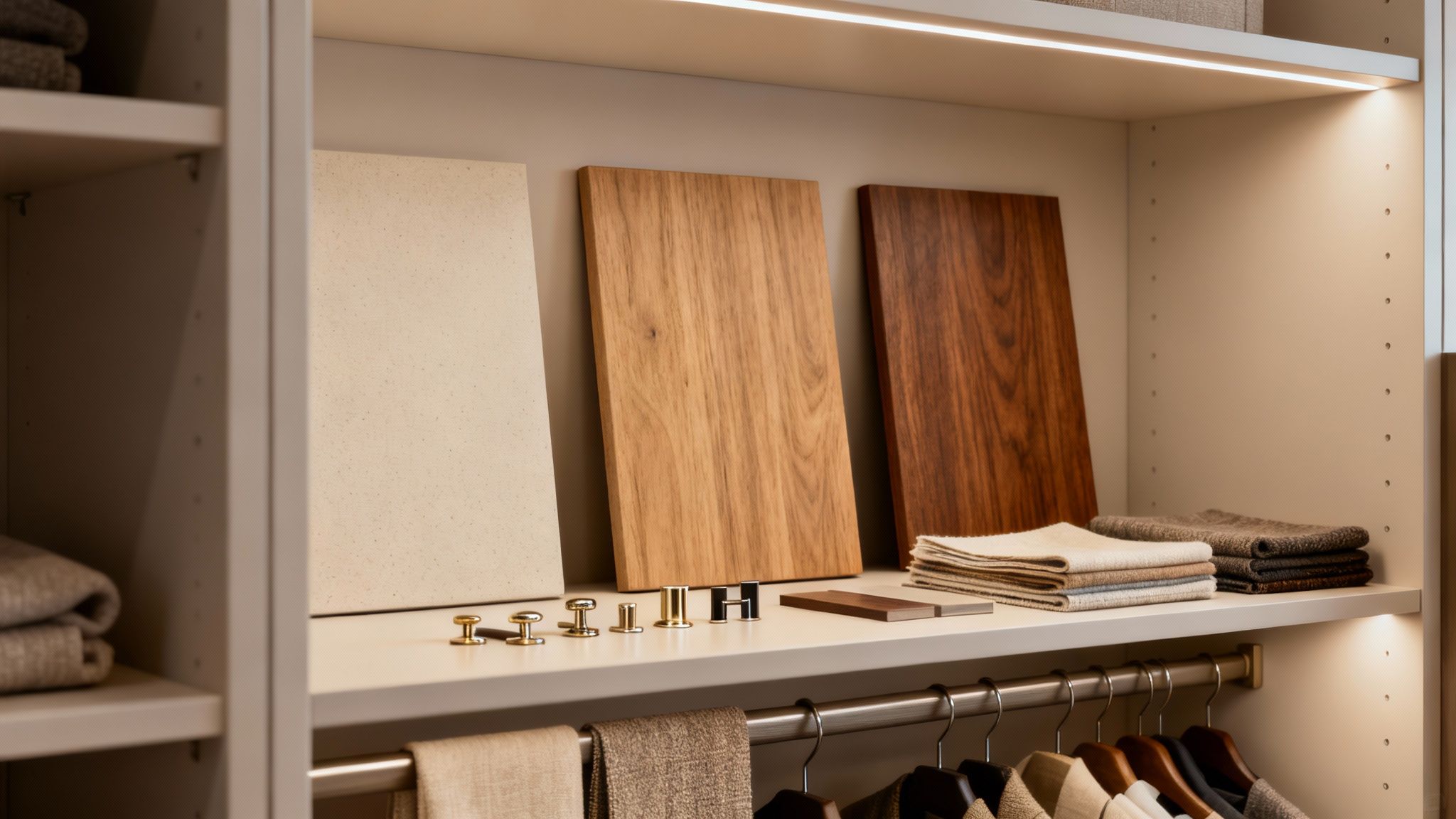
With a layout mapped out, we get to the fun part: picking the materials and finishes that will bring your closet to life. This is where you infuse your personal style into the design. The materials you choose for your walk in closet organization systems aren't just about looks; they dictate the closet's durability, feel, and how you'll care for it down the road.
Think of these choices as the very fabric of your closet. From the sleek durability of modern laminates to the classic warmth of solid wood, every option offers a different blend of aesthetics, performance, and price. Let’s walk through the most common choices to find the perfect fit for your home and lifestyle.
Exploring Core Closet Materials
The skeleton of your closet system is its core material. It’s a decision that really comes down to balancing beauty with everyday practicality. You'll typically run into three main options, each with its own set of strengths.
-
Thermal-Fused Laminate (TFL/Melamine): This has become the workhorse of the modern closet industry, and for good reason. TFL starts with an engineered wood core (usually particleboard) that’s heat-fused with a special resin-coated paper. The result is an incredibly tough, consistent, and scratch-resistant surface available in a huge variety of colors, wood grains, and textures. It's a smart, budget-friendly choice that delivers a clean, polished look with almost no maintenance.
-
Wood Veneer: For anyone who loves the authentic grain of real wood but not the price tag of solid lumber, wood veneer is a fantastic middle ground. It involves bonding a very thin layer of genuine hardwood to a stable core like plywood or MDF. This gives you the rich, one-of-a-kind patterns of species like oak, maple, or walnut, creating a more upscale, traditional ambiance.
-
Solid Wood: This is the pinnacle of classic luxury. Solid wood brings an unmatched warmth and character to a space because every piece is unique. It can be stained or painted for a truly bespoke look that feels substantial and permanent. While it’s the most expensive option and needs a bit more care to prevent scratches, its timeless beauty is undeniable for a heritage-quality closet.
When you're trying to decide, it helps to see how these materials stack up side-by-side.
Material and Finish Comparison For Closet Systems
Here’s a quick breakdown to help you compare the most popular materials at a glance, weighing their durability, cost, and best uses.
| Material | Pros | Cons | Average Cost | Ideal For |
|---|---|---|---|---|
| TFL/Melamine | Highly durable, scratch/stain resistant, wide variety of consistent finishes, low maintenance, most affordable. | Can chip if impacted heavily, perceived as less premium than real wood. | $ | Modern designs, high-traffic closets, budget-conscious projects, and achieving a sleek, uniform look. |
| Wood Veneer | Authentic wood grain appearance, more affordable than solid wood, stable core prevents warping. | Can be scratched or damaged, finish can't be sanded and refinished like solid wood. | $$ | Achieving a high-end wood look without the solid wood price tag; great for transitional and traditional styles. |
| Solid Wood | Unmatched natural beauty, can be sanded and refinished, extremely durable, adds significant home value. | Most expensive option, susceptible to warping in high humidity, can be scratched or dented. | $$$ | Luxury, heirloom-quality closets where budget is a secondary concern and classic elegance is the primary goal. |
Ultimately, the best material is the one that fits your budget, matches your home's aesthetic, and stands up to your daily routine.
A Closer Look at Finishes
The finish is that final layer that truly defines your closet's personality. Whether you're aiming for a contemporary vibe or timeless elegance, the finish you choose sets the entire mood. For instance, high-gloss finishes are fantastic for bouncing light around, creating a bright and airy atmosphere that works beautifully in modern homes here in Parkland.
On the other hand, matte or satin finishes offer a softer, more subtle look that does a great job of hiding fingerprints and small scuffs. For wood veneer and solid wood, stains are used to bring out the natural beauty of the grain, with options ranging from light and natural to deep and dramatic. The right finish doesn't just complete the look; it adds a crucial layer of protection.
Your closet’s finish is more than just a color—it’s a tactile and visual element that interacts with your home's lighting and style. A high-gloss white can make a small closet feel larger, while a dark wood stain can create a cozy, boutique-like ambiance.
Essential Components and Hardware
Beyond the big surfaces, it’s the smaller components and hardware that make your closet truly work for you. These are the details that take a closet from good to great, turning it into a space that actively makes your daily routine smoother.
Be sure to consider these high-impact elements:
- Adjustable Shelving: Life changes, and so does your wardrobe. Adjustable shelves give you the freedom to reconfigure your storage as needed.
- Drawer Dividers: These are a must for keeping small items like jewelry, ties, socks, or delicates perfectly organized and easy to spot.
- Valet Rods: A simple but brilliant little slide-out rod for staging tomorrow's outfit or hanging a few items from the dry cleaner.
- Integrated Lighting: LED strip lighting placed inside cabinets or along closet rods is a game-changer, illuminating your wardrobe so you can easily see true colors and find exactly what you're looking for.
Hardware—the handles, knobs, and drawer pulls—is the jewelry of your closet system. Finishes like brushed brass, matte black, or polished chrome can be chosen to echo your home's existing decor, tying the whole design together for a polished, intentional look.
Budgeting for Your Dream Closet
Let's talk money. Figuring out the cost of a walk-in closet organization system is often the first, and most important, step in turning your vision into a reality. It's best to think of this as an investment in your home's value and your daily routine, not just another expense. The final price tag will come down to a few key things: the materials you choose, how complex the design is, and how much customization you want.
Much like a kitchen renovation, the budget for a closet system can swing pretty dramatically. A simple, off-the-shelf modular system will be on the lower end of the spectrum. On the other hand, a fully custom, built-in closet with all the bells and whistles and high-end materials will, of course, be a more significant investment. Things like custom drawers, integrated LED lighting, and the amount of hands-on labor needed will all shape the final cost.
Breaking Down the Investment Tiers
To give you a clearer idea of what to expect, let's break down the typical cost levels. These ranges should help you set some realistic expectations as you start planning your project here in the Boca Raton area.
- Modular Systems: These are your most budget-friendly option. They offer fantastic organization without breaking the bank, primarily by using standard-sized components and durable materials like TFL (melamine).
- Semi-Custom Systems: This is a very popular middle ground. You get a taste of custom design and more choices in finishes and component sizes, giving you a more polished, built-in look without the full custom price.
- Fully Custom Systems: This is the top tier. These systems are designed and built from the ground up, tailored perfectly to your space and needs. The investment here reflects the one-of-a-kind design, premium materials like solid wood or high-end veneers, and the expert craftsmanship that goes into it.
The most important thing to remember when budgeting is that you're paying for long-term value. A well-built system makes your daily life easier, adds serious appeal to future homebuyers, and is designed to last for decades—unlike flimsy wire shelving you might have to replace every few years.
Understanding the Return on Your Investment
Putting money into a quality closet system pays you back in more ways than just being organized. The home storage and organization market is absolutely booming, which tells you just how much homeowners value these features. In the U.S. alone, the market is valued at USD 12.05 billion for 2025 and is projected to climb to USD 15.21 billion by 2030. A huge piece of that growth comes from bedroom closets, especially walk-ins.
This trend is a clear signal that a professionally installed closet is a real asset. For homeowners in South Florida, partnering with a local expert like Kitchen Renovations Perfected means you're getting the most out of your investment with quality work that meets all local building codes. If you want to dive deeper into the numbers, check out our guide on custom closet installation costs.
A well-designed closet isn't just a line item on a spreadsheet; it's a permanent upgrade to your home. It simplifies your daily life, protects your clothing, and makes your property stand out in a competitive market. By planning your budget with these things in mind, you can create a space that delivers value, day in and day out.
The Professional Design and Installation Process
Bringing a truly organized closet to life is a journey, and frankly, it’s one best taken with a guide. Working with a professional designer and installer isn't just about getting shelves on the wall; it’s a creative partnership that takes your ideas and turns them into a space that works perfectly for you. We handle all the tricky details, from precise measurements to flawless execution.
The whole project hinges on clear communication and painstaking precision. You'll have a dedicated project manager who becomes your go-to person for everything. This isn't just about managing logistics—it's about removing the stress and making the entire experience smooth, predictable, and even fun.
Your Journey From Concept to Completion
Getting from a cluttered "before" to a stunning "after" follows a pretty straightforward path. While we tailor every project to the client, the core steps are always designed to get incredible results without turning your life upside down.
Here’s a look at what you can expect:
- Initial Design Consultation: This is where we just listen. We can meet at our Boca Raton showroom or right in your home to talk about what you need, what you like, and how you imagine your closet functioning. We’ll have material samples and examples on hand to get the ideas flowing.
- Precise On-Site Measurement: Our team comes to your home to take meticulous, professional measurements. This is a crucial step—we account for every nook, cranny, light switch, and outlet to ensure a perfect, wall-to-wall fit. No gaps, no guesswork.
- Collaborative Design & Material Selection: Using those exact measurements, your designer will create a 3D rendering of your new closet. You get to see it all come to life, make tweaks to the layout, and finalize your choices for materials, finishes, and hardware.
- Professional Installation: Once every piece is custom-fabricated, our skilled installers take over. They work cleanly and carefully, making sure every shelf is level and every drawer glides smoothly. Most installations are wrapped up in just a few days.
The Value of Professional Installation
Deciding to go with professional installation is probably the single best decision you can make for your closet system. It’s what separates a system that just looks good from one that performs perfectly for years to come. Our installers ensure every component is anchored securely, preventing any sagging or damage down the road.
This professional touch is more important than ever. Homeowners in communities from Parkland to Delray Beach are looking for lasting, high-quality improvements. The global closet organizers market, valued at USD 7,642 million in 2024, is expected to nearly double by 2032. This isn't surprising when you see the demand for luxury, code-compliant installations that genuinely add to a home's value. You can read more about the booming closet organizers market on credenceresearch.com.
A professional installation is your guarantee of safety, durability, and a perfect fit. It protects your investment and provides the peace of mind that your beautiful new closet is built correctly and will stand the test of time.
Common Questions About Closet Organization Systems
Thinking about a closet remodel always brings up a lot of questions. Getting clear, straightforward answers is the best way to feel confident moving forward with your project. Here are a few of the most common things we hear from homeowners in Boca Raton and the surrounding communities when they’re looking into a new walk-in closet system.
How Long Does It Take to Install a Custom Walk-In Closet?
The timeline really depends on the complexity of the system you choose. A simple modular setup from a big-box store could be done in a day. But a truly custom, built-in system is a different story—it’s a more involved process that often takes several days to install perfectly.
The entire project has a few phases. The design process, where we work together to get the layout just right, usually takes about one to three weeks. After that, fabricating the custom parts takes another four to eight weeks. Don't worry, though—during our first chat, we'll map out a detailed project schedule so you know exactly what to expect.
Will a New Closet System Increase My Home's Value?
Yes, it absolutely can. A high-quality, beautifully organized walk-in closet is a huge draw for potential buyers, especially in competitive markets like ours. It instantly elevates the master suite and shows that the home has been thoughtfully upgraded and cared for.
While you might not see a strict dollar-for-dollar return on investment, it makes your home far more marketable. A stunning, functional closet can easily be the one feature that makes a buyer fall in love and choose your home over another.
What Is the Most Durable Material for a Closet System?
Solid wood is obviously a premium, long-lasting choice, but the gold standard for custom closets today is high-quality thermal-fused laminate (TFL), which you might also hear called melamine. This stuff is fantastic—it’s remarkably durable, resists scratches and moisture like a champ, and is incredibly easy to keep clean.
These practical perks make TFL a smart, long-lasting choice for most homeowners. Plus, it comes in an enormous range of finishes and textures, so it can be made to fit any design style you can imagine.
Can I Install a Closet Organization System Myself?
You’ll find some basic modular systems designed for DIY installation, but for anything semi-custom or fully custom, I always recommend professional installation. Honestly, there's just no substitute for an expert touch.
A professional installer ensures every single component is securely anchored, perfectly level, and built to handle years of daily use. This prevents damage to your walls or the system itself and guarantees a polished, flawless finish. At the end of the day, hiring a pro is an investment in your closet's longevity—and your own peace of mind.
Ready to transform your closet into a beautifully organized space? The design experts at Kitchen Renovations Perfected are here to guide you every step of the way. Visit our Boca Raton showroom or schedule your complimentary consultation to explore the possibilities. Learn more at https://www.kitchenrenovationsperfected.com.