Starting a home remodel in South Florida can feel like a huge undertaking, especially when your search bar is full of "remodeling contractor near me." This guide cuts through the noise and gives homeowners in Boca Raton, Delray Beach, and Parkland a clear, actionable roadmap to follow. Forget the generic advice—this is a real-world walkthrough for finding a trusted local partner.
Your Remodeling Journey Starts Here
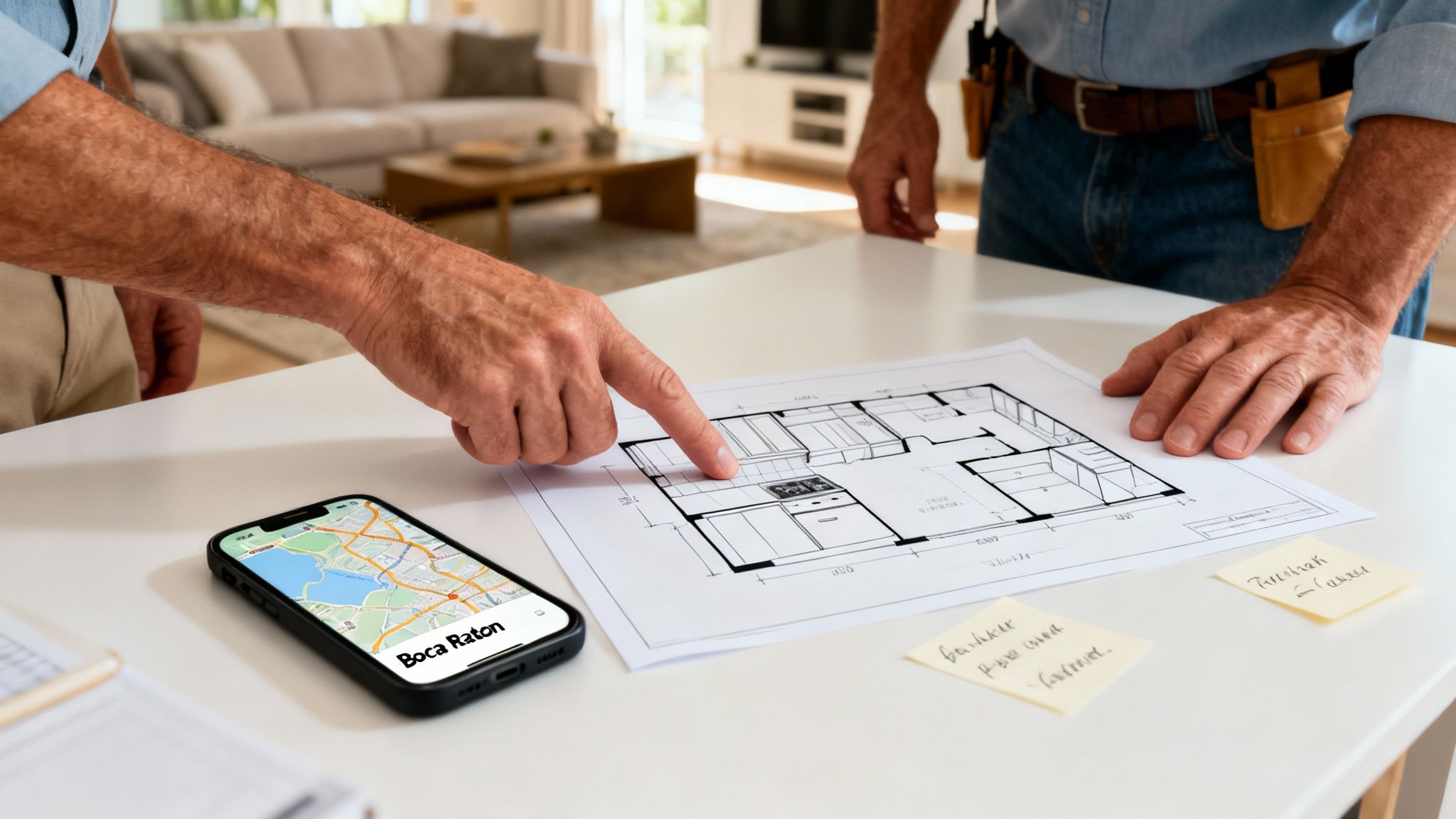
Kicking off a renovation is a major investment of your time, money, and trust. Finding the right contractor isn’t just about getting the job done. It's about finding a partner who can bring your vision to life without the headaches and budget-busting surprises. This takes more than a quick Google search.
We wrote this guide specifically for you, the South Florida homeowner. We'll go beyond the basics and give you the confidence to navigate every step of hiring a pro.
Building Your Foundation for Success
Before you even think about picking up the phone, a bit of prep work is essential. A clear plan doesn't just solidify your own vision; it helps contractors give you much more accurate timelines and estimates. It's always a good idea to review the key considerations before remodeling to get your thoughts organized.
Here’s what you’ll get from this guide:
- Local Know-How: We’ll show you how to find contractors who are experts in the specific building codes for Boca Raton, Delray Beach, and Parkland.
- A Vetting Checklist: Learn how to properly verify licenses, insurance, and references to protect yourself and your investment.
- Smart Interview Questions: We'll arm you with the right questions to ask during consultations to really understand a contractor's professionalism and communication style.
- Red Flag Spotting: You'll learn to see the warning signs of a bad fit before you ever sign a contract.
The real goal here is to turn your renovation from a stressful process into an exciting, well-managed project. A great outcome always starts with choosing the right partner.
Ultimately, this process is about building a relationship based on trust and a shared vision. By following these steps, you can find a remodeling contractor near me who will not only deliver a flawless project but also make the experience a great one. If you’re eager to begin, understanding the initial planning is key, and our guide on getting started on your project is a fantastic place to begin.
Where to Find a Top-Notch Remodeling Contractor
When you’re ready to start your project, your first instinct might be to just Google “remodeling contractor near me” and call the first few names that pop up. But if you want to find a truly reliable, high-quality professional in the Boca Raton area, you’ll need to dig a little deeper. The best approach combines smart online research with old-fashioned, trusted local intel.
The good news? You’ve got more choices than ever. The home remodeling world has exploded in recent years, which is a huge plus for homeowners like you.
Over the last 25 years, the number of remodeling companies in the U.S. has almost doubled. We've gone from fewer than 69,000 firms back in 2000 to over 128,000 expected by early 2025. For anyone searching for a local pro, this boom means more competition, more specialization, and better service. You can see the full story in IBISWorld's market research.
This huge pool of talent is fantastic, but it also means you need a solid game plan to sort through the noise.
Start With Your Own Backyard
Before you even open your laptop, tap into the most valuable resource you have: your local community. People who live right here in Delray Beach, Parkland, and Boca Raton have the real-world experience you’re looking for.
- Nextdoor: This platform is a goldmine for honest feedback. Post what you’re looking for—say, “Anyone have a great kitchen remodeler they’d recommend?”—and you’ll get unfiltered opinions from your actual neighbors.
- Local Facebook Groups: Search for groups dedicated to your city or even your specific neighborhood. You’ll often find detailed posts from homeowners sharing their wins (and sometimes their warnings), complete with pictures of the finished work.
Nothing beats a referral from someone down the street who can tell you their bathroom remodel was finished on time and on budget. It’s a level of trust you just can’t get from an online ad.
Look for the Professionals
Once you have a few names from your neighbors, it's time to see who is recognized by the industry itself. Vetting contractors through professional organizations is a great way to separate the serious players from the rest.
These directories list contractors who have already committed to a higher standard.
- National Association of the Remodeling Industry (NARI): Members here have to follow a strict code of ethics. Finding a contractor through a local NARI chapter is a fantastic way to find someone who takes their craft seriously.
- National Association of Home Builders (NAHB): The NAHB Remodelers council is another great resource. These are builders who specialize in renovation projects and are plugged into the latest industry standards.
Going this route offers some built-in peace of mind. You know you’re dealing with established, properly insured professionals who are dedicated to their work.
Vet Their Online Footprint
Finally, it’s time to head online and really look at their work. This is where you get a feel for their style and quality, but you have to look with a critical eye.
- Houzz and Angi: These sites are great for browsing project photos and reading what past clients have to say. Look for a contractor with a deep portfolio that showcases work similar to what you have in mind.
- Google Business Profiles: Don’t skip the Google reviews! What’s really telling is how a contractor responds to feedback, especially the negative comments. A pro who replies thoughtfully and constructively to a complaint shows they care about their reputation and client satisfaction.
When you’re looking at their online galleries, ask yourself: Does their work match the style and quality I want for my own home?
By layering these three approaches—starting with your community, verifying credentials, and then carefully reviewing their online presence—you'll build a solid shortlist of contractors you can actually trust.
The Ultimate Contractor Vetting Checklist
You’ve done the initial legwork and have a shortlist of a few promising contractors. Now comes the most critical part: vetting. This is where you dig deeper than pretty portfolio pictures and neighborly recommendations to make sure you’re dealing with a true professional.
Honestly, skipping these checks is one of the biggest gambles a homeowner can take. A few hours of focused research now can save you months of stress and potentially thousands of dollars down the road. The goal here is simple: confirm they are who they say they are before you even schedule a consultation.
The first step is always building that initial list. A good search combines a few different avenues to give you a well-rounded group of candidates.
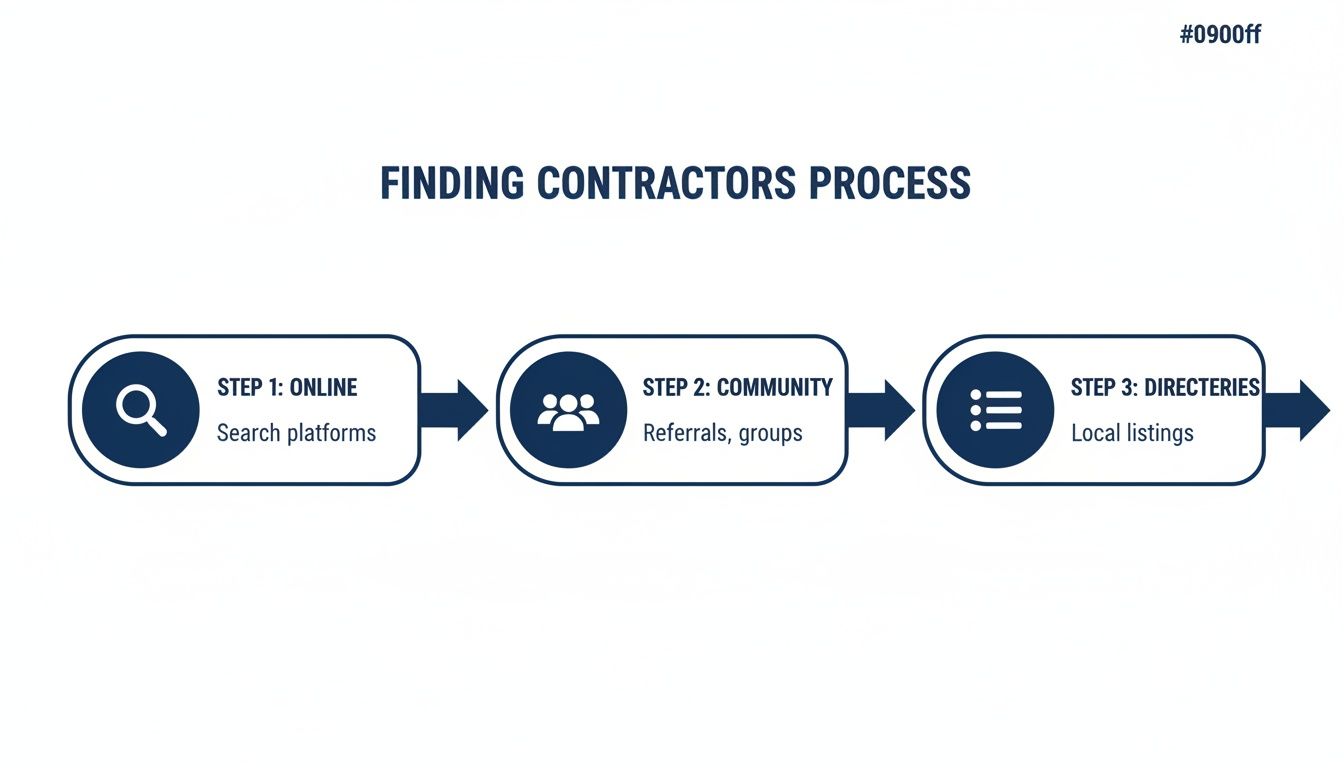
As you can see, blending online tools with local word-of-mouth and professional directories is the best way to start your search on solid footing.
Verify Licenses and Insurance
In Florida, this isn't just a suggestion—it's the law. Any contractor doing structural work in your home needs a license from the state's Department of Business and Professional Regulation (DBPR). Thankfully, you can look up a license number right on their website to see if it’s active and if there are any complaints tied to it.
Insurance is just as crucial. A pro will always carry two key policies:
- General Liability: This covers your home and property if something gets damaged during the project.
- Workers' Compensation: This protects you if one of their crew members gets injured on your job site. Without it, you could be held liable.
Don't just take their word for it. A reputable contractor will have no problem providing their insurance certificates. Take the extra five minutes to call the insurance provider listed and confirm the policies are current. It’s the single best thing you can do to protect yourself financially.
Check Their Reputation and Past Work
A contractor's track record tells you everything you need to know. A great place to start is the Better Business Bureau (BBB). See what their rating is and, more importantly, if any complaints have been filed against them. A clean slate here is a very good sign.
Next, it's time to talk to real people. Ask the contractor for at least three recent references, ideally from homeowners who had a similar project done in the Boca Raton or Parkland area. When you call, get specific. Go beyond "Were you happy?" and ask things like, "How did the team handle unexpected problems?" or "Did the final cost match the initial quote?"
Finally, pour over their project gallery. You're looking for more than just nice-looking photos. Look for consistency in craftsmanship and an attention to detail that matches your own standards. Do their finished projects reflect the style you envision for your own home? A robust portfolio is proof of experience.
For an even deeper dive, our article on how to choose a kitchen remodeling contractor offers more tips on what to look for when evaluating a contractor's past work.
To make this process easier, here's a quick summary of the essential checks every homeowner should perform before signing a contract.
Contractor Vetting Quick Reference
| Verification Item | Why It's Critical | Where to Check |
|---|---|---|
| State License | Ensures they meet Florida's minimum legal and professional standards. | Florida DBPR Online Search |
| General Liability Insurance | Protects your property from accidental damage caused by the crew. | Request a certificate and call the insurance provider directly. |
| Workers' Compensation | Protects you from liability if a worker is injured on your property. | Request a certificate and verify with the provider. |
| Past Client References | Provides real-world insight into their communication, quality, and reliability. | Ask the contractor for at least 3 recent, local references. |
| Online Reviews & BBB Rating | Reveals their public reputation and any history of unresolved complaints. | Google, Houzz, and the Better Business Bureau. |
| Portfolio of Work | Shows their skill level, design style, and the quality of their craftsmanship. | The contractor's official website and social media profiles. |
Think of this table as your pre-flight checklist. Running through these items methodically will give you the confidence that you're hiring a qualified, trustworthy professional for your home.
Mastering The Contractor Interview
After you’ve done your homework and narrowed down your list, it’s time for the interview. This is where you really get a feel for who you might be working with for the next several months. Think of it less as an interrogation and more as a conversation—a chance to see if your personalities and expectations click.
This meeting is about much more than just the price tag. You're looking for clues about their communication style, their professionalism, and how they handle the inevitable curveballs that every renovation throws. A great contractor is interviewing you, too. They want to understand your vision and make sure they’re the right team to bring it to life. This back-and-forth is the start of what should be a solid partnership.
The remodeling business is booming. In fact, the U.S. market is on track to become a $164.5 billion industry in 2025. A big reason for this is that over 80% of American homes are now more than 20 years old and are due for an update. With so much demand, there are plenty of contractors out there, which makes your interview process absolutely critical for finding a true professional. You can find more details on this growing market and its trends.
Key Questions To Uncover Their Process
Anyone can give you a number. What you really want to uncover is how they work. Their answers to questions about their day-to-day process will tell you everything you need to know about the experience you’re signing up for.
-
Project Management: "How will you keep me in the loop on progress, and how often can I expect an update?" Look for a specific system. A great answer sounds like, "We send a summary email every Friday" or "You'll have access to our online portal with daily photo uploads." A vague, "Oh, we'll keep in touch" is a definite red flag.
-
On-Site Leadership: "Who is my go-to person on-site each day?" You need to know if you'll be dealing with a dedicated project manager, the owner, or a lead carpenter. This clarifies the chain of command and ensures someone is always accountable.
-
Handling The Unexpected: "Tell me about a time a project went sideways. What was the problem and how did you handle it?" Listen closely to this one. Problems always come up. A seasoned pro will have a story ready about finding hidden rot or a structural surprise and will be able to explain exactly how they communicated the issue and the solution to the homeowner.
The real test of a contractor isn't when a project is running smoothly. It's how they react when something goes wrong. Their process for handling change orders and surprises tells you everything about their experience and integrity.
Discussing Logistics and Local Specifics
Now, let's get into the nuts and bolts, especially the details that matter right here in Boca Raton, Delray Beach, or Parkland, where local rules can be tricky.
-
Permitting: "Who handles pulling the building permits for the project?" There is only one right answer here: the contractor handles all permitting. If they suggest you pull the permits in your name, walk away. It's a massive red flag that they likely aren't properly licensed or insured.
-
Subcontractors: "Do you use your own crew or do you hire subcontractors for trades like plumbing and electrical?" Either approach can work, but you want to hear that they have a vetted, trusted team they’ve worked with for years. Follow up by asking if their subs are also fully licensed and insured.
-
Payment Schedule: "What is your typical payment schedule?" A professional contractor will tie payments to specific, completed milestones—like "foundation poured" or "cabinets installed." A small, reasonable deposit is standard, but be very wary of anyone demanding a huge chunk of cash upfront.
Asking these sharp, specific questions will help you find a remodeling contractor near me who isn't just a skilled builder, but also a reliable and communicative partner for your project.
Decoding Estimates And Contracts

After a few meetings, the proposals will start rolling in. This is where the rubber meets the road. A truly professional estimate is so much more than a price tag; it's the architectural blueprint for your project, designed to prevent expensive surprises down the line.
It's tempting to jump straight to the bottom-line number, but that's a mistake. The cheapest bid is almost never the best value. In my experience, a suspiciously low offer usually means one of three things: the contractor missed a huge part of the scope, they're planning on using shoddy materials, or they’re banking on hitting you with a ton of change orders later.
This is a serious financial commitment. Homeowners are projected to spend over $450 billion on home improvements in 2024, so you're part of a massive market. For anyone looking up "remodeling contractor near me," learning to read these documents is your single best defense. You can get a better sense of these renovation market trends to understand the industry's scale.
What A Detailed Estimate Includes
If you get a vague, one-page quote, toss it. A serious proposal from a reputable contractor will be several pages long and packed with details, breaking down every single aspect of the job.
Here’s exactly what you should be looking for:
- A Line-Item Breakdown: The estimate must clearly separate costs for labor, materials, permits, and any other project fees. This transparency is non-negotiable—you need to see where every dollar is going.
- Specific Product Details: It should list the exact make and model numbers for things like faucets, tile, and cabinets. Vague descriptions like "standard toilet" are a huge red flag.
- A Crystal-Clear Scope of Work: The document has to outline every task involved, from the first swing of the sledgehammer during demolition to the final paint touch-ups and cleanup.
- Realistic Allowances: For items you haven’t picked out yet (like countertops or light fixtures), the contract will list an "allowance," which is basically a placeholder budget. Make sure these numbers are realistic for the quality you're expecting.
A great estimate is all about preventing future arguments. It sets crystal-clear expectations for everyone, forming the rock-solid foundation for your formal contract and a smooth project.
Red Flags In Contracts And Proposals
The contract is the legally binding version of the estimate, and it needs to be just as thorough. Before you even think about signing, you need to comb through it for warning signs. Our guide to a bathroom remodeling cost breakdown gives you a good idea of how these costs should be presented.
Keep an eye out for these classic red flags:
- Huge Upfront Payments: A standard deposit is around 10-20%. If a contractor asks for 50% or more upfront, they're likely having cash flow problems or, worse, don't plan on finishing the job. Run.
- Vague Language or "Verbal Agreements": If it's not in the contract, it doesn't exist. Period. Any promise or detail discussed in person must be written down and included in the final document.
- Missing Key Information: Every contract must have a clear payment schedule tied to project milestones (e.g., "payment due upon completion of drywall"), a projected start and end date, and specific details about the warranty on labor and materials.
By taking the time to really dissect each proposal, you can move forward with a contractor who is not only a skilled builder but a transparent and professional partner.
Your Top Questions About Hiring a Contractor, Answered
When you’re about to start a major home remodel in Boca Raton or Delray Beach, questions are going to come up. That’s a good thing. Getting the right answers before you sign a contract is the best way to sidestep common headaches and feel good about your decision.
We get asked these questions all the time. Think of this as the final gut-check before you commit, making sure you and your contractor are on the same page about the things that truly matter.
How Many Quotes Should I Really Get?
It's tempting to stop after one or two, but you should always get detailed, written proposals from at least three different contractors. This isn't just about finding the cheapest option—far from it.
Laying three bids side-by-side gives you an incredible amount of insight. You can compare the scope of work, the specific materials they plan to use, and even get a feel for their professionalism. This is your single best defense against an outlier bid, whether it’s suspiciously low or shockingly high.
What’s a Normal Down Payment?
Here in Florida, a typical down payment is between 10% and 20% of the total project cost. This initial payment gets things moving by covering the first round of materials and mobilization costs.
A word of caution: be very wary of any contractor demanding a huge cash payment up front. If they ask for more than a third of the total project cost before a single hammer is swung, it’s a problem. A pro’s payment schedule should always be tied to progress you can see—like "cabinets installed" or "drywall complete"—not just random dates on a calendar. This keeps everyone accountable.
Who’s Supposed to Get the Permits?
This one is simple and non-negotiable. Your licensed contractor is 100% responsible for pulling all necessary building permits. This is a fundamental part of their job, whether you're in Parkland or right on the coast.
Permits are what ensure your project is built to code and will pass inspection, protecting your investment and your family. If a contractor ever suggests you pull the permits yourself, consider it a massive red flag. It often means they aren't properly licensed or insured, and that’s a risk you can’t afford to take. A true professional handles the entire permitting process.
When you search for a "remodeling contractor near me," finding one who answers these questions without hesitation is a great sign. It shows they're organized, financially sound, and committed to doing things by the book—which is exactly the peace of mind you need.
Ready to work with a team that has clear answers and a proven process? The experts at Kitchen Renovations Perfected are here to guide you through every step of your project with transparency and professionalism. Visit us online to schedule your complimentary design consultation today.