When you start dreaming about a luxury kitchen remodel, one of the first questions that pops into your head is, "What's this actually going to cost me?" It's a significant investment, and the numbers can feel a bit overwhelming at first. Nationally, a high-end kitchen renovation can easily run anywhere from $75,000 to $150,000, and often, quite a bit more.
The final price tag really depends on how big you want to go—the size of your space, the caliber of materials you choose, and just how complex the whole project becomes.
Your Financial Map for a High-End Kitchen
Thinking about a luxury kitchen remodel is like planning a major expedition. You have a vision of the incredible destination—a beautiful, highly functional kitchen that's the true heart of your home—but the financial journey to get there can seem intimidating. The best first step is to get your bearings by establishing a clear financial baseline.
This isn't just about picking a number out of thin air. It's about understanding what goes into that six-figure price tag and seeing it for what it is: a strategic investment in your home’s value and your everyday quality of life. A simple cosmetic refresh is like a weekend getaway, but a full gut-and-remodel is a month-long safari. Each requires a very different level of planning and resources. The luxury kitchen remodel cost is a spectrum, not a single fixed point.
National Averages and Market Realities
Across the country, the cost of a high-end kitchen remodel keeps ticking upward, driven by a strong appetite for premium, professional-grade features. For 2025, the National Kitchen & Bath Association has been tracking these trends closely. They've found that the average total spend for a medium-sized kitchen remodel is now $71,159, while larger kitchens are hitting a staggering $137,228 on average, including both materials and labor.
Why the surge? It’s all about the details. Homeowners are increasingly opting for things like fully custom cabinetry, top-tier appliances from brands like Gaggenau or Miele, and stunning sculptural range hoods that act as a centerpiece. You can dive deeper into these detailed cost trends to see how the market is shifting.
This wide range shows exactly why a generic "one-size-fits-all" estimate just doesn't work. The final cost really boils down to three key things:
- Project Scope: Are you just swapping out cabinets and countertops in the same footprint, or are you knocking down walls and completely reconfiguring the layout?
- Material Quality: The price difference between a solid, high-quality granite and a rare, exotic quartzite slab can easily be tens of thousands of dollars.
- Level of Customization: There's a world of difference in cost between semi-custom cabinets and bespoke, handcrafted cabinetry designed and built just for your space.
It's so important to get a handle on these distinctions early on. A budget isn't just a spending limit; it's your strategic guide. It helps you decide where to allocate your funds to get the features you truly care about, making sure every dollar is working toward your dream kitchen.
To give you a clearer idea of what to expect, let's break down the typical cost ranges for different scales of luxury remodels. Think of this table as a quick reference point to help you anchor your expectations as you begin the planning process.
Luxury Kitchen Remodel Cost At a Glance
| Remodel Scale | Average Cost Range | Key Features |
|---|---|---|
| Mid-to-High-End | $75,000 – $110,000 | Semi-custom cabinetry, professional-grade appliances, quartz or high-end granite countertops, new flooring, and updated lighting. |
| Full-Scale Luxury | $110,000 – $150,000 | Fully custom cabinetry, premium appliance suites (e.g., Sub-Zero, Wolf), natural stone countertops, minor layout changes, designer lighting. |
| Ultimate High-End | $150,000+ | Bespoke cabinetry, top-of-the-line integrated appliances, exotic materials, significant layout reconfiguration, structural changes, smart home integration. |
As you can see, the definition of "luxury" varies, but a well-planned budget ensures that no matter the scale, your investment aligns perfectly with your vision for the perfect kitchen.
Decoding Your High-End Kitchen Budget Line by Line
It’s one thing to know the total luxury kitchen remodel cost, but it’s another thing entirely to understand where every dollar is going. That knowledge is what empowers you to make smart, confident decisions. Think of your total budget like a recipe for a gourmet meal; each line item is a crucial ingredient, and the final price tag is just the sum of all those carefully chosen parts.
When you break it down, that big, intimidating six-figure number suddenly becomes a series of manageable choices. This line-by-line view reveals the financial weight of each component, helping you decide where to splurge and where you can be more conservative.
This infographic gives you a bird's-eye view of the national average remodel costs for different kitchen sizes.
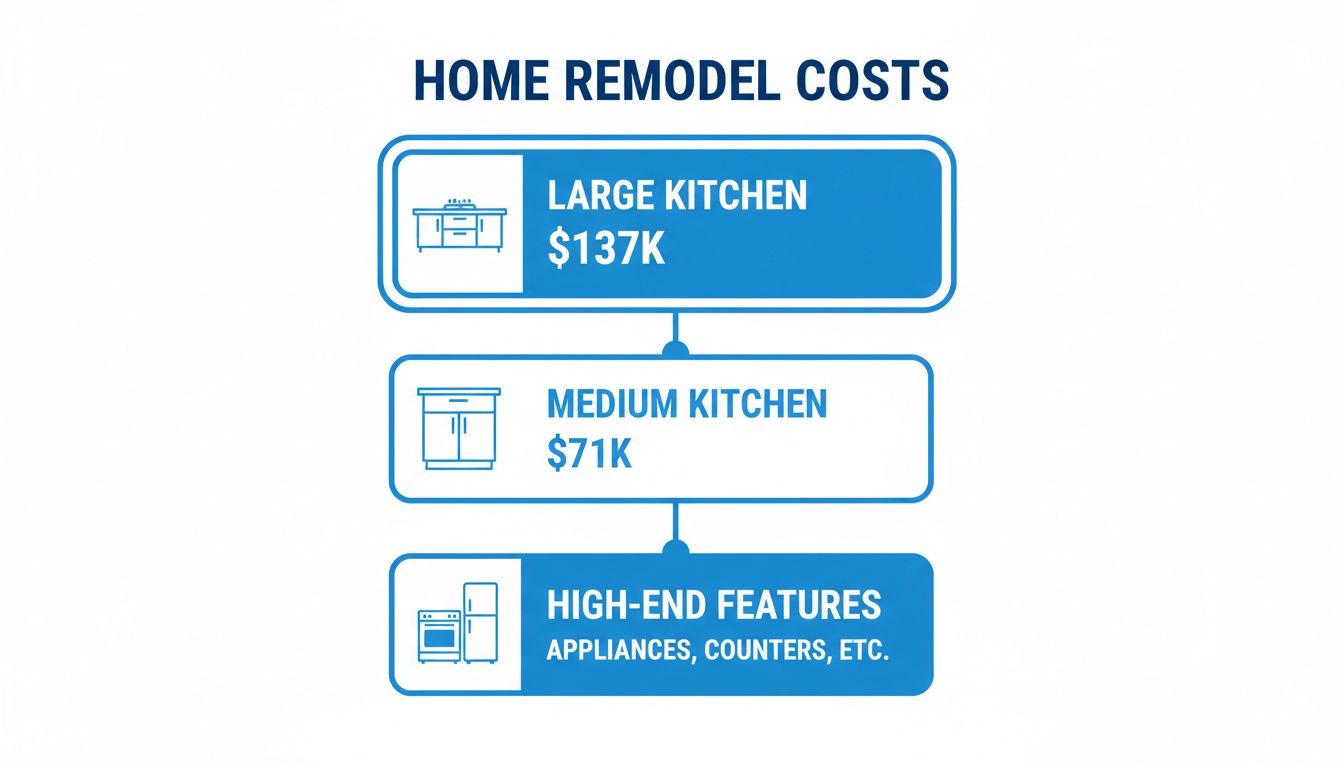
As you can see, the jump from a medium to a large-scale project is significant. It’s a clear illustration of how both square footage and the addition of high-end features drive the final cost skyward.
To give you a clearer picture of how a luxury budget is typically divided, here’s a common breakdown.
Itemized Budget Allocation for a Luxury Kitchen Remodel
| Component | Percentage of Total Budget | Typical Cost Range |
|---|---|---|
| Cabinetry | 25% – 35% | $30,000 – $70,000+ |
| Appliances | 15% – 20% | $20,000 – $50,000+ |
| Countertops | 10% – 15% | $10,000 – $30,000+ |
| Labor | 15% – 20% | $20,000 – $40,000+ |
| Plumbing & Electrical | 10% – 15% | $10,000 – $25,000 |
| Flooring | 5% – 7% | $5,000 – $15,000 |
| Lighting & Fixtures | 3% – 5% | $3,000 – $10,000 |
| Permits & Design Fees | 2% – 5% | $2,000 – $10,000 |
This table shows that components like cabinetry, appliances, and labor command the lion's share of the investment, which is exactly what we see in our high-end projects here in South Florida.
The Cornerstone of Your Kitchen: Cabinetry
Without a doubt, cabinets are the single biggest investment in any luxury kitchen remodel. They literally set the tone for the entire space. It’s the difference between buying a suit off the rack and having one custom-tailored; one works, but the other is crafted to fit your space and your life perfectly.
Recent industry reports confirm this, showing that cabinets often eat up a massive 25% to 35% of the total project cost. For semi-custom or fully bespoke options, that can translate to a range of $30,000 to $70,000 or more. For truly one-of-a-kind, handcrafted pieces, costs can easily soar past $500 per linear foot. While you can get stock cabinets for much less, genuine luxury demands an investment in premium materials and craftsmanship that elevates the entire room.
Countertops and Appliances: The Stars of the Show
Right after cabinetry, your countertops and appliances are the next major budget items. These are the workhorses and the showpieces of your kitchen, and their costs can swing wildly depending on the materials and brands you choose.
- Countertops: Natural stones like marble and quartzite are the top tier, often starting at $150 and climbing to over $250 per square foot once installation is factored in. High-end engineered quartz is another fantastic, durable option. For a deep dive, check out the complete cost of quartz countertops in our guide.
- Appliances: A full suite of professional-grade appliances from brands like Sub-Zero, Wolf, or Thermador can easily run from $20,000 to $50,000, and often more. We’re talking about built-in refrigerators, dual-fuel ranges, steam ovens, and integrated coffee systems that make your kitchen a true culinary powerhouse.
These elements aren't just functional; they define your kitchen's entire aesthetic and its performance, making them a huge piece of the luxury kitchen remodel cost.
Essential Systems: Plumbing and Electrical
Hiding behind those beautiful finishes are the vital systems that make a modern kitchen actually work. Upgrading the plumbing and electrical is non-negotiable for both safety and functionality, and you can expect them to account for 10% to 15% of your total budget.
Want to move your sink to a new island or add a handy pot filler over the range? That requires a skilled plumber. Likewise, installing layers of recessed lighting, under-cabinet LEDs, and the dedicated circuits needed for high-power appliances is a job for a licensed electrician. These costs tend to be higher in older homes or any time we’re making significant changes to the kitchen’s layout.
A word of advice: Investing in professional plumbing and electrical work isn't an expense—it's an investment in your home's safety and long-term value. Cutting corners here is one of the biggest mistakes you can make, often leading to incredibly expensive and dangerous problems down the road.
Finishing Touches: Flooring, Lighting, and Fixtures
The final layers—the flooring, lighting, and fixtures—are what pull the entire design together into a cohesive, stunning space. While their individual costs are smaller than cabinets or appliances, they add up quickly and make a huge impact.
- Flooring: High-end choices like wide-plank hardwood, large-format porcelain tile, or natural stone can range from $10 to $30+ per square foot, installed.
- Lighting: A well-designed, layered lighting plan with ambient, task, and accent lighting can run from $2,000 to $10,000, especially when you opt for designer fixtures.
- Fixtures and Hardware: This is the "jewelry" of your kitchen—the sink, faucet, cabinet pulls, and backsplash. A premium faucet alone can top $1,000, and a dramatic, full-height stone slab backsplash can add thousands more to the final bill.
The Key Factors That Drive Remodel Costs Higher
So, you've picked out some gorgeous materials and top-of-the-line appliances. That's the fun part. But behind the scenes, there are a few fundamental decisions that can really make the total cost of a luxury kitchen remodel jump. These are the big-ticket items that go way beyond aesthetics, touching the very bones of your home. If you want to keep your budget in check, you need to understand these from the get-go.
Think of your kitchen's current layout as its DNA. As long as you work within that existing genetic code—keeping walls, plumbing, and electrical lines where they are—the costs stay relatively predictable. The second you decide to rewrite that code, you're stepping into a whole new world of complexity and expense.

Structural and Layout Changes
Without a doubt, one of the single biggest cost drivers is changing the kitchen's footprint. Knocking down a wall to create that dreamy, open-concept space might look simple on a design show, but in reality, it's a massive undertaking. A "rip-and-replace" project that keeps the same basic layout will always be more budget-friendly than a full gut job that reconfigures the entire room.
Why? Because that wall you want to remove might be a load-bearing wall, a critical piece of your home's skeleton. Taking it out is a job for a team of pros.
- Architects or Structural Engineers: They have to figure out how to support the weight that the wall was holding, which usually means designing and installing a massive, heavy support beam.
- Permits: This isn't weekend work. It requires detailed plans to be submitted and officially approved by local building departments, whether you're in Boca Raton or Delray Beach.
- Intensive Labor: The demolition itself, muscling the new beam into place, and all the finishing work that follows is incredibly labor-intensive, and that labor adds up fast.
What starts as a simple idea like "let's just open this up" can easily tack on an extra $10,000 to $20,000 (or more) to your budget, all depending on how complex the job is.
Relocating Plumbing and Electrical Systems
Right behind changing the layout, the next major cost-inflator is moving your kitchen's essential services. Have you been dreaming of moving the sink from under the window to a big, beautiful new island? It's a fantastic idea, but it’s a lot more involved than just hooking up a new faucet.
Relocating plumbing or electrical lines creates a domino effect of expenses. It involves opening walls and floors, which means more demolition, more labor from specialized trades, more materials for repair, and more intensive inspections.
Just think about what it takes to move some of the key fixtures:
- Plumbing: Shifting a sink means rerouting both the hot and cold water lines. More critically, the drain lines have to be re-run with a precise slope to work correctly. In many South Florida homes, this can mean cutting into the concrete slab foundation—a dusty, difficult, and expensive job.
- Electrical: An oven or a refrigerator isn't plugged into a normal outlet; they need dedicated, high-amperage circuits. Moving them means a licensed electrician has to run heavy-duty new wiring through your walls and ceilings, all while meeting strict local building codes.
- Gas Lines: If you have a gas range, moving it requires a licensed plumber to safely cap the old line and run a new one. This adds yet another layer of cost, permits, and inspections to the project.
These kinds of infrastructure changes can easily add $5,000 to $15,000 to the final bill, turning what seemed like a simple appliance swap into a major overhaul.
The Power of High-End Customization
Finally, the level of personalization you choose is a huge factor in the final price tag. While semi-custom cabinets and high-end appliance packages are certainly luxurious, truly bespoke solutions are in a completely different budget stratosphere.
For instance, selecting a rare, book-matched quartzite slab for both your countertops and backsplash is exponentially more expensive than using a top-tier, manufactured quartz. In the same way, commissioning handcrafted cabinetry with custom-built drawer inserts, exotic wood veneers, and seamlessly integrated lighting is a world away from even the best semi-custom lines.
These are the breathtaking choices that define the absolute peak of luxury, but they also have a powerful impact on your kitchen remodel cost and need to be planned for from day one.
Navigating the Hidden Costs of Labor and Fees
A luxury kitchen is built with more than just stunning materials. Its true quality comes from the skilled hands that bring your vision to life. It's easy to get caught up in the excitement of picking out cabinets and countertops, but the costs for professional labor and administrative fees are a critical piece of the puzzle. Honestly, this is where budget surprises often pop up.
As a good rule of thumb, you should plan on 15% to 25% of your total project budget going straight to labor. This isn't just one charge; it's the combined cost for the entire team of experts needed to execute a high-end remodel without a hitch. Think of them as the engine that drives your project forward, making sure every last detail is perfect.
The Professional Team Behind Your Remodel
At the heart of it all is the general contractor (GC). They're the conductor of your renovation orchestra, coordinating every single trade professional and keeping the project on schedule and on budget. Their fee, which is typically 10% to 20% of the project's total cost, covers this massive logistical effort. But the GC is just the beginning.
Your labor budget also has to cover the specialized tradespeople whose expertise is absolutely non-negotiable for a safe, functional, and beautiful kitchen:
- Licensed Electricians are a must for installing complex lighting designs, running dedicated circuits for high-powered appliances, and ensuring every wire is up to code.
- Master Plumbers are essential for moving sinks, installing gorgeous high-end faucets or pot fillers, and safely connecting gas lines for those professional-grade ranges.
- Skilled Installers for flooring, tile backsplashes, and custom cabinetry are the artists who deliver that flawless finish—something you just can't get with cheap labor.
Choosing the right people is one of the most important decisions you'll make. For a deeper dive, our article on how to choose a kitchen remodeling contractor offers some great advice on finding the best team for your home.
The Non-Negotiable Costs: Permits and Design Fees
Beyond the hands-on work, there are two other "soft costs" that are vital to a well-run remodel. Think of them as investments in your home's safety, legality, and overall design harmony.
First up, building permits. These are not optional. Permits are your official green light from the local municipality—whether you're in Boca Raton or Parkland—confirming your renovation plans are safe and structurally sound. The cost can vary, but they are an absolute necessity to keep your project legal and your home protected.
Hiring a professional designer isn't just an expense; it's a strategic investment. A skilled designer prevents costly mistakes, improves functionality, and ensures the final space is not only beautiful but a cohesive reflection of your style. Their expertise often pays for itself by avoiding expensive rework down the line.
Finally, setting aside part of your budget for professional design services is one of the smartest things you can do. An interior designer or a design-build firm creates the master plan, making sure every single choice, from the cabinet finish to the faucet style, works together beautifully. This expert guidance prevents the kind of costly design mistakes that can derail a project, ensuring your significant investment results in the stunning, functional kitchen you've always wanted.
How to Maximize Your Return on a Luxury Kitchen
When you invest in a luxury kitchen remodel, you’re looking for two payoffs. First, the simple, everyday joy of cooking and living in a space you love. Second, the tangible financial value it adds if you ever decide to sell your home. Thinking about your luxury kitchen remodel cost in terms of its return on investment (ROI) is the key to balancing what you want now with what makes sense for the future.
Let's be honest, a stunning, well-designed kitchen is a huge selling point. It’s often the heart of the home, the room that can make or break a potential buyer’s decision. The big question is, how much of that upfront investment can you realistically expect to see back?
Understanding the Financial Payback
The ROI you get back really depends on the scale of your project. The numbers for 2025 are pretty encouraging—even minor, high-end kitchen updates can recoup as much as 70-80% of their cost at resale.
For a full-blown, major luxury overhaul, you can expect to recover around 50-60%. This isn't just a guess; it's backed by data from the Realtor® Remodeling Impact Report. What this means is a huge chunk of what you spend gets rolled right back into your home's equity, which is a fantastic move in a competitive market like ours.
Even if you don't get back every single dollar you put in, a beautiful new kitchen almost always helps a home sell faster and for a higher price than a similar house with a dated one. It’s this one-two punch of boosting marketability and increasing your equity that makes a smart remodel so valuable. You can get a deeper look into the return on investment (ROI) of a kitchen remodel in our dedicated guide.
Strategies for a High-ROI Remodel
Getting the best return isn’t about cutting corners or spending less—it's about spending smarter. It’s about making choices that will appeal to a wide audience of potential buyers down the road, without sacrificing your own personal style today.
Here are the strategies we always recommend to our clients:
- Stick with Timeless Design: That super-trendy color you love right now might look dated in five years. For the big-ticket items like cabinets and countertops, it’s best to go with a classic, neutral palette. Think elegant whites, sophisticated grays, or warm wood tones that have lasting appeal.
- Functionality is Everything: A kitchen can be gorgeous, but if the layout is awkward, it’s a failure. A logical workflow, plenty of smart storage, and generous counter space are universal features that buyers notice and value.
- Invest in Quality, Not Just Brand Names: High-end appliances are great, but what really screams "luxury" is the quality of the craftsmanship. Beautifully made custom cabinets and perfectly installed countertops tell a story of a well-executed, high-quality remodel.
- Keep it Cohesive: Your new kitchen should feel like it belongs in your home. An ultra-modern, sleek kitchen can feel out of place in a historic home and might actually turn off buyers who were drawn to the home’s original character.
Common Questions About Luxury Kitchen Remodels
Even after you've nailed down a budget and a design you love, a few more questions always seem to pop up as you get closer to demo day. Getting a handle on these details beforehand can make the entire process feel less intimidating and give you the confidence to see it through.
We've pulled together some of the most common questions we hear from homeowners right here in Boca Raton and across South Florida. Knowing the answers will help you truly understand the luxury kitchen remodel cost and what the journey really looks like.
How Long Does a Luxury Kitchen Remodel Typically Take?
Let's be clear: a luxury kitchen remodel isn't a weekend warrior project. While a simple cosmetic refresh might be wrapped up in 4-6 weeks, a full-gut, high-end renovation is a marathon, not a sprint.
For a project that includes custom cabinetry, moving walls, and sourcing specialty materials, you should realistically block out 3 to 5 months on your calendar. That timeframe accounts for everything—demolition, framing, plumbing and electrical rough-ins, installing everything, and passing final inspections. It’s also wise to build a little buffer into that schedule. Delays can happen, whether it's waiting on a custom-built range from Italy or discovering unexpected plumbing issues hiding in a wall.
Can I Save Money by Managing the Project Myself?
The thought of saving that 10-20% general contractor fee by running the show yourself is definitely tempting. On paper, it looks like an easy win. But for a project of this scale, taking the DIY-GC route is fraught with risks that can quickly turn savings into massive, unforeseen costs.
Managing a high-end remodel means you're in charge of everything: juggling schedules for a half-dozen different subcontractors, ensuring every detail meets strict building codes, and troubleshooting complex problems on the fly. One missed inspection or a scheduling mistake can cause a domino effect of delays and costly rework, wiping out any potential savings in a heartbeat.
For a project where the final quality is paramount, hiring a seasoned general contractor or a design-build firm isn’t a line-item expense—it’s an investment. It’s insurance for a smooth process and a flawless outcome, and frankly, it’s what separates a stressful, chaotic build from a seamless, exciting transformation.
Is It Better to Use a Design-Build Firm or Hire Separately?
You can end up with a stunning kitchen either way, but the journey to get there is quite different. When you hire an architect and a contractor separately, you create a natural system of checks and balances. The architect designs the vision, and the contractor executes it, with one holding the other accountable. The flip side is that you can sometimes find yourself in the middle, trying to resolve communication breakdowns or scheduling conflicts between the two.
A design-build firm, on the other hand, puts your entire project under one roof. Your designer, project manager, and construction crew are all part of the same team, working together from day one. This unified approach almost always leads to better collaboration, tighter timelines, and a project that stays on budget. For most homeowners diving into a complex luxury remodel, the simplicity and efficiency of the design-build model is the clear winner for a less stressful experience.
Ready to stop wondering and start planning? The team at Kitchen Renovations Perfected is here to answer all your questions. Visit our showroom or use our online budget estimator to get a clearer picture of your project’s potential. Start your complimentary consultation today!