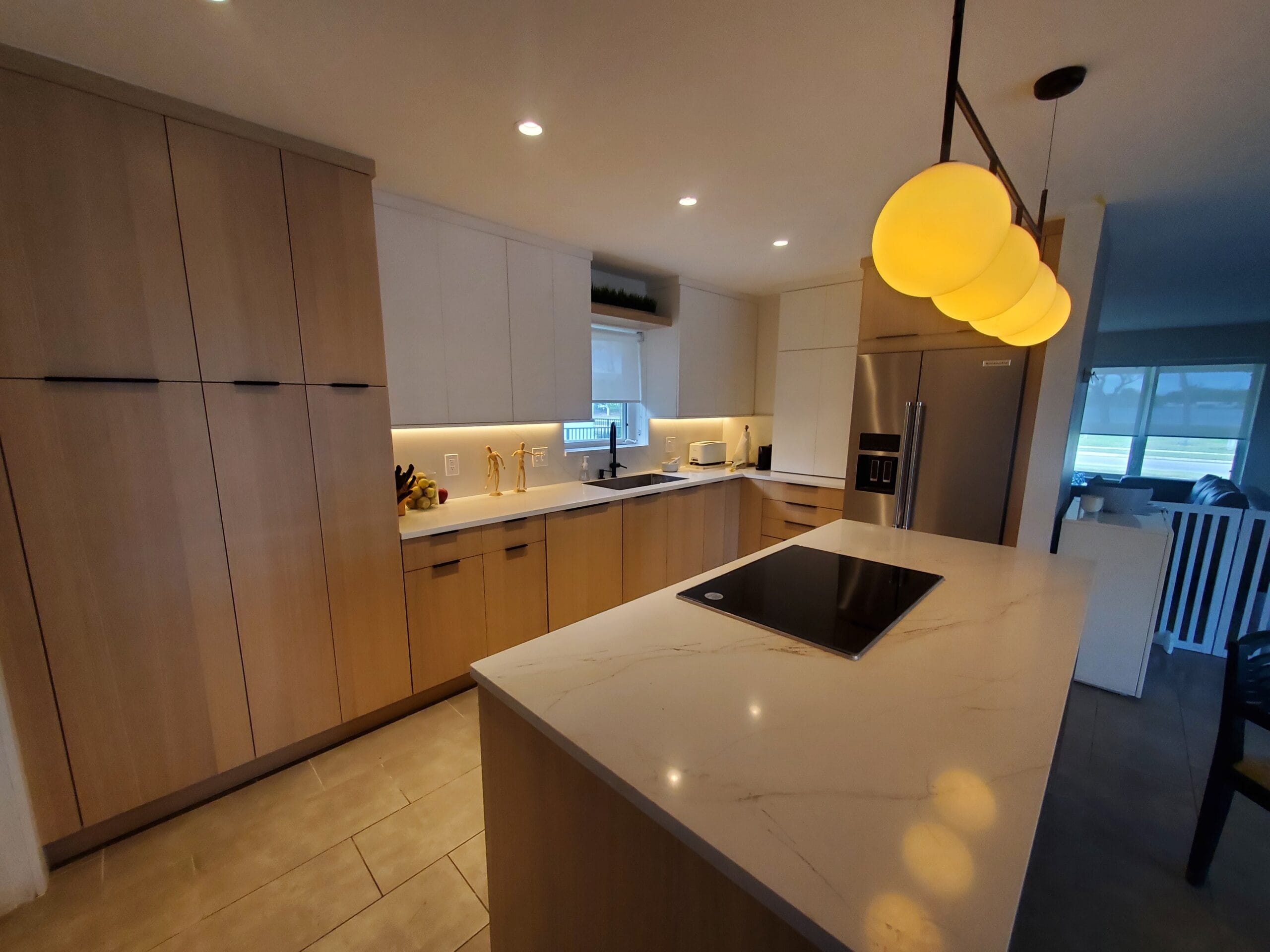
Starting a kitchen remodel can feel overwhelming, but I've found that every successful project really boils down to three things: a clear vision, a realistic budget, and the right local team. If you're a homeowner in Boca Raton, Delray, or Parkland searching for "kitchen remodeling near me," this guide will give you a practical roadmap to get started on solid footing, specifically for South Florida living.
Starting Your South Florida Kitchen Renovation
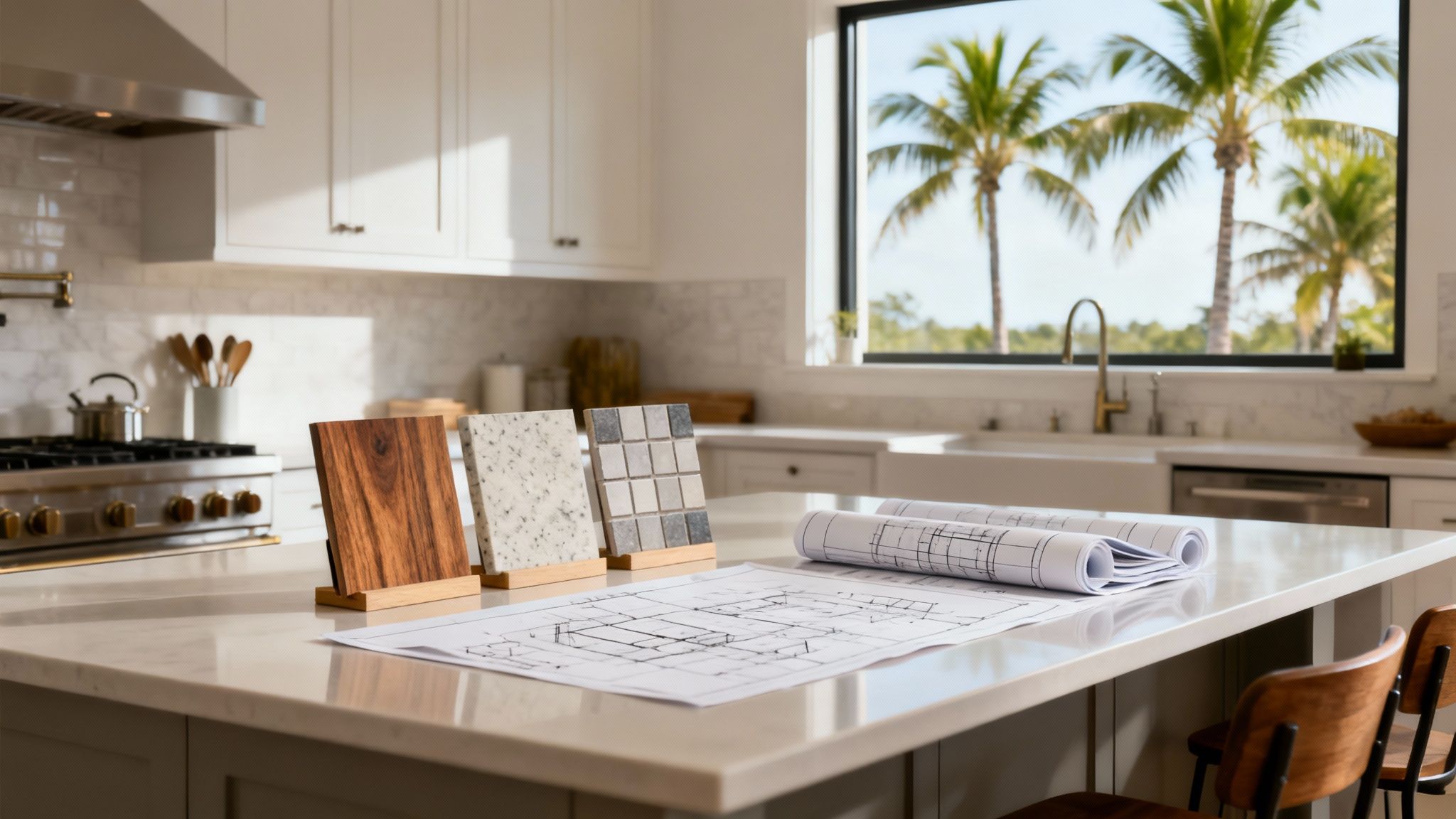
A kitchen remodel is so much more than just swapping out old cabinets and countertops. It's about rethinking the heart of your home so it actually works for your life. The real journey begins long before the demolition crew shows up—it starts with an honest look at how you use your kitchen now and what drives you crazy about it.
This initial planning phase is all about defining the scope of your project. Are you thinking of a simple cosmetic update with new paint and hardware? Or are we talking about a full gut job, moving walls and rerouting plumbing? Your answer here will steer every single decision that follows.
Defining Your Remodeling Vision
Your vision is the North Star for the entire project. It's the benchmark you'll come back to again and again to make sure your design choices, material selections, and budget all stay on track. Without a clear picture of what you want, it's incredibly easy to get distracted by the latest trends or feel lost in a showroom.
To bring your vision into focus, think about these key areas:
- Lifestyle and Function: How does your family really use the kitchen? Maybe you need a big island that can double as a homework station, a dedicated coffee bar for your morning ritual, or deep drawers for all those Costco runs.
- Aesthetic Goals: What look are you going for? A bright, coastal-modern style that feels right at home in Delray Beach? Or something more traditional and elegant for a Parkland estate? Start saving pictures to create a mood board.
- Must-Haves vs. Nice-to-Haves: This is crucial. Make two lists. The "must-haves" are your non-negotiables, like durable quartz countertops or a professional-grade gas range. "Nice-to-haves" might be a wine fridge or that cool under-cabinet lighting you saw online.
Think of your vision as the project's constitution. It guides every decision, prevents scope creep, and makes sure the finished kitchen truly serves your needs, not just a passing fad.
The Value of a Local Contractor
While your vision is deeply personal, bringing it to life demands professional expertise—and more specifically, local expertise. A contractor who lives and works in the Boca Raton area has invaluable knowledge that an out-of-town company just can't match. They understand the intricacies of South Florida building codes, have working relationships with the local permitting offices, and—importantly—know which materials can actually withstand our humidity and intense sun.
This local insight is a game-changer. For instance, a South Florida pro will know to recommend cabinet finishes that won't warp in our humid climate or flooring that resists fading from the sun streaming through your windows. This focus on durability means your investment won't just look great on day one, but will provide lasting value for years to come. Partnering with a local expert from the very beginning sets you up for a smooth, successful renovation.
Finding and Vetting Top Local Remodeling Contractors

Let’s be honest: the success of your kitchen remodel rests almost entirely on who you hire. The right contractor is so much more than a builder. They’re your project manager, a creative problem-solver, and the partner you trust to bring your vision to life.
A quick search for "kitchen remodeling near me" will flood you with options, but the real work is sifting through the noise to find the true professionals. This is where you need to put on your detective hat. Your goal is simple: find a team that produces beautiful work, communicates clearly, respects your budget, and manages the entire process without drama.
Sourcing Trusted Local Recommendations
Online reviews are a decent starting point, but they never paint the full picture. The absolute best leads come from local sources who see a contractor's work—and their professionalism—day in and day out.
Instead of just scrolling, try these insider tactics:
- Visit Local Supply Houses: Walk into a high-end tile, countertop, or cabinet showroom in the Boca Raton or Delray area. Ask the managers which remodeling companies their best designers love working with. These suppliers know who pays their bills on time and who consistently orders quality materials.
- Talk to Neighborhood Experts: Ask a trusted local real estate agent who they call for pre-sale kitchen updates. Realtors have a vested interest in quality work that boosts home value, making them a fantastic source for reputable names.
- Tap Into Community Networks: Check with your local community groups or HOA for recommendations. Nothing beats a direct referral from a neighbor who just went through a successful remodel.
The most valuable referrals come from industry professionals who have a reputation to protect. They won't risk recommending a contractor who does subpar work. This is a powerful way to build your shortlist.
The Initial Consultation and Key Questions
Once you’ve narrowed your list down to three or four potential contractors, it’s time to schedule those first meetings. Remember, this is your chance to interview them, not the other way around. Pay close attention to how they listen, the kinds of questions they ask you, and their overall vibe.
You’ll want to walk into that meeting prepared with a list of essential questions to guide the conversation.
Key Questions to Ask a Potential Contractor
- How long have you been remodeling kitchens specifically in this area? You’re looking for established, local experience.
- Are you licensed and insured in Florida? Don't just take their word for it—ask to see copies of their general liability insurance and state license.
- Who will be my dedicated project manager? You absolutely need a single, reliable point of contact.
- Can you provide a few recent, local references I can actually speak with? A confident, quality contractor will happily provide these.
- How do you handle project changes or unexpected issues? Their process for change orders tells you everything about their communication and billing transparency.
A critical part of this process is ensuring everyone who sets foot in your home is a professional. This goes for the general contractor and all their subcontractors, so it's vital to confirm credentials for everyone from electricians to plumbers. It’s always smart to understand what to look for when hiring licensed and insured professionals.
Verifying Credentials and Reviewing Past Work
Never just take a contractor's word for it. After the initial meeting, it's time to do your homework. Verifying their credentials isn't just a suggestion; it’s non-negotiable and protects you from massive potential headaches, liability, and financial loss.
First, check their license with the Florida Department of Business and Professional Regulation. Next, call the insurance company listed on their certificate to confirm the policy is active. A reputable company will expect you to do this and will have no problem with it. For a deeper dive, check out our guide on how to choose a remodeling contractor near me.
Finally, review their portfolio with a critical eye. Go beyond the glossy "after" photos. Ask to see projects that are similar in scope and style to what you have in mind. If possible, ask their references if you can see the finished kitchen in person. This gives you a true feel for their craftsmanship and attention to detail that you just can't get from a picture.
This hands-on approach is why more homeowners are choosing to hire experts. In fact, professional remodels are forecast to increase by 2.9% in 2025, which is a big jump compared to the 0.6% growth expected for DIY projects. It's clear that homeowners are recognizing the immense value of expert execution.
Budgeting Realistically for Your Kitchen Makeover
Let's be honest: setting a budget is the least glamorous part of a kitchen remodel, but it’s the most critical. Nailing down a realistic financial plan from the start is the difference between a project that feels exciting and one that turns into a source of stress.
In a competitive market like South Florida, a well-planned budget is your roadmap. It keeps your project on track, guides every decision from cabinet styles to countertop materials, and prevents that dreaded "scope creep" where small add-ons slowly blow up your final cost. This isn’t about limiting your vision; it's about making your dream kitchen a reality, responsibly.
Breaking Down the Costs of a Kitchen Remodel
When you see a total project estimate for the first time, it can be a bit of a shock. The key is understanding how that number breaks down. Knowing where the money goes helps you appreciate the value of quality materials and skilled labor, which are essential for a remodel that lasts.
So, where does your investment actually go? While every project is unique, a typical mid-range kitchen remodel budget tends to follow a general pattern.
Sample Kitchen Remodel Budget Allocation
Here’s a typical breakdown of where your money goes in a mid-range kitchen remodel. Percentages can vary based on project scope and material choices.
| Expense Category | Average Percentage of Total Budget |
|---|---|
| Cabinetry & Hardware | 30-35% |
| Labor & Installation | 20-25% |
| Countertops | 10-15% |
| Appliances | 10-15% |
| Flooring, Lighting & Finishes | 5-10% |
| Design, Permits & Other Fees | 5-10% |
This breakdown helps you see the whole picture and make smarter choices. For a more detailed look at local pricing, check out our guide on the average cost of a kitchen renovation.
Where to Invest and Where to Save
Not every dollar you spend carries the same weight. Some parts of your remodel offer a much bigger payoff in daily use and long-term home value. My advice? Spend generously on the things you touch and use every single day.
Invest Heavily In:
- Quality Cabinetry: Your cabinets are the backbone of your kitchen. Well-built cabinets with durable finishes and smooth hardware will look and feel great for years, if not decades.
- A Functional Layout: A design that makes your life easier is priceless. An experienced designer can solve workflow problems you didn't even know you had.
- Professional Installation: The difference between a good kitchen and a great one is flawless installation. This is not the place to cut corners.
On the flip side, there are plenty of places to be savvy with your spending without compromising on style or function.
Smart Savings Opportunities:
- Appliances: You don't always need the professional-grade, top-tier model. Look for holiday sales or bundled appliance packages to get excellent features without the luxury price.
- Backsplash: A classic subway tile can look just as stunning as an intricate, expensive mosaic, often for a fraction of the cost.
- Lighting: The market is filled with gorgeous, affordable lighting. You can find beautiful fixtures online or in big-box stores that look just as good as high-end designer pieces.
Kitchens continue to be the heart of the home, and industry forecasts for 2025 show that kitchen projects will make up around 30–40% of all residential renovation work. While about 25% of these are full gut renovations, a larger portion (around 40%) are more focused updates like new cabinets, showing how homeowners are strategically planning their investments.
The Non-Negotiable: Your Contingency Fund
No matter how carefully you plan, remodeling comes with surprises. This is especially true in older South Florida homes, where opening up a wall can reveal anything from old plumbing to outdated electrical that needs to be brought up to code.
This is exactly why a contingency fund isn't just a good idea—it's essential.
Plan to set aside an extra 15-20% of your total project cost for these "what ifs." This is your project’s safety net. When the plumber finds a corroded pipe that absolutely has to be replaced, you can approve the fix without derailing your entire budget.
Think of it as project insurance. If you don't use it, great! You've got a bonus for that fancy espresso machine you wanted or a little extra for your savings. But having it gives you invaluable peace of mind, turning a potential crisis into just another part of the process.
Bringing Your Kitchen Vision to Life: Design and Materials
This is where the fun really starts. All those saved images and design ideas you've been collecting are about to become real, tangible choices for your new kitchen. Selecting the materials, colors, and finishes is easily one of the most exciting parts of the whole process.
But here in South Florida, it's not just about looks. We have to be smart about what we choose. Our intense sun and ever-present humidity mean we need materials that can stand up to the climate without fading, warping, or wearing out. The goal is to land on a cohesive design that you'll love looking at and, just as importantly, love using for years to come.
How to Tackle a Showroom Visit
Walking into a design showroom for the first time can be a little dizzying—there are options everywhere you look. The key is to go in with a game plan. Always bring your inspiration folder or mood board, a rough sketch of your layout, and your list of non-negotiables. A great design consultant won't just sell you products; they'll use your homework to guide you to the perfect selections for your home and budget.
This is your chance to get hands-on. Don't be shy!
- Touch everything. Run your hands over different countertop textures and cabinet doors. You'd be surprised how much the "feel" of a finish can influence your decision.
- Test the mechanics. Open and close all the drawers and doors. Feel the smooth, quiet action of soft-close hinges and compare them to standard ones. It's a small detail that makes a huge difference in daily use.
- Take samples home. This is a big one. That beautiful countertop slab you saw under the bright showroom spotlights might look completely different in the natural light of your own kitchen.
This tactile experience is priceless. It's what turns a vague idea into a confident decision.
Smart Material Choices for a South Florida Kitchen
Certain materials are just better suited for our coastal environment. When you're looking for a remodeler in the Boca Raton or Parkland area, you need a team that gets this—one that can point you toward products that offer that perfect mix of style and staying power.
Let's dig into some of the most important choices you'll be making.
A truly successful kitchen design is where form and function meet. In our climate, that means choosing materials that fight back against moisture, fading, and daily wear and tear. It’s how you protect your investment and ensure it stays beautiful.
Cabinets: Custom vs. Semi-Custom
As the biggest visual component in your kitchen, your cabinets set the tone for the entire space. Custom cabinets are built from scratch, specifically for your kitchen, offering unlimited options for size, style, and finish. Semi-custom cabinets, on the other hand, start with standard-sized boxes but give you a wide array of doors, finishes, and modification options, often at a more budget-friendly price. A skilled local remodeler can make either choice look like a million bucks.
Countertops: The Great Debate
When it comes to countertops, the conversation almost always lands on two materials: quartz and granite. They’re both fantastic, durable choices, but they have distinct personalities you need to understand.
We've put together a simple breakdown to help you compare.
Comparing Popular Countertop Materials
This table offers a head-to-head look at the most common countertop options, helping you weigh the style, maintenance, and cost to find the perfect fit for your new kitchen.
| Material | Pros | Cons | Average Cost per Sq. Ft. |
|---|---|---|---|
| Quartz | Non-porous (resists stains), super durable, consistent patterns, maintenance-free (no sealing needed). | Not as heat-resistant as granite; some find the patterns too uniform compared to natural stone. | $60 – $150 |
| Granite | Unique, natural stone patterns, very heat-resistant, incredibly durable. | It's porous, so it needs to be sealed periodically to prevent stains; patterns can vary wildly. | $50 – $180 |
| Marble | Classic, luxurious look with unique veining; stays cool to the touch. | Prone to scratching and staining; requires regular sealing and careful maintenance. | $75 – $250 |
| Quartzite | Looks like marble but is much more durable and resistant to etching. | Can be one of the more expensive options; requires sealing like other natural stones. | $70 – $200 |
For many busy South Florida families, the worry-free, stain-resistant nature of quartz makes it a clear winner. But the one-of-a-kind beauty of natural granite is hard to beat. It really comes down to your lifestyle and personal taste.
Pulling It All Together
Once the big pieces—cabinets and countertops—are locked in, it's time to connect the dots. Coordinating your backsplash, flooring, cabinet hardware, and lighting is what creates that harmonious, finished look.
Think beyond the permanent fixtures, too. The right window treatments can add softness, control the intense Florida sun, and tie your design together. It's worth exploring local window treatment services to find blinds or shades that complement your new space perfectly.
And don't forget about workflow! The "kitchen work triangle"—the path between your sink, stove, and refrigerator—is a time-tested principle for a reason. An experienced designer will help you map out an efficient layout, ensuring your beautiful new kitchen is also an absolute dream to cook in.
Getting a Grip on the Remodeling Process and Timeline
Knowing what’s coming is the single best way to keep your sanity during a kitchen renovation. Once you’ve picked your contractor and signed off on the design, the project moves from paper to reality. Understanding the sequence of events helps you brace for the (inevitable) disruption and actually enjoy seeing the daily progress.
A full kitchen remodel isn't a quick weekend flip. It’s a complex dance involving a whole cast of skilled tradespeople. From demolition day to the final brush stroke, every single step builds on the one before it. A delay in one area, like a backordered appliance or a permit snag, can easily create a domino effect, pushing the entire schedule back.
The Not-So-Scary World of Permits in Boca Raton
Before anyone even thinks about swinging a hammer, your project needs a green light from your local city or county office. In places like Boca Raton, Delray, and Parkland, permits are absolutely required for any job that touches structural, electrical, or plumbing systems. A good, professional contractor will handle all of this for you—it’s part of their job.
It might be tempting to skip the permit process to save a few bucks or a little time, but trust me, it’s a bad bet. You risk fines, stop-work orders, and massive headaches down the road when you try to sell your home. Permits are there to protect you; they ensure all the work is done safely and meets current building codes.
Key Takeaway: Think of a building permit as your project's official seal of approval. It's proof that your renovation is being done correctly, safely, and legally—something every homeowner should absolutely insist on.
The Major Milestones of Your Kitchen Teardown and Rebuild
While no two kitchens are identical, the actual construction phase follows a pretty predictable path. Your contractor should give you a detailed schedule, but here’s a general idea of what to expect, and in what order:
- Demolition & Prep (1-5 days): The old kitchen comes out. This part is loud, messy, and dusty. Your crew should take great care to seal off the work zone from the rest of your house.
- Structural & Rough-In Work (3-10 days): If you’re moving walls or changing the layout, this is when it happens. Plumbers and electricians will come in to run new lines for your sink, dishwasher, outlets, and lighting while the walls are still open.
- Inspections (1-3 days): This is a critical checkpoint. A city inspector has to sign off on the new plumbing and electrical work before any drywall goes up.
- Drywall, Flooring & Paint (5-10 days): The room starts to look like a room again. The walls are closed, mudded, sanded, and painted. Your new flooring usually goes in at this stage, too.
- Cabinet & Countertop Install (3-7 days): This is when you’ll see the biggest visual change. Cabinets go in first, then a crew will come to create a precise template for your countertops before installing them.
- The Finishing Touches (5-10 days): The final stretch! This is when the backsplash, appliances, sink, faucet, light fixtures, and all the cabinet hardware are installed. It’s when all the beautiful details finally come together.
For a more week-by-week breakdown, you can check out our detailed kitchen renovation timeline.
How to Survive Without a Kitchen: Setting Up a Temporary Space
Living through a remodel is challenging, but a little bit of prep work makes a world of difference. The single most important thing you can do is set up a makeshift kitchen somewhere else, like in the dining room, laundry room, or garage.
Here’s what you’ll need for a functional temporary setup:
- Move your old refrigerator to the new spot before it gets hauled away.
- Set up your microwave, coffee maker, and maybe a small electric skillet or hot plate.
- Use a sturdy folding table for some "counter" space.
- Plan on using paper plates and disposable utensils. The last thing you want to do is wash dishes in a bathroom sink.
This temporary hub will be a lifesaver, allowing you to handle breakfast and simple meals at home without having to eat out for every meal. It’s that desire for a highly functional space that’s fueling growth in the kitchen remodeling market, which is estimated to be around USD 11–12 billion globally in 2025.
The flowchart below gives you a bird's-eye view of the design process, which is the crucial foundation laid before any of the construction work begins.
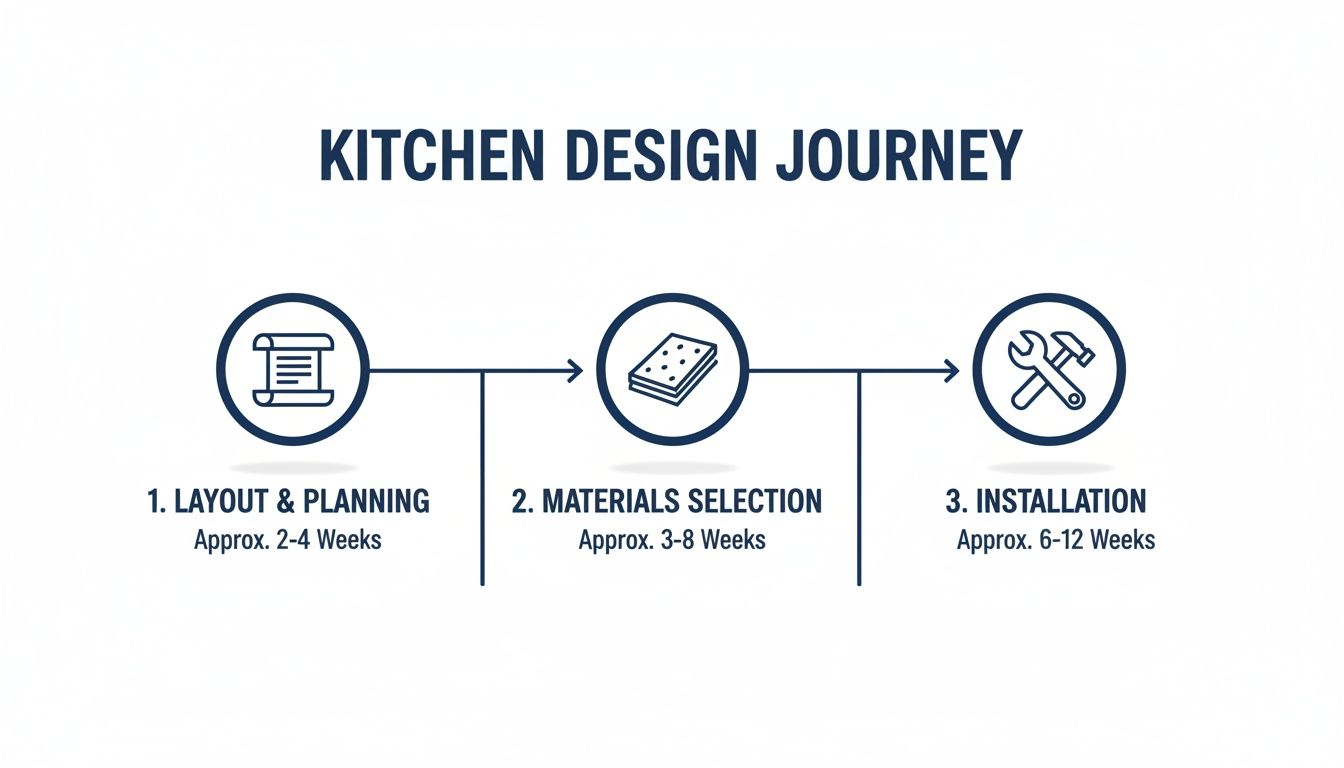
As you can see, a smooth installation is the direct result of thoughtful planning and careful material choices made well in advance.
Tackling Your Top Kitchen Remodeling Questions in South Florida
Even the most seasoned homeowner has a laundry list of questions before diving into a kitchen remodel. It's completely normal. Getting straight answers is the first step toward feeling confident and in control of your project. Let's walk through some of the most common things we hear from homeowners in our area.
"So, How Long Is This Actually Going to Take?"
This is always the first question, and for good reason—you want your life back to normal as quickly as possible. For a complete gut and remodel here in the Boca Raton area, you should realistically plan for 6 to 12 weeks of actual construction time. That’s from the day the sledgehammers come out to the final, sparkling clean walkthrough.
But here’s the thing most people don’t account for: the planning phase. Before any dust flies, there’s the design work, material selection, and permitting, which can easily add another 4 to 8 weeks to the front end.
What can really stretch out that timeline?
- Custom Cabinetry: If you’re going custom, be prepared to wait. Lead times of 8 weeks or more are standard since they’re built just for you.
- Permitting: Depending on your city—be it Boca, Parkland, or Delray—and the project's complexity, just getting the permit approved can take a few weeks.
- Structural Work: Thinking of knocking down a wall or moving a window? That adds a whole other layer of engineering, inspections, and time.
On the flip side, if you're just doing a cosmetic refresh—say, new countertops, a backsplash, and fresh paint—you might be wrapped up in just a couple of weeks. The key is to get a detailed schedule from your contractor before you sign anything.
"What’s the Real Cost of a Kitchen Remodel in the Boca Area?"
This is a tough one because there’s no magic number. The final cost comes down to three things: the size of your kitchen, the level of finishes you choose, and how much work you're actually doing.
Based on what we see every day in this market, here are some realistic budget ranges:
- A Minor Refresh: For new paint, countertops, and maybe a backsplash, you’re likely in the $25,000 to $45,000 range.
- The Full Mid-Range Remodel: This is the sweet spot for most homeowners. It includes all-new cabinets, countertops, appliances, and flooring. Plan on investing somewhere between $45,000 and $90,000.
- A High-End Luxury Kitchen: When you get into premium custom cabinetry, professional-grade appliances, and reconfiguring the layout, costs can easily jump north of $120,000.
A non-negotiable here is getting multiple, itemized quotes. A transparent estimate should break down the costs for materials, labor, and permits. You deserve to know exactly where every dollar is going.
"Do I Really Need a Permit for My Kitchen?"
In South Florida, the answer is almost always a resounding yes. If your project involves moving a sink, adding new outlets, changing the lighting layout, or touching a single wall, a permit is required. Period.
Any reputable contractor will insist on pulling the right permits and will handle the entire inspection process. This isn't just about red tape; it's about safety and ensuring the work meets current building codes. Trying to sidestep permits is a massive red flag. It can create huge headaches down the road, especially when you decide to sell your home.
"How Do We Survive Living Through This?"
Living in a construction zone is a test of patience, but a little bit of prep work makes a world of difference. Your number one goal should be setting up a temporary kitchen away from the chaos.
Here’s a quick survival guide:
- Claim Your Space: The dining room, a corner of the garage, or a spare bedroom can work wonders.
- Move the Essentials: Haul your old fridge to the temporary zone. A microwave, coffee maker, and an electric skillet or toaster oven will be your best friends.
- Create a Counter: A simple folding table works perfectly as a prep station.
- Embrace Simple Meals: Think sandwiches, salads, and anything you can make on the grill. This is not the time for gourmet cooking.
- Go Disposable: Using paper plates and plastic cutlery might feel wasteful, but it will save your sanity when you don't have a kitchen sink.
Daily check-ins with your project manager are also crucial. When you know who’s showing up and what’s on the agenda for the day, the whole process feels far less overwhelming.
Ready to stop searching and start designing? The team at Kitchen Renovations Perfected has been transforming homes in Boca Raton, Delray Beach, and Parkland with a process that prioritizes clear communication and beautiful results. Visit us to schedule your complimentary design consultation and see how we can bring your vision to life. https://www.kitchenrenovationsperfected.com