So, you’re thinking about adding on to your home. It’s an exciting prospect, but the first question on everyone's mind is always the same: what's this going to cost me?
While you might see national averages floating around, from $150 to over $300 per square foot, those numbers don't tell the whole story, especially not here in South Florida. In premium markets like Boca Raton and Parkland, you need to account for what I call a "local premium" of about 15-25%. This isn't just a markup; it's a reflection of the real-world costs of building to our unique standards.
Demystifying Home Addition Costs in South Florida
Before you get lost in floor plans and paint swatches, let's ground your project in financial reality. A home addition cost estimator can give you a rough idea, but remember, the output is only as good as the information you put in. For homeowners in Boca Raton, Delray Beach, and Parkland, several specific local factors can dramatically shift the final number.
The price isn't just about the size of the room. It’s about the complexity of the design and the quality of the materials you choose to fill that space. I find it helpful to think about projects in three general tiers.
Breaking Down the Cost Tiers
A builder-grade addition is your most straightforward option. It relies on standard, readily available materials and simple, functional designs. A semi-custom project is that perfect middle ground, where you might mix standard construction methods with a few key upgrades, like higher-end flooring, better windows, or a few pieces of custom cabinetry. Then you have luxury additions, which are defined by top-of-the-line materials, intricate architectural work, and fully bespoke features.
A standard 500-square-foot addition might run you $75,000 to $100,000 in many parts of the country. But as any builder down here will tell you, South Florida is a different ballgame. If you want to dig deeper, you can explore a more detailed breakdown of 2025 construction costs.
The South Florida Premium
That 15–25% premium isn't just for show. It directly covers the higher costs tied to our stringent hurricane building codes, the specialized labor needed for things like impact window installation, and the logistics of our regional supply chain.
To give you a clearer picture, I've put together a table that breaks down what you can expect to pay per square foot right here in our local market.
Home Addition Cost Tiers in Boca Raton and Parkland
This table provides a snapshot of what you can generally expect based on the level of finishes and complexity you're aiming for. It's a great starting point for aligning your vision with your budget.
| Addition Tier | Estimated Cost Per Square Foot | Common Features |
|---|---|---|
| Builder-Grade | $225 – $290 | Standard materials, basic finishes, simple roofline, pre-fab cabinetry. |
| Semi-Custom | $290 – $400 | Mix of standard and upgraded materials, better insulation, some custom elements. |
| Luxury / High-End | $400+ | Premium materials, custom millwork, complex architecture, smart home integration. |
These figures help frame the conversation, moving it from a vague national average to a specific, local estimate.
Factors Driving Local Costs
So, what exactly is behind that "South Florida premium"? It comes down to a few critical factors that will directly shape your budget:
- Hurricane-Resistant Construction: This is non-negotiable. Our local building codes demand impact-resistant windows and doors, reinforced framing, and specific roofing systems. These materials are inherently more expensive than their standard counterparts.
- Labor Rates: The demand for truly skilled tradespeople in affluent areas like Parkland and Highland Beach is high, which naturally drives up labor costs compared to other regions.
- Material Choices: Our humid, salt-filled air is tough on buildings. That means we have to use more durable—and more expensive—materials like concrete block (CBS), stucco, and corrosion-resistant metals.
- Site and Foundation Work: The ground beneath our feet can also add to the cost. The local soil composition and high water table can sometimes complicate foundation work, requiring more extensive site prep.
Getting a handle on these baseline figures and local market pressures is the first, most important step. It helps you set a realistic budget from day one and avoid that dreaded sticker shock later on, giving you the confidence to plan your home addition the right way.
Budgeting for the Bones of Your Addition
Once you’ve got a rough per-square-foot estimate in mind, it's time to get granular. The first real step in building a reliable budget is to map out the costs for what I call "the bones" of your addition—the core structural components that create the shell. These are the big-ticket items that form the foundation of your project, literally and financially, creating the weatherproof canvas for everything that comes later.
A solid budget starts right where the construction does: from the ground up. Before a single drop of concrete is poured, your site needs to be prepped. This could mean clearing the land, grading the soil to ensure proper drainage, and even trenching for new utility lines. Here in places like Highland Beach, where the water table is often high, site prep and foundation work can get complicated, potentially requiring specialized techniques. Be prepared to see $5,000 to $15,000 (or more) added to your budget right out of the gate for this phase.
With a clean slate, the foundation comes next. For most home additions in South Florida, that means a monolithic concrete slab engineered to handle our specific soil and climate. You can generally expect a slab foundation to run between $10 and $20 per square foot, a figure that includes both materials and labor.
Framing and Sheathing Your New Space
After the foundation has cured, you’ll finally see your addition start to take shape. This is the framing stage, where the walls and roof structure go up. It’s important to remember that in our region, we do things differently. To meet hurricane code, exterior walls are almost always built with concrete block (CBS), which is a far more labor-intensive and expensive process than the wood framing you see in other parts of the country.
Framing is a huge chunk of your overall budget, often accounting for 15% to 25% of the entire project cost. For a 500-square-foot addition, you could easily be looking at $25,000 to $50,000 just for the structural skeleton. This includes the roof trusses and sheathing needed to create a complete, enclosed structure.
This is where you start to see the difference between a standard project and a high-end, custom build.
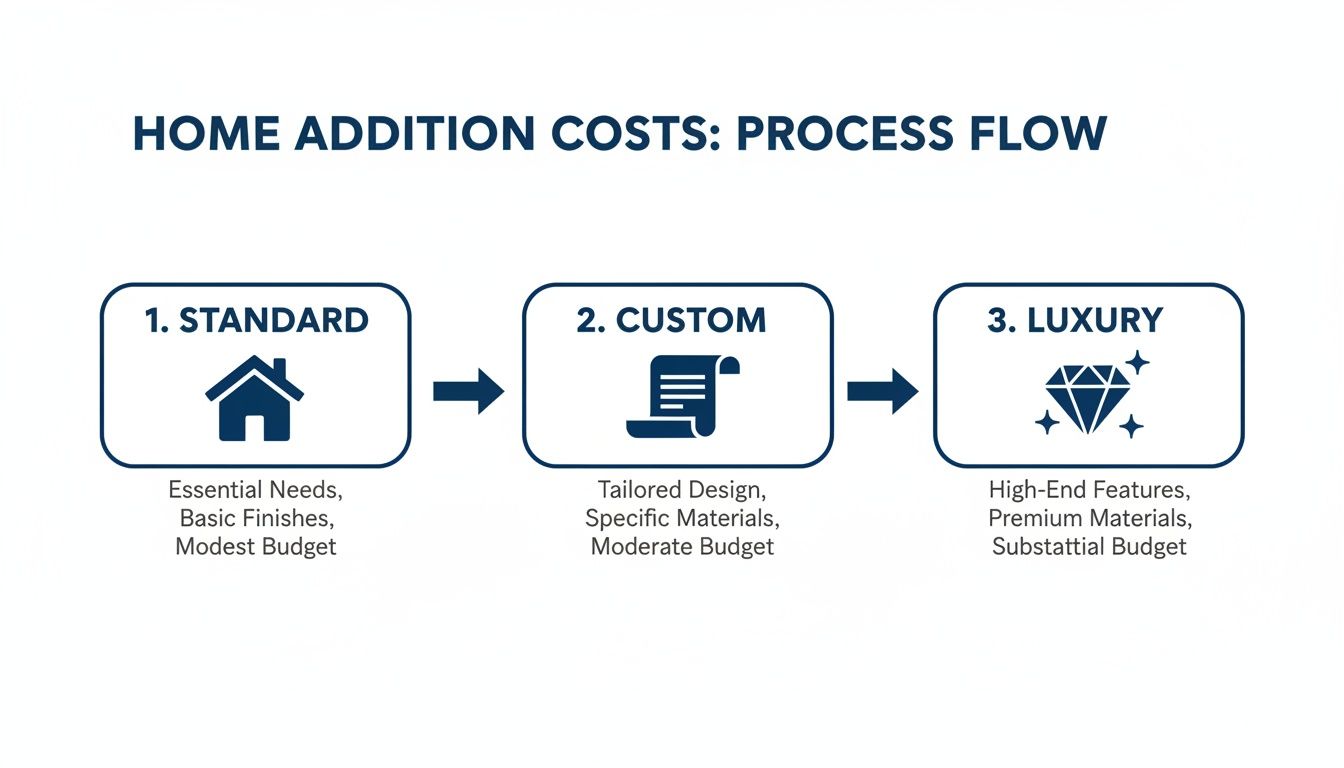
As that chart illustrates, jumping from one tier to the next isn't just about fancier finishes; it often begins with more complex engineering and structural work, which drives up these foundational and framing costs from the start.
Creating a Weatherproof Shell
With the frame up, the next immediate priority is getting it weatherproof. This means installing the roofing, siding (which is typically stucco around here), windows, and doors. Think of these as more than just design choices—they are your home's first line of defense against Florida’s relentless sun, heavy rains, and high winds.
Your major exterior line items will be:
- Roofing: Costs can vary wildly based on material, from $10 to $30 per square foot installed. Asphalt shingles are on the lower end, while tile and metal are higher. A metal roof costs more upfront but offers incredible longevity and storm protection.
- Impact-Resistant Windows and Doors: In South Florida, this is non-negotiable. They are a critical safety feature and a major expense. You should budget $1,500 to $4,000 per window and anywhere from $3,000 to $8,000+ for large sliding glass doors, all depending on the size and style.
- Siding and Exterior Finishes: Stucco is the go-to choice for its durability in our climate. The cost to apply it generally lands between $8 and $15 per square foot, which covers the lath, multiple base coats, and the final textured finish.
By meticulously accounting for these structural components, you are building a realistic financial model of your project. This detailed approach prevents sticker shock and empowers you to make informed decisions about where to allocate your funds for maximum impact and durability.
If you want to dive deeper into the process, learning how to accurately estimate renovation costs will give you a complete picture. This initial breakdown is crucial because it covers the most fundamental—and often most expensive—parts of your home addition before you even think about picking out tile or paint colors. Getting these numbers right sets the stage for a financially sound and successful project.
Estimating Your Interior Systems and Finishes
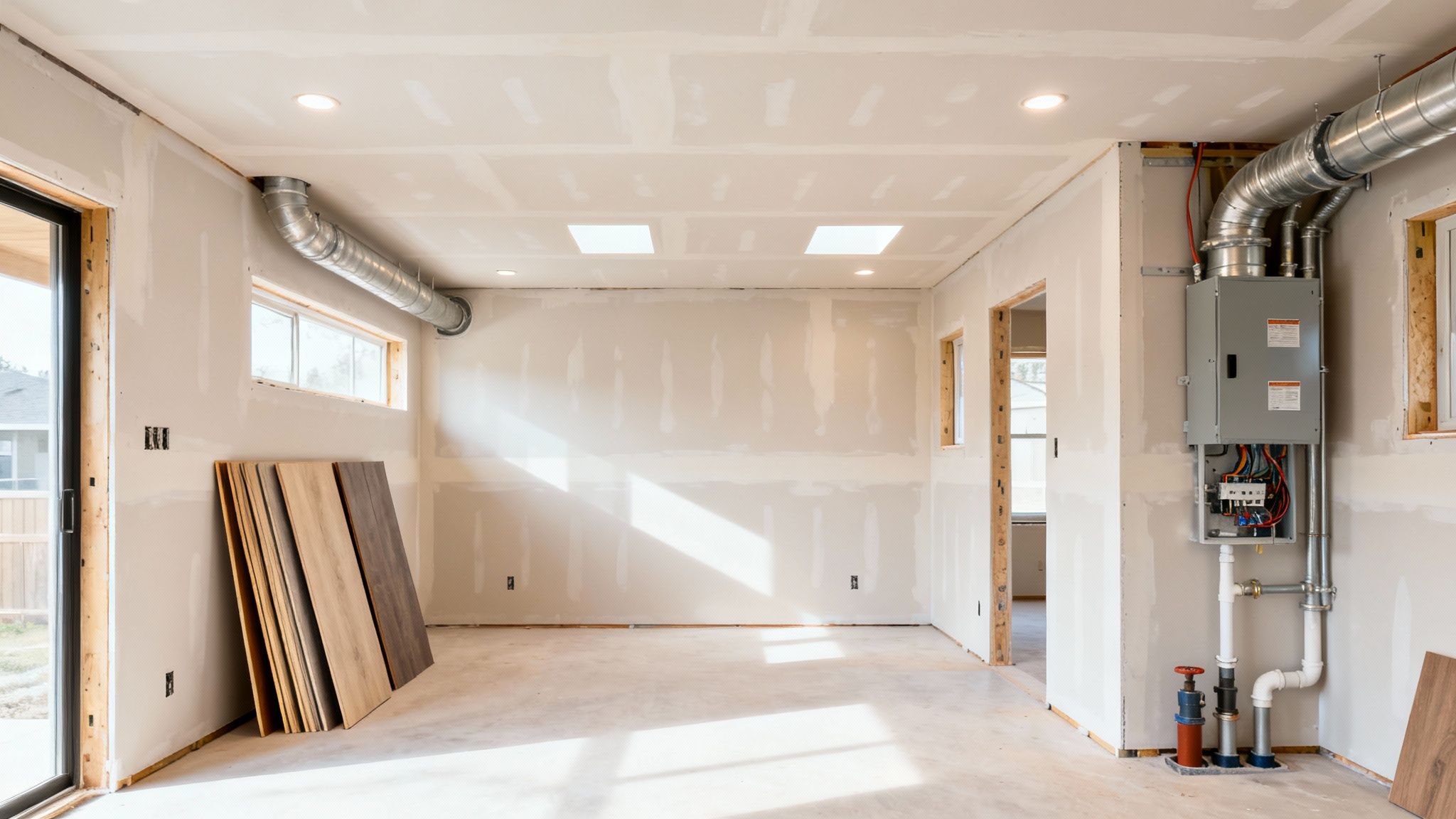
Once the shell of your addition is up and sealed from the weather, the real transformation begins. This is the exciting part where a construction zone starts to feel like an actual part of your home. But this is also where costs can get tricky, blending non-negotiable systems with highly personal design choices.
The "guts" of the addition—mechanical, electrical, and plumbing (MEP)—are often the most underestimated expenses. These are the hidden networks that keep you comfortable and safe, and they can add up fast.
Budgeting for the "Guts" of the Addition (MEP)
MEP systems are the functional heart of your new space. Getting them right isn't just about comfort; it's about meeting strict building codes and ensuring the long-term safety and efficiency of your home.
-
Mechanical (HVAC): Tapping into your existing HVAC system sounds easy, but it's rarely the best solution. Your current unit probably isn't sized to handle the extra square footage, which means you might need a bigger unit or a separate mini-split system. For a 400 sq. ft. addition, you should budget between $3,000 and $7,000 for new ductwork and potentially a new air handler.
-
Electrical: This covers all the new wiring, outlets, switches, and maybe even a new subpanel. Codes are incredibly specific here, dictating everything from how far apart outlets can be to what kind of circuits you need. A solid starting point for your home addition cost estimator is $10 to $20 per square foot for the electrical rough-in and basic fixtures.
-
Plumbing: If your addition involves a bathroom, laundry room, or even a wet bar, plumbing will be a significant line item. Running new supply and drain lines can easily cost $2,000 to $5,000+, and that figure climbs depending on how far you are from existing plumbing.
Tying into an older home’s systems can open a can of worms. We've seen projects where an old electrical panel was already at capacity or the plumbing wasn't up to modern code, forcing expensive upgrades that weren't in the original plan.
From Drywall to the Final Look
With the MEP systems roughed in and inspected, it's time for the finishes—the things you’ll actually see and touch every day. This is where your personal style comes into play, but it's also where a budget can go off the rails without careful planning.
First up is insulation and drywall. Here in South Florida, making the right insulation choice is crucial for keeping your home cool and your energy bills down. For a detailed breakdown, this is a great guide to spray foam vs. blown-in insulation for South Florida homes. The total cost for insulating, hanging, taping, and finishing drywall usually lands between $5 and $9 per square foot of wall and ceiling area.
After the walls are up, things move quickly with flooring and paint. Flooring costs vary wildly, so it pays to know your options.
- Luxury Vinyl Plank (LVP): A durable and popular choice at $7 – $12 per sq. ft. installed.
- Engineered Hardwood: A classic look, typically running $10 – $20 per sq. ft. installed.
- Porcelain Tile: A South Florida favorite, costing $15 – $25+ per sq. ft. installed.
For a professional paint job—including proper prep, primer, and two coats of quality paint—plan on spending $3 to $6 per square foot of floor space.
Insider Tip: Don't get fixated on expensive paint brands. A perfect drywall finish and meticulous prep work will make a mid-grade paint look a thousand times better than the most expensive paint slopped onto a poorly finished wall. The prep is what matters.
Bringing It All Together With Cabinetry and Fixtures
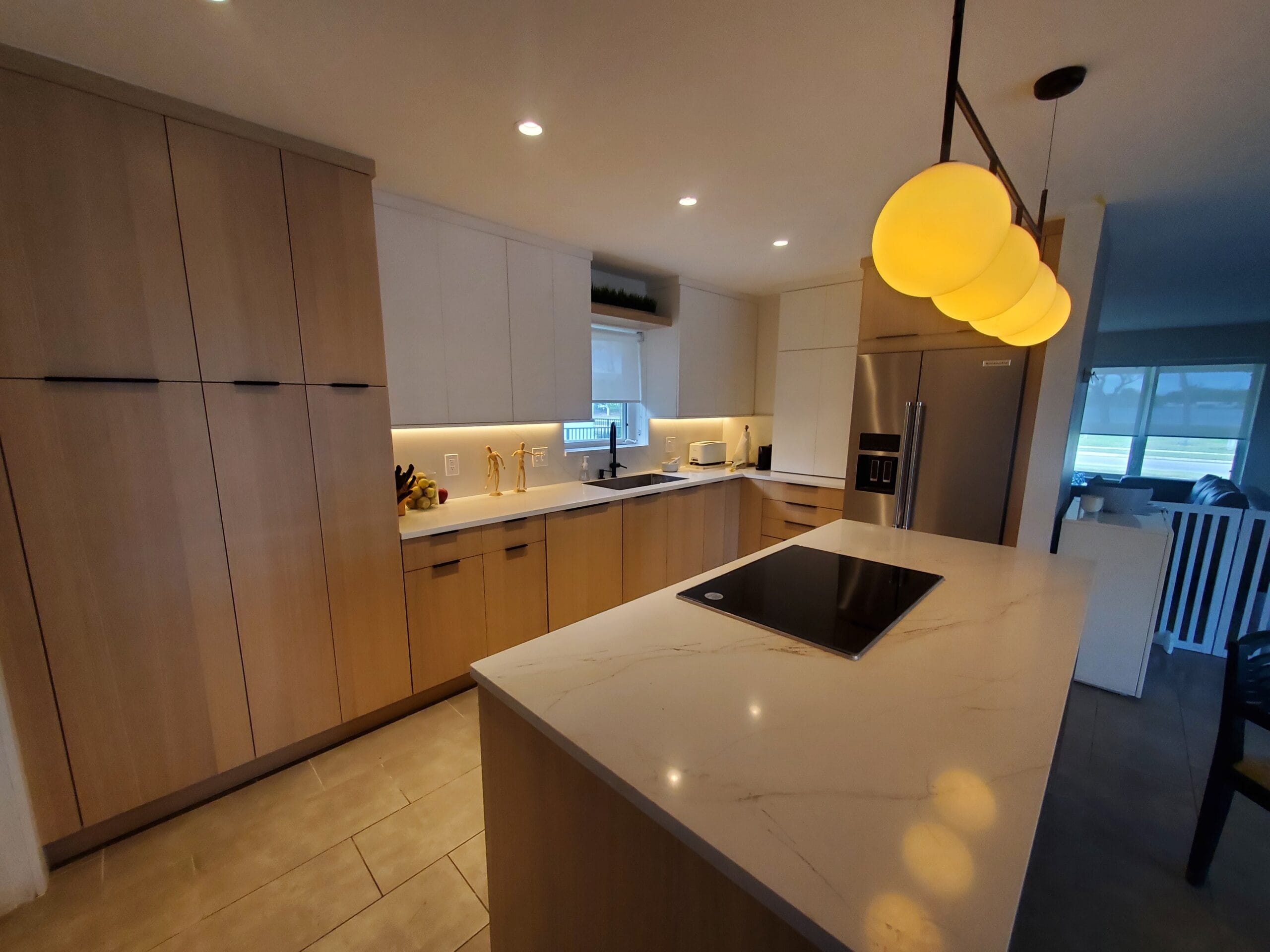
The final elements—cabinetry, lighting, and trim—are what truly define the character of the space. Custom built-ins for a home office or family room can start around $5,000 and go to $20,000 or more, depending on the materials and how intricate the design is. These decisions aren't much different from what you'd encounter in a full kitchen remodel. You can get a better sense of these finish-out costs from this breakdown on the average cost of a kitchen renovation.
Lighting is another make-or-break detail. A good plan uses a mix of ambient (general), task (focused), and accent lighting. You should budget somewhere in the $1,000 to $3,500 range for a thoughtful mix of recessed lights, pendants, and sconces, including the installation.
By carefully pricing out each of these finishes in your home addition cost estimator, you can create a realistic budget that ensures the inside of your new space is just as well-planned as its foundation.
Factoring in the “Hidden” Costs and Planning for the Unexpected
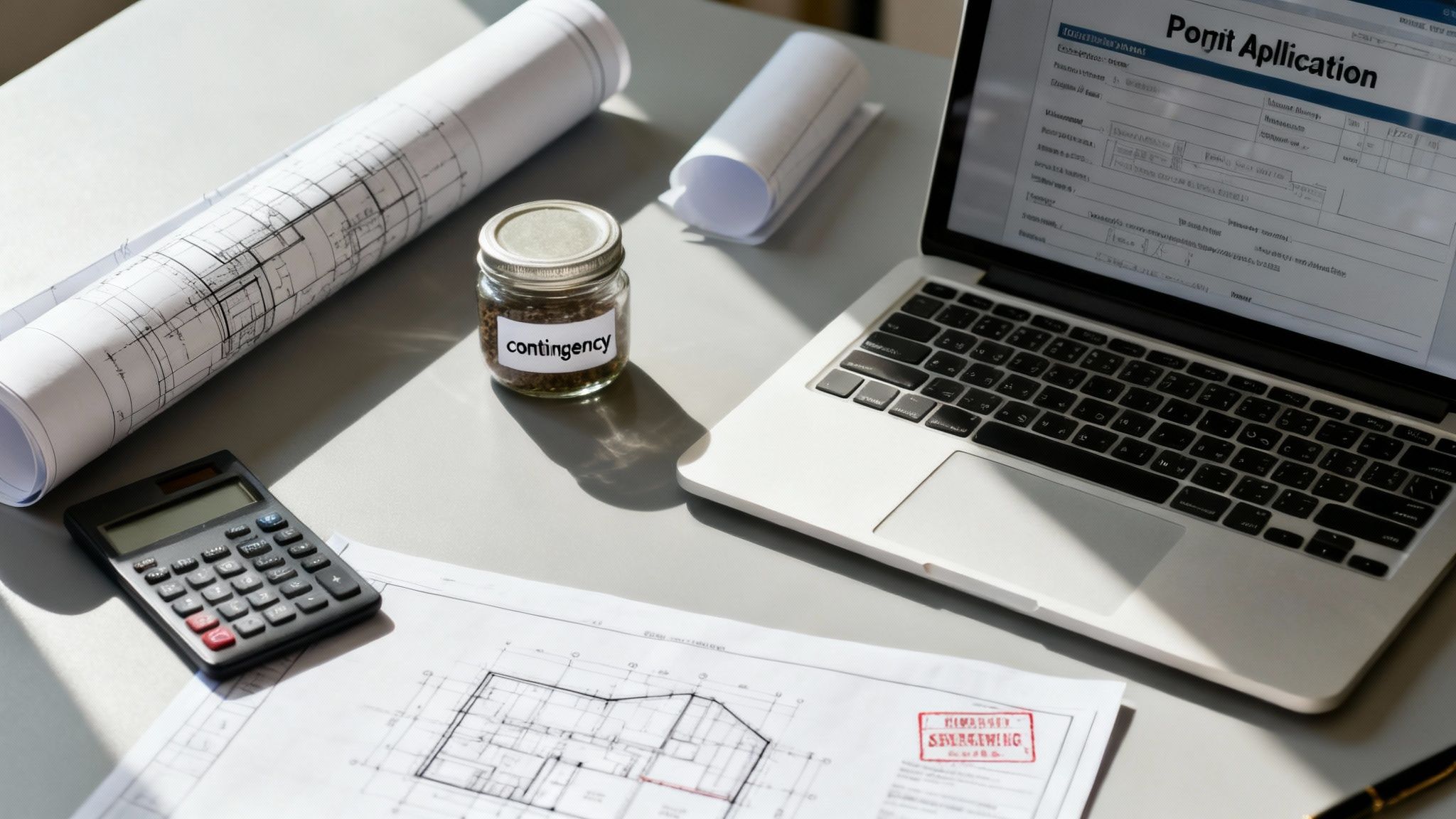
It’s easy to get caught up in the tangible costs of a home addition—the lumber, the concrete, the labor. Those are the big-ticket items, for sure. But I’ve seen far too many budgets get derailed by what we in the industry call "soft costs."
These are the essential, behind-the-scenes expenses that turn your dream into a buildable reality. Think of them as the project’s brain and nervous system. They happen long before the first shovel hits the dirt, and ignoring them is a recipe for disaster.
Breaking Down Professional Fees and Permits
Your first encounter with soft costs will be the fees for the pros who create the roadmap for your project. You can't just sketch something on a napkin; Florida has some of the toughest building codes in the country for a reason.
- Architectural Plans: A licensed architect is non-negotiable. They translate your vision into detailed construction drawings. Plan on dedicating 5% to 15% of your total construction cost for their expertise.
- Structural Engineering: In a hurricane zone like Boca Raton, an engineer’s stamp on your plans is critical. They ensure your addition can stand up to Mother Nature. This usually runs between $1,000 and $4,000, based on how complex the project is.
- Permitting Fees: Every city—whether it’s Parkland, Delray Beach, or another municipality—has its own fee structure. The permits themselves can cost anywhere from $500 to over $2,500.
On top of that, any reputable contractor will build project management and overhead into their price, typically 10% to 20% of the project cost. This isn’t just profit. It’s what pays for the constant coordination, material orders, site supervision, insurance, and the hundred other things that make a job run smoothly. If a bid seems suspiciously low, this is often what's missing—a major red flag.
Your Project’s Most Valuable Asset: The Contingency Fund
Now, let's talk about the single most important line item in any budget: the contingency fund. This is your project's financial safety net. I tell every client the same thing: set aside an additional 10% to 20% of your total estimated cost. Period.
This money is not for splurging on upgraded countertops or fancier light fixtures. It's exclusively for the true, unpredictable "uh-oh" moments—like finding termite damage when we open a wall or discovering old plumbing that has to be completely rerouted.
These are the issues that can bring a project to a dead stop if you’re not prepared. A healthy contingency fund keeps the momentum going without forcing you to make painful cuts to your original vision. This kind of detailed financial planning is a core part of the 5 steps to planning a home remodeling project we walk our clients through.
Staying Ahead of Market Volatility
In today's economic climate, that contingency fund is more critical than ever. Supply chain snags and inflation can cause material prices to swing wildly, and those costs land directly on your project.
Just look at the numbers. The cost of construction has jumped to 64.4% of a new home's final price in 2024, up from 60.8% in 2022. That’s the highest it’s been since 1998, driven almost entirely by these rising material costs.
This isn’t just an interesting statistic; it’s the reality on the ground. Building a robust contingency into your budget isn’t just good advice anymore—it’s an absolute necessity for successfully completing your home addition.
Turning Your Estimate into a Professional Quote
You've put in the time—you've listed out materials, dug into the soft costs, and even set aside a smart contingency fund. That initial estimate you've created is a fantastic starting point, a solid foundation for your project. But it's not the final number.
Now, the real work begins: turning your research into a firm, professional quote that a bank will approve and a construction crew can actually build from.
An online home addition cost estimator is a great tool for getting your bearings. It gives you a ballpark figure and helps you see the major cost drivers. But here's the thing: those calculators can't see the specific quirks of your property. They don't know about the tricky drainage slope in your Delray Beach backyard or the ancient electrical panel hiding in your historic Boca Raton home.
This is where a real conversation with a professional becomes absolutely essential.
From Digital Tool to On-Site Assessment
There's simply no substitute for a physical site visit. It's the only way for a contractor to see the ground-truth conditions that will shape your project. When we come out for our complimentary budget estimating process, we leave the generic per-square-foot numbers behind and build a quote based on the reality of your home.
This hands-on process looks something like this:
- A Thorough Site Walk-Through: We’ll get eyes on your home’s existing structure, map out the utility access points, and assess the exact patch of land where your new addition will stand.
- An In-Depth Vision Discussion: This is more than just blueprints. We want to understand not just what you want to build, but how you plan to live in that new space.
- A Transparent Cost Breakdown: After the visit, we'll give you a detailed, line-item budget. No mystery numbers—you'll see exactly where every dollar is going.
This collaborative approach is what transforms your spreadsheet from a guess into an actionable plan. It’s all about working together to root out surprises and make sure the final quote is as accurate and comprehensive as possible.
By inviting a professional to assess your project on-site, you’re not just getting a price. You're gaining a strategic partner who can spot potential roadblocks and uncover opportunities that no online calculator could ever find. This is the single most critical step toward a successful build.
How to Spot Red Flags in a Contractor's Quote
As you start collecting quotes from different builders, you’ll notice they aren't all created equal. A shockingly low bid might catch your eye, but it’s often a sign of trouble brewing. A good, trustworthy quote is packed with detail and transparency. A bad one is vague and full of holes.
Keep an eye out for these warning signs:
- Vague Line Items: If you see something like "Electrical Work – $5,000," that's a red flag. A proper quote will get specific, detailing things like the number of outlets, the types of light fixtures, and whether a new subpanel is part of the deal.
- No Mention of Allowances: For finishes like tile, faucets, or countertops, the quote must include a clear "allowance." This is the amount budgeted per item. Without it, you're setting yourself up for a nasty surprise when you pick out the materials you actually love.
- An Unusually Low Price: Is one bid dramatically lower than the others? Be skeptical. It often means something critical has been left out, whether it's permits, proper insurance, or a realistic budget for skilled labor.
Choosing your building partner is the most important decision you'll make in this entire process. Finding a qualified and trustworthy remodeling contractor near you isn't just about comparing the bottom-line price; it’s about finding a team that’s committed to honesty and quality from the very first conversation.
Viewing Your Addition as a Long-Term Investment
It’s easy to get sticker shock when you start pricing out a home addition. But thinking of it purely as an expense is the wrong way to look at it. In a hot market like South Florida, a smart addition is one of the best investments you can make—both in your property's value and in your family's quality of life.
You're not just tacking on a room; you're building real, tangible equity while making your home a better place to live.
Think beyond just adding square footage. The projects that really pay off are the ones that add functional value. We see it all the time: a dedicated home office, a true master suite to escape to, or blowing out the back wall to create a modern kitchen and family hub. These aren't just trendy upgrades. They are practical, meaningful improvements that buyers in places like Boca Raton and Parkland are actively looking for.
Connecting Cost to Long-Term Value
The trick is to connect the dots between your project's cost and how much it'll boost your home’s appeal on the market.
- Adding a new bedroom and bathroom, for example, is a no-brainer. It instantly changes your home's stats on a real estate listing from a 3/2 to a 4/3, putting you in a different price bracket.
- An expanded great room might not add to the bedroom count, but it completely transforms the home's flow and makes it an entertainer's dream—a huge selling point around here.
This perspective helps you justify the numbers you see on a home addition cost estimator. Is that high-end gourmet kitchen island worth the price? When you think about the years of family gatherings you'll have around it and the "wow" factor it adds for resale, the answer for most people is a clear yes.
The market backs this up in a big way. The U.S. home remodeling market is on track to blow past $600 billion in 2025. Even back in 2023, the average homeowner was dropping nearly $4,700 on improvements. For a deeper dive, check out this detailed report from Harvard's Joint Center for Housing Studies.
Why Investing Now Makes Sense
With property values in South Florida staying so strong, putting money into your home is a solid financial move. An addition lets you get the home you need without the massive headache and expense of selling, buying, and moving.
An addition is more than a line item on a budget; it's a direct investment in your home's equity and your family's happiness. By focusing on projects that deliver both personal joy and market value, you ensure that every dollar spent today pays dividends for years to come.
At the end of the day, the goal is to build a space you absolutely love living in right now, knowing it will be a valuable asset down the road. When you see your project through that lens, the initial cost feels less like an expense and more like a smart step toward a more functional, beautiful, and valuable home.
Common Questions About Home Addition Costs
Embarking on a home addition is a big step, and it's natural to have a lot of questions. We've been guiding homeowners in Boca Raton, Delray Beach, and Parkland through this process for years, and a few key questions always come up. Here are some straightforward answers to help you plan with confidence.
How Long Does a Home Addition Really Take?
This is probably the number one question we get. While the actual hands-on construction might seem like the main event, it's often just one piece of a much larger puzzle.
You can expect the on-site work to last three to six months, but the entire journey—from our first conversation to your final walk-through—is typically a six to twelve-month process.
A huge chunk of that time is spent in the pre-construction phase. This is where we finalize architectural plans, work through the structural engineering, and navigate the permitting process with the local city offices. That permitting step alone can sometimes take a few months. This is where working with a unified design-build team really pays off, as we can manage these moving parts simultaneously to keep things on track.
Will an Addition Increase My Property Taxes?
In a word, yes. It's pretty much a given.
When you add legally permitted square footage to your home, you're directly increasing its assessed value. After the final inspections are signed off, the county property appraiser will reassess your home based on its new, larger size and updated features.
Your property tax bill will adjust accordingly. Nobody loves paying more taxes, but think of it this way: it’s official confirmation that you’ve added significant, lasting value to your biggest investment.
The real magic of the design-build model is having one team, one point of contact, and one source of accountability for your entire project. By integrating design and construction from day one, we eliminate the communication gaps that cause delays, prevent costly errors, and produce a budget you can actually trust.
What is the Main Advantage of a Design-Build Firm?
Accountability. Full stop.
With a design-build firm, everyone—the architects, the designers, the project managers—is on the same team, rowing in the same direction from the very beginning.
This completely sidesteps the classic finger-pointing that can happen when you hire an architect and a contractor separately. "The plans weren't right." "The builder didn't follow the plans." You won't hear any of that. When one team is responsible for everything from the first sketch to the final coat of paint, the process is just smoother, the schedule is tighter, and the budget is far more predictable. For you, the homeowner, it means a seamless, less stressful experience.
Ready to see what's possible? The team at Kitchen Renovations Perfected offers a complimentary consultation and a practical budget estimator to help you define your scope, materials, and timeline. Let our design-led process bring your vision to life. Learn more at https://www.kitchenrenovationsperfected.com.