When you're choosing kitchen cabinets, it really comes down to two fundamental construction styles. On one hand, you have framed cabinets, the classic American approach. They're built with a solid wood face frame that gives them incredible strength and that familiar, traditional look.
On the other hand, there are frameless cabinets. You'll often hear these called European-style. They do away with the face frame entirely, mounting the doors directly onto the cabinet box itself. This creates a clean, sleek appearance and gives you more direct access to what's inside.
A Quick Comparison of Cabinet Construction
Getting a handle on the basic construction differences between framed and frameless cabinets is the first—and most important—step. It's a decision that influences everything else, from the overall look and feel of your kitchen to how much storage you get, what it will cost, and how it’s installed. One style gives you a timeless, versatile foundation, while the other offers a crisp, modern canvas.
For generations, framed cabinets were the go-to in American homes, but we've seen a major shift in recent years. Today, frameless cabinets make up a significant chunk of the market—about 40-45%—and their popularity is growing more than twice as fast as framed styles. This really speaks to a growing desire for contemporary design and getting every last inch of usable storage space. You can discover more insights about cabinet construction trends and what they mean for your project.
Framed vs Frameless Cabinets At-a-Glance
To make this simple from the get-go, let's break down the essential differences. Think of this table as a quick cheat sheet to see which style might be a better fit for your kitchen goals right off the bat.
| Attribute | Framed Cabinets (Traditional) | Frameless Cabinets (European) |
|---|---|---|
| Construction | Built with a 1.5-inch solid wood face frame attached to the front of the cabinet box. | The cabinet box stands alone without a face frame. Doors mount directly to the side panels. |
| Appearance | Delivers a classic, traditional, or transitional look. The frame is visible between doors and drawers. | Modern and minimalist. Doors and drawers sit flush against each other, creating a seamless facade. |
| Accessibility | The face frame creates a small lip at the opening, which can slightly get in the way. | Provides "full-access" with no lip, making it much easier to slide in and pull out bulky items. |
| Door Styles | Extremely versatile. Works beautifully with inset, partial-overlay, and full-overlay doors. | Almost exclusively uses full-overlay doors to maintain that clean, uninterrupted look. |
| Installation | A bit more forgiving. The frame can help mask minor imperfections if your walls aren't perfectly plumb. | Demands precision. A professional installation is key to getting perfect alignment and smooth operation. |
This at-a-glance view helps clarify the core distinctions, but as we'll explore, the real-world implications of these differences are what will ultimately guide your decision.
Understanding Core Differences in Cabinet Construction
When you're choosing between frameless and framed cabinets, it's easy to get lost in styles and finishes. But to really get it right, you need to look at how they're built. The fundamental anatomy of a cabinet box dictates its strength, its look, and even how it feels to open and close every single day. This isn't just shop talk; it’s the core engineering that determines how well your kitchen will hold up over the long haul.
The Traditional Approach: Framed Cabinets
Think of framed cabinets as the classic American standard. The construction is pretty intuitive: a cabinet box with a solid wood "picture frame" attached to the front. This face frame is usually about 1.5 inches wide and serves as the cabinet's backbone. It provides serious structural reinforcement and a solid place to mount doors and hinges.
This design makes framed cabinets incredibly sturdy. The frame keeps the box from twisting or racking, which is a huge advantage during installation, especially in older homes where walls and floors are rarely perfectly level.
The Modern Alternative: Frameless Cabinets
Frameless cabinets, often called European-style or full-access cabinets, do away with the face frame entirely. It’s a cleaner, more modern approach. To compensate for the missing frame, their stability comes from a thicker, more robust cabinet box. The walls of the cabinet itself have to be strong enough to carry the weight of the doors and everything you store inside.
This comparison chart gives you a quick visual on these core structural differences.
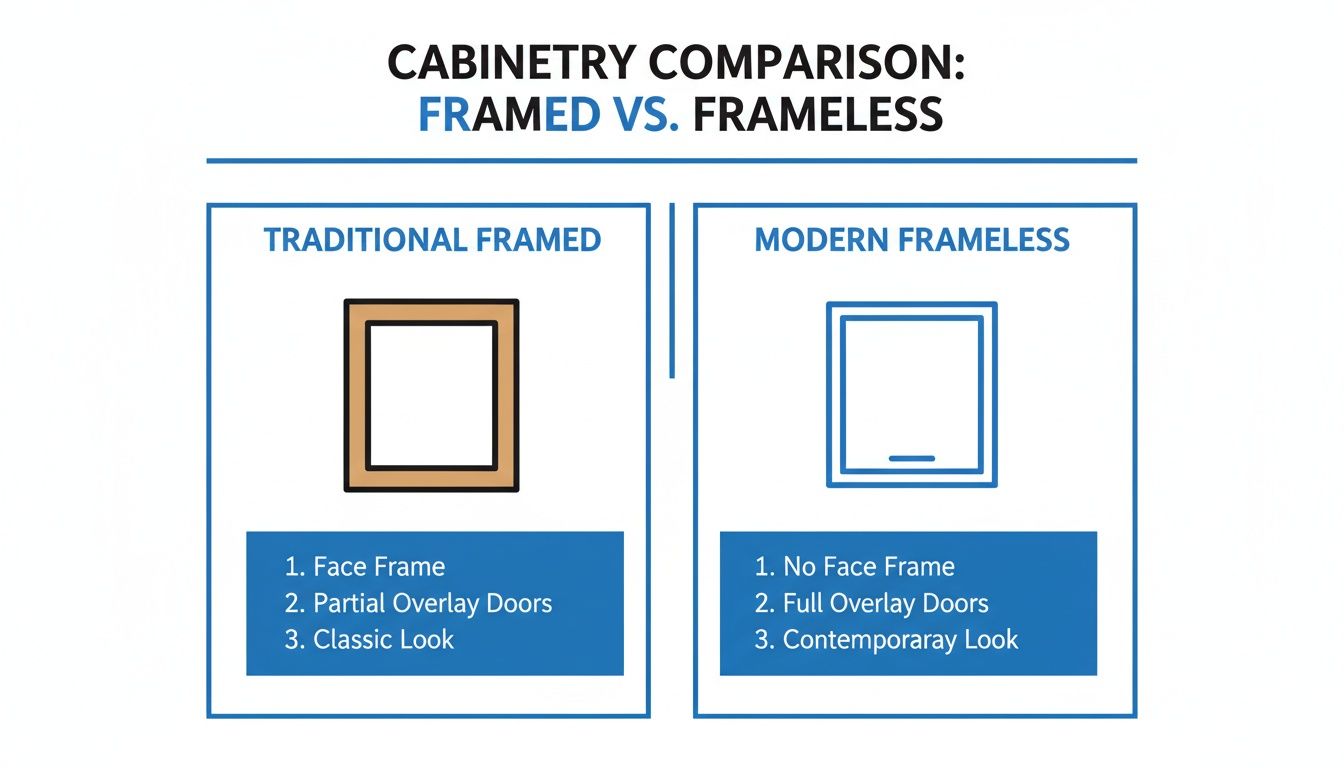
As you can see, that one element—the face frame—is the key difference that changes everything from aesthetics to accessibility.
Why the Face Frame Matters
In a framed cabinet, that face frame is doing more than just holding things together; it’s a key part of the design. It creates a visible border around the doors and drawers, contributing to that classic, layered look many people love.
Here’s a breakdown of its main jobs:
- Structural Backbone: It adds a ton of rigidity, preventing the cabinet box from warping over time.
- Solid Hinge Mount: It gives you a solid hardwood surface to attach hinges to, a sign of traditional craftsmanship.
- Design Flexibility: The frame is what makes certain door styles possible, like inset doors that sit perfectly flush inside the frame or partial-overlay doors that leave a bit of the frame peeking out.
Because the frame adds so much strength, the cabinet box itself can sometimes be made from slightly thinner materials without sacrificing durability. The only real trade-off is that the frame creates a small lip inside the cabinet opening, which can slightly reduce your storage access.
How Frameless Cabinets Stay Strong
So, how do frameless cabinets stand firm without that front frame? It all comes down to heavy-duty engineering. Their strength is built right into the box, which is typically constructed from thick 3/4-inch furniture-grade plywood or particleboard. This beefier construction is absolutely essential because the hinges mount directly to the side walls of the cabinet.
The need for precision with frameless cabinets is a big deal. Because the doors hang with only a hair's breadth of a gap between them, the boxes must be installed perfectly level and plumb. If they're not, the doors will never align properly, and you'll notice it immediately.
Another detail that’s crucial to frameless construction is edge banding. The raw edges of the plywood or particleboard box are covered with a thin, durable strip of matching material, like a wood veneer or PVC. This protects the core from moisture and chipping while creating a clean, seamless finish. It's a small touch that makes a huge difference, giving the cabinets that polished, high-end look.
The payoff for all this precision? You get what we call "full access." With no face frame in the way, the entire interior of the cabinet is open and easy to reach, making it a breeze to slide in large pots, pans, and appliances.
Comparing Real-World Storage Space and Accessibility
Beyond the look, the single most practical difference between frameless and framed cabinets is how much stuff you can fit inside and how easily you can get to it. This isn't a small detail—it completely changes the day-to-day flow of your kitchen. The whole frameless vs framed cabinets debate often boils down to this one crucial point of real-world use.
Frameless cabinets have earned the nickname "full-access" cabinets, and it’s a fitting one. By getting rid of the front face frame, the entire inside of the cabinet box is open and clear. It’s a design choice that has a surprisingly big impact on your usable space.
Maximizing Every Inch with Frameless Design
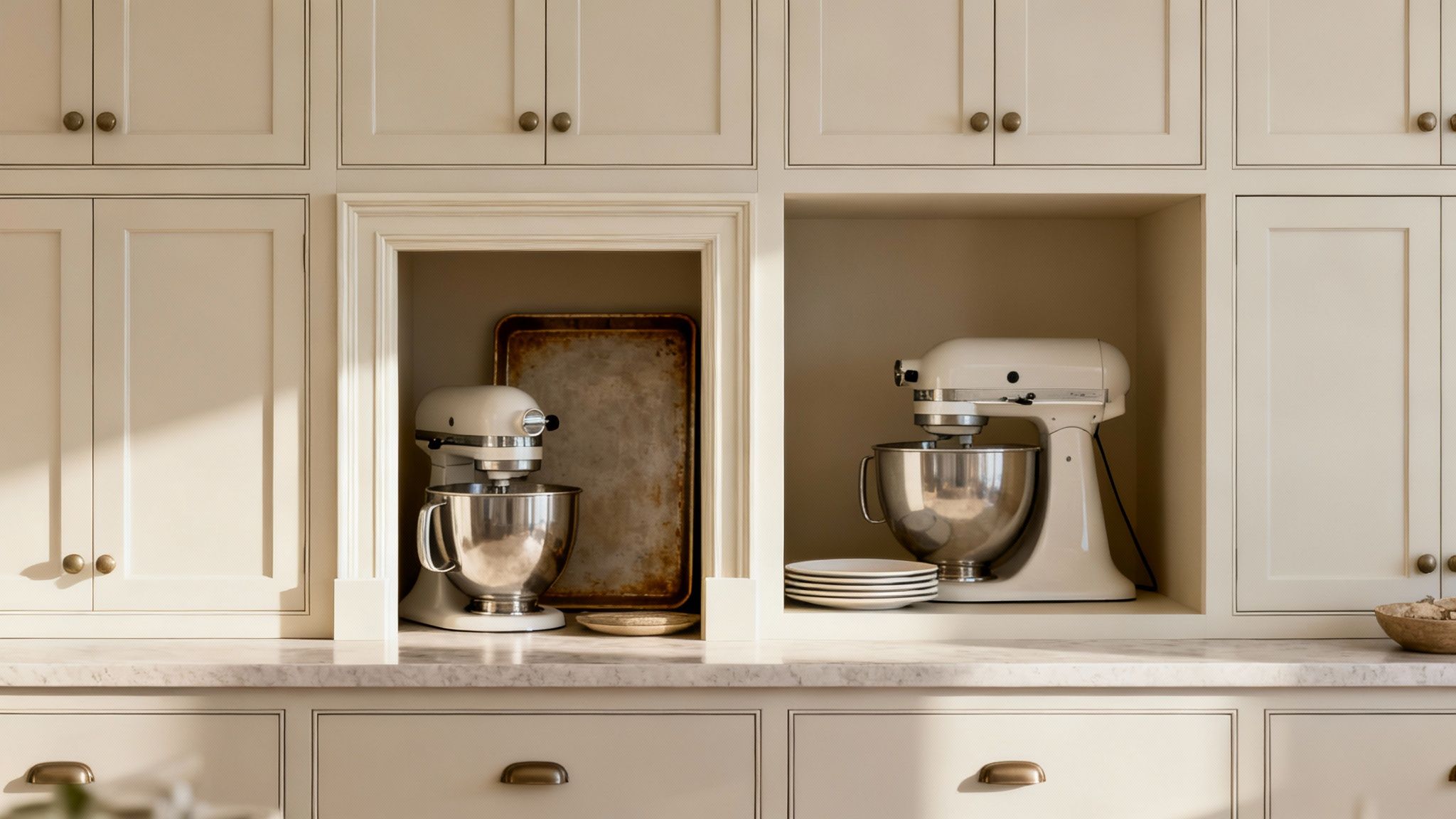
The first thing you’ll notice with a frameless cabinet is the wider opening for both doors and drawers. Without that 1.5-inch frame creating a lip around the opening, you gain precious clearance. This might seem small, but it can translate into as much as 15% more usable interior space, especially in drawers where every fraction of an inch really matters.
Think about storing a bulky stand mixer or a stack of big serving platters. In a frameless cabinet, you can slide those items straight in without any awkward twisting or turning. That unrestricted access makes everyday tasks feel so much smoother and less of a hassle.
The larger, unobstructed opening of frameless cabinets isn't just about fitting more items—it's about reducing daily frustration. You won't have to empty the front of a shelf just to retrieve something from the back.
This efficiency becomes a huge plus when you're trying to keep your kitchen tidy. For some practical ideas on using this extra space, check out our guide on how to organize kitchen cabinets; the strategies there work perfectly with full-access designs. The ability to pull out a drawer and see everything inside, edge to edge, is a total game-changer for staying organized.
The Framed Cabinet Storage Experience
In contrast, framed cabinets offer a different kind of storage experience. That face frame provides incredible structural support, but it also shrinks the size of the cabinet opening. This creates a small but noticeable "lip" that you have to lift items over to put them inside or take them out.
This is most obvious in double-door cabinets. A lot of traditional framed designs have a vertical center stile right between the two doors. While this adds rigidity, it also creates a fixed partition right in the middle of your cabinet, making it tough to store wide items like baking sheets, large cutting boards, or oversized casserole dishes.
While some modern framed cabinets now come in "butt door" configurations that ditch the center stile, the surrounding face frame still slightly constricts the opening on all four sides.
A Practical Side-by-Side Comparison
To really picture the difference, let’s imagine a standard 36-inch wide base cabinet in both styles.
- Frameless 36" Base Cabinet: You could have two large, deep drawers. Each drawer box can be nearly the full 36-inch interior width, giving you a massive, uninterrupted space for pots, pans, and lids. You can see it all at a glance.
- Framed 36" Base Cabinet (with center stile): This cabinet would have two doors, each opening to a separate compartment that's smaller than 18 inches because of the frame. Trying to store a large roasting pan would be impossible unless you turned it sideways, which is a big waste of space.
- Framed 36" Base Cabinet (without center stile): This is a much better option, but the opening is still reduced by the top, bottom, and side frames. A drawer in this cabinet would have to be narrower than its frameless cousin just to clear the frame when it slides out.
Ultimately, the choice comes down to what you value most. If your number one priority is squeezing every cubic inch of storage out of your kitchen and having effortless access to bulky items, the frameless design is the clear winner. But if you love the classic look of framed cabinets and can work around the slightly reduced access, they are still a perfectly functional and beautiful choice for any kitchen.
How Construction Impacts Aesthetic and Design Flexibility
The choice between framed and frameless cabinets is one of the first and most important decisions you'll make, as it truly sets the tone for your entire kitchen design. This isn't just a minor detail; the cabinet's core structure dictates the room's visual language, from its clean, modern lines to its classic, detailed character.
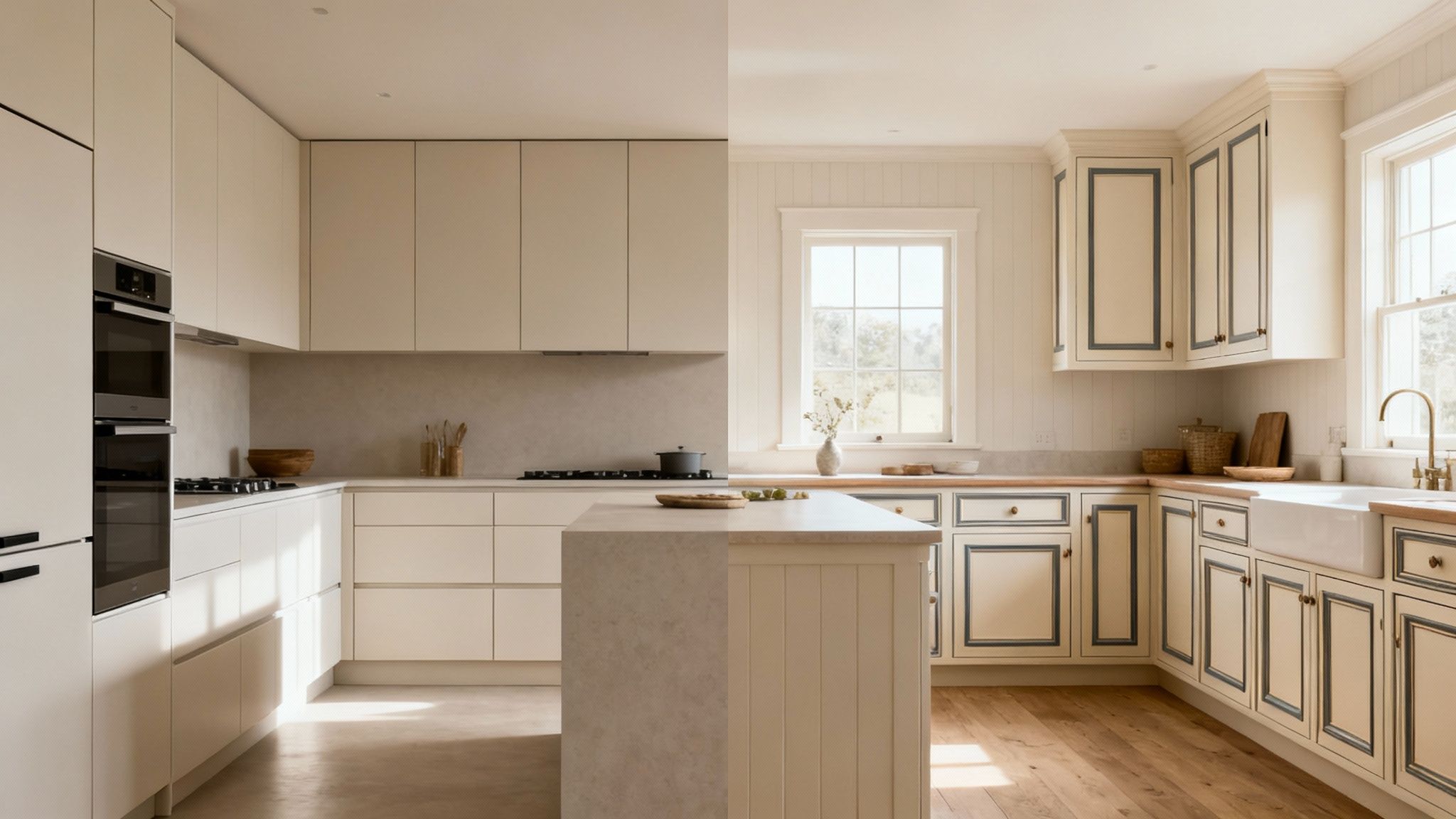
Think of it as choosing the canvas before you pick up the brush. One style gives you a smooth, uninterrupted surface, while the other provides a built-in framework perfect for adding layers of detail.
The Modern Appeal of Frameless Cabinets
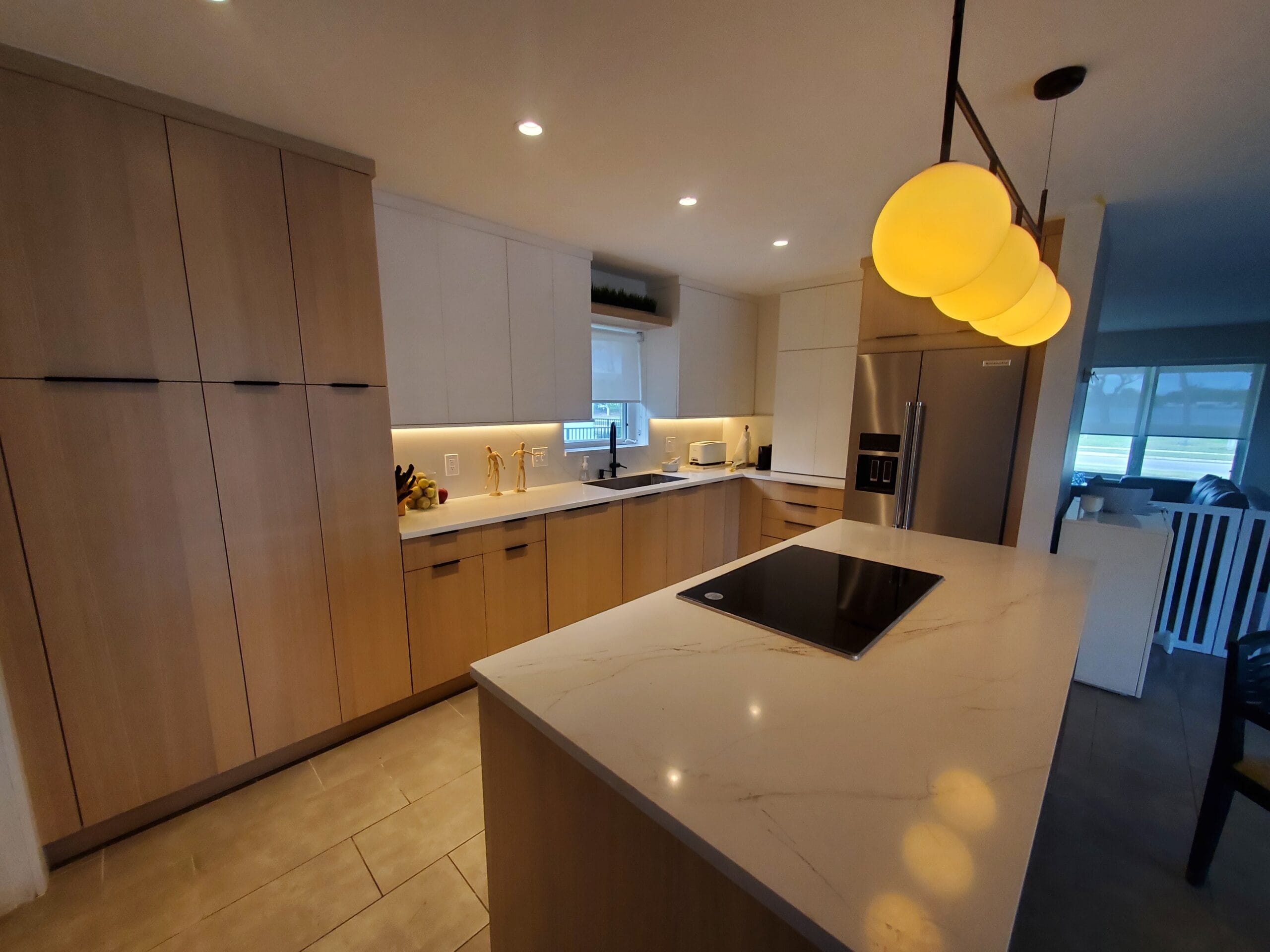
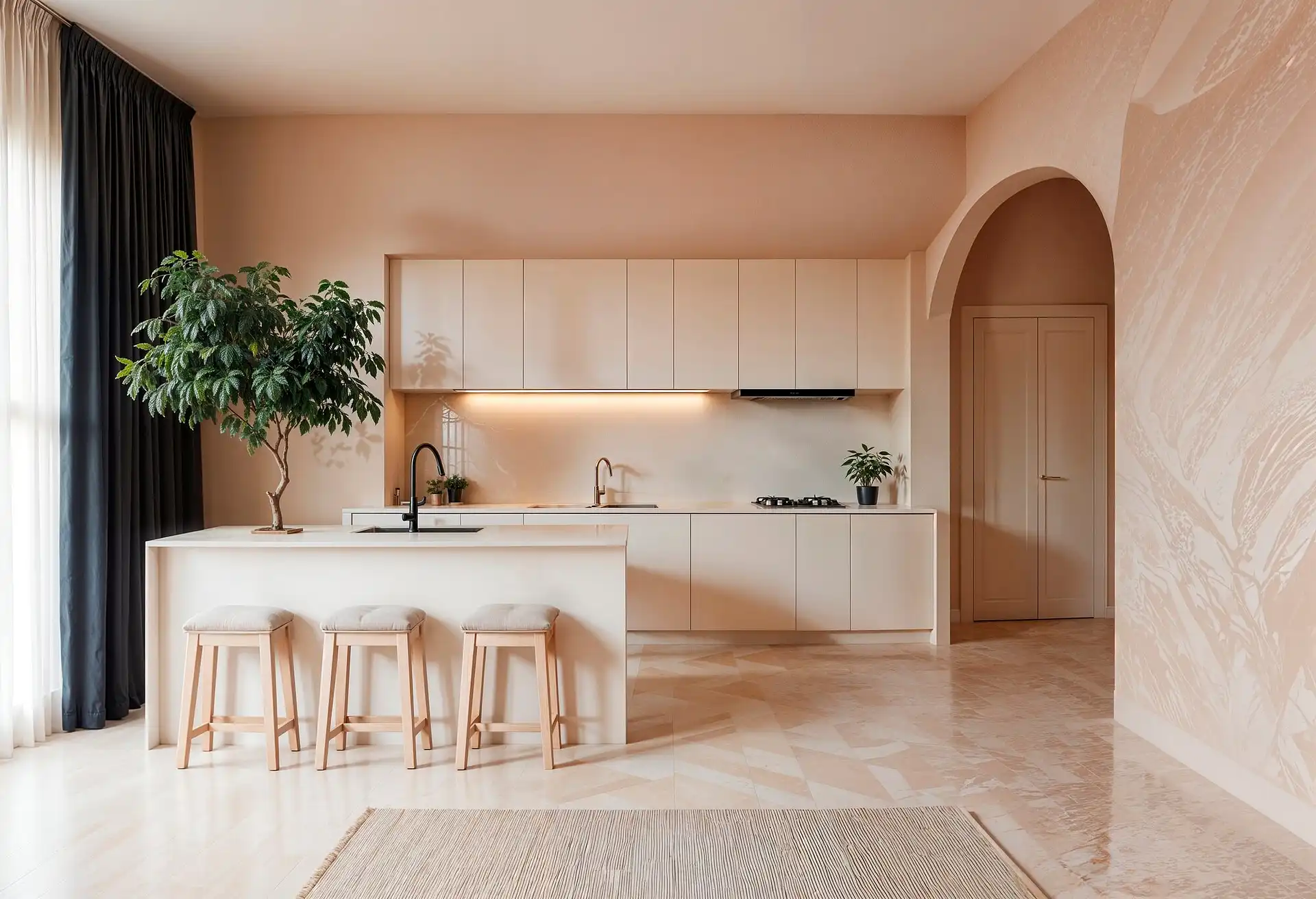
If you're drawn to minimalist, modern, or sleek contemporary styles, frameless cabinets are your go-to. Their entire design philosophy is about creating a clean, seamless appearance. Doors and drawers mount directly onto the cabinet box, leaving only a tiny, consistent gap between each one.
The result is a flat, unbroken plane that feels visually calm and uncluttered. With no face frame to create shadows or busy lines, the material itself becomes the star. This is why you so often see frameless cabinets with high-gloss finishes, unique wood veneers, or bold, solid colors—the uninterrupted surface lets those materials shine.
Imagine a bank of floor-to-ceiling frameless cabinets. They can look less like individual cupboards and more like a single, unified architectural wall, making the kitchen feel more integrated into the home and much more expansive.
The Versatile Charm of Framed Cabinets
Framed cabinets are the chameleons of the kitchen world, fitting perfectly into traditional, transitional, and farmhouse designs. Here, the face frame isn't just structural; it's a key design element. It adds depth, creates subtle shadow lines, and gives the cabinets a substantial, handcrafted feel.
The real magic of framed construction is its incredible flexibility with door styles. This is where you can really dial in the exact look and feel you want for your kitchen.
- Inset Doors: Sitting perfectly flush inside the frame, inset doors create a classic, furniture-quality look. This style screams craftsmanship and is a signature of high-end traditional and historic kitchens.
- Partial-Overlay Doors: A more common and budget-friendly option, this style leaves part of the face frame exposed around the door and drawer fronts (usually about an inch). It adds dimension and texture, working beautifully in everything from country to transitional spaces.
- Full-Overlay Doors: This style covers nearly the entire face frame, leaving just a small sliver visible. It’s a great way to bridge the gap between traditional construction and a more modern, streamlined look.
A key differentiator: The ability to pair a visible frame with an inset door is a look you can only achieve with framed cabinets. It instantly gives a kitchen a sense of permanence and bespoke quality that frameless construction simply can't replicate.
This built-in versatility makes framed cabinets a fantastic choice if you want a look that can evolve with your tastes. Knowing how to paint kitchen cabinets can completely transform a space down the road, giving classic framed cabinetry a fresh new life with just a color change.
Ultimately, your decision comes down to the story you want your kitchen to tell. If that story is about clean lines, integrated design, and modern simplicity, the seamless canvas of frameless cabinets is your starting point. But if you envision a room with rich detail, classic character, and textural depth, the versatile structure of framed cabinets will give you the perfect foundation.
Durability, Cost, and Installation: The Nitty-Gritty Details
Beyond the look and feel, we need to talk about the practical side of things. How do these cabinets hold up over time? What will they really cost? And what does installation actually involve? These factors are where the rubber meets the road in the frameless vs framed cabinets debate, heavily influencing your budget, timeline, and how happy you'll be with your kitchen down the line.
Getting these details right means you're not just buying a look; you're making a smart, long-term investment.
A Closer Look at Durability
There’s a common myth floating around that framed cabinets are always tougher simply because of that solid wood face frame. And while it's true that the frame adds a ton of rigidity, it doesn't mean frameless cabinets are delicate. Far from it.
High-quality frameless cabinets are engineered for strength. They're built using thicker materials—usually 3/4-inch plywood or particleboard—to make sure the box itself can handle the weight of doors and dishes without bowing. The real test of a frameless cabinet's durability isn't the design itself, but the quality of its construction and, most importantly, the skill of the installer. A well-made, perfectly installed frameless cabinet will look great and function beautifully for decades.
On the other hand, the face frame on framed cabinets gives them a built-in sturdiness that makes them incredibly forgiving and exceptionally strong from the get-go.
Navigating the Installation Process
Installation is where you see the biggest difference between the two styles. Framed cabinets are a bit more forgiving for installers. That face frame helps keep the box square and can easily hide minor imperfections, like a wall that isn't perfectly straight or a floor that has a slight slope.
Frameless cabinets, however, demand perfection. Because the doors hang with razor-thin gaps—often just 2-3mm—the cabinet boxes must be installed perfectly level and plumb. There's no face frame to cover up even the slightest misalignment.
For frameless cabinets, a top-notch installer isn't a luxury; it's a necessity. That flawless, seamless look you're after is only possible when every single box and door is aligned with surgical precision. Even a tiny error will stick out like a sore thumb.
This need for meticulous work can sometimes mean higher labor costs for frameless installations, as it simply takes more time and skill to get it just right.
Decoding the True Cost of Cabinets
It’s tempting to think one style is automatically more expensive, but the truth is a lot more nuanced. These days, the price gap between a quality frameless and a quality framed cabinet is often pretty small. The real cost drivers aren't the construction style, but rather the materials, finishes, brand, and any custom features you choose.
For instance, a semi-custom frameless cabinet with a high-end thermofoil finish could easily be cheaper than a fully custom framed cabinet built from solid cherry wood with classic inset doors. To get a better sense of how materials affect price, you can check out our guide on the best kitchen cabinet materials.
What you ultimately pay will come down to a mix of these key factors:
- Material Quality: Solid wood, plywood, or MDF all come with different price tags.
- Finish: A standard paint job costs less than a complex multi-step glaze or a sleek high-gloss lacquer.
- Brand Reputation: Well-known national brands often have different pricing than local custom cabinet makers.
- Customization: The more you move away from standard sizes and add unique features, the more the cost will reflect that.
To help you sort through these practical details and match them to your own priorities, here’s a quick decision-making tool.
Decision Matrix for Framed vs Frameless Cabinets
This table is designed to help you weigh what matters most to you and your project.
| Priority | Choose Framed Cabinets If… | Choose Frameless Cabinets If… |
|---|---|---|
| Aesthetic Goal | You're aiming for a traditional, transitional, or farmhouse style that benefits from layered details like inset doors. | You want a modern, minimalist, or contemporary kitchen with clean, uninterrupted lines and a sleek finish. |
| Storage Needs | You have plenty of kitchen space, so giving up a tiny bit of interior room for a sturdier frame isn't a big deal. | Every inch of storage counts. You need full, easy access to everything inside your cabinets without a frame in the way. |
| Installation Site | Your home is older, and you suspect the walls or floors aren't perfectly straight. You need the flexibility a frame provides. | You're working with a new build or have confirmed your surfaces are level, allowing for the precise installation required. |
| Budget Focus | You're prioritizing intricate door styles, custom wood finishes, or other details best suited to a framed construction. | Your budget is focused on maximizing interior space and achieving that high-end, seamless look with premium finishes. |
In the end, choosing between framed and frameless is all about finding the right balance between the cabinet's structure, your kitchen's everyday needs, and the style you've always dreamed of.
Making the Right Choice for Your Kitchen
So, how do you actually decide between frameless vs framed cabinets? It’s not about finding a universally “best” option—it’s about finding the best fit for your kitchen, your lifestyle, and your taste. The right choice becomes clear when you stop thinking in abstract terms and start applying these differences to your own space and needs.
Let's walk through a couple of real-world scenarios. Context is truly everything here.
Matching Cabinet Style to Your Needs
If you're working with a smaller kitchen, like in many condos or townhomes, every square inch counts. This is where frameless cabinets really shine. By getting rid of the face frame, you get full, unobstructed access to the cabinet's interior. That means no more wrestling with a stand mixer to get it past a pesky frame lip. For small spaces, that extra bit of usable room in every drawer and cabinet can be a game-changer.
On the other hand, if you're dreaming of a classic, traditional, or farmhouse kitchen, framed cabinets are almost always the way to go. Their construction is the only way to achieve certain timeless looks, especially inset doors that sit perfectly flush inside the frame. This creates a beautiful, furniture-like quality that adds a sense of history and character. The frame itself becomes part of the design.
The right cabinet choice balances your kitchen's spatial limitations with your stylistic aspirations. Frameless excels at maximizing modern efficiency, while framed excels at delivering timeless, detailed character.
For a more comprehensive look at all the factors at play, our guide on how to choose kitchen cabinets is a great next step. It breaks down the entire process to help you feel confident in your decision.
Final Considerations for a Confident Decision
At the end of the day, your choice should feel empowering. You’re building a kitchen that needs to look great and work hard for you every single day. Think about your daily routine. Are you constantly pulling out pots, pans, and appliances, where easy access is a top priority? Or is your heart set on a specific aesthetic that honors the architectural style of your home?
By weighing these practical needs against your design vision, you'll land on the cabinet style that provides the perfect foundation for the heart of your home. It’s an investment that should feel like a true reflection of you—one you’ll be happy with for years to come.
Frequently Asked Questions
When you're deep in the details of a kitchen renovation, the frameless vs. framed cabinets debate always sparks a few specific questions. I hear them all the time from homeowners trying to make the right call. Here are some straightforward answers to the most common ones.
Are Frameless Cabinets Less Durable Than Framed Cabinets?
Not really, it’s a common misconception. Framed cabinets definitely have a "built-like-a-tank" reputation because of that solid wood face frame, and it’s well-earned. But a well-made frameless cabinet is no slouch.
Top-tier frameless cabinets are engineered from thick, robust materials—think 3/4-inch furniture-grade plywood. That kind of construction gives the box all the structural integrity it needs. The real secret to a long-lasting frameless kitchen is the installation. It has to be precise. When a skilled pro installs them correctly, they’re incredibly durable and will look fantastic for decades.
Can I Use Any Door Style with Either Cabinet Type?
For the most part, yes, but there are a few key exceptions that really define the look of each style. Frameless cabinets are built for one thing: full-overlay doors. This is how you get that seamless, modern aesthetic where the doors cover nearly the entire cabinet box.
Framed cabinets, on the other hand, give you a lot more creative freedom with door styles. You can go with:
- Full-overlay doors, which give a framed cabinet a more contemporary feel.
- Partial-overlay doors, where a bit of the face frame is intentionally visible.
- Inset doors, which sit perfectly flush inside the frame for a timeless, custom-furniture look.
That classic inset style—the kind you see in high-end, traditional kitchens—is only possible with framed construction. If you're chasing that specific, handcrafted aesthetic, this is a critical detail to remember.
Is There a Major Price Difference Between Frameless and Framed?
Honestly, the price has far more to do with the materials, finish, and brand you choose than whether it's framed or frameless. It used to be that frameless was seen as the pricier, European option, but today the costs have really leveled out.
You could easily spend more on a high-end custom framed cabinet made from cherry wood than you would on a quality semi-custom frameless cabinet with a thermofoil finish. My advice? Don't assume one is cheaper. Focus on the overall build quality and features you want, and let that guide your budget.
Do Frameless Cabinets Require Special Hardware?
They do. The hardware is designed specifically for their construction. Since the doors mount directly onto the interior sides of the cabinet box, frameless cabinets rely on European-style concealed hinges.
These hinges offer a huge range of adjustability, which is absolutely essential for getting those perfect, tight gaps between doors that are the hallmark of the frameless look. Framed cabinets use a totally different set of hinges designed to mount directly onto the solid wood face frame.
Ready to see the difference for yourself? The design experts at Kitchen Renovations Perfected can walk you through stunning examples of both frameless and framed cabinets in our Boca Raton showroom. Schedule your free, no-obligation consultation today and let's start designing the kitchen you've always wanted. Learn more at https://www.kitchenrenovationsperfected.com.