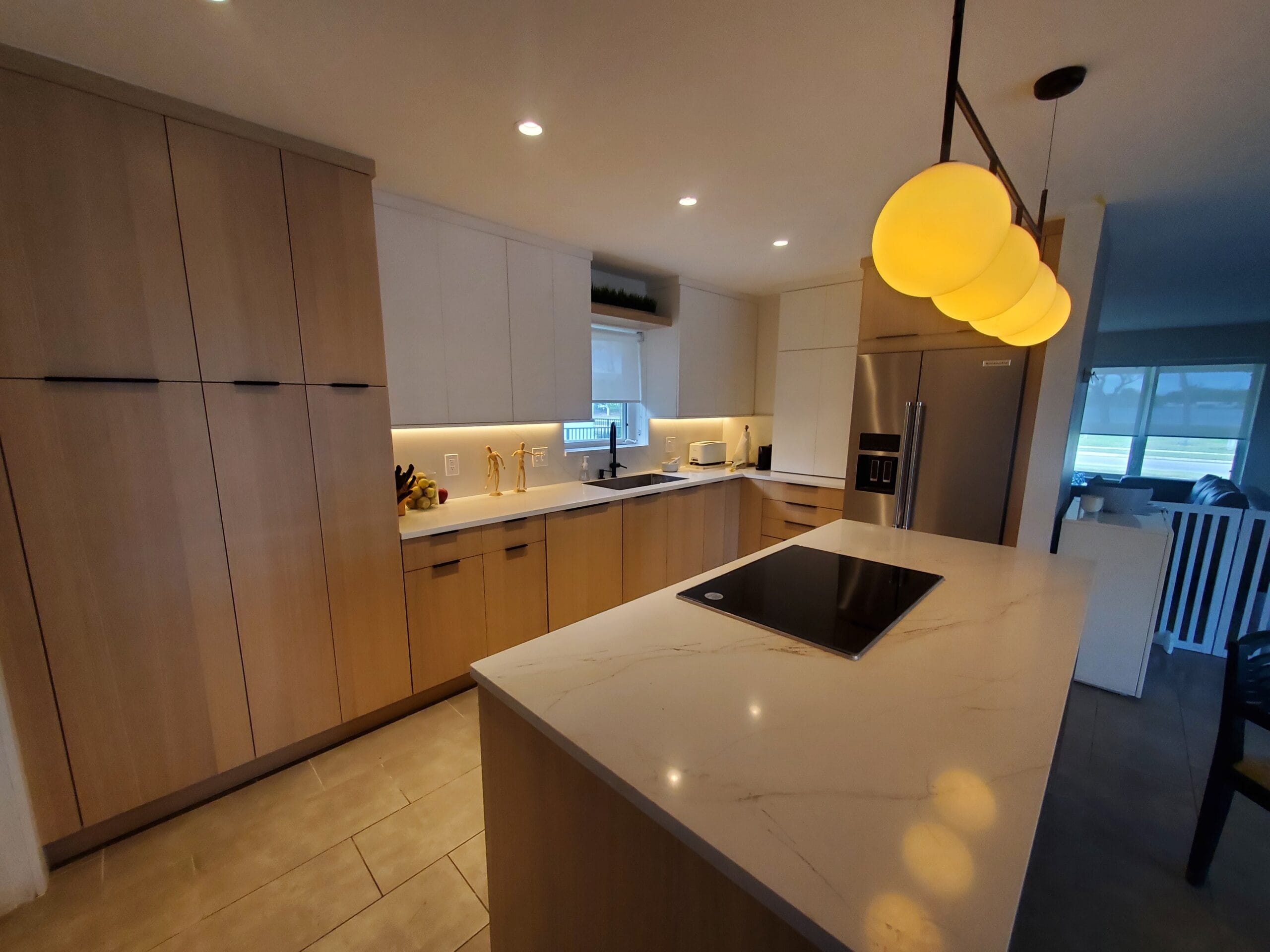
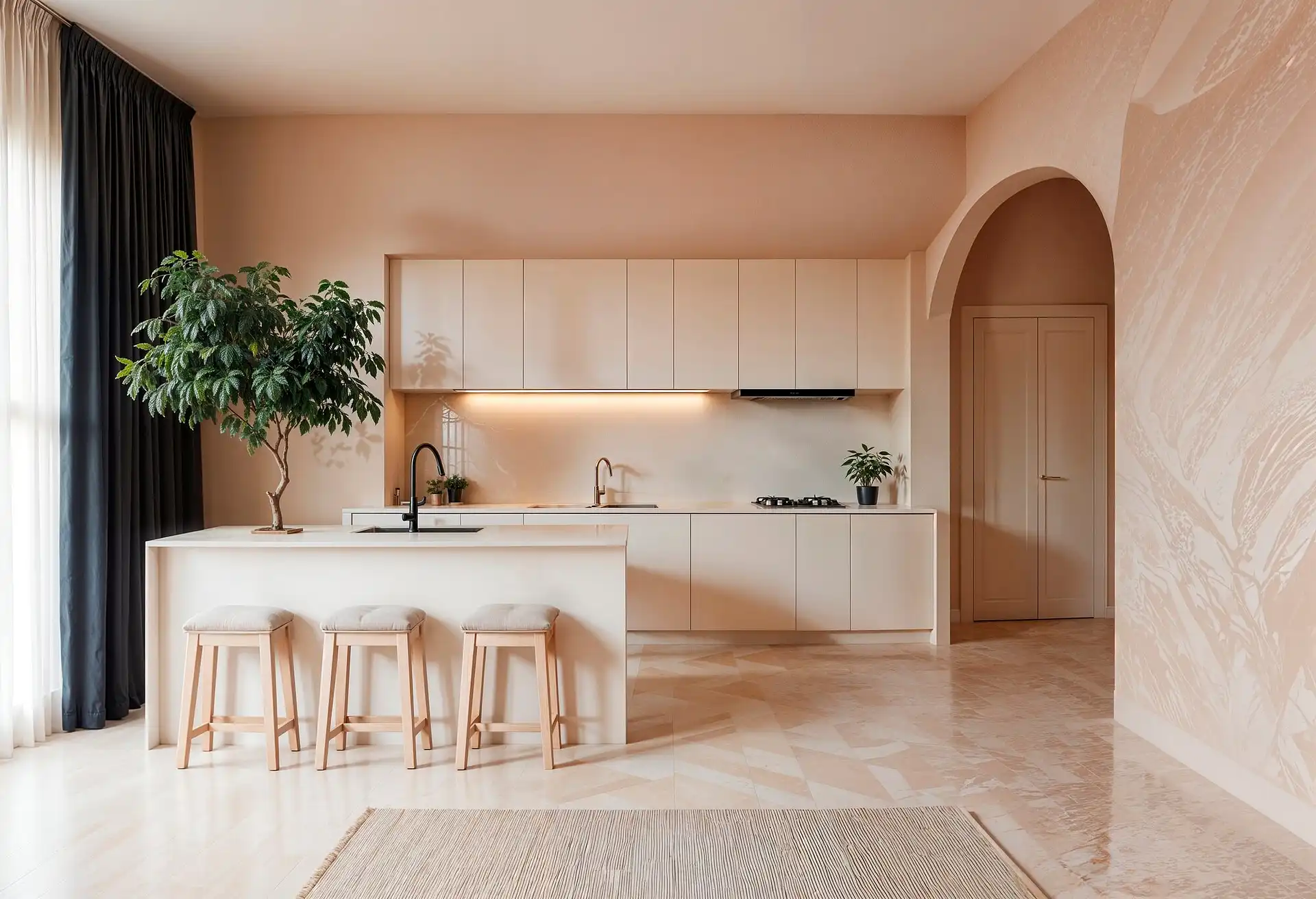
When you're ready to update your kitchen, the big question often boils down to cabinet refacing vs. refinishing. Think of it this way: refacing is a complete cosmetic transformation, while refinishing is more of a restoration project.
Refacing gives you a brand-new look by replacing your cabinet doors and drawer fronts. Refinishing, on the other hand, is all about breathing new life into what you already have by changing the color or finish.
Your Quick Guide to Cabinet Refacing and Refinishing
Choosing how to tackle your kitchen cabinets is a major decision. It affects everything from your budget and timeline to how your kitchen will look and hold up for years to come. Getting a clear handle on the difference between refacing and refinishing is the first step to making a smart choice you'll be happy with.
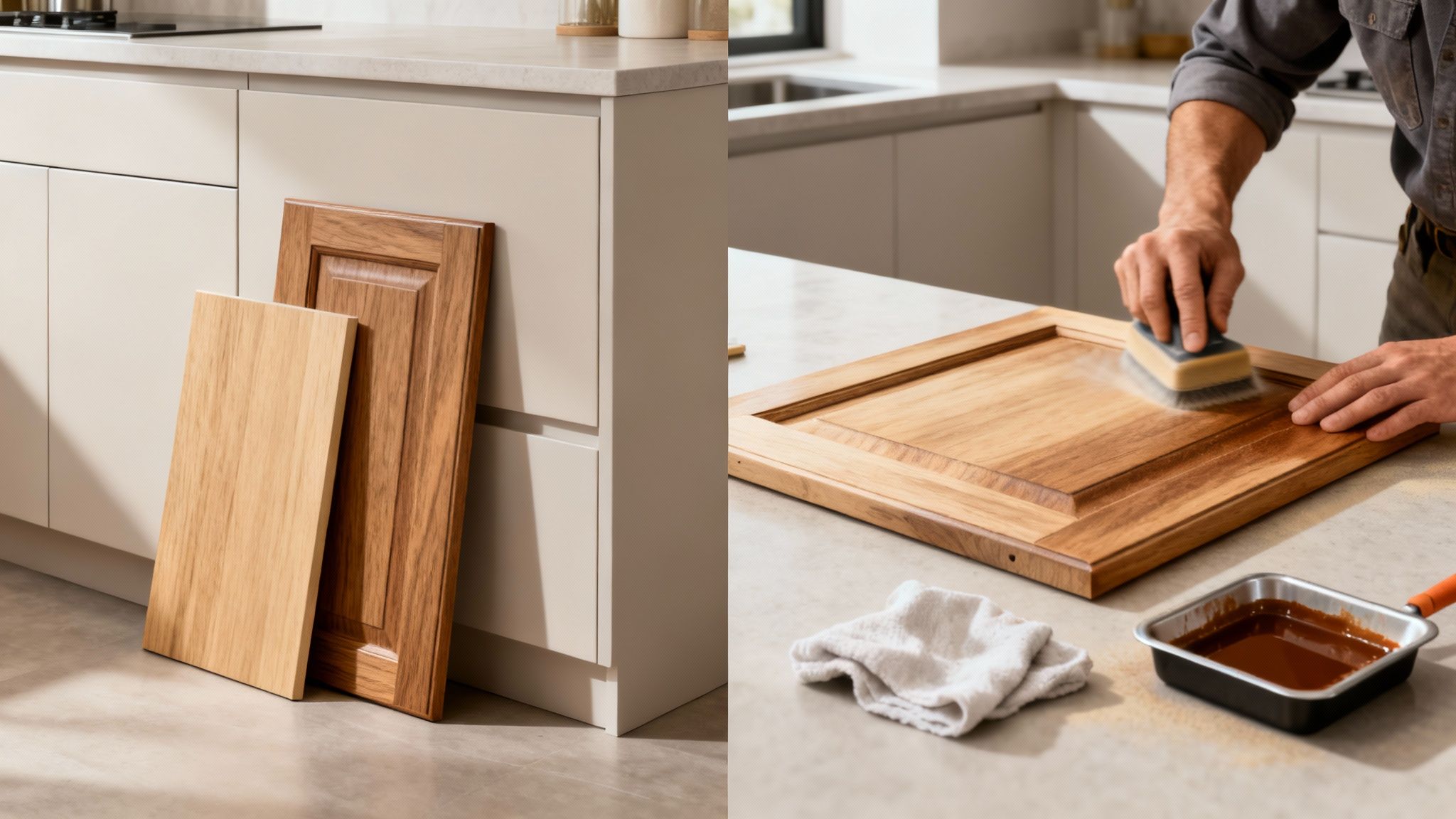
Cabinet refacing is a deep cosmetic and structural upgrade. We keep your existing cabinet boxes intact but replace everything you see and touch. This includes:
- Brand new, custom-made cabinet doors and drawer fronts in the style of your choice.
- A durable, matching veneer applied to the cabinet boxes to create a seamless, unified look.
- All-new hardware, from soft-close hinges to fresh knobs and pulls.
Refinishing is purely about the surface. The process involves stripping the existing finish off your current doors and cabinet boxes, sanding everything down, and then applying new paint or stain. It's a great way to change up the color, but it won’t change the underlying style of your cabinets.
Refacing vs. Refinishing at a Glance
To really see how these two options stack up, it helps to look at them side-by-side. This quick comparison chart breaks down the key factors that homeowners care about most.
| Factor | Cabinet Refacing | Cabinet Refinishing |
|---|---|---|
| Aesthetic Impact | Total style transformation with new doors and drawers. | Color and finish change only; keeps the original style. |
| Typical Cost | $4,500 – $13,000 | $1,500 – $5,000 |
| Project Timeline | 3-5 days | 3-7 days (plus significant drying time) |
| Durability | High. Uses new, factory-finished materials built to last. | Moderate. Painted surfaces can be prone to chipping over time. |
| Best For | Outdated cabinet styles when the boxes are still solid. | Good-quality wood cabinets that just need a color refresh. |
This quick-glance table should help you start leaning one way or the other based on what matters most for your kitchen project.
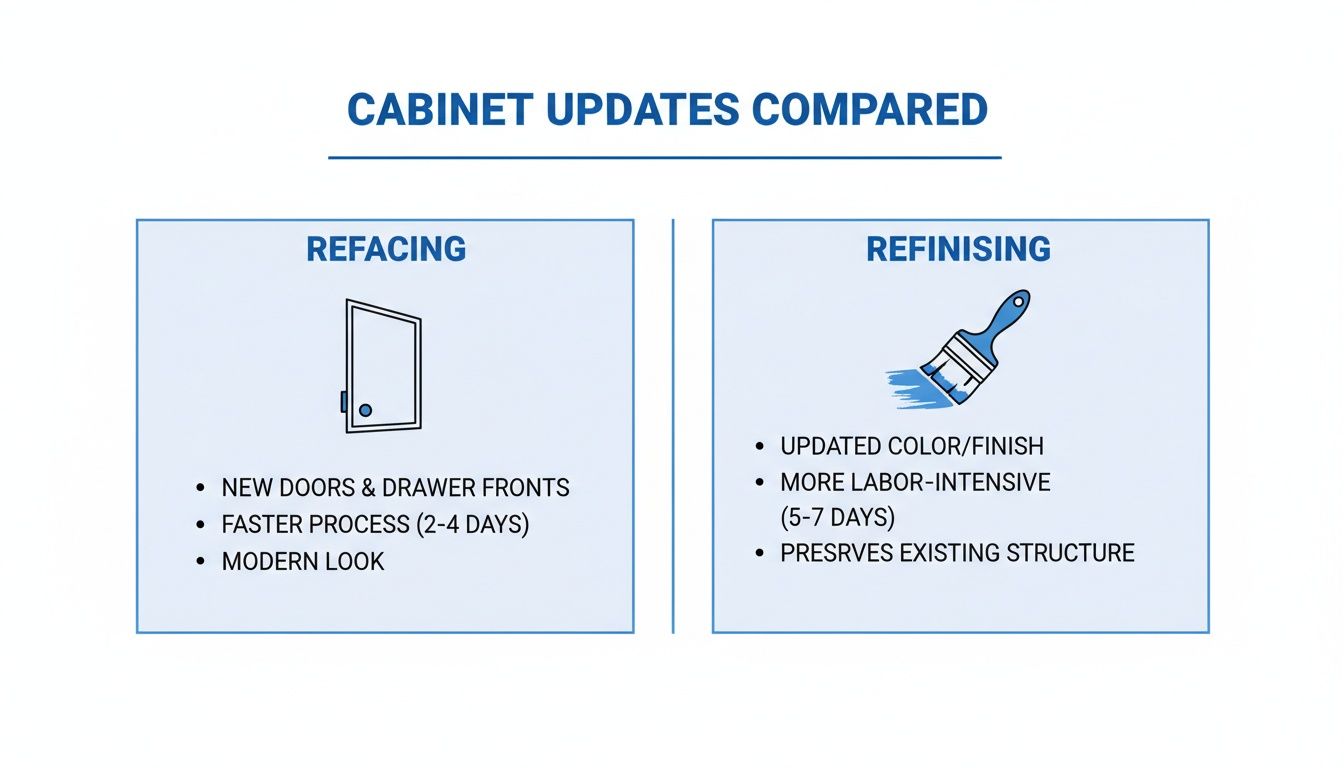
The takeaway is pretty clear: while both projects will freshen up your kitchen, refacing delivers a much more dramatic and durable upgrade. It’s a bigger investment upfront, but the results are truly like-new and built to last.
A Step-by-Step Look at Each Process
To really get to the heart of the cabinet refacing vs. refinishing debate, you have to picture what each job actually looks like inside your home. One is a surgical-style upgrade with brand-new components, while the other is an intensive, on-site restoration project. The differences in mess, skill, and disruption become glaringly obvious once you see the steps involved.
Walking through the process for each helps you understand why the costs and timelines are so different and what to expect when a crew shows up at your door.
The Cabinet Refacing Method: A Transformation
Think of cabinet refacing as a highly organized, systematic upgrade. It’s a marriage of skilled craftsmanship and high-quality, pre-manufactured materials. This isn't just a quick cosmetic fix; it's a full-scale renewal of your kitchen's look and feel, all without the gut job of a total replacement.
The journey from dated to dazzling almost always follows these key stages:
-
Consultation and Precise Measurement: It all starts with a pro taking a good look at your existing cabinet boxes to make sure they're structurally solid. Then, they’ll take meticulous measurements of every single door, drawer front, and exposed cabinet surface to custom-order the new materials. Precision is everything here.
-
Material Selection and Fabrication: This is the fun part for you. You get to choose from a huge range of styles, colors, and materials for your new doors, drawer fronts, and veneer. Those components are then custom-made for your kitchen off-site, which guarantees a perfect fit and a tough, factory-grade finish.
-
Preparation and Removal: When installation day arrives, the crew gets to work carefully removing all the old cabinet doors, drawer fronts, and hardware. They’ll also prep your kitchen, laying down protective coverings to keep the work area clean and contained.
-
Surface Preparation and Veneering: The "face" of your cabinet boxes—the stiles and rails you see around the openings—gets a light sanding and a thorough cleaning. A professional-grade adhesive is then applied, followed by a new, matching veneer. This is a critical step that makes the old boxes look brand new and perfectly match your new doors.
-
Installation of New Components: With the boxes refaced, it's time for the main event: installing your new, custom-made doors and drawer fronts. This is also when modern hardware like soft-close hinges, new drawer slides, and handles are fitted, which instantly upgrades how your kitchen functions.
-
Final Touches and Cleanup: The project wraps up with the installation of any finishing touches, like crown molding, new toe kicks, or light valances. The team does a full cleanup, leaving you with a kitchen that looks and feels brand new, typically in just 3 to 5 days.
Refacing is an engineered solution. You're replacing all the visible, high-touch elements with durable, factory-finished materials. The result is a consistent, beautiful finish built to handle the chaos of a real family kitchen.
The Cabinet Refinishing Method: A Restoration
Cabinet refinishing, on the other hand, is a gritty, labor-intensive process that lives or dies by the skill of the painter. It demands painstaking attention to detail at every single stage, because one shortcut can ruin the final look. And unlike refacing, all the work happens right there in your home, which means more dust, strong fumes, and general disruption.
Here’s what this multi-day restoration project usually entails:
-
Complete Disassembly: Everything comes off. Every door, drawer front, and piece of hardware is removed from the cabinet boxes. Each item has to be carefully labeled to make sure it goes back in the exact same spot later.
-
Intensive Cleaning and Stripping: Years of kitchen grime, grease, and cooking oils have to go. All surfaces get a deep clean with a strong degreaser. If your cabinets have a thick layer of old paint or varnish, they'll often need a chemical stripper to get them down to the bare wood—a very messy, smelly, and time-consuming job.
-
Sanding, Sanding, and More Sanding: Once the surfaces are stripped and clean, the real work begins. Every square inch—doors, drawer fronts, and the cabinet boxes themselves—must be sanded perfectly smooth. This not only removes the last bits of old finish but also creates a surface the new paint or stain can actually stick to.
-
Priming and Painting or Staining: Next, a high-quality primer is applied to ensure the final color goes on evenly and will last. After the primer dries, several coats of paint or stain are meticulously applied. For a truly smooth finish, there’s often more sanding done between each coat. This is where a painter's skill really shows.
-
Applying a Protective Topcoat: To give the new finish a fighting chance against chipping and daily wear, multiple layers of a durable topcoat, like polyurethane, are applied. Each coat needs plenty of time to dry properly before the next one can go on.
-
Reassembly and Curing Time: Once everything is completely dry to the touch, the doors, drawers, and hardware are reinstalled. But you’re not done yet. The new finish needs several days, sometimes even weeks, to fully "cure" and reach its maximum hardness. You’ll have to be extra careful with your "new" kitchen during this delicate period.
Comparing Costs and Return on Investment
Let's talk money. When you're weighing cabinet refacing vs. refinishing, it's easy to get stuck on the initial price tag. But the real story is in the long-term value you're adding to your South Florida home. This isn't just about a kitchen update; it's a financial decision.
The Upfront Investment: What to Expect
Right out of the gate, refinishing is the lighter lift on your wallet. You're typically looking at a cost between $1,500 and $5,000. That price covers the labor-intensive process of sanding down, painting or staining, and sealing your existing cabinet doors and frames. It's an excellent choice for a quick, high-impact refresh without a huge initial spend.
Cabinet refacing, on the other hand, is a more involved project with a higher price point to match. Because it includes brand-new materials—doors, drawer fronts, veneers, and hardware—the investment is naturally greater. A professional refacing project usually falls in the $4,500 to $13,000 range.
Unpacking the Numbers in South Florida
For homeowners here in South Florida, these numbers really hit home. Let’s say you’re in your Boca Raton condo, looking at cabinets that feel a decade out of style. As of 2025, cabinet refacing can cost up to 78% less than a full cabinet replacement.
We're talking an average of $4,000 to $9,500 for a standard kitchen, a stark contrast to the $10,000 to $30,000 (or more!) for a total gut job. That huge savings comes from keeping your perfectly good cabinet boxes and just replacing the visible elements. It's a game-changer for families in Delray Beach or Parkland who want that high-end look without the high-end demolition and budget.
Why Return on Investment is the Real Bottom Line
The most important number isn't the initial cost—it's the Return on Investment (ROI). This is where cabinet refacing truly pulls ahead as a savvy long-term investment. Why? Because refacing leaves you with a kitchen that genuinely looks and feels brand new, and that has a huge impact on your home's resale value.
Homeowners can typically expect to recoup 65% to 80% of their investment from a cabinet refacing project when they sell. Buyers see it as a major, high-quality renovation, not just a quick paint job.
Refinishing, while still a great improvement, offers a more modest ROI. It freshens things up, but it doesn't fix outdated door styles or replace worn-out hardware. Potential buyers might still see the kitchen and think, "We'll probably need to update this down the line." The overall ROI of a kitchen remodel is always tied to the quality and perceived permanence of the upgrades.
Viewing Your Project as a Valuable Asset
Here’s a simple way to think about it: refinishing is like getting your car detailed. It looks fantastic for now. Refacing is like putting in a new engine and upgrading the interior—it fundamentally increases the car's core value.
When you're deciding, think about how the update contributes to your home's overall appeal, much like the dramatic effect seen in successful home staging before and after transformations. A modern, durable, and stylish kitchen isn't just a pleasure to live in; it's a powerful selling point that can help your home sell faster and for a better price.
Ultimately, your choice hinges on balancing your immediate budget with your long-term goals. Refinishing is a fantastic, affordable fix for a quick refresh. But refacing is the smarter financial move, delivering a more substantial upgrade that boosts your home's value for years to come.
Durability and Longevity in Florida's Climate
South Florida’s sun and humidity are relentless. They’re tough on everything, especially the finishes in your kitchen. So when you’re thinking about cabinet refacing or refinishing, you’re not just choosing a new look—you’re making a bet on how long that look will last against our unique, demanding climate. The materials and how they're applied make all the difference in fighting off warping, fading, and moisture damage.
This makes the cabinet refacing vs refinishing discussion a critical one for anyone living here. A beautiful finish that works wonders in a dry, moderate climate could be a disaster in a coastal Florida kitchen.
The Refacing Advantage: Factory-Finished Durability
Cabinet refacing brings engineered, factory-finished materials into your home, and that’s its superpower. Think high-grade veneers and advanced laminates created in a controlled environment, resulting in a non-porous surface that’s built to last. This gives them a serious leg up in a few key areas.
- Moisture Resistance: The sealed, seamless surfaces on refaced cabinets are much better at shrugging off humidity. Unlike solid wood, they won’t swell or warp—a huge plus when the air feels like soup for half the year.
- Fade Resistance: Factory finishes come with built-in UV inhibitors to stand up to the intense Florida sun. A painted cabinet near a window can start looking patchy in just a few years, but refaced surfaces hold their color for much, much longer.
- Heat Tolerance: These modern materials are also designed to handle the heat from your stove and oven without peeling or bubbling, keeping them looking sharp right in the kitchen’s busiest work zone.
With a lifespan of 15-20 years with proper care, refaced cabinets are a true long-term solution. That factory-applied finish creates a consistent, tough shield that an on-site paint job just can't match.
The Refinishing Reality: On-Site Application Challenges
Refinishing is a fantastic way to give your kitchen a facelift, but the work happens right in your home. No matter how professional the painter, applying paint or stain on-site creates a finish that’s naturally more vulnerable to the daily grind of a kitchen, particularly in our climate.
At its core, a refinished surface is a new coat of paint on an old door. Over time, everyday use leads to chips and dings, especially around knobs, handles, and the corners you bump into. In a humid place like this, every tiny crack is an open invitation for moisture, which can get under the paint and cause it to bubble or peel right off the wood.
If you are leaning this way, it’s worth understanding the best kitchen cabinet materials to see which wood types hold up best to a new finish.
Maintenance and Longevity Compared
The durability gap gets wider when you consider day-to-day upkeep. Refaced cabinets are a breeze to clean. Their smooth, non-porous surfaces let you wipe away spills and grease effortlessly, with no wood grain or seams for gunk to get stuck in.
Refinished cabinets, on the other hand, need a gentler touch. Abrasive cleaners can easily scratch the paint, and a dropped pan can create a chip that needs immediate touch-up to seal out moisture and prevent more damage. While a top-notch refinishing job can look great for 5-7 years, it's generally seen as a shorter-term fix that will likely need redoing to keep your kitchen looking its best.
Exploring Your Aesthetic and Customization Options
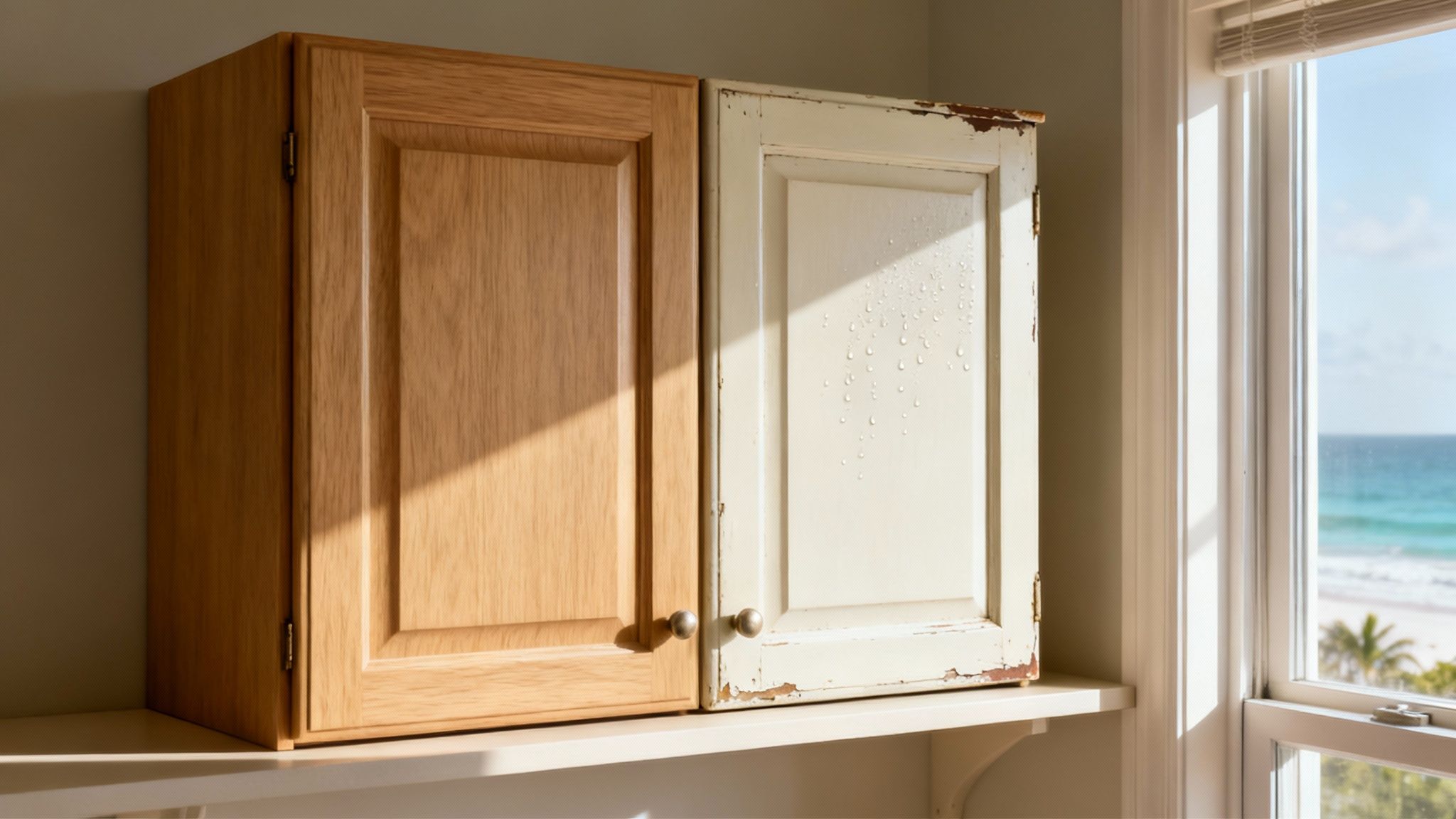
When you’re weighing cabinet refacing vs. refinishing, your creative vision is a huge part of the equation. This decision goes beyond just cost or timeline; it's about the look and feel you want for your kitchen. Each path offers a completely different level of design freedom, dictating whether you're making a simple refresh or a bold style statement.
Refinishing, at its core, is about giving your current cabinets a new color. If you love the style of your cabinet doors but can't stand that dated honey oak finish, painting them a sharp white or a contemporary gray can completely rejuvenate the space. You are, however, still working with the same old framework.
You can’t paint your way to a new door style. Refinishing will change the color, but a 1990s arched oak door will still be an arched oak door—just in a different shade.
This makes refinishing a fantastic solution when you want to breathe new life into a classic look you already like. Think of it as a color-centric update, not a full-blown stylistic overhaul.
The Design Freedom of Cabinet Refacing
Cabinet refacing opens up a world of design possibilities that refinishing can’t even begin to approach. Since you’re replacing all the cabinet doors and drawer fronts, you have the power to completely redefine your kitchen’s entire personality.
This is your chance to pivot from a traditional, ornate style to something sleek and minimalist. The creative control is yours:
- New Door Profiles: Ditch those dated raised panels for timeless Shaker doors or go ultra-modern with flat-panel slab doors.
- Expansive Material Choices: Choose from hundreds of colors and finishes, including real wood veneers, super-durable laminates, and high-gloss thermofoils that can match any design trend.
- Hardware Upgrades: Complete the look with contemporary pulls, classic knobs, and modern soft-close hinges that upgrade both the appearance and the functionality of your kitchen.
Just imagine your Parkland kitchen with its current dark, heavy cabinets. Refacing lets you swap them for light and airy white Shaker doors with matte black hardware, instantly making the space feel larger, brighter, and more current.
Refinishing: Working Within a Limited Canvas
With refinishing, your existing cabinets are your canvas. And while you have an infinite spectrum of paint colors at your disposal, you're still working with the same foundational design. The process works best on high-quality wood cabinets that have a timeless style but just need a color refresh.
For instance, solid maple cabinets with a simple, clean door profile are perfect candidates for painting. A new color will highlight their classic design rather than trying to hide an outdated shape. It's a highly effective way to modernize without a total transformation.
The conversation around refacing often brings up the question of value compared to a full replacement. Refacing can deliver a brand-new look with 50-70% savings over tearing everything out. For a cost of $4,500-$13,000, you get a completely new style and modern features—a huge leap from a $1,500-$5,000 paint job that could start chipping in just a few years. You can learn more about the pros and cons of kitchen cabinet refacing to see how it stacks up.
Ultimately, the right choice comes down to your goal. If you’re happy with the bones of your cabinets and just want a new hue, refinishing is a solid, cost-effective choice. But if you’re dreaming of a completely different kitchen style, refacing is the only option that delivers that level of aesthetic transformation.
How to Make the Right Choice for Your Home
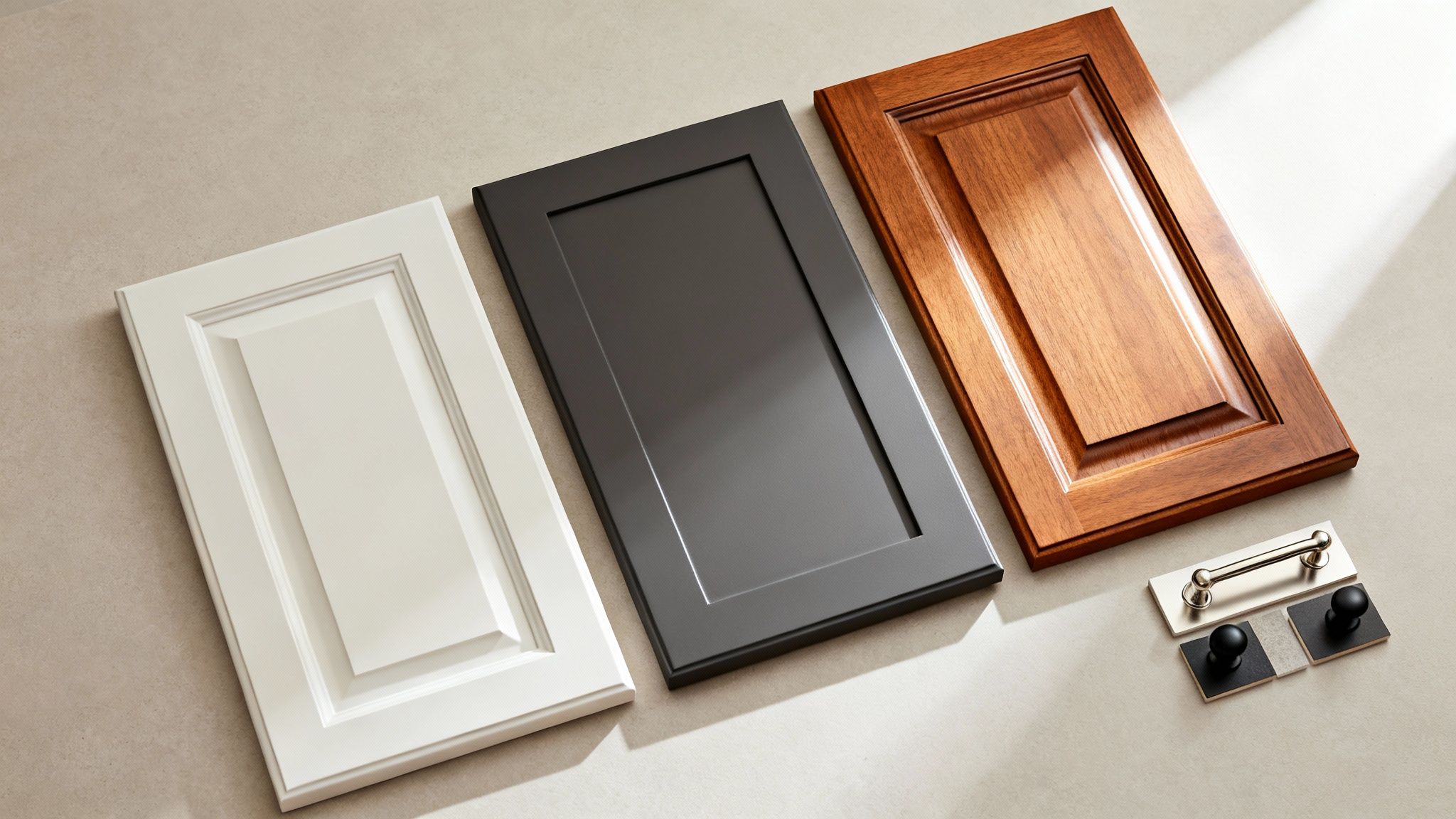
When you're staring down the cabinet refacing vs refinishing decision, it really boils down to your kitchen's current condition and what you're hoping to achieve. By now, you can see the two distinct paths: one is a complete style overhaul, and the other is a fresh, but surface-level, color change. Let's distill all this information into practical advice to help you pick the right route for your home, confidently.
Your best choice hinges entirely on your specific situation, budget, and the final look you're after. I'll break down the ideal scenarios for each option to make this process as straightforward as possible.
When to Choose Cabinet Refacing
Cabinet refacing is the undisputed champion when your goals are bigger than a simple color swap. Think of it as an investment in a major, lasting transformation.
You should choose refacing if:
- You're looking for a dramatic style change. If those old raised-panel oak doors just aren't cutting it anymore, refacing lets you jump to a clean, modern Shaker style or a minimalist slab door.
- Your cabinet boxes are solid, but the doors are tired. This is the classic use-case for refacing. You keep the sturdy framework but get rid of the worn-out, dated-looking parts.
- You want modern functionality. Refacing is the perfect time to add all those little luxuries that make a big difference, like soft-close hinges and smooth, full-extension drawer glides.
The whole point of refacing is to get a 'like-new' kitchen without the massive cost, timeline, and mess of a full gut job. It fundamentally changes the style and improves how the kitchen works, making it a seriously powerful upgrade.
When to Choose Cabinet Refinishing
On the other hand, refinishing is a fantastic, budget-friendly option if you’re generally happy with your kitchen's layout and door style but are just dying for a fresh look.
You should opt for refinishing if:
- You actually love your current cabinet style. If you have high-quality, solid wood cabinets with a timeless design, a professional paint or stain job can make them feel brand new again.
- Your budget is the main driver. Refinishing delivers a huge visual bang for your buck, making it a much more accessible update. It's always smart to find a qualified pro by researching the https://kitchenrenovationsperfected.com/best-cabinet-refinishing-near-me/.
- The cabinets are in excellent physical shape. This process works best on surfaces that are free of any major dings, dents, or damage. Paint can sometimes highlight imperfections instead of hiding them.
In a competitive market like South Florida, where every home improvement counts, cabinet refacing has seen a 40% surge in popularity since the early 2000s. As material costs rise, homeowners see the value. It offers a substantial 30-50% savings over a full replacement while delivering a far greater transformation than refinishing. Plus, the quick 3-5 day project timeline for refacing is a huge win for busy families compared to the weeks of fumes and disruption that can come with refinishing or a total tear-out.
And if you’re making these updates with resale value in mind, knowing how to present the final product is key. Learning about staging your kitchen to attract buyers can help you align your project with what people are looking for, maximizing your return on investment.
Frequently Asked Questions
Even after laying out all the details of cabinet refacing vs. refinishing, there are always a few specific questions that pop up. I get it. You want to be absolutely sure before making a decision for your home, so let's tackle the most common things homeowners in South Florida ask me.
Think of this as the final piece of the puzzle, clearing up any lingering doubts so you can feel confident moving forward.
Can I Change My Kitchen Layout with Cabinet Refacing?
This is a big one, and the short answer is no. Cabinet refacing is all about giving your kitchen a brand-new skin, not a new skeleton. The process works with your existing cabinet boxes right where they are, so your kitchen's footprint stays the same.
If you’re dreaming of moving the fridge, adding a big island, or reconfiguring the flow of your kitchen, you're looking at a full remodel, not a reface. Refacing is the perfect solution for a dramatic cosmetic upgrade without the headache of demolition.
How Long Does Each Process Typically Take?
Nobody wants their kitchen torn apart for weeks on end. While both of these options are much faster than a full cabinet replacement, there's a definite difference in their timelines.
- Cabinet Refacing: This is where efficiency really shines. Most refacing projects are wrapped up in just 3 to 5 days. Since all the new doors and materials are made off-site, the actual work in your home is surprisingly quick and clean.
- Cabinet Refinishing: A pro refinishing job often takes a bit longer, usually 3 to 7 days. The real kicker, though, is the curing time. The fresh paint or stain needs days, sometimes even weeks, to fully harden. You’ll have to be very gentle with your "new" cabinets for a while.
The key difference is the "curing" period. Refacing leaves you with a fully functional, durable kitchen the moment the job is done. Refinishing requires a delicate touch long after the crew has left.
Are My Cabinets Suitable for Refinishing?
Honestly, not all cabinets can handle being refinished. This process really only works for one type of cabinet construction.
For refinishing to be an option, your cabinets must be made of solid wood or a high-quality wood veneer, and they need to be in fantastic shape. Materials like laminate, thermofoil, or cheap particleboard just can't be properly sanded and prepped, so they're out of the running.
Even with wood cabinets, if the doors are warped, cracked, or have deep scratches, refinishing might just put a spotlight on those imperfections. In those situations, refacing with brand-new doors is a much better call.
What Kind of Warranty Is Standard for Cabinet Refacing?
A good warranty tells you a lot about the quality of the materials and the confidence of the installer. When you reface your cabinets, you're getting brand-new, factory-made products, and they should come with solid protection.
Most top-tier refacing companies will offer a manufacturer's lifetime warranty on the new doors, drawer fronts, and veneers. This covers things like peeling, bubbling, or warping under normal use. A refinishing job, on the other hand, might have a short one or two-year warranty on the labor, but the finish itself isn't guaranteed against the inevitable chips and scuffs from daily life. This makes refacing a much more secure investment for the long haul.
Ready to see how a professional cabinet refacing can completely transform your South Florida kitchen? At Kitchen Renovations Perfected, we specialize in creating stunning, durable spaces tailored to your lifestyle. Visit our showroom or request a complimentary budget estimate today!