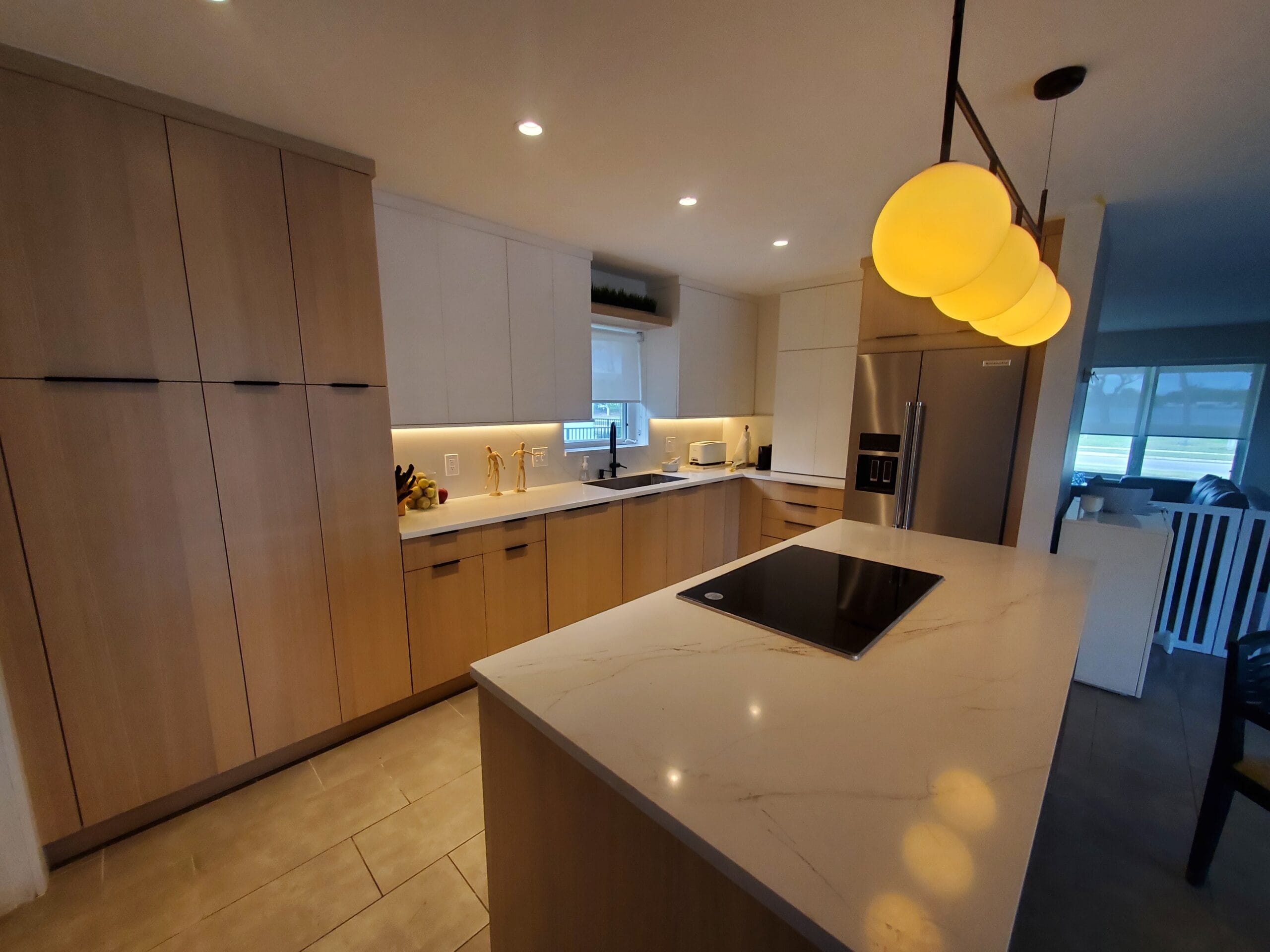
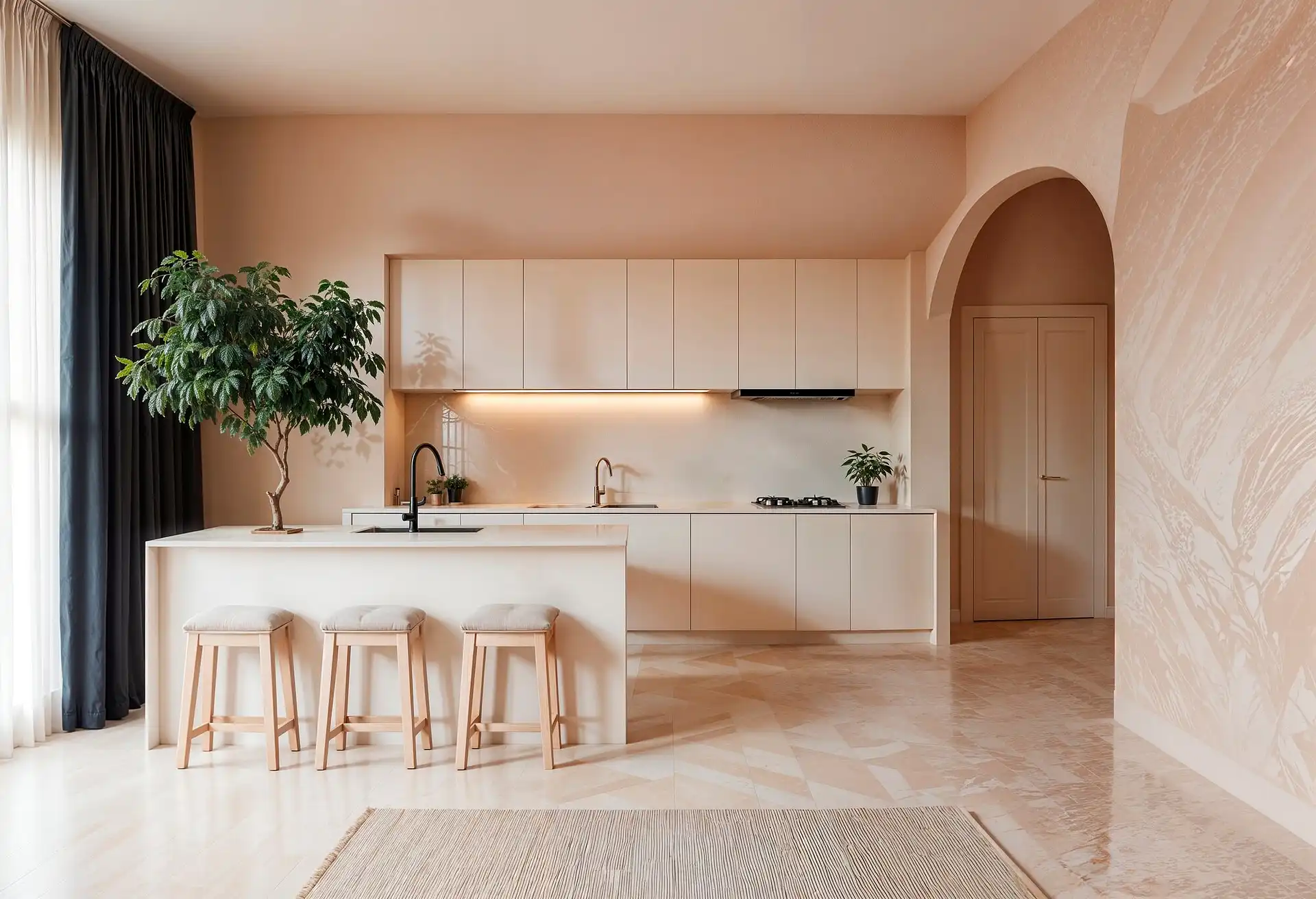
Building a new pantry is more than just a home improvement project; it’s about creating a space that makes your entire kitchen work better for you. It all starts with a clear vision, a solid plan, and the right materials to make it happen. For anyone living here in South Florida, a thoughtfully designed pantry is one of the smartest investments you can make in your home’s daily function and long-term value.
Why a Custom Pantry Is Such a Smart Upgrade
The days of the pantry being a dark, forgotten closet are long gone. A modern pantry is the functional heart of the home, especially in communities like Boca Raton, Delray Beach, and Parkland where we love to entertain and enjoy a high-quality lifestyle. Think of it as an intentional upgrade that simplifies everything from meal prep to putting away the groceries.
It’s So Much More Than Just Storage
Let’s be honest, the way we live has changed. We’re buying in bulk from places like Costco, stocking up on fresh ingredients for healthier meals, and we all want those clean, decluttered kitchen countertops. A custom pantry is the perfect answer to all of these needs.
Moving beyond that standard, builder-grade closet opens up a world of benefits:
- A Real Boost to Your Home’s Value: A beautifully finished walk-in or butler’s pantry is a huge selling point. In fact, a recent Zillow report found that homes with a pantry can sell for 3.1% more than similar homes without one. That’s a serious return on investment in our competitive South Florida market.
- Next-Level Organization: When you have custom shelving, pull-out drawers, and dedicated cabinetry, everything gets its own spot. This kind of organization drastically cuts down on food waste because you can actually see what you have, and things don’t get lost and expire in the back of a cabinet.
- A Better Kitchen Workflow: Imagine moving your coffee maker, toaster, and other small appliances off the counter and into the pantry. Suddenly, your main kitchen space feels more open and is far more efficient for cooking and hosting guests.
A professional, design-led approach is what truly unlocks a pantry’s potential. It’s not just about slapping up some shelves; it’s about creating a space that’s built around your family’s specific lifestyle, from the overall layout right down to the hardware you choose.
In the end, building a pantry is about more than just adding storage. You’re crafting a new cornerstone for your home’s functionality and style. When you work with experts who get the local climate and building codes, you can be confident that your vision will become a durable, beautiful space you’ll love using every single day.
Planning Your Perfect Pantry Layout And Location
Before you even think about cutting a single piece of wood, the success of your new pantry comes down to smart planning. Honestly, choosing the right spot and designing a layout that actually works for you are the most critical first steps. This is where we move from a “wouldn’t it be nice” idea to a practical blueprint that will make your kitchen life easier, not more complicated.
The first thing I always tell clients is to walk through their kitchen and the areas around it. Think about your home’s natural flow. Do you have an underused coat closet nearby? What about that awkward corner in the dining room or even a slice of the garage? We need to balance your dream pantry with the reality of your home’s layout. The key is to make it super accessible for grabbing ingredients mid-recipe, but not so central that it creates a traffic jam.
This whole process can be broken down into three main stages: dreaming it up, planning it out, and then building it.
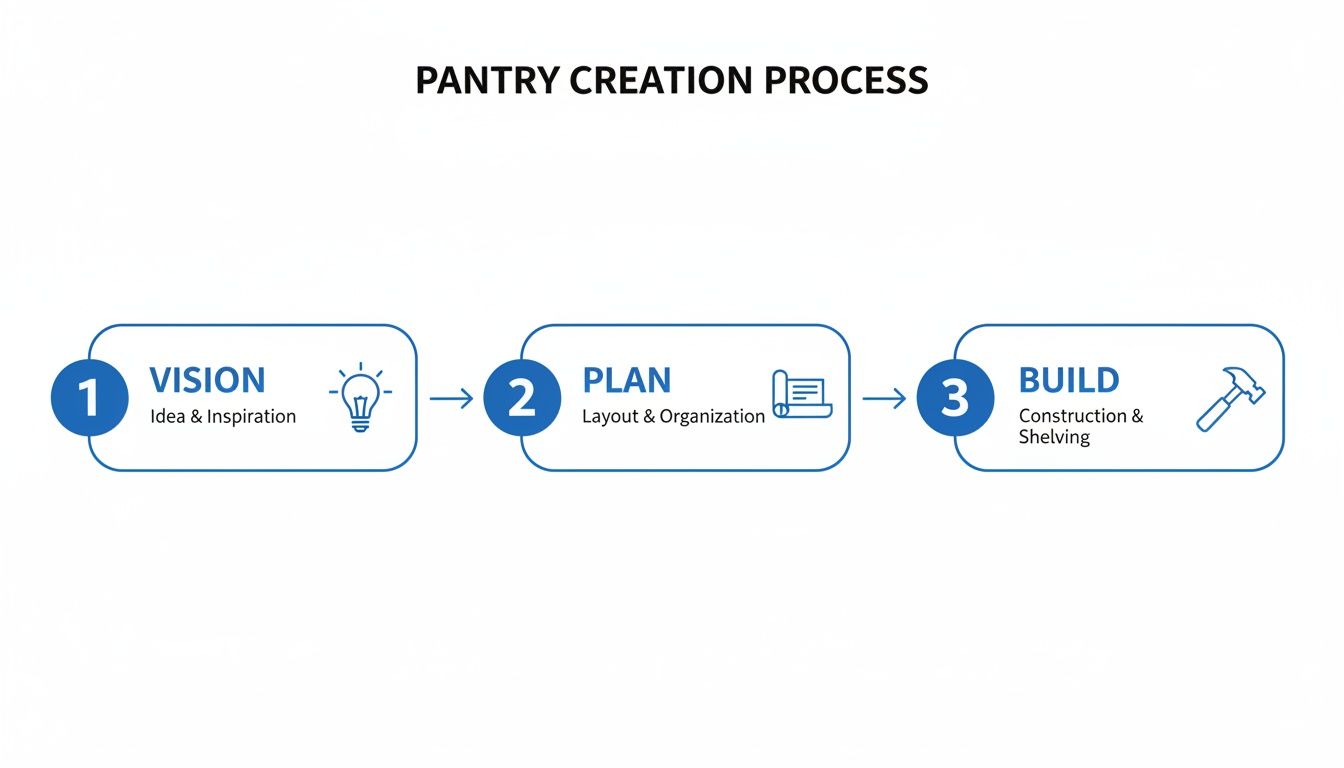
Think of it this way: a solid plan is the bridge that gets you from a great idea to a fantastic result you’ll love for years.
Matching Pantry Type To Your Home
In South Florida, we see everything from sprawling estates in Parkland to sleek condos along the beach in Boca Raton. Each home has its own unique footprint, so the trick is to pick a pantry style that fits your space and, more importantly, your lifestyle.
I find this table is a great starting point for homeowners trying to decide which direction to go.
| Pantry Type | Best For | Space Requirement | Key Feature |
|---|---|---|---|
| Walk-In Pantry | Large families, bulk shoppers, and those who love to entertain. | A small room, typically 5′ x 5′ or larger. | Functions like a mini-storeroom with space for deep shelving and countertop prep areas. |
| Butler’s Pantry | Homes with formal dining rooms; perfect for hosting. | A transitional space or hallway between the kitchen and dining area. | Features cabinetry and countertops for storing fine china and staging meals or drinks. |
| Cabinet Pantry | Condos, townhomes, or kitchens with limited square footage. | A tall cabinet unit, usually 24″–36″ wide. | Integrates seamlessly with existing kitchen cabinets, often using pull-out shelves. |
| Reach-In Pantry | A classic closet-style space common in many homes. | A standard closet, often 24″ deep. | Can be dramatically improved with smarter, shallower shelving to prevent items from getting lost. |
Each of these has its pros and cons, but seeing them laid out like this usually helps clarify which one makes the most sense for a specific home.
Taking Measurements And Creating A Floor Plan
Okay, once you’ve settled on a location and a style, it’s time to get precise. Grab a tape measure and get the width, depth, and height of your chosen space. And don’t just measure the open area—make sure to note the exact location of light switches, outlets, windows, and doorways. Trust me, these are the little details that can trip you up later.
With these numbers, you can start sketching a basic floor plan. Graph paper works great, but there are also plenty of free online tools that let you play around with a digital layout. This is your chance to experiment with different shelving configurations and cabinet placements without any real-world consequences.
A well-designed pantry isn’t just about cramming in as much stuff as possible. It’s about creating a system where you can see and reach everything easily. When you do that, you’ll find you waste less food and your daily routine just feels simpler.
This push for organized living isn’t just a local trend. The global kitchen pantry organizer market is rocketing towards USD 6.4 billion. Here in the Boca Raton area, it’s part of a larger kitchen storage industry expected to hit USD 25 billion by 2033. The data backs it up, too: an efficient pantry can slash a family’s food waste by up to 19% a year, saving them around $1,500. These numbers show that when you build a pantry, you’re not just adding storage; you’re making a smart investment.
Optimizing Your Layout For Efficiency
Now that you have a floor plan, we can get into the fun part: designing the inside. I always recommend thinking in “zones.” Create dedicated spots for different categories—one area for canned goods, another for pasta and grains, a section for snacks, one for baking supplies, and so on. This simple strategy makes finding things a breeze.
Thinking through smart shelving ideas for optimal storage is crucial at this stage. While a lot of advice online is for bedroom closets, the core principles of using vertical space and adjustable systems are exactly what we need for a high-functioning pantry.
Here are a few layout tips I’ve picked up over the years:
- Go U-Shaped or L-Shaped: In a walk-in pantry, these layouts are your best friend. They make use of every inch of corner space that would otherwise become a dead zone.
- Vary Your Shelf Depths: Don’t make all your shelves the same depth. Use shallower shelves (around 12 inches) for things like cans and jars so nothing can hide in the back. Save the deeper shelves (16-20 inches) for bulky items like a stand mixer or a case of paper towels.
- Bring in Drawers and Baskets: Pull-out drawers are a game-changer for containing bags of chips, snacks, or even produce like potatoes and onions. They keep everything tidy and within easy reach.
Choosing Materials That Last in South Florida
With your layout locked in, it’s time for the fun part: picking the materials that will pull the whole look together. But when you’re building a pantry here in South Florida, your choices have to be about more than just aesthetics. The constant humidity we deal with in Boca Raton and Delray Beach means moisture resistance and long-term durability are non-negotiable.
Picking the right stuff from the get-go ensures your pantry not only looks fantastic on day one but also holds up to daily life and our unique climate for years. It’s the single best way to protect your investment.
What to Use for Your Cabinetry
Think of your cabinetry as the skeleton of your pantry—its strength is everything. Getting this right is especially important in the Florida climate. For a deeper dive, Sinclair Custom Homes has a practical guide to choosing kitchen cabinets for Florida homes that I often recommend to clients.
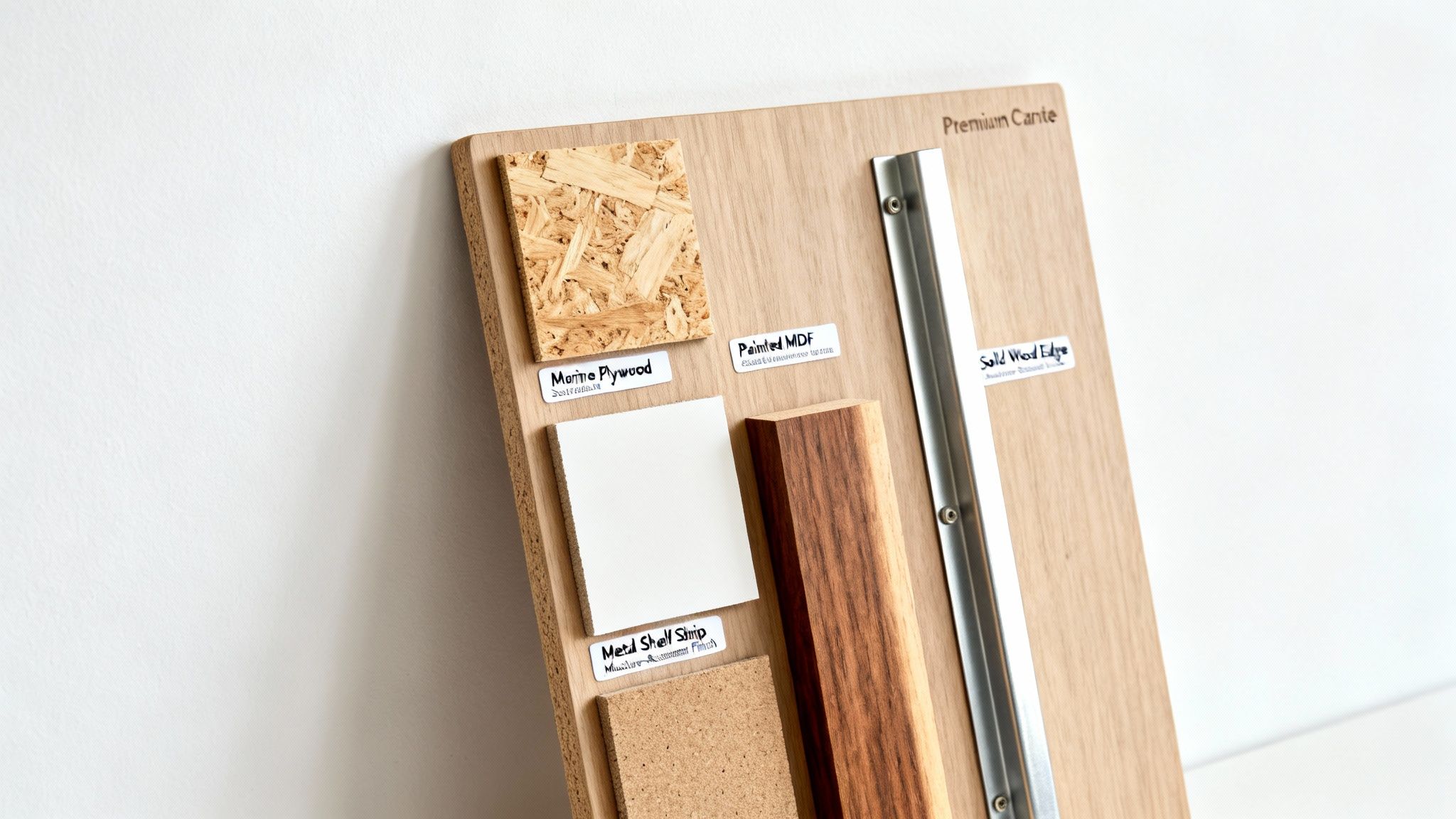
Here’s a look at the materials I work with most often:
- Marine-Grade or Moisture-Resistant Plywood: This is my go-to recommendation for pantries in our area. It’s built with waterproof glue, which stops the layers from peeling apart in high humidity—a common problem with standard plywood. It gives you incredible stability for both the cabinet boxes and shelving.
- Solid Wood: It’s undeniably beautiful, but solid wood has a tendency to warp as it expands and contracts with our fluctuating humidity. If you have your heart set on that classic wood look, a smart compromise is to use it for cabinet doors and drawer fronts, then build the actual cabinet boxes from stable plywood.
- MDF (Medium-Density Fiberboard): Stay away from standard MDF; it soaks up moisture like a sponge. However, a high-quality, moisture-resistant MDF can be a great, budget-friendly choice for painted cabinet doors because it gives you a perfectly smooth finish with no wood grain to worry about.
Making the right call here prevents so many future headaches, from swollen doors that won’t close to shelves that start to sag.
Smart Choices for Shelving and Countertops
The shelves are where your pantry does its real work every day. The materials you choose need to be tough enough to handle heavy cans and bulk items without bowing over time.
For shelving, you can’t go wrong with thick plywood—at least ¾-inch. It’s incredibly sturdy and can be painted to match your cabinets or finished with a durable veneer. If you’re leaning toward a more modern, open look, adjustable wire shelving is a fantastic option. It allows for great air circulation, which is a huge plus in our humid environment, and it’s a breeze to clean.
If you’re planning a prep area with a countertop, you’ll want something non-porous and tough.
- Quartz: This is an engineered stone that’s a champion against stains and never needs to be sealed.
- Granite: A classic natural stone that’s very durable, but it does require periodic sealing to keep it stain-free.
- Laminate: Always a great budget-friendly option with tons of styles, but it isn’t as resistant to heat or scratches.
Your material choices really come down to how you plan to use the space. A workhorse pantry for heavy-duty storage demands materials built for strength and moisture resistance. A butler’s pantry, on the other hand, can lean more into elegant finishes that flow with your dining room.
This emphasis on durability isn’t just for indoors. We apply the same principles when designing for outdoor living. In fact, you can see how these ideas translate to another key part of a South Florida home by checking out our guide on the https://kitchenrenovationsperfected.com/best-materials-for-outdoor-kitchen/.
Finishes That Protect and Look Great
The final touch is choosing finishes that seal and protect everything. A high-quality paint or stain is your pantry’s best defense against moisture.
For a painted pantry, go with a durable, scrubbable paint made for kitchens and bathrooms. I usually recommend a semi-gloss or satin sheen because it’s so much easier to wipe down than a flat or matte finish.
If you love the natural wood look, a polyurethane topcoat is a must. It creates a protective shell that seals the wood from humidity and makes cleaning simple. And don’t forget the hardware! Choose high-quality pulls and knobs in finishes that resist tarnishing, like stainless steel or a coated brass.
Investing in a well-built pantry isn’t just about convenience; it’s a smart financial move. With the household food storage market expected to hit USD 47 billion by 2035, it’s clear that organized living is here to stay. Plus, renovated kitchens can recoup 60-80% of their cost at resale, and a functional, beautiful pantry is a huge selling point for buyers.
Power, Light, and Air: The Unsung Heroes of a Perfect Pantry
A truly great pantry is so much more than just a room with shelves. It’s an active, functional part of your kitchen. To get it right, especially here in South Florida, you have to think about the details that make the space work: the lighting, the air circulation, and the power.
These aren’t just nice-to-haves; they’re essential. They transform a dark closet into a bright, usable workspace and prevent our humid climate from turning your food storage into a science experiment. Don’t treat these as an afterthought—plan for them from day one.
Let There Be Light: Seeing What You Actually Have
Bad lighting is the number one enemy of an organized pantry. It creates dark corners where items get lost and forgotten, only to be rediscovered months past their expiration date. The goal isn’t just to light the room, but to illuminate every single shelf.
Here are a few ways we bring light into our pantry designs:
- Under-Shelf LED Strips: This is my go-to recommendation. Placing motion-activated LED strips under each shelf means the light is always exactly where you need it, with no shadows. The second you open the door, the whole space lights up. It’s a simple touch that feels incredibly high-end.
- Recessed Lighting: For overall ambient light, a few well-placed recessed cans on the ceiling provide a clean, modern look. They wash the entire space in a soft, even glow, making it feel bigger.
- A Touch of Style: If you have a walk-in pantry with a bit of ceiling height, why not add a decorative fixture? A small, stylish pendant or a couple of elegant sconces can turn a purely functional space into a beautiful little room that complements your kitchen’s design.
I always tell my clients to think of pantry lighting as a tool. When you can see everything at a glance, you shop smarter, waste less food, and save time every single day. It’s a small investment with a huge return.
Keeping It Fresh: Why Ventilation is Non-Negotiable
Living in Boca Raton means living with humidity. Without proper air circulation, a pantry can become a stuffy, damp box—the perfect environment for mildew to grow and for crackers to go soft overnight. Ventilation is absolutely critical.
For a simple cabinet-style pantry, a small gap at the bottom of the door might be enough. But for any walk-in space, you need to be more proactive. The best solution is a small, quiet exhaust fan that’s either tied into your home’s HVAC system or vented directly outside. It actively pulls out the stale, moist air, keeping everything inside fresh, dry, and safe.
This focus on creating durable, high-functioning spaces is driving a massive trend. The global market for kitchen storage and pantry organization is projected to reach an incredible USD 182.08 billion by 2030. In luxury markets like Delray Beach, consumers demand solutions that are both beautiful and built to last. For families in Parkland, this means investing in systems that can handle bulk purchases and help reduce food waste, a key benefit when you consider that 70% of renovated kitchens report a major boost in daily efficiency. You can discover more insights about these market trends and their impact on home design.
Powering Up: Creating a Hidden Appliance Hub
The final piece of the functional puzzle is power. Running electrical outlets into your pantry can completely change how you use your kitchen, creating a secondary prep zone that keeps your main countertops beautifully clear.
Think about adding a dedicated circuit for a few outlets. This opens up a world of possibilities for specific “stations” tucked away inside the pantry.
- The Coffee Bar: Imagine your coffee maker, grinder, and all your mugs living in one dedicated spot, out of sight but always ready.
- The Breakfast Nook: The toaster and microwave can be hidden away, making chaotic mornings just a little bit smoother.
- The Charging Dock: An outlet is perfect for charging a handheld vacuum or other small electronics, keeping them off your kitchen counters.
It’s far cheaper and easier to plan for this during the design phase than to try and add it later. When you talk to your contractor, walk through the space and point out exactly where you see yourself plugging things in. This small step ensures your new pantry isn’t just for storage—it’s a dynamic, hardworking extension of your kitchen.
Navigating Your Build: Permits, Costs, and Timelines
Alright, the creative part is done—you’ve got a fantastic design and you’ve picked out your materials. Now it’s time to get into the nuts and bolts of actually building your pantry. Getting a handle on the logistics—permits, budget, and a realistic schedule—is what separates a smooth project from a stressful one. A solid plan here is your best defense against surprises.
First things first, let’s talk permits. Here in South Florida, municipalities like Boca Raton, Delray Beach, and Parkland are diligent about building codes. If your pantry project involves moving walls, running new electrical lines, or touching the plumbing, you’re almost certainly going to need a permit.
This isn’t just bureaucratic busywork. It’s about safety. Permits ensure the work is done correctly and to Florida’s strict building codes, protecting you, your family, and the long-term value of your home. Honestly, this is one of the biggest reasons to hire a licensed and insured contractor. They live and breathe this stuff—they know the paperwork, manage the inspections, and make sure everything is buttoned up and compliant.
Creating a Realistic Budget
One of the first questions I always get is, “So, what’s this pantry going to cost me?” While every project is different, we can break down the expenses into a few key areas to get a clearer picture.
- Materials and Finishes: This is everything from the cabinet boxes and shelving to your countertops, light fixtures, and drawer pulls. Your choices here are the biggest variable in the total cost.
- Labor: This covers the skilled pros doing the work—the carpenters, electricians, painters, and plumbers. Their expertise is a huge part of the budget, but it’s what guarantees a high-quality, lasting result.
- Professional Fees: If you’re partnering with a design-build firm, this fee covers the whole package: the initial planning, detailed design work, project management, and the coordination of every single trade and delivery.
Pro Tip: Always, and I mean always, build a 10-15% contingency fund into your budget. This isn’t for splurging; it’s your safety net for the unexpected things that can pop up once walls are opened. Think of it as peace of mind.
A beautiful, functional pantry doesn’t have to break the bank. I’ve seen homeowners get really creative. For example, one impressive DIY project was valued at nearly $18,000 but was actually built for about $11,000 by sourcing some gifted products and making smart choices. In that particular build, the countertops alone were $6,100, which just goes to show how much impact one or two key decisions can have on the final number.
Understanding the Project Timeline
Knowing the sequence of events can make the whole construction phase feel much less chaotic. A custom pantry build follows a fairly predictable path, and understanding it helps you plan your life around the work happening in your home.
From our first conversation to the final walkthrough, the project unfolds in phases. If you want a really deep dive, our guide to the kitchen renovation timeline breaks it down in detail, and the same principles apply here.
But for a quick overview, here are the major milestones you can expect:
- Consultation & Design (1-4 weeks): We’ll start with meetings, take precise measurements, fine-tune the layout, and finalize all your material and finish selections.
- Permitting & Procurement (2-6 weeks): Once the design is locked in, we submit the plans to the city for approval. While we wait, we’re busy ordering everything—from cabinets to light fixtures—so it’s ready to go.
- Demolition & Construction (1-3 weeks): This is when the action starts. We’ll prep the space and complete any framing, electrical, and plumbing rough-ins.
- Installation & Finishes (1-2 weeks): The vision comes to life! Cabinets, shelves, and countertops go in, followed by painting, lighting, and all the final hardware and details.
- Final Walkthrough & Punch List: Together, we’ll inspect the finished space to make sure every detail is perfect and create a “punch list” of any tiny adjustments that might be needed.
Keeping Your New Pantry Perfectly Organized
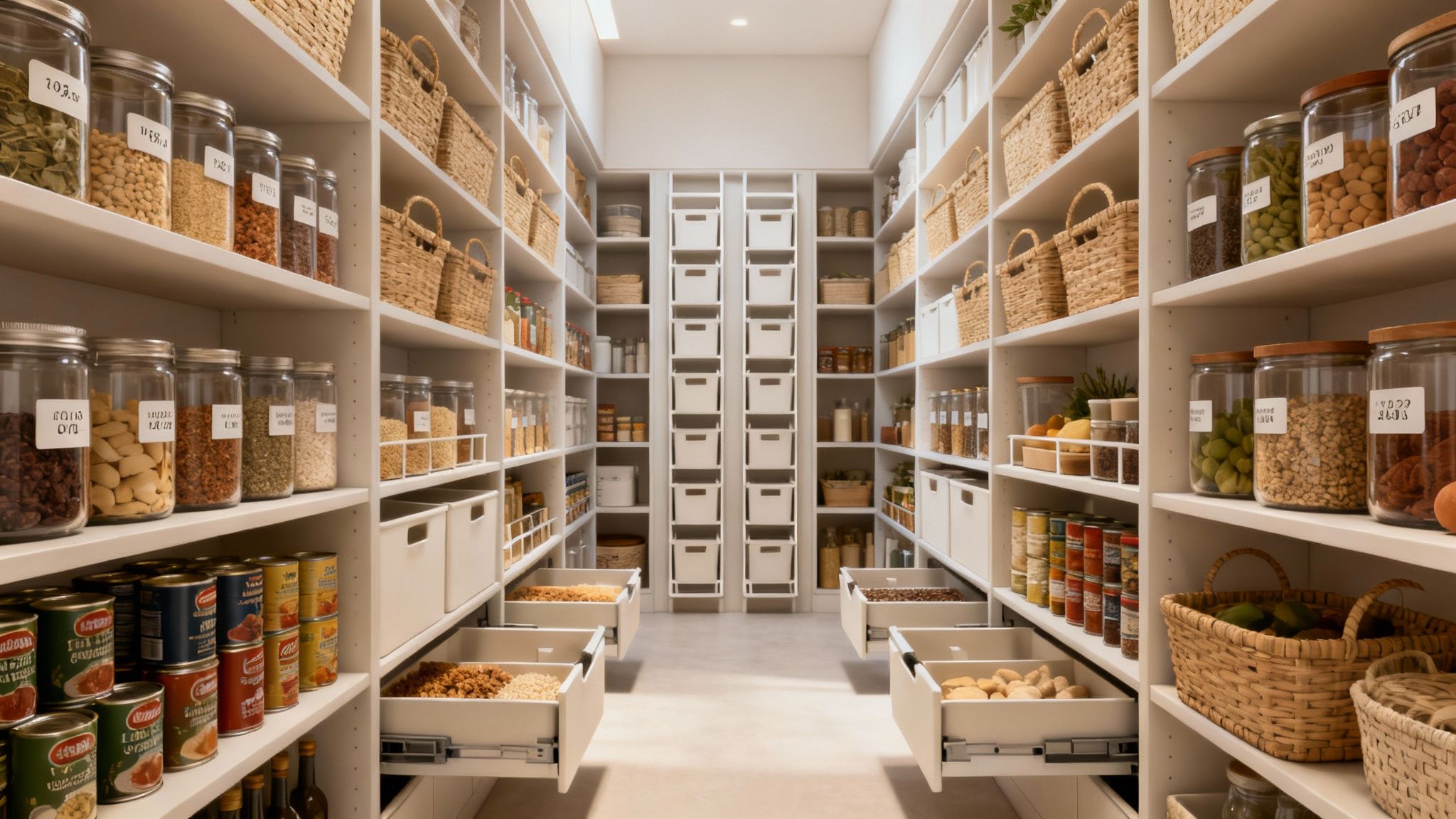
Once the final coat of paint has dried and the last drawer pull is installed, the real fun begins. The final piece of the puzzle, after you build a pantry, is creating an organization system that works for you and keeps the space as functional as it is beautiful.
This isn’t just about lining things up neatly on shelves. It’s about designing a workflow that makes your daily routine simpler. A truly organized pantry saves you time, cuts down on those “what’s for dinner?” headaches, and even helps you waste less food by making sure everything is visible and easy to grab.
Strategic Organization for Lasting Order
My best advice? Think like a grocery store manager and give every single item a dedicated home. Group like with like—all your baking supplies in one area, canned goods in another, and maybe a basket of snacks for the kids on a lower shelf they can reach themselves.
- Embrace Clear Containers: Take things like pasta, rice, and flour out of their bulky packaging and put them into airtight, clear containers. It instantly makes the space look cleaner and lets you see what you have with a quick glance.
- Implement a “First In, First Out” System: This is a simple but powerful habit. When you unload new groceries, just slide the older items to the front. It ensures you use things up before they expire.
- Use Vertical Space Wisely: Tiered shelves for spices and cans are an absolute game-changer. You’ll be able to see everything without having to shuffle items around to find what you need.
The most successful pantries I’ve seen are always designed with everyday use in mind. An organization system that is intuitive and easy to maintain is far more valuable than one that just looks good for a photo.
Maintaining Your Investment
Keeping your new space in top shape is all about building a few simple habits. A quick wipe-down of the shelves and cabinet faces with a damp cloth every so often will take care of spills and dust before they become a chore. This is especially key here in our humid Boca Raton climate.
These organizational principles don’t just stop at the pantry door. For more great ideas you can use throughout your kitchen, check out our guide on how to organize kitchen cabinets.
Common Questions About Building a Pantry
Even with the best-laid plans, building a new pantry inevitably brings up a few questions. I’ve found that homeowners here in the Boca Raton area tend to ask about the same things, mostly centering on permits, cost, and timelines. Let’s tackle those head-on so you can move forward with confidence.
Do I Really Need a Permit for This?
This is probably the number one question I get. The short answer is, it depends, but you should probably assume “yes.”
If your project involves anything more than simply installing pre-made shelving, you’ll likely need to pull a permit. Think about it this way: are you moving or building walls? Adding new electrical outlets for that fancy coffee maker or a second freezer? Touching any plumbing? If you answered yes to any of those, your local municipality will definitely want to see a permit application to make sure everything is being done safely and to code.
What’s a Realistic Budget for a Custom Pantry?
This is the “how long is a piece of string?” question. Your final cost is completely tied to your choices in materials, finishes, and features. A pantry with high-end quartz countertops and custom walnut cabinetry is going to have a very different price tag than one with simple laminate counters and painted MDF shelving.
To give you a real-world sense of how costs break down, one recent project we saw had a total value of nearly $18,000. On that particular build, the countertops alone were over $6,100. This really highlights how you can strategically decide where to splurge and where to save to keep the project in line with your budget.
Here’s a pro tip I always share with clients: add a 10-15% contingency fund to your final budget. This isn’t for splurging on fancier hardware; it’s your safety net for the unexpected—like discovering hidden plumbing or electrical issues once a wall is opened up. It’s for your peace of mind.
How Long Will This Actually Take?
It’s so important to have a realistic timeline in mind. A full pantry build is not a weekend warrior project; it’s a multi-week process from start to finish.
Here’s a rough sketch of how the phases usually play out:
- Design & Planning: This is where you finalize the layout and pick all your materials. This can take anywhere from one to four weeks, depending on how decisive you are.
- Permits & Ordering: Once the design is locked in, we submit for permits and order all the long-lead items like cabinets and countertops. This waiting period can easily add another two to six weeks before any real work begins.
- Construction & Installation: This is the exciting part! From demolition to the final coat of paint and hardware installation, the active build-out typically takes between two and five weeks.
Finally, people often wonder if a custom pantry is truly a good investment. My answer is always a resounding yes. Beyond making your daily life so much more organized and efficient, a thoughtfully designed, well-built pantry is a huge selling point. It adds significant functional appeal and real resale value to your home, making it one of the smartest upgrades you can make in South Florida.
Ready to transform your kitchen with a pantry designed just for you? The team at Kitchen Renovations Perfected has the expertise to bring your vision to life, from initial concept to flawless installation. Schedule your complimentary consultation today by visiting us at https://www.kitchenrenovationsperfected.com.