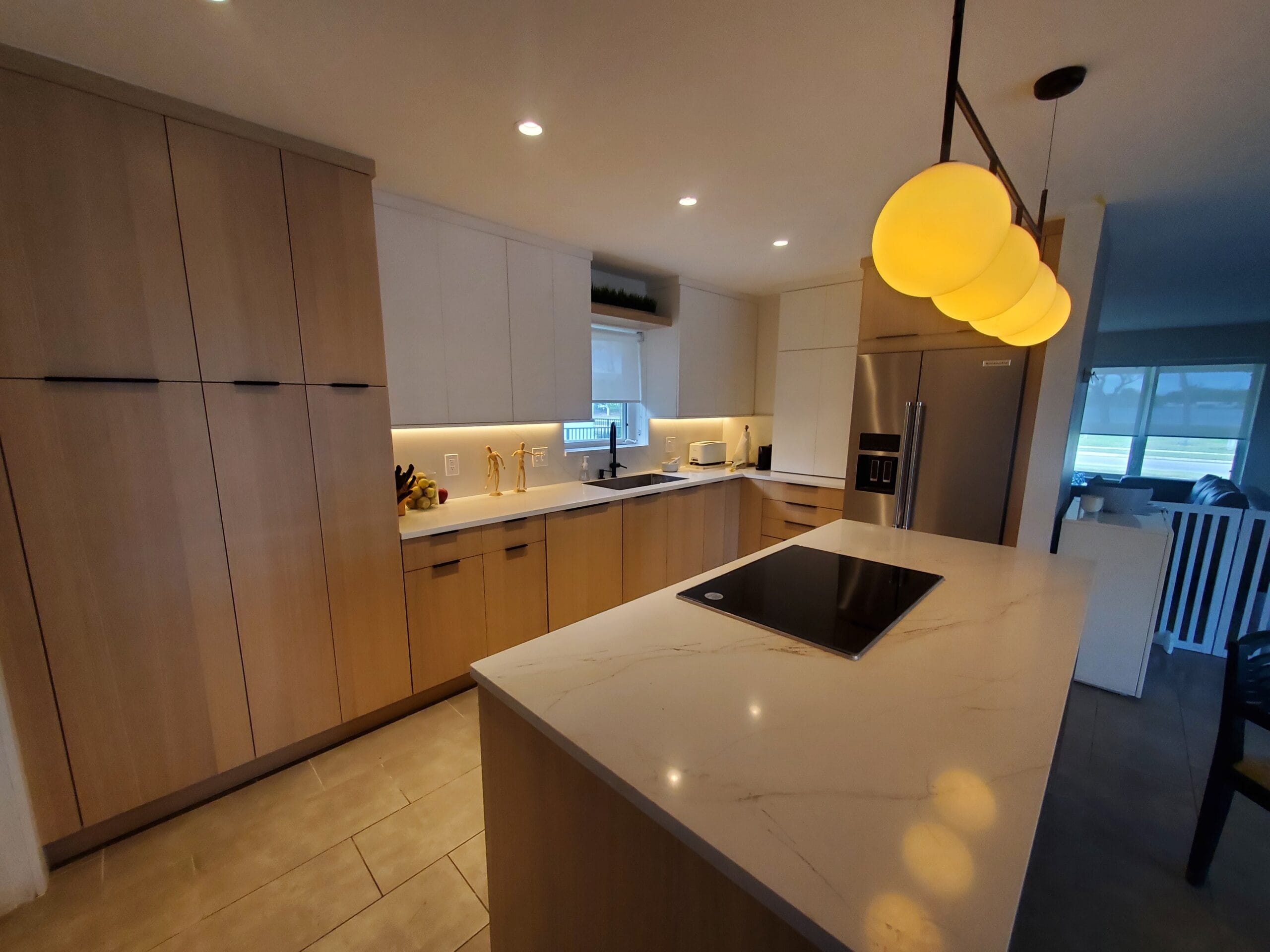
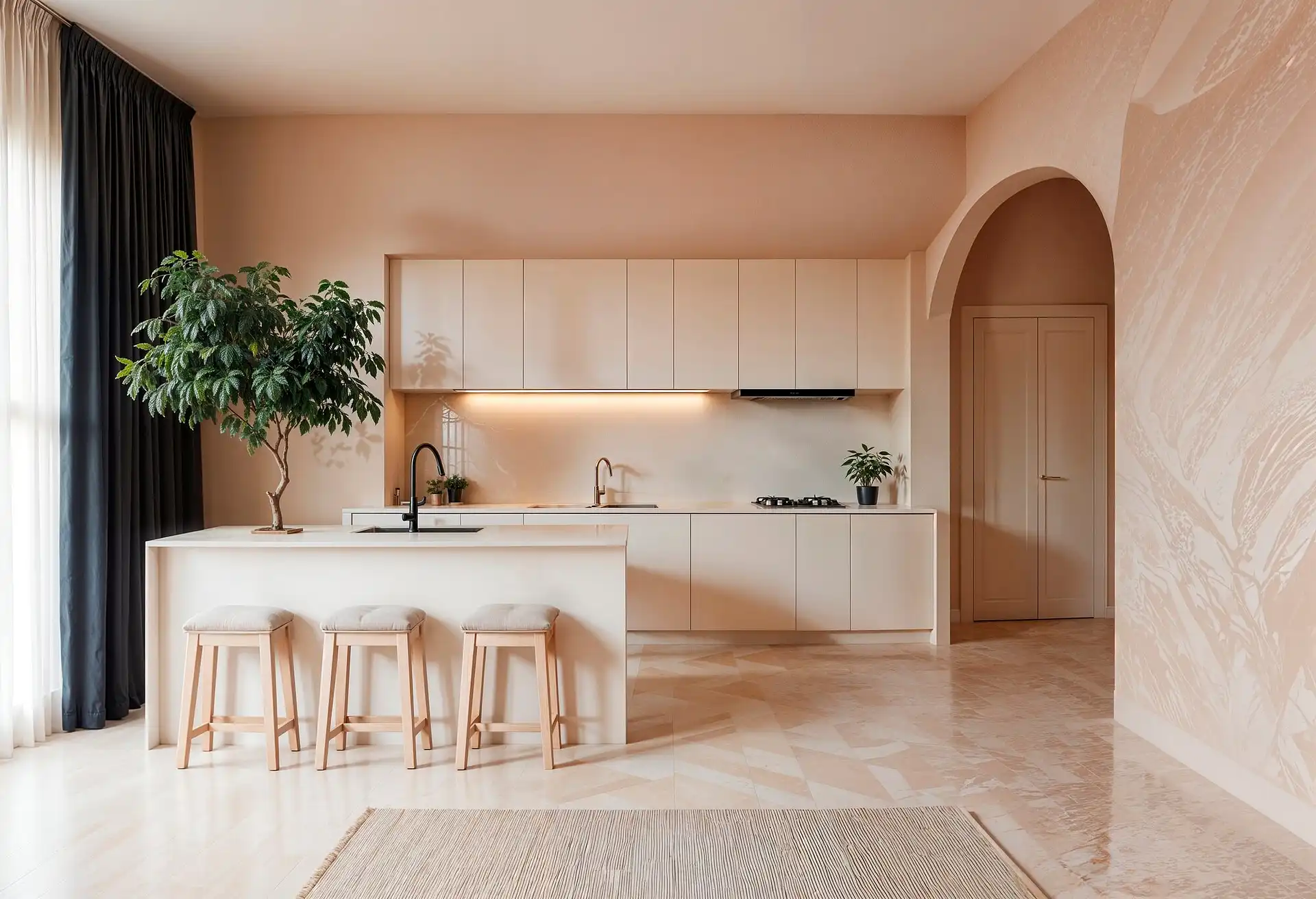
When you’re building an outdoor kitchen in South Florida, some materials just stand up to the weather better than others. Anything that can fight off humidity, intense UV light, and salt in the air is a winner. For cabinetry and countertops, you can't go wrong with marine-grade stainless steel, high-density polymer (HDPE), or ultra-compact surfaces like Dekton. These are the heavy hitters known for their durability and low-maintenance needs in our demanding climate.
Why Your Material Choice Matters in South Florida
Putting an outdoor kitchen in places like Boca Raton, Delray Beach, or Parkland isn’t just about looks—it’s a constant battle against the elements. We've got a unique combination of relentless sun, thick humidity, and salty air that just loves to eat away at building materials. I've seen it countless times: a poor choice leads to warped cabinets, stained countertops, and rusted-out appliances in just a couple of years.
A smart, long-term investment starts with truly understanding these local challenges. This guide is all about the materials that have proven they can take a beating from Florida weather and still look great.
Here’s what you absolutely have to consider:
- UV Resistance: You need materials that won’t fade or break down after being blasted by the sun day after day.
- Moisture and Mold Resistance: Non-porous materials are key. They won't swell, rot, or become a breeding ground for mildew in our humid air.
- Corrosion Resistance: If you're near the coast, you need metals and finishes that can handle the salt without turning into a rusty mess.
This isn't just a local concern; homeowners everywhere are demanding more resilient outdoor living spaces. The outdoor kitchen market is expected to balloon from USD 24.6 billion in 2024 to USD 58.8 billion by 2034, with North America driving that growth. You can dig into the outdoor kitchen market trends on market.us to see the bigger picture. This just goes to show how critical it is to get your material choices right from the start.
Key Takeaway: In South Florida, your choice of materials isn't just about design. It's the single most important decision that will determine how long your outdoor kitchen lasts and how much value it holds.
Let's break down the top-performing materials for each part of your outdoor kitchen.
Quick Comparison of Top Material Categories
| Material Category | Primary Benefit | Best For | Climate Challenge Addressed |
|---|---|---|---|
| Stainless Steel (316) | Corrosion Resistance | Cabinets & Appliances | Salt Air & Humidity |
| HDPE Polymer | Waterproof & No-Fade | Cabinetry & Enclosures | Humidity & UV Rays |
| Ultra-Compact Surfaces | Non-Porous & Durable | Countertops | Staining, Heat & Sun |
| Natural Stone | Heat Resistance | Countertops & Flooring | Intense Sun & Heat |
Comparing Outdoor Countertop Materials For Florida's Climate
Picking the right countertop is easily one of the most important decisions you'll make for your outdoor kitchen. Here in South Florida, that surface is going to take a beating—relentless UV rays, surprise torrential downpours, and that thick, salty humidity we all know. The only materials that truly last are the ones built to withstand this daily assault without staining, fading, or falling apart.
This decision goes way beyond looks. It’s about getting real, long-term value for your investment. A countertop that looks incredible on day one but demands constant upkeep or starts degrading in a few years is just a headache waiting to happen. Let's break down the top contenders, focusing specifically on how they hold up in the unique climate of Boca Raton, Delray Beach, and Parkland.
These are the three big environmental challenges your materials will face every single day.

You have to account for the sun, the humidity, and the salt in the air when choosing a countertop that's built to last.
Natural Stone: Granite and Quartzite
For years, granite has been the go-to for its rugged durability and classic, natural appeal. It's fantastic with heat, so you can set a screaming-hot pan right off the grill without a second thought. But its success in Florida’s climate comes down to one thing: the seal. Granite is naturally porous, and if that seal isn't rock-solid, it will drink up moisture, leading to ugly stains and even mildew. For a kitchen in Parkland, this means sealing it annually isn't a suggestion—it's essential.
Quartzite is another natural stone that gives you a look similar to marble but with toughness that's much closer to granite. Its real superpower in our sunny climate is its superior UV stability. Unlike engineered quartz (which you should never use outside), natural quartzite won’t yellow or fade in direct sunlight. This makes it a fantastic choice for kitchens without a roof. It's also incredibly dense, which means it resists scratches and heat like a champ.
Ultra-Compact Surfaces and Porcelain
If you're looking for the absolute easiest, most hands-off solution, you can't beat ultra-compact surfaces and porcelain. Materials like Dekton are engineered using a process that basically mimics how natural stone is formed, creating a slab that is completely non-porous. In our humid environment, this is a total game-changer.
A non-porous surface is your best defense against South Florida's humidity. It offers zero opportunity for mold, mildew, or stains from tropical rain to penetrate the material, ensuring a cleaner and more durable outdoor kitchen.
Because they are non-porous, you never have to seal them. Ever. They’re also exceptionally tough against UV rays, scratches, and thermal shock—that means a sudden, cold downpour on a blazing hot day won’t cause a crack. Porcelain slabs offer the same benefits and open up a world of design options, from realistic wood looks to sleek, modern solid colors. Cleanup is a breeze, which is a huge bonus for any outdoor cooking space.
Making the Call for Your Florida Kitchen
The best choice really boils down to where your kitchen is located and how much maintenance you're willing to do. Is it completely exposed to the elements, or is it tucked away under a covered lanai? Our in-depth guide to comparing different kitchen countertop materials offers even more detail to help you nail down the right fit.
To make things a little easier, here is a quick comparison of how these materials perform right here in our backyard.
Outdoor Countertop Performance in South Florida
This table breaks down how the top materials stack up against the key challenges of the Boca Raton, Delray Beach, and Parkland climate.
| Material | UV Resistance | Humidity and Mold Resistance | Required Maintenance | Best Use Case |
|---|---|---|---|---|
| Granite | Excellent | Moderate (Requires Sealing) | Annual sealing is a must to prevent staining and moisture absorption. | Covered lanais where routine maintenance is manageable. |
| Quartzite | Excellent | High (Very Dense) | Sealing recommended to ensure maximum stain protection. | Uncovered kitchens needing top-tier durability and UV stability. |
| Ultra-Compact | Superior | Superior (Non-Porous) | Virtually none; routine cleaning is sufficient. | Fully exposed kitchens demanding the highest performance. |
| Porcelain | Superior | Superior (Non-Porous) | None needed; simple to clean and maintain. | Versatile for both covered and exposed spaces with many design options. |
Ultimately, whether you lean toward the natural beauty of quartzite or the bulletproof performance of an ultra-compact surface, the goal is to choose a material that lets you spend more time enjoying your kitchen and less time maintaining it.
Choosing the Right Cabinets and Structure for Your Outdoor Kitchen
While countertops often steal the show, the cabinets and the underlying structure are the real workhorses of your outdoor kitchen. Here in South Florida, this is where you win or lose the war against humidity, salty air, and determined pests. Picking the right material isn't just about looks; it's a critical investment in how long your entire outdoor space will last.
The materials you choose for your outdoor kitchen cabinets must be completely bulletproof against moisture and the corrosive salt that hangs in our coastal air. Let's dig into the three best contenders that we’ve seen consistently hold up in the demanding climates of Boca Raton, Delray Beach, and Parkland.

Marine-Grade Stainless Steel
Stainless steel is a classic for good reason. It delivers that sleek, professional look and is naturally resistant to rust. But—and this is a big but—not all stainless steel is the same, especially when it’s up against our salty atmosphere.
For any coastal Florida project, 316-grade stainless steel is the only way to go. It contains an element called molybdenum, which dramatically improves its defense against the chlorides found in salt air. In contrast, the much more common 304-grade stainless steel will eventually start to show pitting and rust spots from the constant exposure.
The market backs this up. Stainless steel grabbed about 33% of the global outdoor kitchen cabinet market in 2020 and is on track to hit nearly 42% of the North American market in 2024, driven largely by its performance in coastal areas. Of course, the material for your grill is just as important. It’s worth understanding different steel types for built-in braais to make sure every single component can handle the elements.
High-Density Polyethylene (HDPE) Polymer
If you’re looking for the ultimate low-maintenance champion, high-density polyethylene (HDPE) polymer cabinets are tough to beat. Think of it as a high-grade, solid plastic that is completely waterproof.
Unlike wood, it will never, ever rot, warp, or swell up in the humidity. Unlike metal, it can’t corrode. And as a huge bonus in Florida, it’s completely unappealing to insects. Modern HDPE cabinets come in a ton of colors and even realistic wood-grain textures. Since the color is part of the material itself, you don’t have to worry about it chipping or scratching off. Top-tier polymer cabinets are also UV-stabilized to keep them from fading in our intense sun.
HDPE polymer is a true "set it and forget it" solution. Its total immunity to water, salt, and pests eliminates the most common reasons outdoor cabinetry fails in South Florida, making it one of the most durable choices you can make.
This material is perfect for a kitchen that gets hammered by sun and rain, as it needs nothing more than a simple cleaning now and then to look brand new for decades. For a different perspective on cabinetry, you can check out our guide on the best kitchen cabinet materials for indoor projects.
Masonry and Concrete Block Structures
Building your outdoor kitchen island from masonry or concrete blocks is a traditional approach that delivers incredible durability. This method creates a rock-solid foundation that simply isn't affected by weather, rot, or pests. You can then finish the structure with just about anything—stucco, stone veneer, or tile—to match your home’s aesthetic.
The biggest plus here is sheer permanence and strength. It gives you a super-sturdy base for heavy countertops like granite or concrete and can be custom-built into any shape you can imagine.
The catch? The installation has to be perfect. If the foundation and blockwork aren't done by an expert, the structure can settle over time, leading to hairline cracks in the finish. Also, keep in mind that this is a permanent decision; you can’t easily move or reconfigure a masonry kitchen island if your needs change later on.
Comparing Cabinet and Structure Materials
| Material | Durability | Moisture Resistance | Maintenance | Best Use Case |
|---|---|---|---|---|
| 316 Stainless Steel | Excellent | Excellent | Low; needs regular cleaning to wipe away salt deposits. | Modern, professional-style kitchens, especially for homes on the water. |
| HDPE Polymer | Superior | Superior | Virtually none; just occasional soap and water. | Any fully exposed kitchen where zero maintenance is the top priority. |
| Masonry | Superior | Superior | Low; may need a finish touch-up every few years. | Permanent, custom-designed kitchens that need to support heavy countertops. |
Choosing the Right Flooring for Safety and Style
When you're designing an outdoor kitchen, the floor is much more than just the surface you walk on. It's really the foundation of the entire space, and it has a tough job. Here in South Florida—especially in places like Boca Raton and Delray Beach—your flooring has to handle everything from poolside splashes to sudden downpours, all while baking under intense sun. The best materials are slip-resistant, tough as nails, and easy to clean up.
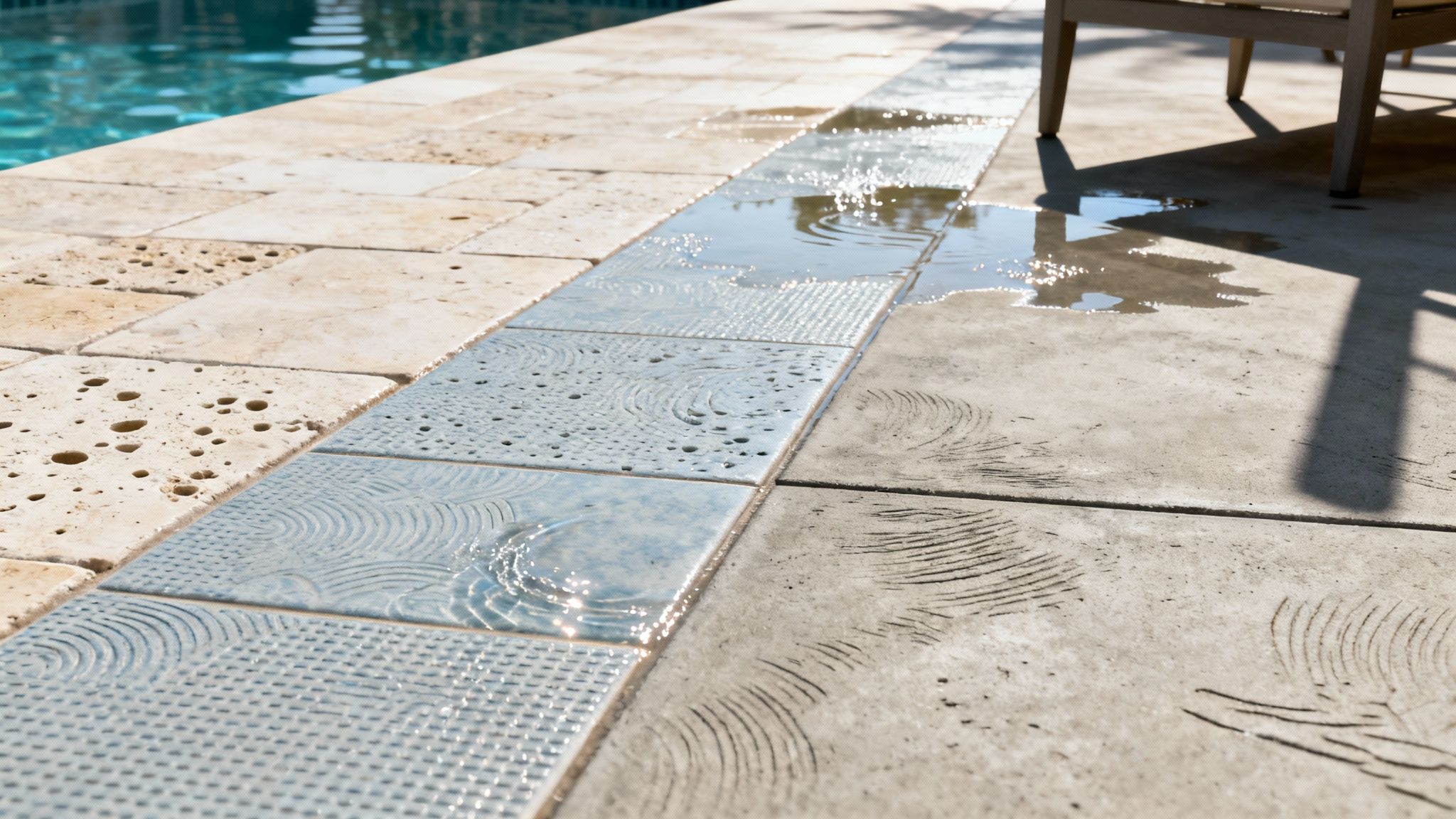
The goal is to find something that not only looks great with your existing patio or pool deck but can also stand up to spilled marinades, grease splatters, and heavy foot traffic.
Natural Stone Pavers: The Cool and Classic Choice
For a South Florida outdoor kitchen, natural stone pavers—especially travertine—are a fantastic choice. Their biggest selling point is a unique ability to stay surprisingly cool to the touch, even after being blasted by the summer sun all day long. If your kitchen is poolside and you'll have people walking around barefoot, this is a game-changer for comfort.
Beyond that, travertine's naturally porous surface gives it excellent slip resistance, a critical safety feature anywhere water is present. The subtle, elegant patterns in the stone also deliver a timeless, high-end look that works with almost any design. Just keep in mind that its porosity means it absolutely needs to be sealed to fend off stains from grease and spills.
Situational Recommendation: For a luxury poolside kitchen in Highland Beach or Delray Beach, travertine pavers are the top choice. Their cool-to-the-touch surface and natural slip resistance provide a perfect blend of safety, comfort, and sophisticated style.
Porcelain Tiles: Modern Durability and Design Freedom
Porcelain tiles have really taken over the outdoor flooring market, and for good reason. These tiles are engineered to perform; they're incredibly dense and non-porous, which makes them practically waterproof and stain-proof. In an outdoor kitchen where spills are just a matter of time, this is a massive advantage.
Modern porcelain tiles are manufactured with high slip-resistance ratings specifically for outdoor and wet areas. They also offer incredible design flexibility, coming in styles that convincingly mimic natural stone, concrete, or even wood. This lets you get just about any look you want without sacrificing durability. If you’re considering the wood look, it's worth seeing a comparison between composite decking and traditional wood to understand the long-term performance differences.
- Stain Resistance: Grease, red wine, and other messes wipe away easily without a trace.
- UV Stability: The colors won't fade or wash out, even after years of direct sunlight.
- Low Maintenance: Unlike natural stone, porcelain never needs to be sealed to maintain its protective qualities.
Poured and Stamped Concrete: The Practical Foundation
For a no-nonsense, durable, and budget-friendly floor, you can't go wrong with concrete. A simple brushed concrete finish creates an excellent non-slip texture, making it one of the safest surfaces you can have in a wet environment. If you want something more decorative, stamped concrete can replicate the look of pavers, stone, or even wood planks.
The secret to a long-lasting concrete floor lies in a professional installation and a high-quality sealer. Sealing is non-negotiable—it's what prevents stains from soaking in and helps protect against hairline cracks over the years. When it's done right, concrete provides a seamless, rock-solid foundation that can easily handle heavy traffic and the immense weight of a fully loaded kitchen island.
Flooring Material Showdown
| Material | Slip Resistance | Heat Absorption | Maintenance Needs | Best For |
|---|---|---|---|---|
| Travertine | Excellent | Very Low | Requires periodic sealing to prevent stains. | Poolside kitchens and areas with high sun exposure. |
| Porcelain Tile | High | Moderate to High | Routine cleaning is all that's required. | High-traffic kitchens needing maximum stain resistance. |
| Concrete | Excellent | High | Needs sealing to protect against stains and weather. | Creating a durable, seamless, and budget-friendly surface. |
Navigating Local Building Codes and Permits
It's easy to get caught up in choosing the perfect granite countertops or the shiniest stainless steel grill. But before you get too far, we need to talk about something just as crucial: making sure your new outdoor kitchen is safe, legal, and built to last. Dealing with building codes and permits might sound like a headache, but it’s a step that protects your home, your family, and your investment.
Cities like Boca Raton, Delray Beach, and Parkland have very specific rules for a reason—they’re designed to prevent fires and ensure everything is structurally sound. Trying to sidestep this process can lead to some serious trouble down the road, including hefty fines, being forced to tear down your beautiful new kitchen, and even issues with your homeowner's insurance. This is exactly why bringing in a pro isn't just a good idea; it's the only way to guarantee a smooth, compliant project from start to finish.
What South Florida Inspectors Are Looking For
While the fine print can differ a bit from one city to the next, the core safety requirements are pretty consistent across our area. Most of the rules zero in on keeping heat away from things that can burn and making sure your utilities are hooked up safely. Knowing these from the get-go helps you plan a layout that’s both smart and up to code.
Here are a few of the big ones you absolutely have to follow:
- Setback Distances: You can’t just build your kitchen right up to the property line. There are minimum distances required to ensure there’s enough space between you and your neighbors.
- Grill and Appliance Clearances: This is a huge one. Codes dictate exactly how many feet your grill and other appliances need to be from combustible materials—think your home’s siding, wood deck railings, or that new pergola you just installed.
- GFCI Protection: Every single electrical outlet in your outdoor kitchen must be a Ground Fault Circuit Interrupter (GFCI). In a place like Florida where moisture is a constant, this is a non-negotiable safety feature that prevents electrical shocks.
Why You Can't DIY the Gas and Plumbing
Let's be clear: hooking up gas and water lines is not a weekend warrior project. Running a natural gas or propane line requires a licensed professional who knows the local codes for everything from pipe materials to how deep it needs to be buried. One wrong move with a gas line creates a serious risk of fire or explosion.
The same goes for plumbing. Sinks and drainage have to be installed correctly to prevent leaks and keep things sanitary. And if your kitchen is under any kind of roof, you’ll also need proper ventilation to stop carbon monoxide from your grill from building up to dangerous levels.
Critical Insight: Think of a building permit as your project’s insurance policy. It’s not just paperwork. It triggers official inspections at critical stages, giving you a certified, third-party expert who confirms that the most complex parts—like the gas and electrical work—were done safely and by the book.
The simplest way to handle all of this? Work with an experienced, licensed contractor. They’ll take care of the entire permitting process, from drawing up the plans to scheduling the final inspections. This way, you can be confident your stunning new outdoor kitchen is not only built with the right materials but is also a safe, legal, and permanent addition to your home.
Material Recommendations for Your Outdoor Kitchen
Alright, we've broken down the top contenders for materials. Now, let's put it all together. Choosing the right materials for your outdoor kitchen isn't just about picking what looks good; it's about matching them to your lifestyle, your specific location in South Florida, and frankly, how much time you want to spend cleaning versus cooking.
Below are a couple of real-world scenarios I see all the time. Think of them as starting points—blueprints that show how the right combination of materials can create a space that’s not only beautiful but built to last right here in our climate.
The Coastal Entertainer Profile
If you live in Boca Raton or Delray Beach and your backyard practically touches the water, this one’s for you. This kitchen is for the person who loves hosting big parties where salt spray is just part of the atmosphere. Everything here is chosen for maximum resilience against the coast.
- Cabinets and Structure: There’s really only one contender here: 316-grade stainless steel. It's marine-grade for a reason. Its superior corrosion resistance is essential for fighting off the pitting and rust that salty air brings, keeping your kitchen looking sleek and professional for years.
- Countertops: Go with an ultra-compact surface like Dekton. It's completely non-porous, so it won’t stain from spilled wine or marinate, and it's totally UV-stable. You can even put a hot pan directly on it without a second thought.
- Flooring: Travertine pavers are perfect, especially around a pool. They stay surprisingly cool on bare feet even in the July sun and offer fantastic natural slip resistance when wet.
The Low-Maintenance Oasis Profile
This setup is designed for the Parkland homeowner who wants a stunning outdoor kitchen without dedicating their weekends to upkeep. The philosophy here is "set it and forget it," creating a space that looks perfect with minimal effort.
- Cabinets and Structure: HDPE polymer cabinetry is the undisputed champion of low maintenance. It's 100% waterproof, bugs can't stand it, and it’s loaded with UV stabilizers. That means it will never rot, warp, or fade. Just hose it down.
- Countertops: Large-format porcelain slabs deliver that seamless, modern aesthetic with zero porosity. They never need sealing and are ridiculously easy to clean.
- Flooring: Sealed and stamped concrete is a workhorse. It gives you a durable, non-slip surface that can be customized to look like stone, wood, or tile, but with the simple maintenance of hosing it down.
By defining your primary goal—whether it's coastal resilience or minimal upkeep—you can select a synergistic blend of materials that work together to create your perfect outdoor kitchen.
If you're looking for more in-depth guidance on the entire planning process, from design ideas to budgeting, check out this ultimate guide to outdoor kitchen installations.
Ready to build a profile for your own perfect outdoor kitchen? Let's talk about your vision.
Your Outdoor Kitchen Questions, Answered
When you're planning an outdoor kitchen, especially in a place like South Florida, a lot of specific questions come up. It's totally normal. Here are the answers to some of the most common things we're asked by homeowners around Boca Raton, Delray Beach, and Parkland.
What's the Best Countertop if My Outdoor Kitchen Has No Roof?
For a kitchen that’s completely open to the elements, you really can’t beat ultra-compact surfaces like Dekton or a top-tier porcelain. These materials are practically bulletproof against our climate. Their non-porous structure means they shrug off UV rays, so they won't fade in the intense sun. They also handle thermal shock beautifully—a huge plus when a sudden afternoon downpour hits a scorching hot counter.
Of course, natural quartzite is another tough contender that holds up well against UV light. But the big advantage of porcelain and Dekton is that they're zero-maintenance. You never have to seal them. For a kitchen with absolutely no cover, that kind of resilience makes them the smartest choice.
Think about this: in an uncovered Florida kitchen, a countertop's ability to handle thermal shock—going from over 150°F in the sun to being drenched in cold rain—is just as critical as its UV resistance. This is where ultra-compact surfaces and porcelain really shine.
Are Wood Cabinets a Terrible Idea for a South Florida Outdoor Kitchen?
Honestly, using traditional wood here is a tough sell. It’s a constant battle against humidity, rot, and all the pests that love our tropical weather. You could opt for a resilient hardwood like teak, but you’d be signing up for a strict annual sealing schedule, and even then, it's a lot of work to keep it from breaking down.
If you want something that will genuinely last for decades without constant upkeep, your best bet is marine-grade polymer (HDPE) or 316-grade stainless steel cabinets. These materials give you the beautiful look of wood but without any of the headaches. They’re a much better investment for our climate, offering real peace of mind and lasting value.
Do I Really Need a Permit to Build an Outdoor Kitchen in Boca Raton?
Yes, almost always. Any time your project includes permanent structures, running gas lines, hooking up plumbing, or installing electrical wiring, you're going to need a permit. There's really no way around it.
Cities like Boca Raton, Delray Beach, and Parkland have very specific building codes to make sure every project is safe. These rules dictate everything from how far your grill needs to be from a wall to requiring GFCI outlets. The best approach is to work with a licensed, insured contractor who knows the local regulations inside and out. They’ll handle the entire permitting process, which takes the stress off you and ensures everything is built correctly and safely from the start.
Ready to choose the perfect, climate-resilient materials for your dream outdoor kitchen? The experts at Kitchen Renovations Perfected are here to guide you through every step, from design to installation. Schedule your complimentary consultation today!