When you start looking into a bathroom remodel, the first thing you'll probably notice is the wide range of potential costs. Nationally, the average project can run anywhere from $6,600 to over $17,600, and it’s not uncommon for high-end, luxury renovations to top $30,000.
Think of these numbers as a starting point. The final price tag on your project really comes down to three things: the size of your bathroom, the materials you fall in love with, and just how complex the job is.
Decoding Your Bathroom Remodeling Investment
Planning a bathroom remodel is a lot like planning a vacation. A simple weekend road trip (a budget-friendly refresh) is going to have a very different price tag than a two-week European luxury tour (a high-end gut renovation). The secret to staying on budget is understanding exactly where your money is going.
To make sense of it all, we can break projects down into three general tiers: budget, standard, and luxury. Each one strikes a different balance between cosmetic updates, functional overhauls, and long-term value.
-
Budget Remodel: This is all about making a big impact with cosmetic changes. Think a fresh coat of paint, new cabinet hardware, a simple pre-made vanity from a big-box store, and updated, standard-grade fixtures. The main goal here is to refresh the look without touching the plumbing or electrical layout.
-
Standard Remodel: This is the most popular type of project we see. It involves a full gut and replacement of all the major fixtures and finishes. You're typically looking at better-quality materials, like semi-custom cabinets, classic porcelain or ceramic tile, and a brand-new tub or shower.
-
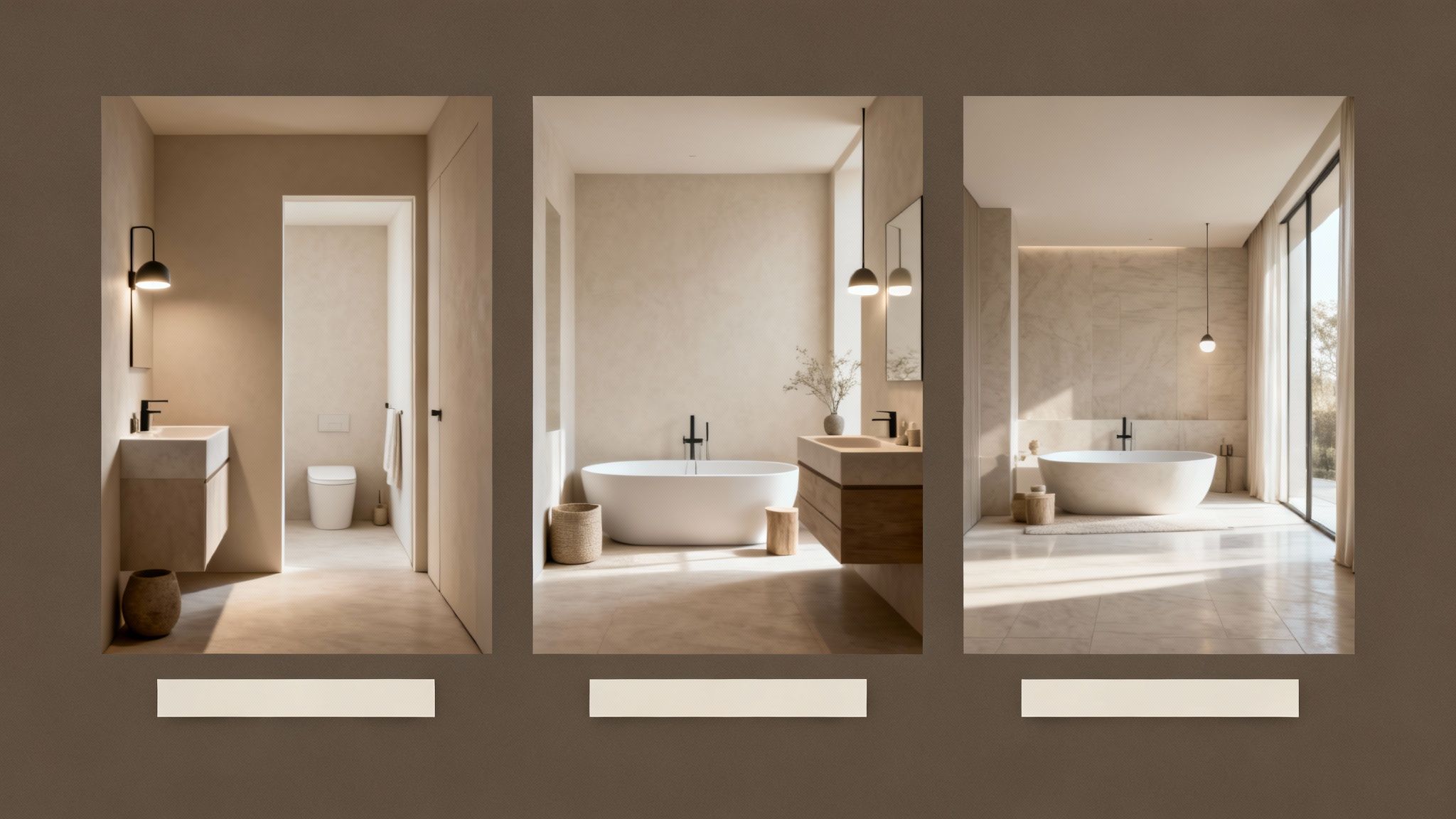
Luxury Remodel: This is where you get your dream bathroom. It often means a complete transformation, including moving walls or plumbing to create a better layout. High-end features are the norm here—a freestanding soaking tub, a custom walk-in shower with multiple jets, heated floors, natural stone tile, and bespoke vanities.
Average Bathroom Remodel Cost by Project Scope
So, how do these tiers translate into actual dollars? Below is a table that breaks down the typical costs and features for a standard 5' x 8' bathroom. This should give you a good idea of where your vision might land before we get into the nitty-gritty of line-item costs.
| Remodel Tier | Typical Cost Range | Key Features |
|---|---|---|
| Budget | $6,000 – $10,000 | Cosmetic updates like painting, new standard fixtures, a pre-fabricated vanity, and vinyl or basic ceramic tile. |
| Standard | $10,000 – $20,000 | Full replacement of fixtures, semi-custom vanity, porcelain/ceramic tile, new tub/shower combo, and improved lighting. |
| Luxury | $20,000+ | Layout changes, moving plumbing, custom cabinetry, natural stone, freestanding tub, walk-in shower, high-end fixtures. |
Seeing these numbers helps you align your dream bathroom with a realistic financial plan. It’s the first step toward creating a space you’ll love without any surprise costs down the road.
Breaking Down Your Budget: Labor vs. Materials
When you start planning a bathroom remodel, every dollar you spend will fall into one of two main buckets: labor or materials. Getting a handle on this split is the first step to building a realistic budget.
Think of it like building a custom car. You have the cost of the high-performance engine, the premium leather seats, and the custom paint job—those are your materials. Then you have the cost of the master mechanics and artisans who put it all together with precision—that's your labor. Both are absolutely essential to the final product.
In the remodeling world, we often talk about the 40/60 split. As a rule of thumb, you can expect skilled labor to account for anywhere from 40% to 60% of your total project cost. The other half goes to all the beautiful fixtures and finishes you've picked out. This isn't a hard-and-fast rule, though. If you want an incredibly complex tile mosaic or need us to move a wall, the labor side of the equation will naturally tick up. On the flip side, falling in love with a rare Italian marble slab will push your material costs higher.
Who's On the Job? Understanding Labor Costs
Labor isn't just a single line item; it's the combined expertise of a team of licensed professionals working in perfect sync. Paying for quality labor means you're investing in a job done right, safely, and to code. It's the best insurance policy for your home.
Here’s a look at the key tradespeople your budget covers:
- General Contractor: This is your project's quarterback. They manage the entire timeline, coordinate every single trade, pull the necessary permits, and are ultimately responsible for making sure the whole process is seamless from demolition day to the final inspection.
- Plumber: A great plumber is worth their weight in gold. They’re the ones expertly handling all the behind-the-scenes work—moving water lines and drains, and flawlessly installing your new sink, toilet, and shower fixtures to prevent any future leaks.
- Electrician: From installing that beautiful new vanity light to wiring the heated floors and ensuring the exhaust fan is vented correctly, the electrician’s work is critical. This is one area where you never cut corners; it’s all about safety and compliance.
- Tiler: The work of a skilled tiler is part science, part artistry. They meticulously lay each piece of tile to create the stunning, durable surfaces that define your bathroom's look. The difference between a DIY job and a professional one is immediately obvious here.
The cost for these pros is based on their experience, insurance, and the specific tasks at hand. Swapping out a toilet is one thing; completely re-plumbing a shower is another beast entirely.
Choosing Your Finishes: A World of Materials
Now for the fun part! The materials part of your budget is where your vision and personality really come to life. It's also the easiest place for costs to creep up if you're not careful.
The best way to approach this is to think in terms of "good, better, and best." This framework helps you see where you can save and where you might want to splurge.
Our Pro Tip: The secret to a smart budget is finding the right balance. You can get 90% of the look of a high-end designer vanity with a quality mid-range option. That move alone could free up enough money to upgrade to the luxury walk-in shower system you really want.
Let's apply this to a few key bathroom elements:
Vanities and Countertops
- Good: A standard, pre-made vanity from a home improvement store, often with an integrated top.
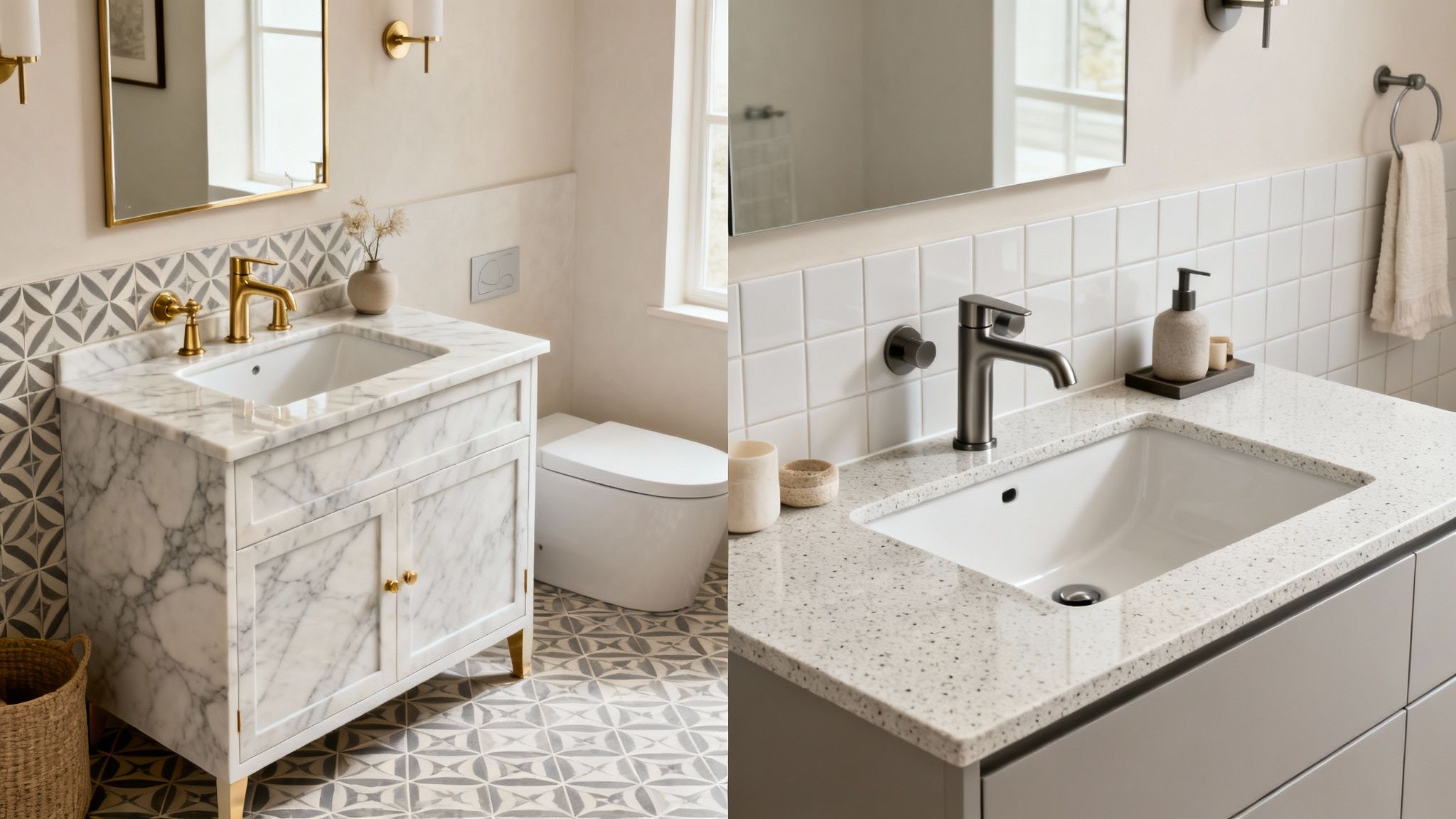
- Better: A semi-custom vanity with solid wood construction, soft-close drawers, and a sleek quartz countertop.
- Best: A fully custom-built piece designed to your exact specifications, crowned with a premium slab of natural quartzite or marble.
Flooring and Wall Tile
- Good: Classic ceramic or porcelain tiles in standard sizes. They're durable, timeless, and budget-friendly.
- Better: Large-format porcelain for a more seamless look, or natural stone like travertine for added warmth.
- Best: High-end marble, intricate waterjet-cut mosaics, or specialty glass tiles that make a bold statement.
Shower and Tub Fixtures
- Good: A clean, functional acrylic tub-and-shower combo with a reliable showerhead from a trusted brand.
- Better: A sturdy cast-iron tub paired with a custom-tiled surround and a thermostatic shower system that keeps the water temperature perfectly consistent. You can explore a range of options with professional shower and tub installation services to see what’s possible.
- Best: A luxurious freestanding soaking tub and a custom-built walk-in shower, complete with frameless glass doors, body jets, and a ceiling-mounted rain showerhead.
By understanding how these two sides of the budget—skilled labor and tiered materials—work together, you’re in the driver's seat. You get to decide where your investment makes the most impact, creating a bathroom that’s not just stunning on day one, but built to last for years to come.
A Line-by-Line Look at Your Bathroom Remodel Budget
Alright, we’ve covered the big picture split between labor and materials. Now, let’s get into the nitty-gritty. The secret to a successful remodel—and keeping your sanity—is a detailed financial plan that accounts for everything from the first swing of the sledgehammer to the last brushstroke of paint. When you start thinking about the project in terms of individual line items, the total cost becomes much less intimidating.
Breaking it down this way turns one giant, overwhelming number into a series of smaller, more manageable decisions. Each line item is its own mini-project with its own costs, and this gives you the power to see exactly where your money is going. More importantly, it helps you decide where you want to save and where it’s worth it to splurge.
To give you a clearer picture, this chart shows how a typical budget breaks down between the two major categories we just discussed.
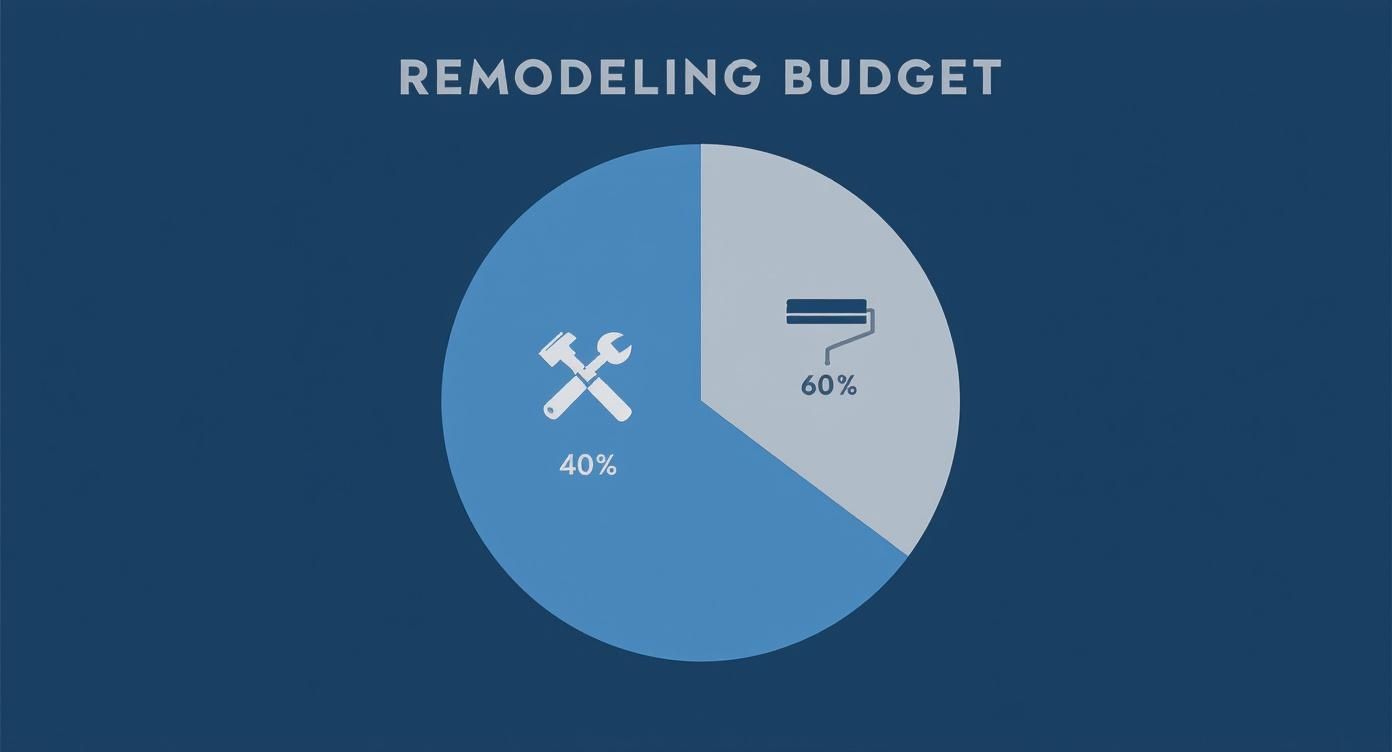
As you can see, materials usually take the bigger slice of the pie. But never underestimate the cost—or the value—of skilled labor. It’s a crucial investment for a beautiful, long-lasting renovation.
To help you see how this plays out in a real project, here's a table illustrating how a typical mid-range remodel budget is allocated. This gives you a percentage-based roadmap for planning your own expenses.
Detailed Cost Allocation for a Mid-Range Bathroom Remodel
| Expense Category | Percentage of Total Budget | Common Cost Drivers |
|---|---|---|
| Cabinetry & Vanity | 15% – 20% | Stock vs. semi-custom vs. fully custom; material (MDF, plywood, solid wood); hardware choices. |
| Plumbing Fixtures & Install | 10% – 15% | Relocating drains/supply lines; fixture quality (faucets, shower heads); toilet features (e.g., dual-flush). |
| Tile & Flooring | 10% – 15% | Material type (ceramic, porcelain, natural stone); tile size and complexity of layout (e.g., herringbone). |
| Countertops & Surfaces | 5% – 7% | Material (laminate, quartz, granite, marble); edge profiles; number of sink cutouts. |
| Lighting & Electrical | ~5% | Number and type of fixtures (sconces, recessed); adding new circuits; smart features; high-CFM exhaust fan. |
| Painting & Finishing | ~5% | Extent of wall repair needed; quality of paint; complexity of trim work. |
| Labor (General) | 20% – 30% | Demolition, framing, drywall, project management; complexity of the overall design. |
| Permits & Other | 3% – 5% | Local municipal fees; dumpster rental; unforeseen issues (e.g., mold remediation). |
This table is a fantastic starting point. Remember, these are averages—your project might lean more heavily on one category depending on your specific design goals.
Cabinetry and Vanities
The vanity is almost always the focal point of a bathroom, setting the style for the whole room. It’s also a major line item, usually eating up 15% to 20% of your total budget. The final cost really boils down to three things: size, material, and whether you go with a stock, semi-custom, or fully custom unit.
You can find a perfectly good pre-made vanity at a home improvement store to keep costs down. On the other hand, a custom-built piece gives you a perfect fit and storage designed just for you, though you'll pay a premium for it. This is one area where you can really play with the balance between your dream look and your budget.
Plumbing Fixtures and Installation
Plumbing is the unseen hero of your bathroom. This category covers everything from the rough-in pipes behind the walls to the shiny new fixtures you see and use every day, making up about 10% to 15% of your total spend. This includes your toilet, sink, faucets, and shower system.
The complexity of the job is the biggest cost driver here. Swapping out an old faucet for a new one is one thing; moving a toilet or a shower drain is a whole different ballgame that requires a licensed plumber and significantly more labor. To put it in perspective, a simple faucet swap might run $170 to $360, but major plumbing moves can easily hit $800 or more.
Key Takeaway: If you want to keep your plumbing costs in check, the number one rule is to stick with your current layout. Moving supply lines and drains is one of the fastest ways to blow up your labor budget.
Tile and Flooring
Tile is where function, durability, and artistry all come together. It covers your floor, your shower walls, and maybe a backsplash, and it can easily account for 10% to 15% of your budget. The cost is a direct split between the price of the tile itself and the expert labor needed to get those perfect, clean grout lines.
The cost of the tile itself can vary wildly:
- Ceramic and Porcelain: These are the workhorses of the bathroom. They're affordable, durable, and come in a staggering variety of styles.
- Natural Stone: Materials like marble, travertine, or slate deliver a truly luxurious, high-end look, but they cost more and require sealing and maintenance.
- Luxury Vinyl Tile (LVT): A fantastic choice for flooring. It's 100% waterproof, budget-friendly, and does a great job of mimicking the look of real wood or stone.
Your choice here has a huge ripple effect on both the final look and the final bill. For a deeper look at your options, take a look at our guide to popular bathroom tile types.
Countertops and Surfaces
Hand-in-hand with your vanity, countertops typically represent around 5% to 7% of the total cost. The material you choose is what drives the price. Laminate and cultured marble are solid, budget-conscious options that look clean and hold up well.
Engineered quartz has become the reigning champ for mid-range and luxury projects. People love it because it’s non-porous (so it doesn’t stain), incredibly durable, and comes in countless colors and patterns. If you're going for a true statement piece, nothing beats natural stone slabs like granite or marble, but just know they'll need a bit more TLC to keep them looking pristine.
Lighting and Electrical
Good lighting can completely change the feel of a room, and you should plan for it to take up about 5% of your budget. This covers new fixtures—like vanity lights, recessed cans in the ceiling, and a wet-rated light for the shower—as well as the labor for a licensed electrician to install them safely.
And please, don’t overlook the exhaust fan! Here in South Florida, a powerful, properly vented fan isn’t a luxury; it’s essential for fighting humidity and preventing mold. Spending a little extra on a quieter model or one with a humidity sensor is money well spent. While this detailed renovation budget breakdown is for kitchens, the principles for itemizing costs are universal and can really help you get organized.
Avoiding Hidden Costs and Budget Surprises
A detailed cost breakdown is your best friend in a remodel, but even the most buttoned-up plans can hit a snag. We're talking about the issues lurking behind the walls or tucked away in the fine print—the kind of surprises that can quickly drain the fun out of a project.
Think of your initial budget as the roadmap for your renovation. Hidden costs are the detours and potholes that don't show up on the map. They almost always appear during demolition, which is the first chance anyone gets to see the true condition of your home's bones.
The Power of a Contingency Fund
This is exactly why a contingency fund isn't just a good idea; it's essential. The rule of thumb is to set aside an extra 10% to 20% of your total project cost. For a $15,000 remodel, that means having another $1,500 to $3,000 ready to go.
Let's be clear: this isn't "fun money" for a last-minute tile upgrade. It’s your project’s insurance policy. It's the safety net that lets you tackle a surprise problem without having to halt the entire job or sacrifice parts of your vision.
By planning for the unexpected, you transform a potential crisis into a manageable task. A contingency fund ensures that a surprise problem becomes a simple line item, not a budget-breaking disaster.
Common Unforeseen Remodeling Expenses
So, what are these budget-busters you should be bracing for? While every home has its own quirks, especially older ones, a few usual suspects tend to show up time and time again.
Here are some of the most common gremlins we find in the walls:
-
Hidden Water Damage: This is the big one. A tiny, slow leak from an old toilet seal or a cracked shower pan can silently cause wood rot, mold, and crumbling subfloors. Finding this during demo can be a serious setback. To get a handle on what this might involve, check out this water damage cleanup cost guide.
-
Outdated Plumbing or Electrical: Once the walls are open, we often find old galvanized pipes that are corroded shut, sketchy wiring that doesn't meet today's safety standards, or a vent fan that does absolutely nothing. These aren't optional fixes—they must be brought up to code to pass inspection.
-
Structural Problems: Sometimes we’ll find that a load-bearing wall was altered incorrectly years ago or that floor joists are sagging. These issues have to be properly supported before we can safely install heavy new items like a freestanding tub or stone tile.
-
Permit and Disposal Fees: These aren't technically "hidden," but they're easy to forget if you're tallying up costs on your own. Your city permit has a fee, and so does hauling away the old debris. Getting rid of a heavy, old cast-iron tub isn't free, after all.
Building that contingency fund from day one is the single best thing you can do to protect your investment and your sanity. It gives you a financial cushion to absorb the inevitable bumps in the road, keeping your project moving forward without the stress.
Smart Strategies to Lower Your Renovation Costs
Creating a bathroom you love doesn't mean you have to empty your bank account. With some clever planning and a few strategic trade-offs, you can keep costs firmly in check without compromising on the quality or style you're dreaming of. It's all about making smart, high-impact decisions where it counts.
Think of it like planning a vacation on a budget. You prioritize the amazing experiences you really want—maybe a great hotel or a special dinner—and find savings on things like flights or souvenirs. In a remodel, focusing on the big-ticket items frees up cash for the special touches that truly make a space yours.
Preserve Your Plumbing Footprint
If you want to know the single best way to control your bathroom remodeling cost breakdown, here it is: keep your existing layout. That daydream of moving the toilet across the room might seem simple, but in reality, it's a budget-buster.
Moving major fixtures like a sink, shower, or toilet is a massive undertaking. It requires a licensed plumber to reroute supply and drain lines, which almost always means tearing open walls and floors. This adds a ton of labor hours and complexity to the project, easily tacking on thousands of dollars to your final bill.
By designing your new bathroom around the current plumbing locations, you sidestep the single biggest labor expense in any remodel. This one decision can give you the financial breathing room to splurge on that beautiful tile or high-end vanity you've had your eye on.
Smart Material Selections
Yes, high-end materials look incredible, but they're not the only path to a luxurious bathroom. Today's market is full of gorgeous, durable alternatives that give you a nearly identical look for a fraction of the cost.
Making savvy material choices is one of the pillars of a budget-friendly renovation. The key is to be selective—splurge where it matters most to you and choose value-conscious options for larger areas.
Here are a few high-impact swaps we often recommend:
- Flooring: Instead of pricey marble, take a look at high-quality luxury vinyl tile (LVT). Modern LVT is 100% waterproof, tough as nails, and does a fantastic job of mimicking the appearance of natural stone or wood.
- Countertops: While natural stone is classic, engineered quartz is a workhorse. It's non-porous, stain-resistant, and incredibly durable, coming in a huge range of styles that are often more affordable.
- Tile: Large-format porcelain tiles can give you a sleek, high-end look with fewer grout lines to clean. They often cost much less per square foot than intricate mosaics or natural stone tiles.
Remember, these choices don't just save you on the material cost; they can often lower the bill for installation labor, too.
Refinish or Replace
When it comes to your tub or shower, you don't always have to rip everything out and start over. If your current tub is made from a quality material like cast iron and is still structurally sound, refinishing is a fantastic, cost-effective option.
Refinishing Your Tub
A professional can repair any chips and apply a new, factory-hard finish. This process, also called reglazing, can make a dated, stained tub look brand new. It costs significantly less than a full replacement, which involves demolition, plumbing work, and disposal fees.
When to Replace
On the other hand, if your tub is a cheap acrylic or fiberglass model that's cracked or failing, replacement is the better long-term investment. It's all about honestly assessing the condition and material of your current fixtures to make the smartest financial decision.
Embrace Some DIY Sweat Equity
Finally, think about where you can roll up your sleeves and contribute some of your own labor. While you should always leave plumbing and electrical work to licensed professionals, several smaller jobs are perfect for a handy homeowner looking to cut down on labor costs.
Consider taking on these tasks yourself:
- Demolition: Carefully tearing out an old vanity, toilet, or tile can save you hundreds in labor. Just be sure you know what you're doing!
- Painting: Nothing transforms a room like a fresh coat of paint, and it’s one of the most affordable and impactful DIY projects you can do.
- Final Touches: Installing towel bars, mirrors, and cabinet hardware are straightforward tasks. Each one may seem small, but the savings add up quickly.
Navigating Remodeling Costs in South Florida
When you start digging into a bathroom remodeling cost breakdown, you quickly realize it’s not a one-size-fits-all situation. Location is a huge part of the equation, and here in South Florida, we have our own set of rules and realities that homeowners elsewhere just don't face. Remodeling in places like Boca Raton, Delray Beach, and Parkland requires a game plan that accounts for our climate, strict building codes, and local design tastes.
This isn't just a local trend, though. The desire for beautiful, functional bathrooms is booming worldwide, driven by everything from wellness trends to smart home tech. To put it in perspective, North America's market share alone is expected to hit a staggering $17.9 billion by 2025. People are clearly willing to invest in these essential spaces. You can see the full picture in this global bathroom remodel cost market report.
Local Cost Drivers in Palm Beach and Broward Counties
So, what exactly makes a bathroom project here different from one in, say, Ohio or California? A few key factors come into play and will definitely shape your budget.
- Higher Labor Rates: Let's be honest—South Florida is a desirable place to live, and that means the demand for top-tier, licensed, and insured craftspeople is high. That demand naturally gets reflected in labor costs.
- Stringent Building Codes: Palm Beach and Broward counties are serious about building codes, especially when it comes to hurricane safety. This isn't a suggestion; it often dictates the specific materials and installation techniques we have to use.
- Luxury Finishes: The aesthetic here often gravitates toward high-end finishes. Think natural stone countertops, custom-built vanities, and designer plumbing fixtures, all of which push the material budget higher.
- Permitting Nuances: Each city has its own way of handling permits. Knowing how to navigate the local bureaucracy efficiently is critical. A misstep or delay here can cost you both time and money, which is why having an experienced local contractor is so important.
The biggest local factor we deal with is the absolute necessity for hurricane-rated products. Things like impact-resistant windows and doors aren't just a nice-to-have for peace of mind—they're often mandated by code and become a specific, non-negotiable line item in your budget.
Getting a handle on these local dynamics from the start is the key to building a realistic budget that won't give you any surprises. Our deep experience in Boca Raton bathroom remodeling means we're experts at pricing these regional factors accurately, keeping your project on track and on budget.
We'd love to help you get started. Feel free to schedule a complimentary consultation, and we can walk you through a detailed estimate tailored specifically to your home and your vision.
Common Questions We Hear About Remodeling Costs
When you start thinking about a bathroom remodel, the numbers can feel a little overwhelming. It's completely normal to have a ton of questions, and we've heard just about all of them over the years. Getting straight answers is the first step to feeling confident about your project.
Let's dive into some of the questions that come up most often with our clients right here in South Florida. Knowing the answers will help you build a solid plan and avoid any surprises down the road.
How Long Does a Bathroom Remodel Actually Take?
This is a big one. While a quick facelift with new paint and fixtures might just take a few days, a full-gut remodel of a standard bathroom is a different story. You should plan for about 3 to 5 weeks from start to finish. That timeline gives us the breathing room needed for demolition, plumbing and electrical work, inspections, tiling, and all the final details.
Of course, things can happen. Waiting on a custom-ordered vanity or discovering some old water damage behind a wall can add to the schedule. That's why we map out a detailed project calendar for you from day one, so you always know what’s happening and when.
Can I Save Money By Doing Some of It Myself?
Absolutely! Putting in some "sweat equity" is a fantastic way to trim down labor costs. If you're handy, tasks like demolition, painting, or even installing a new vanity can be great DIY projects.
However, we always tell homeowners to draw a firm line when it comes to plumbing and electrical. A small mistake there can quickly turn into a massive headache—think serious water damage or dangerous wiring. It can also lead to failed inspections and costly code violations that end up costing far more than you saved. The best approach for most people is a hybrid: tackle the cosmetic stuff yourself and leave the technical work to the licensed pros.
A great bathroom remodel isn't just an expense; it's an investment. On average, you can expect to get back 60% to 70% of what you put in when you eventually sell your home. A beautiful, updated bathroom is a huge draw for buyers.
What's the Single Biggest Expense in a Bathroom Remodel?
Two things consistently top the list: labor and tile work. Skilled labor is the engine of the project and typically accounts for 40% to 60% of your total budget.
Beyond that, the most expensive choice you can make is moving the plumbing around. Want to relocate the toilet or the shower? It's a major job that requires opening up floors and walls, and the cost reflects that. As for materials, a stunning walk-in shower with high-end tile and a frameless glass door can easily become the most expensive feature in the room.
Ready to stop guessing and start planning? The team at Kitchen Renovations Perfected is here to walk you through it all. We create clear, detailed estimates that turn your ideas into a real, achievable plan.
Start planning your dream bathroom with a free consultation and budget estimate today!