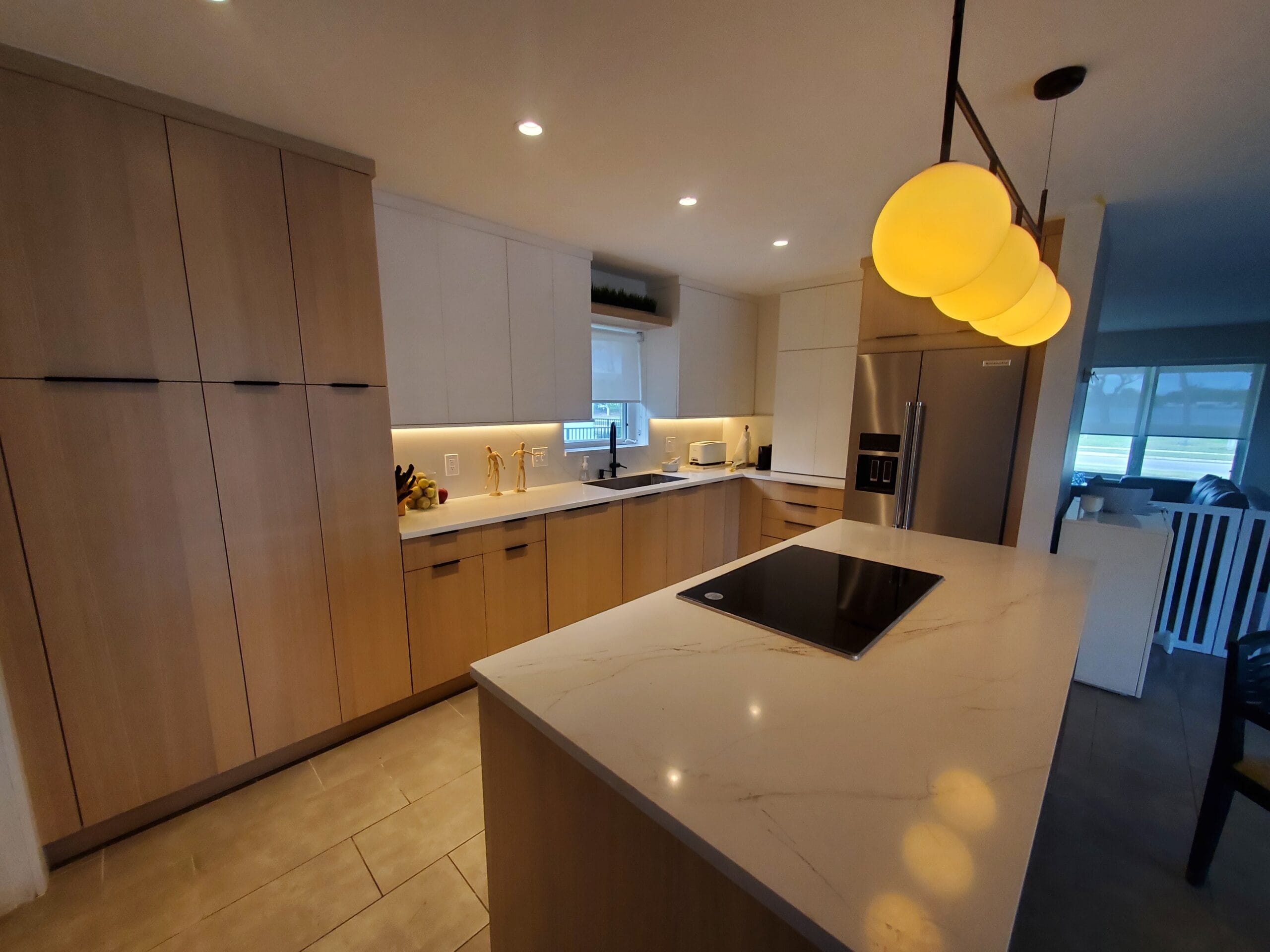
Everyone wants to know the magic number: what does a kitchen remodel really cost? The truth is, it’s a moving target. While you might see national averages suggesting a spend between $14,585 and $41,534, with a typical project hovering around $26,964, those numbers need context.
Here in South Florida—especially in communities like Boca Raton, Delray Beach, and Parkland—those national figures are more of a starting block. Higher local labor rates and a penchant for premium materials mean our costs often begin where the national averages top out.
Understanding South Florida Kitchen Remodel Costs
Think about your kitchen remodel budget like you would a car purchase. A basic sedan will get you from point A to point B just fine, but a luxury SUV offers a completely different experience with higher-end engineering, materials, and features. The same logic applies directly to your kitchen.
The final price tag is a direct reflection of your project's scope. Are we just swapping out a few finishes, or are we tearing down walls and moving plumbing lines? One is a facelift; the other is major surgery, and the costs will reflect that.
As a solid rule of thumb, plan to invest between 5% and 15% of your home's total value into your kitchen. For a $700,000 home in Boca Raton, that puts you in a realistic budget range of $35,000 to $105,000.
Remodel Tiers Explained
To help you get a clearer picture of where your vision and budget might meet, let's break projects down into three common tiers. Each one represents a different level of investment and scope.
- Essential Refresh: This is your high-impact, budget-conscious update. We’re not changing the layout, but we’re making everything look new again. Think cabinet refinishing, installing new countertops and a backsplash, or upgrading your sink and faucet.
- Mid-Range Overhaul: This is the sweet spot for most homeowners and offers a major transformation. It usually involves all-new semi-custom cabinets, a suite of quality appliances, and maybe some minor layout tweaks, like adding that island you’ve always wanted.
- Luxury Custom Renovation: The sky’s the limit here. This is a full gut-and-rebuild, complete with high-end custom cabinetry, professional-grade appliances, premium natural stone, and even structural changes to completely reimagine the heart of your home.
Across the country, contractors often estimate costs at $75 to $250 per square foot. For a typical 200-square-foot kitchen, that’s a huge spread—from $15,000 to $50,000. This just goes to show how much your choices in finishes, scope, and local labor rates matter. If you want to dive deeper, you can always read the latest industry reports on kitchen remodel costs.
South Florida Kitchen Remodel Tiers At A Glance
To put it all into perspective for our area, here’s a quick breakdown of what you can generally expect at each budget level right here in South Florida.
| Remodel Tier | Estimated Cost Range (Boca Raton Area) | Common Scope of Work |
|---|---|---|
| Essential Refresh | $25,000 – $45,000 | Cabinet refacing or painting, new countertops (quartz/granite), backsplash, sink, faucet, new paint, and upgraded lighting fixtures. |
| Mid-Range Overhaul | $50,000 – $90,000 | New semi-custom cabinets, mid-range appliance package, new countertops, adding an island, minor electrical/plumbing work, flooring. |
| Luxury Custom Renovation | $100,000+ | Full gut, custom cabinetry, high-end stone/quartzite countertops, pro-grade appliances, structural changes (moving walls), new plumbing/electrical. |
This table helps set a realistic starting point for your conversations. Remember, these are ballpark figures—the final cost will always come down to the specific materials you choose and the complexity of your unique project.
Breaking Down The Major Cost Drivers In A Kitchen Remodel
Ever wonder why one kitchen remodel costs $40,000, while a nearly identical one down the street tops $150,000? It all comes down to the individual choices you make for materials and finishes. Getting a handle on these key cost drivers is your best tool for building a realistic budget and avoiding sticker shock down the road.
Think of your total remodel budget as a pie. Each slice represents a different part of the project, and the size of that slice can get a lot bigger or smaller depending on your selections. Let's dig into the five elements that always take the biggest bites out of the budget.
It’s a bit like figuring out the average cost to install hardwood floors; the total price is a direct result of the materials you choose and the complexity of the labor involved.
Cabinets: The Foundation Of Your Kitchen
Cabinets are, without a doubt, the heavyweight champion of kitchen costs. They don't just provide storage; they define the entire layout and set the visual tone for the room. Because they take up so much physical and visual space, they have an enormous impact on the final price tag.
You’ll generally find cabinets fall into one of three categories:
- Stock Cabinets: These are your most budget-friendly option. They're mass-produced in standard sizes and styles, ready to go. The trade-off is limited customization in size, color, or finish.
- Semi-Custom Cabinets: A great middle ground, these start with a stock cabinet framework but allow for far more personalization. You can tweak dimensions, choose from a much wider array of finishes, and add clever organizational features.
- Custom Cabinets: Built from the ground up just for you. With custom, the design possibilities are truly endless. They are crafted to fit your space and style perfectly but come with the highest price point.
Countertops: The Workhorse Of Your Space
Your countertops are the next major player in the budget game. They have to withstand daily use while also being a centerpiece of your design. The material you pick will dramatically affect both the look and the final cost.
Durable laminate is a solid starting point for a tighter budget. Materials like granite and quartz represent a step up in both performance and price. For a truly high-end finish, luxurious surfaces like quartzite, marble, or custom-poured concrete will command a premium. To see how different materials compare, you can dive deeper into our guide on the cost of quartz countertops.
Appliances: The Engine Of The Kitchen
This is another area where your budget can fluctuate wildly. A standard appliance package—a reliable fridge, range, dishwasher, and microwave—can be purchased for a few thousand dollars.
But if you start looking at professional-grade, panel-ready, or smart appliances with all the latest features, you can easily triple or quadruple that line item. The brands you select and the technology you want will ultimately decide how much of your budget this category eats up.
Labor And Installation: The Human Element
It doesn't matter how gorgeous your materials are if they aren't installed correctly. Labor is a significant and non-negotiable part of your budget. You’re paying for the skill, time, and expertise needed to pull everything together seamlessly.
This infographic gives a great visual of how different tiers of remodels stack up financially.
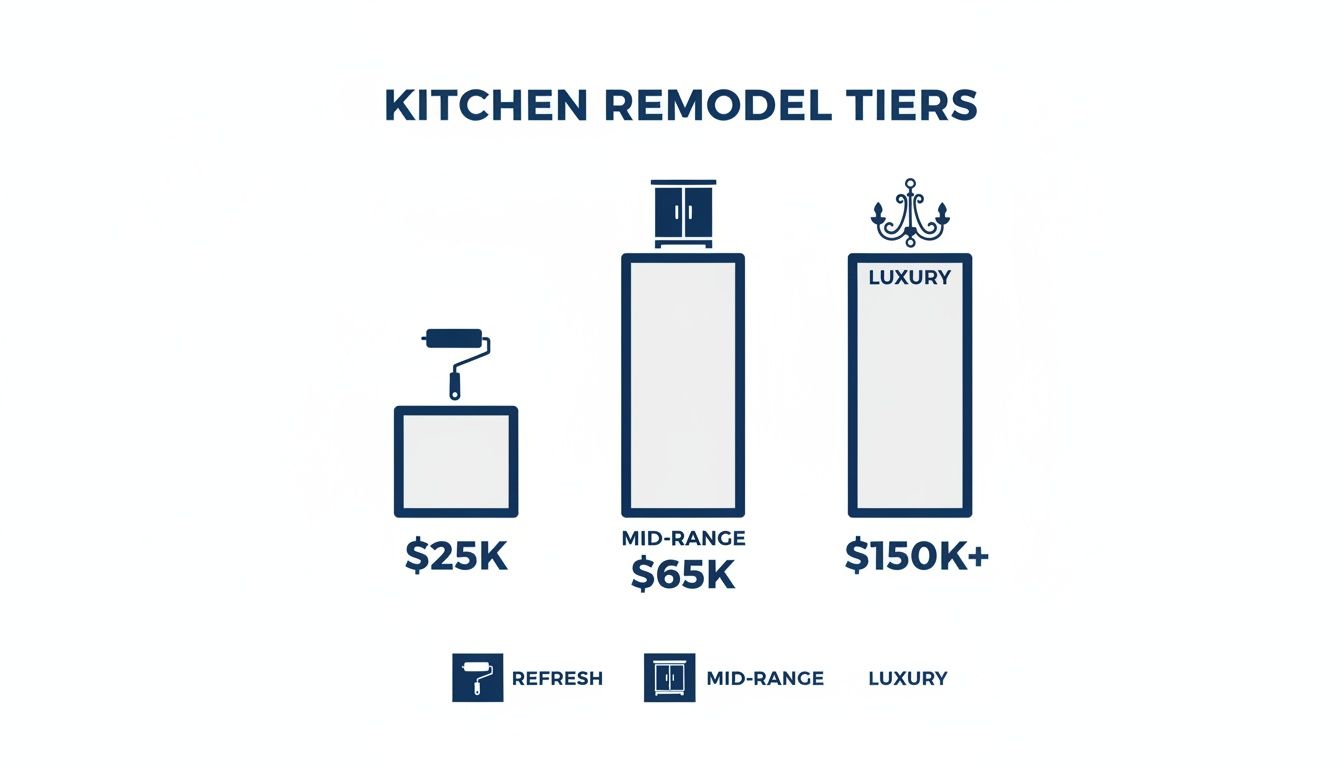
As you can see, the financial jumps between a simple refresh, a solid mid-range project, and a full luxury renovation are substantial.
To give you a better idea of how a budget breaks down, here's a look at where the money typically goes.
Typical Kitchen Remodel Budget Allocation
This table illustrates the average percentage of a total kitchen remodel budget allocated to each major component, helping you plan your spending.
| Component | Average Percentage of Total Budget | Example Cost (on a $60,000 Remodel) |
|---|---|---|
| Cabinetry & Hardware | 35% | $21,000 |
| Labor & Installation | 20% | $12,000 |
| Appliances & Ventilation | 15% | $9,000 |
| Countertops | 10% | $6,000 |
| Flooring | 7% | $4,200 |
| Lighting & Electrical | 5% | $3,000 |
| Plumbing & Fixtures | 4% | $2,400 |
| Backsplash & Walls | 2% | $1,200 |
| Permits & Other Fees | 2% | $1,200 |
Keep in mind these are just averages. A simple project might have lower labor costs, while a high-end kitchen could see the appliance budget swell to 25% or more.
Permits And Structural Changes: The Unseen Essentials
Finally, we have the less glamorous—but absolutely critical—costs. If your project involves moving walls, altering plumbing lines, or upgrading electrical systems to meet today's codes, you'll need permits and specialized tradespeople. These costs add up.
While not as exciting as picking out a backsplash, these foundational elements are critical for a safe, functional, and legally compliant renovation. A reputable contractor will manage this process for you, ensuring everything is done correctly.
When you understand these five main drivers, you can steer your budget with confidence and put your money where it matters most to you.
Real-World Kitchen Remodel Budgets In South Florida
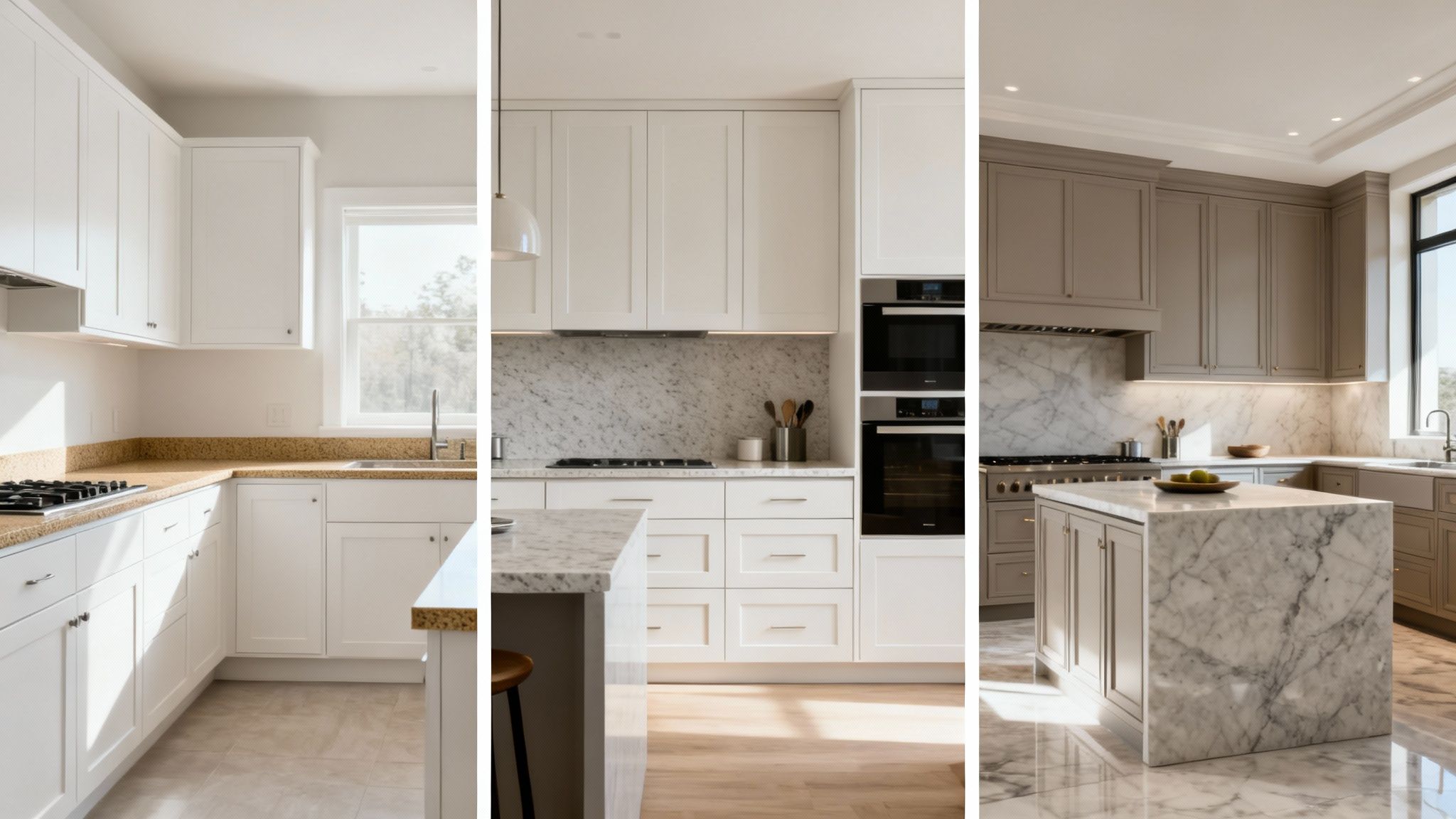
Talking about percentages and cost drivers is one thing, but those numbers can feel a bit abstract on a spreadsheet. To really get a feel for the average kitchen remodel price, it’s helpful to see how these budgets come to life in real homes.
Let's walk through three common scenarios we see all the time in Boca Raton, Delray Beach, and Parkland. Each one tells a story about different goals, lifestyles, and what a specific budget can achieve. You'll see exactly where the money goes and why, helping you connect your own ideas to a realistic price point.
Scenario 1: The Luxury Condo Refresh
Client Profile: A professional couple living in a beautiful Boca Raton high-rise. The ocean views were incredible, but the kitchen felt stuck in the past with dark granite and older, builder-grade appliances that just didn't fit the luxury feel of the condo.
Primary Goal: They wanted a bright, modern space for entertaining friends. The key was to create a high-impact look without changing the kitchen's efficient layout. This project was all about sophisticated, cosmetic upgrades.
Total Budget: $40,000
This project is a perfect example of how to get the most bang for your buck by working within the existing footprint. Since we weren't moving plumbing or tearing down walls, every dollar went directly into high-end finishes you can see and touch. The result was a stunning transformation that felt like a complete overhaul for a fraction of the cost.
Cost Breakdown:
- Cabinet Refacing & New Doors: $12,000
- Quartz Countertops & Waterfall Island Edge: $9,500
- Panel-Ready Dishwasher & Induction Cooktop: $7,500
- Glass Tile Backsplash: $3,000
- Labor & Installation: $6,000
- Designer Lighting Fixtures: $2,000
Scenario 2: The Family-Focused Upgrade
Client Profile: A busy family with three young kids in a suburban Parkland home. Their kitchen was mission control—the spot for homework, quick meals, and general chaos. It had to be tough as nails, super functional, and still look great for weekend get-togethers.
Primary Goal: The focus here was on improving workflow, adding tons of storage, and building a kitchen that could handle everything a young family throws at it. This meant replacing tired cabinets, installing hard-wearing countertops, and creating a large island for everyone to gather around.
Total Budget: $80,000
This kind of mid-range remodel is one of our most common projects. The budget was carefully balanced between looking good and working hard. We went with semi-custom cabinets to get a personalized feel without the full custom price tag, and chose durable quartz countertops that offer the beauty of stone with the resilience a busy family needs.
The game-changer here was reconfiguring the layout just enough to fit a much larger island. That one move completely transformed how the kitchen worked, adding tons of prep space and a casual spot for the kids to eat.
Cost Breakdown:
- Semi-Custom Shaker Cabinets: $28,000
- Durable Quartz Countertops: $12,000
- Mid-Range Appliance Suite (French Door Fridge, Double Oven): $11,000
- Labor (Including Minor Electrical/Plumbing for Island): $16,000
- Porcelain Tile Flooring: $7,000
- Plumbing Fixtures (Sink, Faucet, Pot Filler): $3,500
- Permits & Design Fees: $2,500
Scenario 3: The Gourmet Chef's Dream
Client Profile: Passionate home cooks in a Delray Beach estate home who love to entertain. Their dream was a true chef's kitchen with specialized, pro-grade appliances and custom storage designed for how they cook.
Primary Goal: A complete, down-to-the-studs gut renovation to build a culinary masterpiece. This was the real deal: we removed a non-load-bearing wall to open the kitchen to the living room, installed top-of-the-line appliances, and designed bespoke cabinetry with storage for every specific pot and pan.
Total Budget: $150,000+
This high-end renovation is all about what’s possible when the budget allows for structural changes and the very best materials. The investment here goes way beyond just looks; it's about creating a space with uncompromising performance. Every single detail, from the 48-inch professional range to the custom drawer inserts, was chosen to support their passion for cooking.
Cost Breakdown:
- Full Custom Cabinetry (Walnut & Lacquer Finish): $55,000
- Professional-Grade Appliances (48" Range, Built-in Refrigerator): $35,000
- Labor (Including Demolition & Wall Removal): $30,000
- Quartzite Countertops & Full-Height Backsplash: $18,000
- Structural Engineer & Permitting: $5,000
- Custom Lighting & Electrical Overhaul: $7,000
As you can see, the average kitchen remodel price isn't one number—it's a direct reflection of your goals. Whether you’re planning a smart cosmetic refresh or a full-scale culinary transformation, having a clear vision is the first step toward building a realistic and successful budget.
How To Build A Realistic Kitchen Remodeling Budget
A detailed budget is so much more than a spreadsheet of expenses. It's the strategic roadmap that keeps your project on track and turns your vision into a reality without the headaches. The best way to start isn't with numbers, but with honesty—getting crystal clear on what you absolutely need versus what would be nice to have.
Think of it like packing for a trip. You have essentials you can't leave home without, and then you have the fun extras you'll bring if there's room in the suitcase. Applying this same logic to your kitchen helps you focus your spending on what truly matters.
This process is the bedrock of a well-defined project scope. For a deeper dive, you can check out our in-depth article on how to plan a kitchen remodel.
Differentiating Needs From Wants
The easiest way to start is with a simple piece of paper. Just draw a line right down the middle and label one side "Must-Haves" and the other "Nice-to-Haves."
-
Needs (Must-Haves): These are your non-negotiables. They typically solve a real problem you're facing now. It could be "more counter space for meal prep," "durable flooring that can stand up to the dog and kids," or "better task lighting over the island." These are the functional upgrades your new kitchen must have.
-
Wants (Nice-to-Haves): This is the fun part where you get to dream a bit. Maybe you've always wanted a professional-grade Wolf range, a pot-filler faucet over the stove, or that gorgeous waterfall quartzite countertop you saw in a magazine. These are the luxury items you'd love to include if the budget allows.
This simple exercise is incredibly powerful. It gives you an instant filter for every decision down the line and helps your design-build team immediately grasp your priorities.
Research and Gather Real Numbers
Once your list is ready, it's time to start putting real-world price tags on your ideas. You can't rely on those generic online cost calculators; they just don't understand the specifics of our South Florida market. Instead, get out there and visit a few showrooms in the Boca Raton area to see and price out materials yourself.
Next, get at least three detailed, itemized quotes from reputable, licensed contractors. A legitimate quote is never just a single number scribbled on a piece of paper. It should break down the costs for everything—demolition, cabinetry, plumbing, electrical, installation, and labor. This transparency is the only way you can truly compare apples to apples and see exactly where your money is going.
Pro Tip: Never, ever choose a contractor based on the lowest bid alone. A price that seems too good to be true almost always is. It can be a red flag for inexperience, uninsured workers, or cheap materials that will end up costing you far more down the road.
The Non-Negotiable Contingency Fund
If you take away one piece of advice, let it be this: always expect the unexpected. Once you have your total estimated cost, you need to add a 15-20% contingency fund right on top. This isn't "extra" money to play with; it's an essential, non-negotiable part of your total budget.
This fund is your safety net for the surprises that inevitably pop up during a renovation. The moment your contractor opens up a wall, they might find faulty wiring that needs to be brought up to code, or hidden water damage that has to be fixed. Without a contingency fund, these discoveries can derail your entire project or force you to sacrifice some of your "must-haves."
Think of it as project insurance. You really hope you won't have to use it, but you'll be incredibly glad it's there when you do. A well-planned budget transforms the average kitchen remodel price from a scary number into a manageable plan, setting you up for a smooth and successful renovation.
Understanding The Kitchen Remodel Timeline And Process

While the average kitchen remodel price is front-and-center in your mind, your time is an equally precious resource. Getting a feel for the entire journey helps set realistic expectations and highlights why a great renovation simply can’t be rushed. It’s more than just swinging a hammer; a huge chunk of the schedule is dedicated to careful planning before a single cabinet is removed.
A smooth, well-managed process is what prevents those frustrating delays and keeps your project on track once construction finally kicks off.
The Planning And Design Phase
This is where your dream kitchen starts to take shape. It’s the creative, collaborative phase where we translate all your ideas, magazine clippings, and Pinterest boards into a workable blueprint. Think of it as building the foundation for the entire project.
This stage typically takes 2 to 4 weeks and involves a few key steps:
- Initial Consultation: We’ll sit down to discuss what you love, what you hate, and what you absolutely need in your new kitchen, all while keeping your budget in focus.
- Space Planning: Our team takes precise measurements to create detailed floor plans and 3D renderings, giving you a virtual tour of the finished space before we even start.
- Initial Selections: You'll start getting a feel for different material styles and appliance options that align with your vision.
This back-and-forth ensures the final design is one you’ll be thrilled with and that it’s perfectly aligned with your investment plan.
A common misconception is that a remodel's timeline is defined solely by the construction period. In reality, the most successful projects spend nearly as much time in detailed pre-planning as they do in active renovation.
The Selection And Procurement Phase
With the design locked in, it's time to order everything. This is often the longest part of the pre-construction journey, lasting anywhere from 4 to 8 weeks—sometimes longer, depending on your choices.
What drives this timeline? Lead times.
Custom or even semi-custom cabinetry, for instance, can take 6 to 12 weeks from order to delivery. The same goes for specialty tile, high-end appliances, and custom-cut countertops. Each component has its own production schedule that has to be coordinated.
During this time, we're also submitting architectural plans to local municipalities like Boca Raton or Parkland to secure the necessary building permits, a process that can add several weeks all on its own. You can see how all these pieces fit together in our complete kitchen renovation timeline.
The Demolition And Construction Phase
Finally, the part everyone's been waiting for! This is where you see your old kitchen disappear and the new one rise from the dust. For a mid-range to high-end project, the actual construction usually takes 4 to 8 weeks.
The on-site work follows a carefully choreographed sequence to maximize efficiency:
- Demolition and Preparation: We carefully tear out the old kitchen and prep the "blank canvas" for new plumbing and electrical systems.
- Rough-Ins and Inspections: Our licensed plumbers and electricians run new lines, which are then signed off by a city inspector.
- Installation Begins: With the green light from inspections, we hang drywall, lay down new flooring, and install the cabinetry. This is when the countertop fabricator comes to create a precise template.
- Finishing Touches: The new countertops are installed, followed by the tile backsplash, appliances, sinks, faucets, and lighting. A final coat of paint brings it all together.
- Final Walkthrough: We'll walk through the completed kitchen with you, checking every last detail to ensure it meets our exacting standards and leaves you completely satisfied.
Maximizing Your Return On Investment
Think of a kitchen remodel as more than just an expense—it's one of the smartest investments you can make in your home. Sure, the immediate payoff is a beautiful, functional space you'll love using every day. But it's also a strategic move that can significantly boost your home's value.
When it comes to home improvement projects, a well-designed kitchen consistently offers one of the highest returns. In a competitive real estate market like South Florida, a modern, updated kitchen isn't just a nice feature; it’s practically a requirement for many buyers. A great remodel can help you recoup a huge chunk of what you spent, making it a sound financial decision whether you plan to sell soon or stay put for years.
Financial ROI vs. Lifestyle ROI
When we talk about "return on investment," it's helpful to think about it in two different ways.
- Financial Return: This is the straightforward, dollars-and-cents increase in your home's market value. Here in areas like Boca Raton and Delray Beach, it's not uncommon for a minor kitchen remodel to recoup over 70% of its cost when you sell.
- Lifestyle Return: This is the value you can't put a number on. It's the simple joy of cooking in a kitchen where everything has a place, the ease of hosting friends and family, and the pride you feel in a space that truly works for you.
Honestly, that second return is just as important. The daily happiness and improved functionality pay you back long before you ever decide to list your home.
A successful remodel is one that intelligently balances market trends with your personal needs. It creates a space that not only attracts future buyers but also makes your daily life better right now.
It’s also interesting to see who’s making these investments. Recent data shows that Gen X and Boomers are leading the charge, accounting for 35% and 32% of all kitchen remodels, respectively. They’re also the ones spending the most.
With experts predicting that kitchen footprints will only get larger, the average kitchen remodel price is likely to continue its upward trend. This makes a smart, well-timed investment even more crucial. You can dive deeper into what's next by checking out the 2026 Kitchen Trends Report.
At the end of the day, a thoughtfully planned kitchen remodel is a powerful tool. It’s your chance to improve your home’s financial standing while creating a beautiful, welcoming space that you and your family will enjoy for years to come.
Answering Your Questions About Kitchen Remodel Costs
Let's face it, talking about the financial side of a remodel can feel a little daunting. But getting clear answers to your biggest questions is the best way to move forward with confidence. We hear these questions all the time from homeowners across South Florida, so let's break them down.
How Much Should I Budget For A Kitchen Remodel In Boca Raton?
You've probably seen national averages that put a kitchen remodel around $27,000, but that number doesn't quite reflect the reality here in Boca Raton. For a quality, mid-range kitchen renovation in our area, a more realistic budget is somewhere between $40,000 and $75,000.
If you're dreaming of a truly high-end kitchen with all custom elements, it's not uncommon for projects to climb past $100,000.
A great rule of thumb to start with is the 5-15% rule: plan to invest about 5% to 15% of your home's total value into the kitchen. This helps make sure your investment is proportional to your property's worth. For more on this, check out these general strategies for maximizing home value with kitchen and bathroom upgrades.
What Is The Most Expensive Part Of A Kitchen Remodel?
Without a doubt, cabinetry is the single biggest line item in almost every kitchen project. It consistently eats up about 30-35% of the entire budget. The choice between stock, semi-custom, or fully custom cabinets, along with your selected materials and finishes, will have the biggest impact on your total cost.
Right behind cabinetry, the next major expenses are typically:
- Labor and Installation: The skilled craftsmanship that pulls the whole vision together.
- Appliances: This can vary wildly, as professional-grade appliances come with a hefty price tag.
- Countertops: Premium materials like quartzite or marble are a significant investment.
How Can I Save Money Without Sacrificing Quality?
You can absolutely be smart with your budget and still get a stunning result. The most impactful way to control costs is to keep your kitchen's current layout. That one decision can save you a fortune by avoiding the complex and expensive work of moving plumbing, electrical, and gas lines.
Another fantastic strategy is to mix high-end and more modest finishes. Think about splurging on a showstopper countertop for the island, which is always the center of attention, and then choosing a more budget-friendly (but still beautiful) material for the perimeter counters. This is where having an experienced design-build partner really pays off—they know exactly where to invest for the biggest impact.
The goal isn't to cut corners, but to spend wisely. A great design partner helps you allocate your budget to the features that matter most to you, ensuring every dollar enhances your final result.
How Long Does A Typical Kitchen Remodel Take?
The timeline really depends on the scope of work. A simple cosmetic update—think new countertops, backsplash, and paint—might only take 4-6 weeks of actual construction.
On the other hand, a full gut remodel that involves changing the layout, moving walls, and installing custom pieces will likely require 8-12 weeks for the construction phase.
And remember, that's just the on-site work! The crucial pre-construction phase—which includes planning, design, and ordering all your materials—can easily add another 6-12 weeks to the total project timeline. A professional contractor will always walk you through a detailed schedule before any work begins.
Ready to stop guessing and start planning? The team at Kitchen Renovations Perfected is here to help you build a clear, realistic budget for your dream kitchen. Use our free estimator tool or schedule a complimentary consultation to get started.