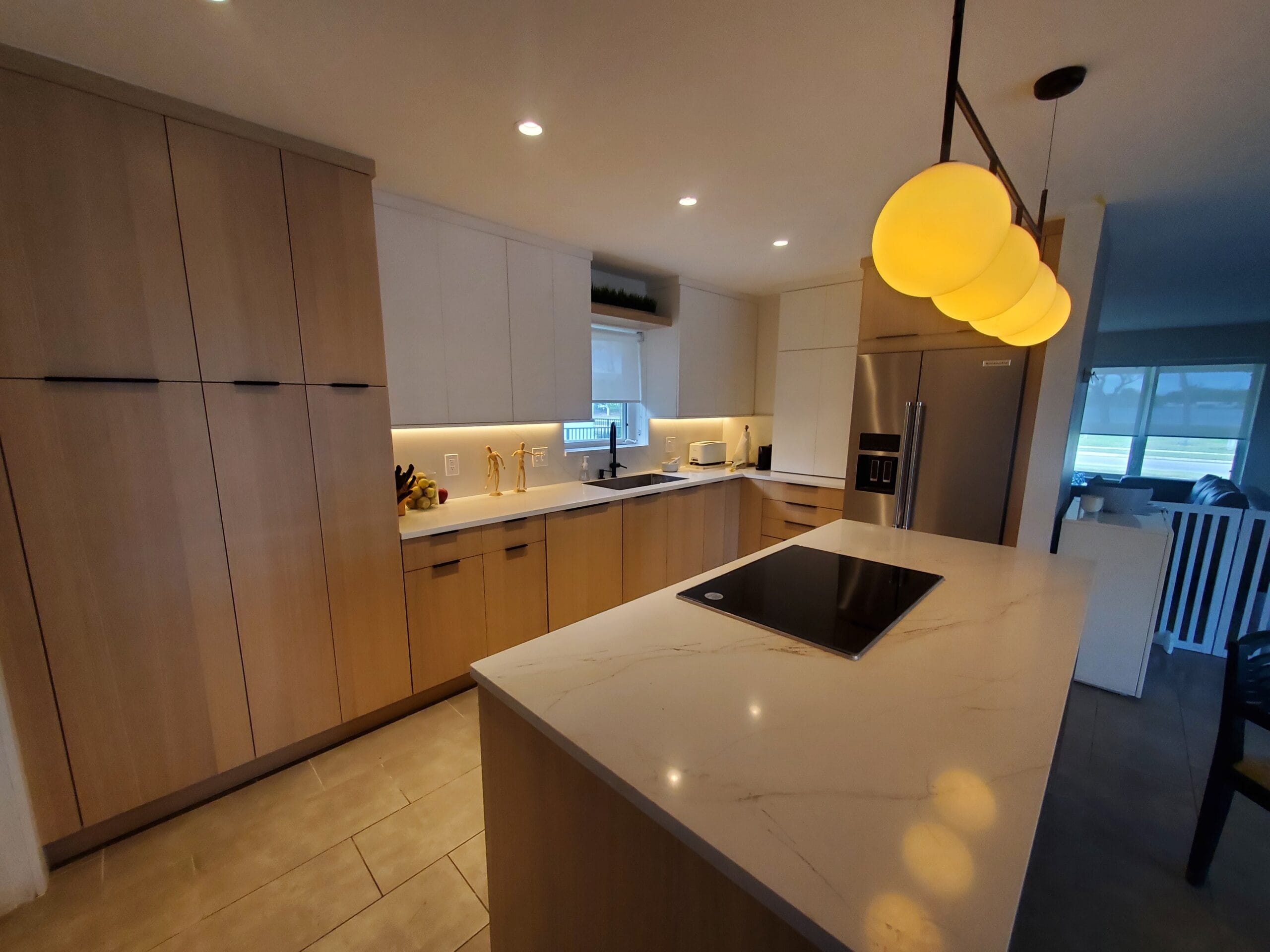
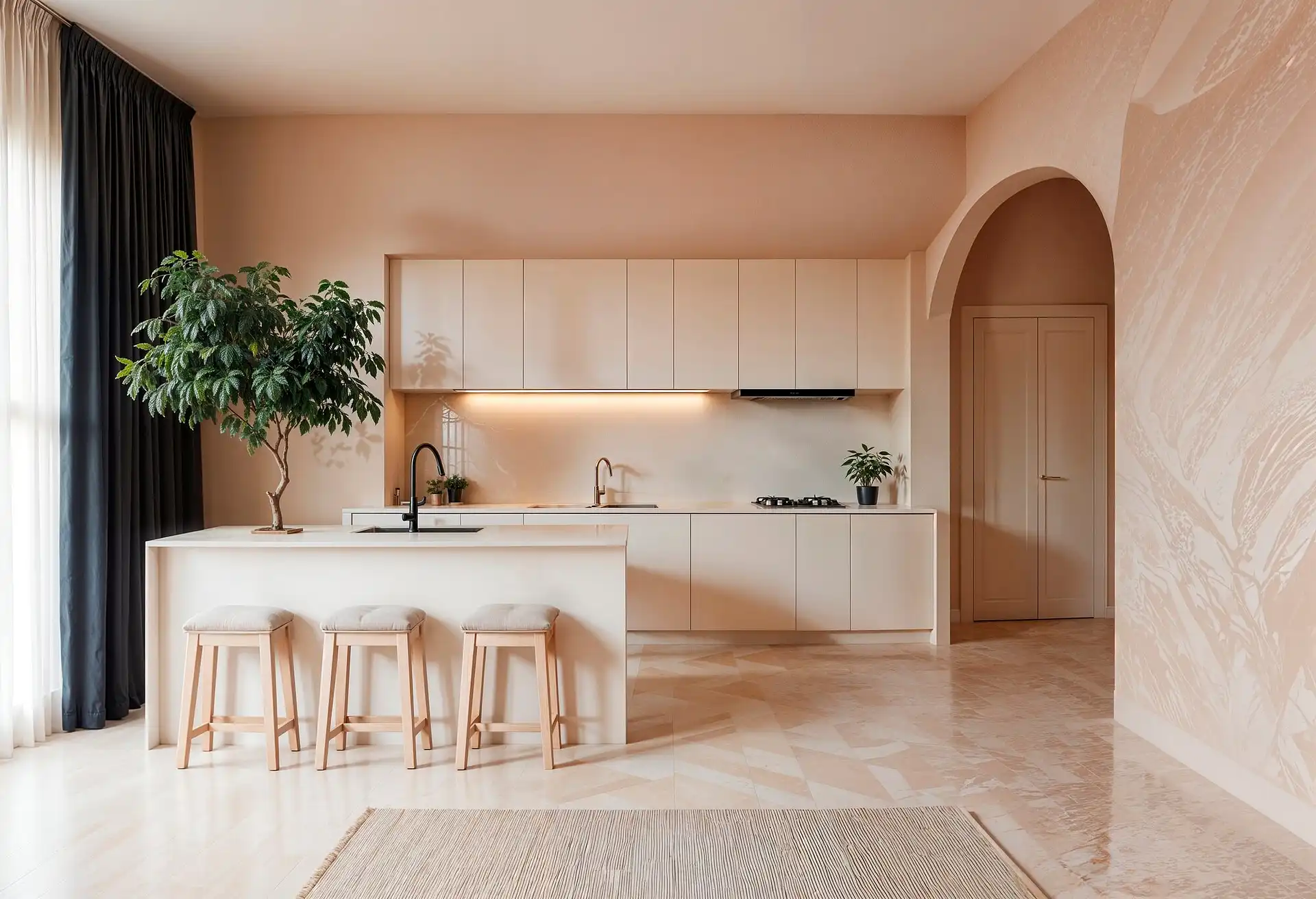
When it comes to cabinets, the first major decision you'll face is frameless vs. framed. This isn't just about looks; it's a fundamental choice that dictates how your kitchen will function every single day. Are you drawn to the clean, full-access design of European-style cabinetry, or do you prefer the classic, rock-solid feel of traditional American cabinets? One gives you a seamless, modern aesthetic with incredible accessibility, while the other offers a timeless look built around a sturdy face frame.
This single decision will define your kitchen's entire character.
Choosing Your Kitchen's Foundation
Picking between framed and frameless cabinets is one of the most critical calls you'll make in a kitchen remodel. It's so much more than just a style preference. This choice directly impacts your storage capacity, how easy it is to grab a pot or pan, and whether the final look complements your home's architecture. Think of it as the structural backbone of your kitchen—it influences everything from the hardware you can use to the overall vibe of the room.
Getting a handle on the core differences is the first step toward a design that truly works for you.
- Framed Cabinets: You’ll often hear these called "American style." They have a solid wood face frame built onto the front of the cabinet box. This isn't just for show; it adds significant rigidity and creates that classic, layered look many people love.
- Frameless Cabinets: Widely known as "European style," these cabinets do away with the face frame entirely. The doors mount directly to the sides of the cabinet box, resulting in a sleek, uninterrupted appearance with razor-thin gaps between doors and drawers.
Ultimately, you’re weighing the traditional sturdiness and design flexibility of framed cabinets against the superior storage and clean, minimalist appeal of a frameless build.
Market Trends and Local Preferences
The cabinet world has seen a real shift in recent years. For decades, framed cabinets were the undisputed king in the U.S., and they still hold a majority with a 55-60% market share. Their traditional charm and versatility keep them popular.
But frameless cabinets have been catching up fast, climbing from a niche product to making up 40-45% of new installations. This surge is all about the demand for minimalist, clean-lined kitchens. We see it constantly here in Boca Raton and Delray Beach, where open-concept layouts in luxury condos and updated family homes demand that seamless look. If you're curious, you can explore more about these construction trends and market shifts to see how they affect home value.
A Quick Comparison
To get started, let's break down the main differences at a glance. This table will give you a quick reference before we get into the nitty-gritty of each style.
| Feature | Framed Cabinets (American Style) | Frameless Cabinets (European Style) |
|---|---|---|
| Appearance | Traditional, classic look with visible frames. | Modern, seamless, and minimalist aesthetic. |
| Construction | Cabinet box with an added 1.5-inch face frame. | Thicker cabinet box with no face frame. |
| Accessibility | Slightly restricted opening due to the frame. | Full, unobstructed access to the interior. |
| Storage Space | Less interior space due to the frame's lip. | Maximized interior storage and drawer space. |
| Installation | More forgiving on uneven walls. | Requires precise, expert installation. |
Understanding Cabinet Construction: Framed and Frameless
To really get to the heart of the framed vs. frameless debate, you have to look past the cabinet doors and see how the boxes themselves are built. It's more than just a style choice—it's a fundamental difference in engineering that impacts everything from how your kitchen looks to how it functions day-to-day.
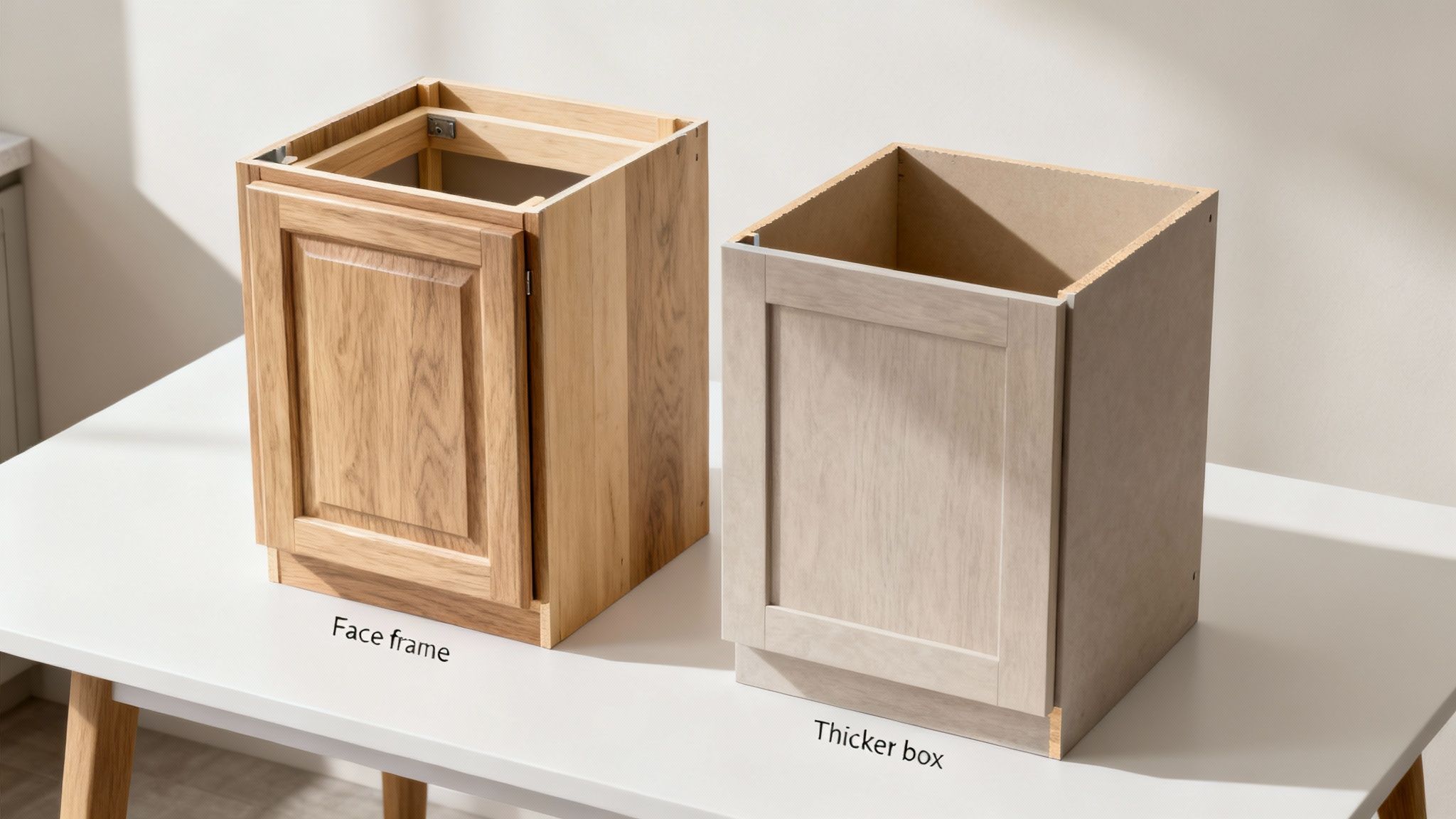
The easiest way to picture a framed cabinet is to think of, well, a picture frame. It’s the classic "American style" of cabinet making that’s been a staple in homes for a very long time.
The Traditional Framed Cabinet Approach
With this method, a solid wood frame—usually about 1.5 inches wide—is built right onto the front of the cabinet box. This face frame is the cabinet's skeleton, giving it a rock-solid, rigid structure. It's why framed cabinets have such a reputation for being tough and durable.
This frame isn't just for show; it serves a few key jobs:
- Built-in Strength: The frame keeps the cabinet box square and prevents it from twisting or racking over the years.
- Solid Hinge Mount: Cabinet doors are hung directly onto this sturdy face frame, giving them a strong anchor.
- Door Style Flexibility: The frame is what allows for different door styles, like traditional inset doors that sit perfectly flush inside the frame, or the more common overlay doors that cover it partially or fully.
From an installer's perspective, that face frame is also pretty forgiving. It can hide minor gaps or imperfections where the cabinet meets an uneven wall, which is a lifesaver in older homes. This built-in tolerance can make for a smoother installation.
The face frame is the defining feature of American-style cabinetry. It provides a classic, layered look and structural integrity that has made it a mainstay in homes for generations.
The Modern Frameless Cabinet Design
Now, let's look at the other side. Frameless cabinets, often called "European style" or "full-access," do away with the face frame completely. To make up for the lack of a front frame, this design relies on a beefier cabinet box for its stability.
The boxes for frameless cabinets are typically constructed from thicker 3/4-inch plywood or particleboard. The edges are then covered with edge banding to seal them off from moisture and daily wear. It's a different philosophy of strength.
Here’s what that means for your kitchen:
- Direct-to-Box Doors: The hinges mount directly to the inside walls of the cabinet box.
- A Sleek, Seamless Look: With no frame breaking up the lines, doors and drawers can sit almost flush against each other. This creates that clean, uninterrupted aesthetic that is so popular in modern design.
- Maximum Accessibility: This is why they're called "full-access." Without a face frame creating a lip at the opening, you get complete, unobstructed access to the entire interior. No more trying to maneuver a large pot around a center stile.
The trade-off for that sleek look is that frameless cabinets demand absolute precision during installation. The tight tolerances between doors leave zero room for error. The walls need to be plumb and the floors level for everything to line up perfectly. This is where a skilled, professional installer is non-negotiable.
So, when you're choosing between the two, you're really deciding on structural priorities. Framed cabinets bring that time-tested sturdiness and a classic, detailed look. Frameless construction, on the other hand, delivers a clean, modern aesthetic with incredible accessibility, thanks to its clever engineering and meticulous installation requirements.
Comparing Storage Space and Daily Accessibility
Beyond how they look, the real difference between framed and frameless cabinets shows up every single day in your kitchen. We're talking about how much you can actually fit in them and how easy it is to get to your stuff. This is where the debate gets practical, shifting from pure aesthetics to everyday function.
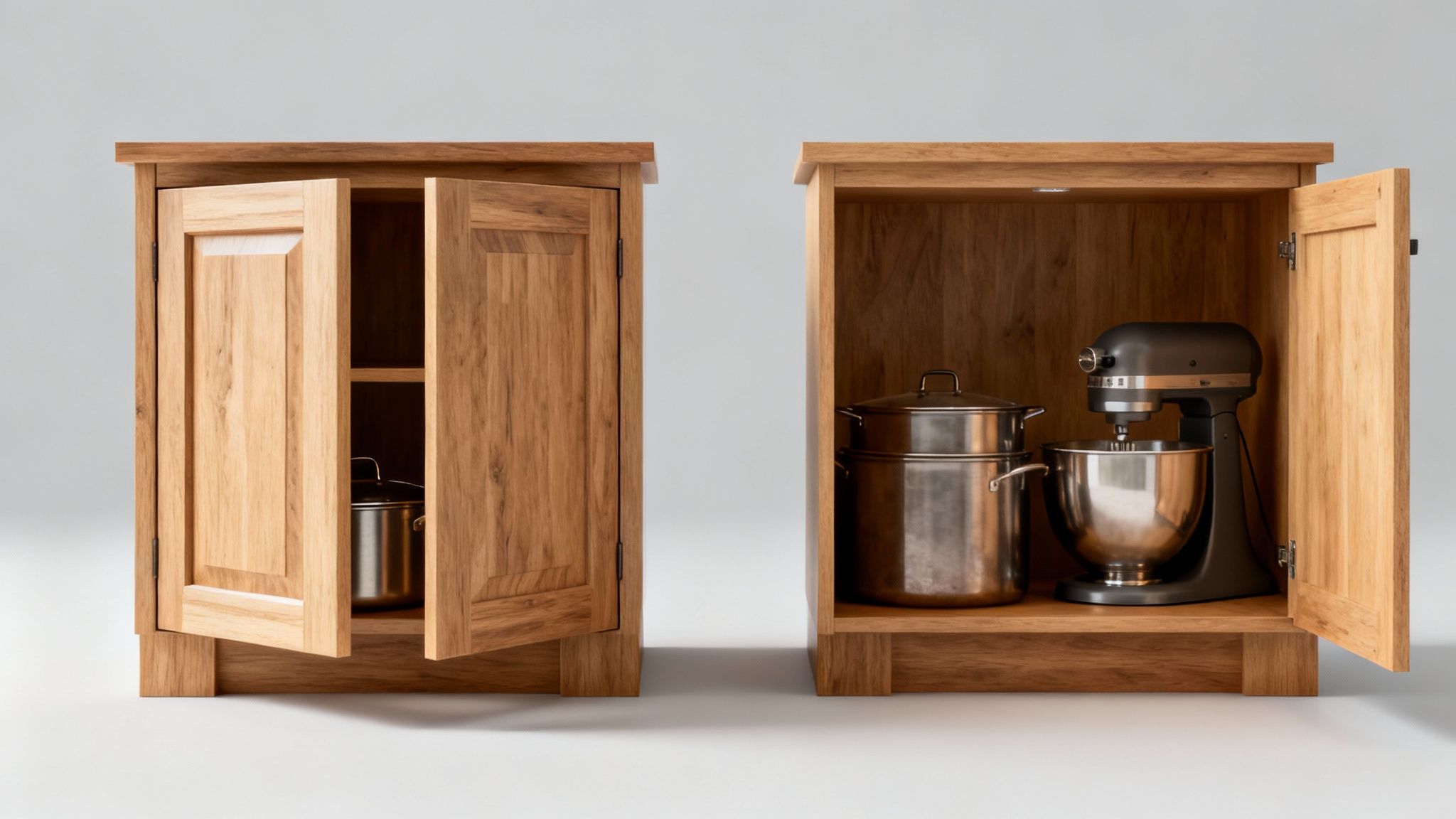
The construction of each style directly impacts usable interior space. A kitchen's real efficiency comes down to inches, and those small construction details make a huge difference in how your kitchen works for you.
Maximizing Every Inch with a Frameless Design
The biggest win for frameless cabinets—often called "full-access" for a reason—is the significant boost in storage. By getting rid of the 1.5-inch face frame that sits inside the cabinet opening, you gain a surprising amount of usable space. In fact, frameless cabinets can offer up to 15% more interior room compared to framed cabinets of the same size.
This isn't a small perk; it’s a game-changer, especially in cozy kitchens, condos, or older homes where you have to make every inch count. That bigger, unobstructed opening means your drawers can be wider and deeper, giving you more space for everything from silverware to mixing bowls.
If your main goal is to squeeze every last bit of storage out of your kitchen's existing footprint, frameless cabinets deliver an unmatched level of space efficiency.
Daily use feels completely different, too. Picture sliding a big cutting board or your heavy stand mixer into a cabinet. With a frameless design, there’s no inner lip to clear. You just slide things straight in and out, no awkward tilting required. This easy, direct access is a huge selling point for homeowners who want a modern, highly functional kitchen.
Understanding Framed Cabinet Accessibility
While framed cabinets have a bit less interior space, they have their own practical points to consider. That face frame does make the opening a little smaller than the cabinet box itself, which can occasionally make it tricky to store oversized platters or appliances.
The more significant factor you'll notice day-to-day is the center stile you find in many traditional double-door cabinets. This vertical piece of wood is there for structural support right where the two doors meet, but it can get in the way.
Think about these real-world examples:
- Storing Wide Items: A big roasting pan might not fit through the smaller individual openings on either side of the stile.
- Reaching the Back: Getting to items stored in the back can mean awkwardly reaching around that center post.
It's worth noting, however, that this isn't a deal-breaker. Many modern framed cabinets are now built without a center stile, giving you better access and blending traditional strength with modern convenience. If you're leaning toward framed but worried about accessibility, just make sure to ask about stile-free options. Knowing how to organize kitchen cabinets can help you work around these quirks, but the physical structure is what it is.
Framed Vs Frameless Cabinets At-A-Glance
Sometimes, a simple side-by-side view makes all the difference. This table breaks down the core differences to help you see how each cabinet style might fit into your daily life.
| Feature | Framed Cabinets (American Style) | Frameless Cabinets (European Style) |
|---|---|---|
| Construction | A solid wood frame (1.5") is attached to the front of the cabinet box. Doors are mounted to this frame. | The cabinet box is built without a face frame. Doors are mounted directly to the sides of the box. |
| Storage Space | The face frame slightly reduces the opening and interior space. Drawers are a bit smaller. | Provides full access to the interior, offering up to 15% more usable space. Drawers are wider and deeper. |
| Accessibility | Can have a center stile in double-door cabinets, which may obstruct access to large items. | No face frame or center stile means a completely open and unobstructed interior for easy access. |
| Durability | The rigid face frame provides excellent structural strength and helps keep the box square over time. | Relies on a thicker, sturdier box construction for its stability since there is no reinforcing front frame. |
| Style | Versatile. Well-suited for traditional, transitional, and farmhouse designs with inset, partial, or full overlay doors. | Known for a sleek, seamless look. Perfect for modern, contemporary, and minimalist aesthetics. |
| Hardware | Offers a variety of hinge options, including exposed, decorative hinges that add to the style. | Relies on concealed, European-style hinges that are completely hidden when the doors are closed. |
In the end, choosing between framed and frameless often comes down to what you prioritize most. Do you prefer the classic, sturdy build of a framed cabinet, or is the extra space and effortless access of a frameless design more important for your lifestyle? It’s a classic trade-off between traditional form and modern function.
How Cabinet Style Shapes Your Kitchen Aesthetic
More than any other choice you'll make, the cabinet construction you pick—frameless or framed—sets the entire visual tone for your kitchen. Think of cabinets not just as storage, but as the architectural backbone of the room. They establish the design language that everything else, from the countertops to the backsplash, will follow.
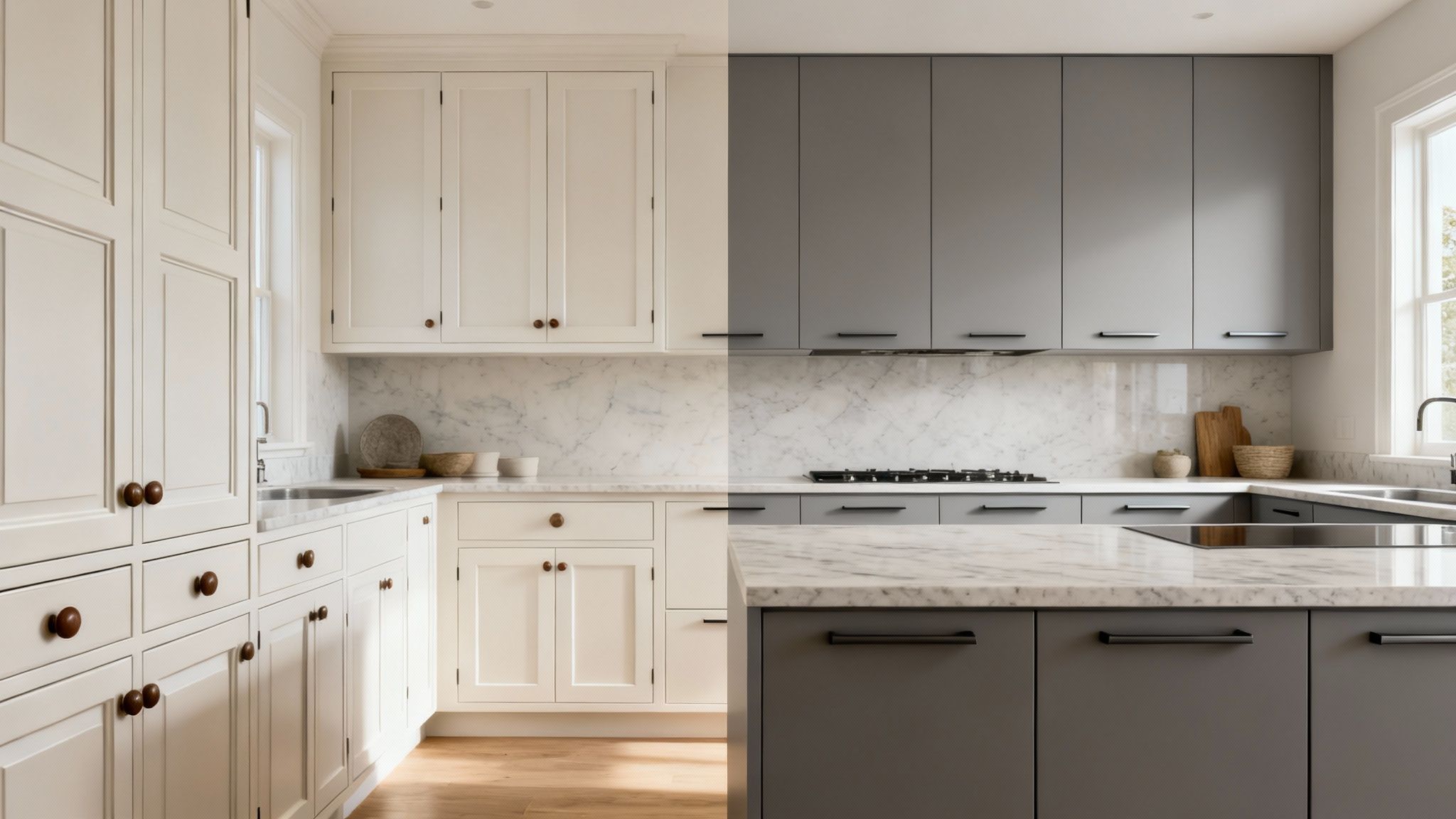
Framed cabinets immediately bring a sense of depth and detail. That visible face frame creates natural shadow lines and a layered look that feels substantial and classic. This built-in character makes them a natural fit for certain design themes.
On the other hand, frameless cabinets are all about clean lines and smooth, uninterrupted surfaces. Because the doors and drawers sit edge-to-edge, they create a sleek, monolithic appearance that feels incredibly efficient—it’s no wonder they’re a hallmark of modern European design.
Finding the Right Fit for Your Design Vision
Your end goal for the kitchen's look is the most important factor here. Each cabinet style is a master at creating a specific atmosphere, and trying to force one into a design it doesn't naturally fit can leave the whole room feeling disconnected.
Framed Cabinets are ideal for:
- Traditional Kitchens: The detailed construction, especially with classic inset or partial overlay doors, is the very soul of a traditional kitchen.
- Farmhouse and Coastal Styles: These aesthetics are all about charm and texture. The visible frames and potential for decorative details on framed cabinets feel perfectly at home.
- Transitional Designs: Looking for a blend of old and new? A framed cabinet with a simple, full-overlay door can bridge that gap beautifully.
Frameless Cabinets are the go-to for:
- Modern and Contemporary Kitchens: That sleek, unadorned look is modern design. The focus shifts to pure form, color, and material without the visual break of a frame.
- Minimalist Aesthetics: When your goal is a serene, uncluttered space, the clean grid of frameless cabinets is simply unmatched.
- Scandinavian Designs: This style champions simplicity, light, and function—all qualities that frameless cabinetry expresses perfectly.
The core decision comes down to this: Is your kitchen’s personality defined by detailed, layered character (framed) or by clean, uninterrupted form (frameless)? Aligning this choice with your home's overall architectural story is the secret to a truly cohesive result.
The Role of Doors, Finishes, and Hardware
Of course, the cabinet box is just the canvas. Your choice of door style, finish, and hardware will either amplify its natural style or create a totally unique look.
With framed cabinets, door styles like a classic shaker or a raised panel add wonderful dimension. Pair them with traditional knobs or cup pulls, and you’ve got a timeless, inviting look.
Frameless cabinets, by contrast, almost always use full-overlay slab (flat) doors to keep those lines pristine. Hardware here is typically minimalist—think sleek bar pulls, discreet edge pulls, or even touch-to-open systems that let the cabinetry’s finish be the star. A slim shaker door can also work here, offering a hint of detail that feels modern and fresh.
The color you land on plays a huge role, too. The crisp white of a coastal kitchen feels right on a framed cabinet, while a high-gloss gray or a rich wood grain really comes alive on a seamless frameless front. If you're weighing your options, our guide on the best kitchen cabinet colors can help you see how different palettes interact with each construction style. In the end, every single element needs to work in harmony to create a design that feels intentional and complete.
Analyzing Durability, Cost, and Long-Term Value
When you're weighing your options between frameless and framed cabinets, the conversation almost always lands on two things: durability and cost. These are the twin pillars that really define the long-term value you'll get from your investment. There's a common myth that one is automatically stronger or cheaper, but the truth is a lot more interesting than that. The best choice really hinges on the materials you pick, the skill of your installer, and what you’re trying to achieve in your kitchen.
What Really Makes a Cabinet Last?
The secret to a cabinet's longevity is in its bones. Traditional framed cabinets have a reputation for being tanks, and for good reason. They're built with a solid wood face frame attached to the front of the cabinet box. Think of it like a skeleton—it gives the whole structure extra rigidity and helps it resist racking or twisting over the years. This can be a huge plus if your walls aren't perfectly straight.
Frameless cabinets take a different approach to strength. Since they don't have that face frame, they depend on a beefier, more robust box construction to do the heavy lifting. We're talking thick, 3/4-inch furniture-grade plywood or high-density particleboard. When they’re built right and assembled with precision, these cabinets are incredibly solid.
The durability debate isn't about which style is inherently stronger, but rather where that strength comes from. Framed cabinets get their toughness from the face frame, while frameless cabinets depend on superior box materials and flawless, professional installation to ensure long-term structural integrity.
Breaking Down the Real Costs
The price tag is probably the most misunderstood part of this whole comparison. A lot of people assume framed cabinets are always the budget-friendly choice, but that's not the full story. The final cost is a mix of things—materials, door styles, finishes, and hardware all play a huge role.
Generally, your basic, off-the-shelf framed cabinets might be a little easier on the wallet than entry-level frameless ones. That's because their construction can sometimes get by with thinner box materials since the face frame is there for support. But once you start looking at semi-custom and fully custom cabinetry, the tables often turn.
Here’s what really moves the needle on price:
- Door Style: A high-end, custom inset framed cabinet—where the door sits perfectly flush inside the face frame—is one of the most expensive styles you can buy. It's a labor-intensive work of art and will often cost you a lot more than a premium frameless cabinet.
- Materials: The specific wood, plywood, or particleboard you choose has a massive impact on the price for both styles. Diving into the best kitchen cabinet materials is a must if you want to understand how your choices affect both durability and your bottom line.
- Finish: Fancy custom paint colors, sleek high-gloss lacquers, and detailed multi-step glazes all add to the cost, no matter which construction style you pick.
Installation and Seeing the Big Picture
Installation is the final piece of the puzzle, and it affects both the total cost and how well your cabinets perform for years to come. Framed cabinets tend to be a bit more forgiving to install. That face frame can cleverly hide minor gaps or imperfections where the cabinet meets an uneven wall, which can sometimes mean slightly lower labor costs.
Frameless cabinets, on the other hand, are all about precision. To get that clean, seamless look, everything has to be perfectly aligned, which means your walls need to be plumb and level. It’s a meticulous job that demands a highly skilled installer, and that can bump up the initial labor cost. But that precision is exactly what guarantees their stability and smooth operation over the long haul.
So, what’s the final word on long-term value? A well-built, professionally installed cabinet of either type will serve you beautifully for decades. The real value comes from picking the style that fits your home’s architecture, your day-to-day needs, and your budget. It's also smart to think ahead. For example, knowing how to reface kitchen cabinets can give you a cost-effective way to refresh your kitchen's look down the road without a total tear-out, protecting the value of your original investment.
Ultimately, you get the best long-term value by investing in quality materials and expert installation. That’s how you ensure your kitchen doesn't just look amazing on day one but also holds up to the reality of daily life for years to come.
Making the Right Choice for Your Home and Lifestyle
So, how do you actually decide between frameless and framed cabinets? It really comes down to what you value most. This isn't just about picking a style; it's about finding the right balance between your design dreams, how you use your kitchen every day, and what works best for your home's unique quirks and your budget.
Let's start with a simple question: is storage your absolute top priority? If you're dealing with a smaller kitchen or just want to squeeze out every possible inch of usable space, the answer is pretty clear. Frameless cabinets are the undisputed winner here, giving you up to 15% more interior storage and unobstructed access.
Aligning Style with Your Home's Character
Now, let's talk about the look and feel. What kind of kitchen are you picturing? If your vision is all about sleek, clean lines and a modern, uninterrupted facade, then frameless construction is your go-to. It’s the backbone of contemporary and minimalist designs, creating that seamless, polished appearance.
But what if your home leans more traditional, coastal, or farmhouse? This is where framed cabinets really shine. The face frame adds a layer of depth, detail, and craftsmanship that feels substantial and timeless. It provides that classic structure that anchors a room and feels incredibly inviting.
The right choice synthesizes form and function. Frameless cabinets excel in modern, high-efficiency spaces, while framed cabinets offer classic durability and stylistic versatility for traditional homes.
This decision tree helps map out the key factors—like durability, cost, and long-term value—that will guide you toward the right cabinet choice for your project.
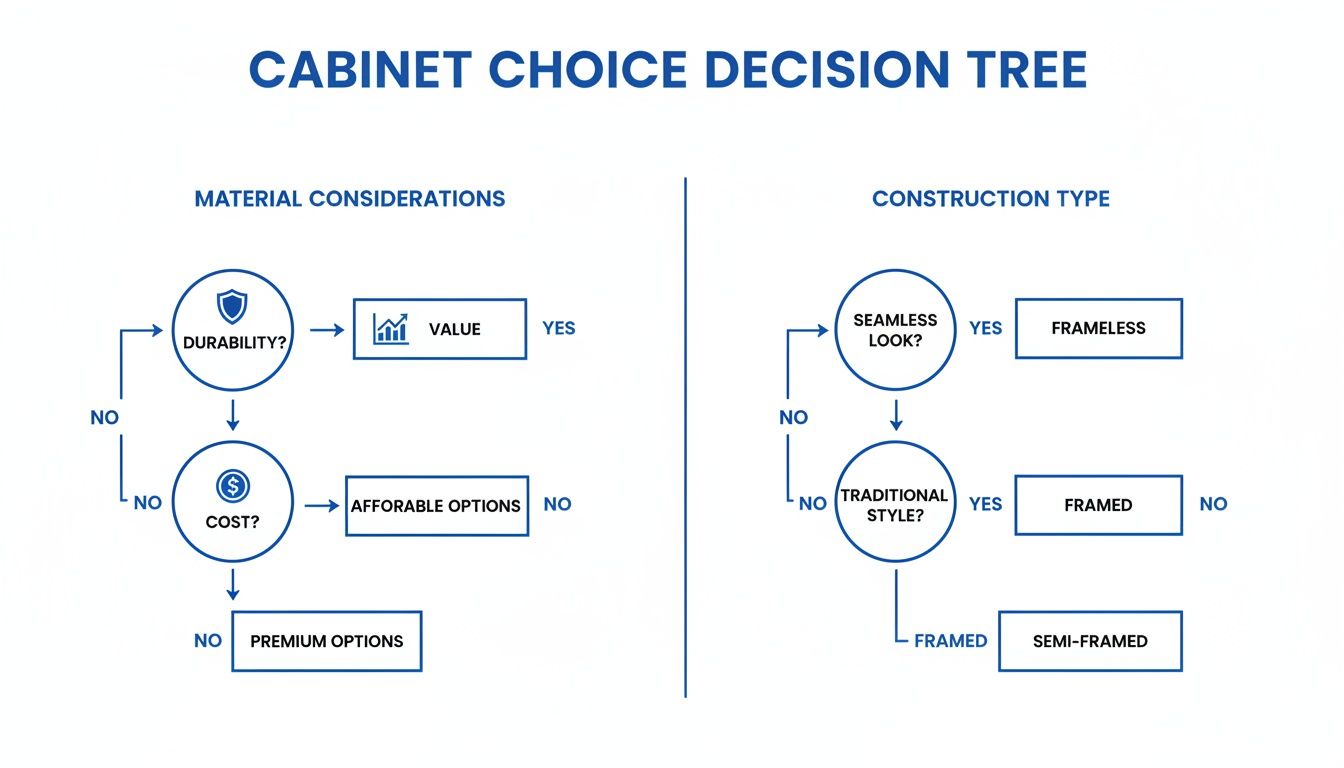
As you can see, your priorities will point you directly to one style over the other, which can really simplify the whole process.
Finally, you have to consider your home itself. Are you in a modern Boca Raton condo where the walls are perfectly straight? Frameless cabinets will install like a dream. But if you're renovating an older home with walls that have a bit of character (and aren't quite plumb), the adjustability of a framed cabinet installation might save you a lot of headaches.
Making the final call means looking at the full picture, and there are many key considerations when buying cabinets beyond this initial choice. By thinking through these personal factors, you can land on a cabinet style that you’ll be happy with for years to come.
Your Top Questions, Answered
When you're weighing the pros and cons of frameless versus framed cabinets, a few key questions always come up. I hear these from homeowners all the time, and getting clear answers is crucial before you commit to one style over the other. Let's tackle the most common ones.
Are Frameless Cabinets Really Less Sturdy Than Framed Ones?
This is probably the biggest myth out there. While a framed cabinet does get some extra rigidity from its face frame, a well-made frameless cabinet is engineered to be incredibly strong. The secret is in the construction—they typically use thicker, more robust box materials to compensate for the lack of a frame.
Ultimately, the durability of a frameless cabinet comes down to two things: the quality of the materials and, most critically, the skill of the installer. When a professional gets the installation just right, ensuring every box is perfectly square, these cabinets are rock-solid and will easily stand up to the weight of heavy countertops and years of daily use.
Can I Still Get a Modern, Clean Look With Framed Cabinets?
You absolutely can. If you love the sturdiness of a framed cabinet but want that sleek, contemporary look, the answer is a full overlay door style. This design covers almost the entire face frame, dramatically reducing the visible gaps between doors and drawers to create a clean, nearly seamless facade.
To really nail the modern aesthetic, pair that full overlay door with a simple flat-panel (or "slab") door profile and some understated, minimalist hardware. It’s the perfect way to get the classic strength of framed construction while achieving the clean lines that are so popular in modern design.
If you want to modernize a framed cabinet, your goal is to make the frame disappear. A full overlay, flat-panel door is the best trick in the book for creating that sleek, uninterrupted look that closely mimics a frameless cabinet.
Which Style Is a Better Bet for Resale Value?
Both styles can add serious value to your home, but the right choice really depends on your home's overall character and what's popular in your local market. Framed cabinets have a timeless, classic appeal that works well in almost any home, making them a consistently safe bet for attracting a wide range of buyers.
That said, in upscale markets like Boca Raton and Delray Beach, a high-end kitchen featuring premium frameless cabinets can be a major selling point. It tells potential buyers that the home has been updated with a modern, luxury touch. The smartest investment is always the style that feels like a natural fit for the rest of your home’s design.
Feeling clear about your cabinet choice is the first real step toward a kitchen you'll love for years. At Kitchen Renovations Perfected, we believe seeing is believing. Come visit our showroom to touch and feel these styles for yourself, or let's talk through your project in a free consultation.
Schedule Your Free Design Consultation at kitchenrenovationsperfected.com/